
Chobe National Park
Where the giants of Africa gather by the water 🐘🌊
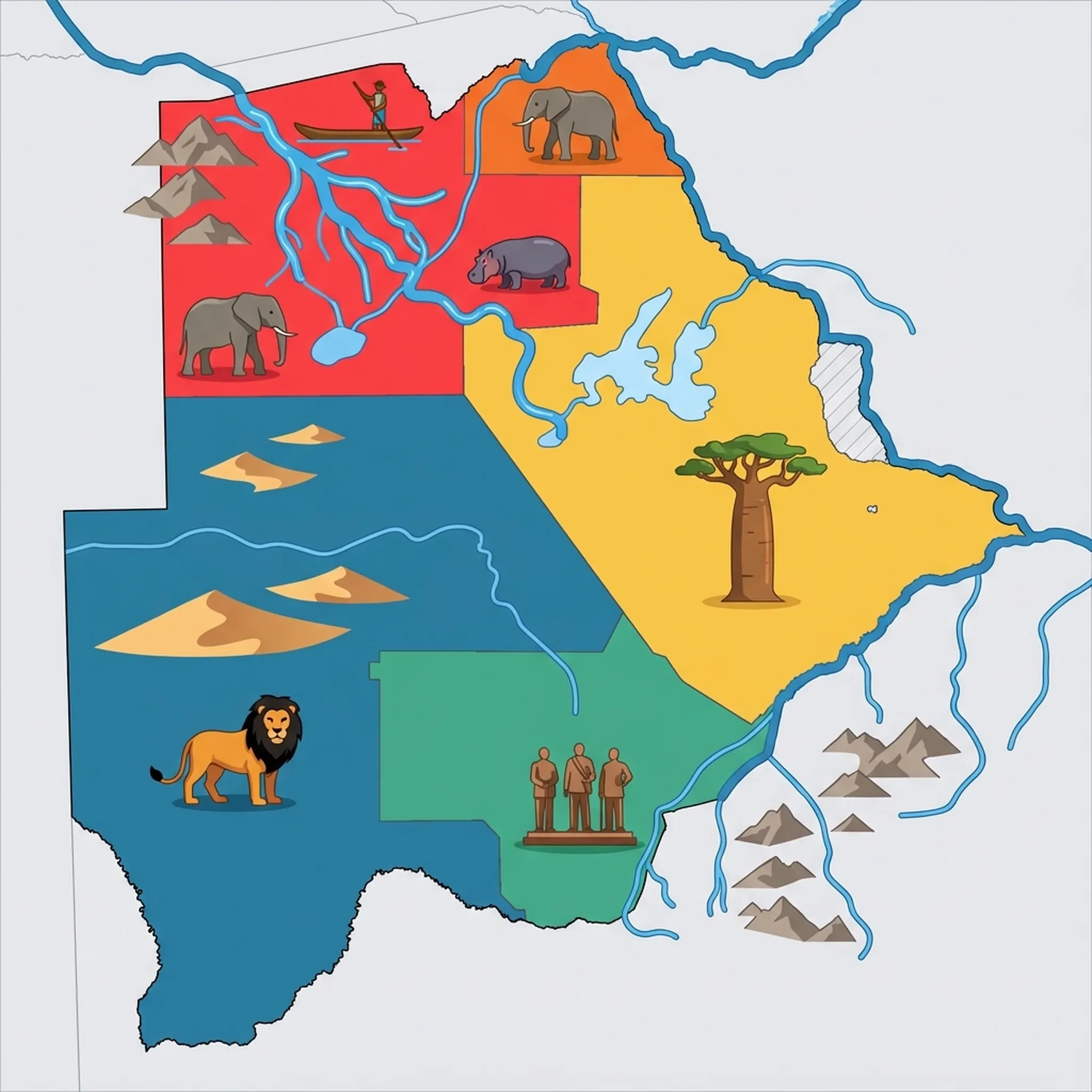
Click a region to explore
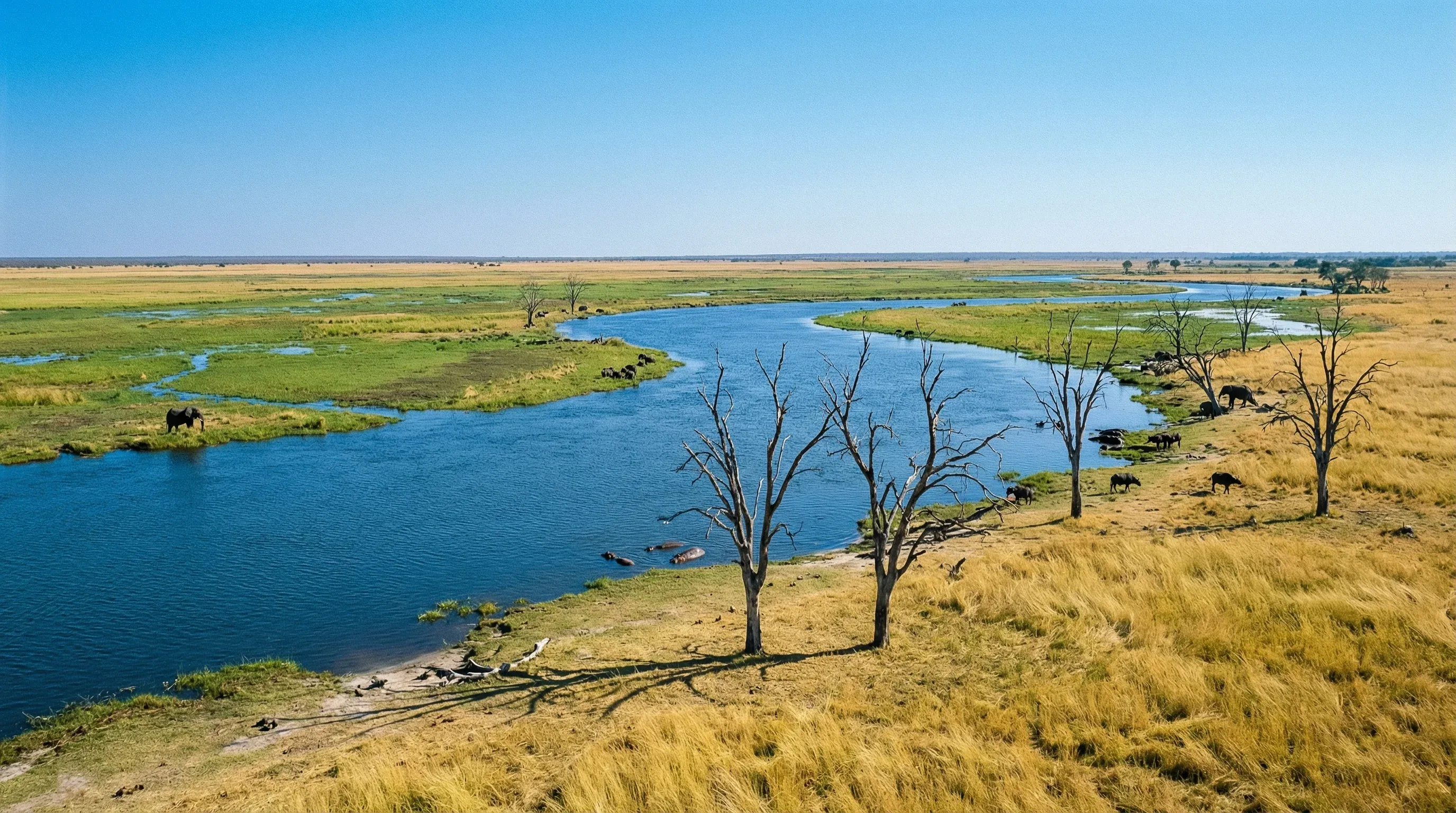
Chobe is widely considered the best introduction to safari for families, primarily because the wildlife comes to you. In the dry season, the Chobe River becomes the lifeblood of the region, drawing tens of thousands of elephants, buffalo, and antelopes to its banks. For children who might get restless on long game drives, Chobe offers a magical alternative: the river boat safari. Drifting silently past families of elephants bathing and playful hippos podding in the water offers a National Geographic experience that feels safe, relaxed, and incredibly close. The region is anchored by the town of Kasane, which provides easy logistics, supermarkets, and a range of accommodation from luxury lodges to family-friendly campsites.
Beyond the river, the landscape varies from the floodplains of the north to the raw wilderness of Savuti in the south, known for its high density of predators. The sunsets here are legendary, painting the sky in deep crimsons and burning oranges while fish eagles call overhead. It is a place where nature's drama plays out daily, yet the infrastructure makes it comfortable for travelers of all ages. Whether you are self-driving or flying in, Chobe strikes the perfect balance between wild adventure and family convenience.
Key Attractions
The crown jewel is undoubtedly Chobe National Park. Families should prioritize a sunset boat cruise along the riverfront; it is the most reliable way to see game without tiring out younger children. Inside the park, the game drives offer chances to see lions stalking buffalo and arguably the highest density of elephants on the planet. For a view of modern Africa, the majestic Kazungula Bridge is a sight to behold, curving across the Zambezi River where four countries meet, offering a quick gateway to see Victoria Falls on a day trip.
Practical Advice
The best time to visit is the dry season (May to October) when animals congregate at the river, though October can be extremely hot. For families, the green season (November to April) offers distinct advantages: dramatic thunderstorms, newborn animals, and lower rates, though some tracks may be muddy. Malaria prophylaxis is essential for this region; consult a travel doctor before departure.
Food & Drink
Typical meal times: Breakfast is served early (5:30 am to 8:30 am) before activities. Lunch is typically 1:00 pm to 2:30 pm, and dinner is served from 7:00 pm to 9:00 pm.
Typical meal costs: A restaurant meal in Kasane costs around BWP 150–250 (approx. $11–19 USD / €10–18 EUR) per person. Lodge buffets are pricier, often BWP 350–550 (approx. $26–40 USD / €24–38 EUR).
Dietary requirements: Lodges are very accustomed to international dietary needs and can cater to vegetarian, gluten-free, and allergies if notified in advance. In town restaurants, options may be more limited to standard meat-and-starch dishes.
Signature dishes:
- Seswaa – The national dish of pounded beef or goat meat, slow-cooked until tender and served with maize meal (pap).
- Chobe Bream – Fresh tilapia fish caught in the local river systems, often grilled or fried whole with lemon butter.
- Magwinya – Delicious deep-fried dough balls (fat cakes), often bought from street vendors and eaten plain or with mince.
Why this score?
The region offers classic African wilderness experiences, including river safaris and 4x4 game drives among the world's largest elephant herds. While the riverfront area is well-traversed, areas like Savuti Marsh provide a more rugged, remote feel with challenging sand tracks. It strikes a balance between raw nature and established safari infrastructure suitable for families.
Why this score?
Medical facilities in Kasane are limited to basic clinics and a small hospital that can handle minor issues but lacks specialized care. For serious emergencies, tourists typically require medical evacuation to Gaborone or South Africa. While better than the deep bush, it does not meet international standards for complex pediatric or emergency care.
Why this score?
As Botswana's most accessible park, Chobe benefits from its proximity to Victoria Falls, receiving a steady flow of international day-trippers and safari-goers. The Chobe Riverfront is one of the most visited wildlife areas in Southern Africa, supported by the tourism hub of Kasane. While high for the region, it remains a moderate destination on a global scale compared to major European or Asian hubs.

Chobe is one of the pricier safari destinations, though cheaper than the Okavango Delta. High-end lodges cost BWP 6,500–14,000 (approx. $480–1,050 USD / €450–970 EUR) per person per night. However, Kasane offers self-catering and mid-range hotels where families can stay for BWP 1,300–2,500 (approx. $95–185 USD / €90–175 EUR) per night. Park fees are additional.
Family Travel Notice
Minors under 18 must present a certified copy of their full unabridged birth certificate at the border. If traveling with only one parent, a signed affidavit from the absent parent is mandatory.

Getting Here & Around
Getting Here
- Airports – Kasane International Airport (BBK) is the main hub, with direct flights from Gaborone and Johannesburg.
- Driving – Accessible via tarred roads from Nata or the Kazungula Bridge if crossing from Zambia.
- Transfer – Many travelers arrive via road transfer from Victoria Falls (Zimbabwe/Zambia), which takes about 1–1.5 hours.
Getting Around
- Car – A 4x4 is required for driving inside Chobe National Park due to deep sand.
- Boat – Motorboats and double-decker riverboats are the primary way to explore the riverfront area.
- Guided Tours – Open-sided game viewers are the standard for wildlife viewing and are widely available from lodges.
Nearby Airports (1 airport)
Kasane
BBKKasane
View full flight map for Botswana →
Official Links

Packing List
Keeps children engaged during game drives; wildlife can sometimes be distant.
Essential for boat cruises to protect cameras and phones from river spray.
Wind on boat safaris will blow loose hats away instantly.
River cruises can occasionally be choppy; useful for sensitive children.
Light aircraft flights to the Delta have strict luggage rules: no hard shells or wheels allowed.
Many campsites and eco-lodges are unfenced and very dark at night; essential for hands-free safety.
Avoid dark blue and black, which attract painful tsetse flies in the bush. Wear khaki or tan.
Sharing frustrates kids. Having their own pair keeps them engaged in spotting wildlife.
The air in Botswana is incredibly dry; lips and skin crack quickly without frequent application.
Morning game drives are freezing (often near 0°C) even in shoulder seasons due to open vehicles.

Activities & Best Times

Hiking, wildlife, outdoor exploration, ecotourism
A world-class safari destination renowned for its massive elephant herds and the unique Savuti Marsh and Chobe Riverfront ecosystems. Peak dry season (June-October) offers unparalleled wildlife density as animals congregate at water sources, while the wet season sees animals disperse into thick, inaccessible bush.

Urban tourism, museums, historical sites, architecture
While primarily a wilderness area, the region features unique landmarks like the Kazungula Bridge and ancient Savuti rock paintings that offer genuine cultural depth. Access to remote heritage sites is most reliable during the dry winter months, whereas summer rains can make the necessary off-road tracks impassable.

Scenic drives, countryside tours, route-based travel
Offers iconic routes such as the Elephant Highway and the scenic Chobe Riverfront Drive, popular with sophisticated self-drive overlanders. The dry season ensures safe navigation on sandy tracks; however, the 'black cotton soil' in Savuti becomes notoriously difficult for vehicles during the peak summer rains.

Sport tourism, fitness activities, active recreation
Provides unique active infrastructure like the Old Hunters Road and Seboba Nature Trails for hiking and specialized cycling. The cooler months of May to August are essential for physical exertion in this climate, as the extreme heat of the 'suicide months' (September-October) and subsequent rains make activity uncomfortable.

Learning experiences, scientific sites, historical education
The CARACAL Biodiversity Center offers high-quality, specialized education on local conservation and wildlife rescue for visiting families. Suitability is tied to the general tourism season, with the best visiting conditions occurring during the dry, temperate winter months when the center is most accessible.




Public Holidays & Calendar Next 12 months
Public holidays, festivals, cultural celebrations, and seasonal natural phenomena coming up in Chobe National Park over the next 12 months.
Loading holidays and events...

Travel Advisory
A majority of international agencies classify Botswana as safe for travel under standard security awareness, though North American agencies advise elevated caution specifically regarding crime.
Safety Topics
Traveller Advice (2 groups)

Minors under 18 must present a certified copy of their full unabridged birth certificate at the border. If traveling with only one parent, a signed affidavit from the absent parent is mandatory.

While legal protections exist, social attitudes remain conservative. Travelers are advised to be discreet regarding public displays of affection.
Agency Summaries
While the overall security situation is stable, visitors should be cautious of petty crime in urban centers and take health precautions against malaria in the north.
Most visits are safe, but travelers should take basic precautions against street crime and be aware of limited medical facilities in remote areas.
Irish citizens are encouraged to follow standard safety protocols, especially regarding personal belongings and avoiding ATMs after dark.
There are no significant security warnings for the country, but travelers should maintain comprehensive insurance and stay informed on local health risks.
Heightened awareness is recommended due to frequent crimes of opportunity, such as muggings and 'smash-and-grab' thefts from vehicles at intersections and shopping centers.
Travelers are advised to remain highly vigilant due to prevalent criminal activity, including home burglaries and carjackings, though tourists are not the primary targets.
Information is provided for general guidance only and does not constitute travel, safety, medical, or legal advice. Conditions may change. Users are responsible for independently verifying information before travel.