

Overview
Brazil is a country of continental proportions, offering families a kaleidoscope of landscapes that range from the dense, mysterious jungles of the North Brazil & Amazon Basin to the sun-drenched coastlines of the northeast. It is a destination that sparks the imagination of children and adults alike, where nature is not just a backdrop but the main event. Families can explore the biodiversity of the planet's largest rainforest, swim in crystal-clear rivers in the Cerrado, or simply build sandcastles on some of the world's best beaches. The Brazilian people are famously affectionate and welcoming to children, meaning your little ones will often be treated like VIPs wherever you go.
Beyond the nature, Brazil's culture is a vibrant tapestry of indigenous, African, and European influences. In Rio, Sao Paulo and Southeast Brazil, the energy is infectious, with music spilling out of cafés and street corners. While the distances are vast, the rewards are equally huge. A family trip here requires some planning-especially regarding internal flights and safety-but the payoff is an experience of raw beauty and joy that few other destinations can match. Whether you are watching monkeys swing through the trees or tasting your first authentic brigadeiro sweet, Brazil leaves a mark on the soul.
Key Attractions
No family trip to Brazil is complete without visiting Christ the Redeemer in Rio de Janeiro. Standing atop Corcovado mountain, this iconic statue offers breathtaking views over the city and provides a geography lesson kids will never forget. Afterward, head down to the coast to experience Copacabana Beach, where the golden sands and gentle waves create a perfect urban playground. For a different kind of water experience, the AquaRio is the largest marine aquarium in South America and a hit with younger children.
For nature lovers, the Iguazu Falls in Southern Brazil & Highlands are a non-negotiable stop. The sheer power of these waterfalls is humbling, and the surrounding park is teeming with butterflies and coatis. If your family craves wildlife, the Bioparque Pantanal offers a safe and accessible way to see the incredible aquatic life of the wetlands. For pure fun, head to the Northeast Brazil & Atlantic Coast to visit Beach Park near Fortaleza, one of the world's largest water parks, or explore the magical Anavilhanas Archipelago in the Amazon for a boat trip through submerged forests.
Practical Advice
Brazil is huge, so pick one or two regions rather than trying to see it all. The best time to visit is generally during the dry season (April to October), though the Amazon and Northeast are warm year-round. Brazilians love children, and you will find priority lanes for families at airports and supermarkets. However, English is not widely spoken outside major hotels, so a translation app is essential.
Safety
While most visits are trouble-free, safety is a primary concern. Avoid wearing expensive jewelry or watches. Use app-based taxi services (like Uber) rather than hailing cabs on the street, especially at night. Stay in the 'Safe Zone' tourist areas of cities and avoid empty streets after dark. Always keep a close eye on children in crowded places.
Food & Drink
Typical meal times: Lunch is the main meal, typically served from 12:00 pm to 2:30 pm. Dinner is eaten late, usually from 7:30 pm to 10:00 pm.
Typical meal costs: R$40–80 (approx. $7–14 USD / €6.50–13 EUR) for a casual meal; R$120–250 (approx. $21–44 USD / €19–40 EUR) for a mid-range dinner for two.
Dietary requirements: Vegetarian options are increasingly common in cities, but rural areas rely heavily on meat. Comida a quilo (pay-by-weight) buffets are excellent for families with dietary needs, offering huge variety including salads, rice, and beans.
Family-friendly dining: Children are welcome everywhere. Most restaurants offer highchairs and are very patient with kids. The 'per kilo' buffet style is a lifesaver for picky eaters, allowing kids to choose exactly what they want.
Signature dishes:
- Feijoada – A rich black bean and pork stew, traditionally served with rice, kale, and orange slices.
- Pão de queijo – Cheesy, gluten-free bread rolls made from tapioca flour, perfect for snacking.
- Moqueca – A fragrant, mild fish stew made with coconut milk and coriander, popular in the northeast.
- Coxinha – A teardrop-shaped fried dough filled with shredded chicken, a favorite street snack.
- Brigadeiro – A chocolate truffle made from condensed milk and cocoa, loved by every Brazilian child.
Family Travel Notice
Minors, especially dual nationals, often require formal notarized authorization from both parents to enter or exit the country if not traveling with both guardians.

While local food and public transport can be very affordable, costs for families rise quickly due to the need for secure accommodation and internal flights. A family of four can expect to spend R$800–1,500 (approx. $140–260 USD / €130–245 EUR) per day for a comfortable trip with mid-range hotels, domestic travel, and restaurant meals.
Age Suitability





Did you know? Brazil welcomes approximately 6.8 million international visitors per year. Most visitors come from Americas.
Explore Regions
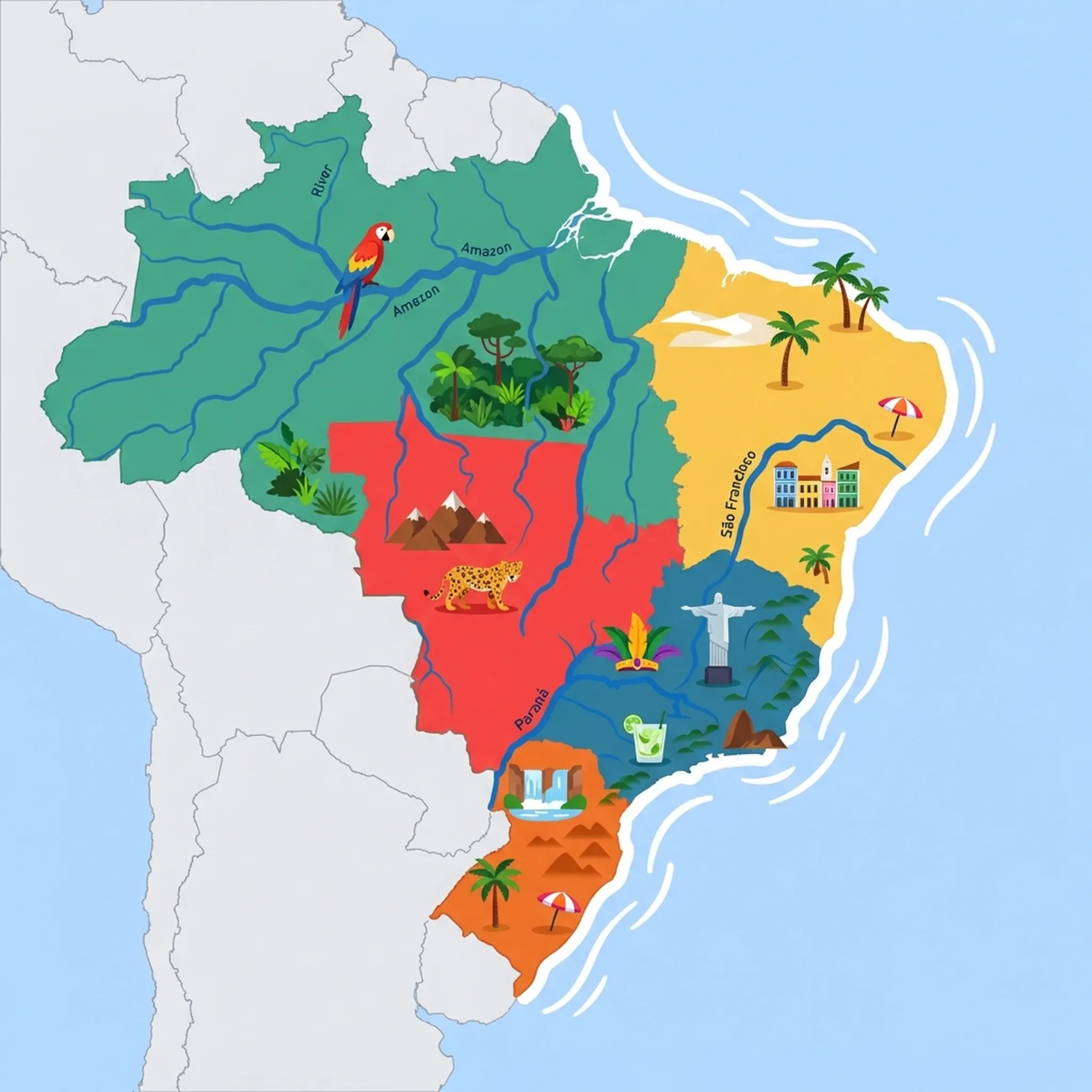
5 Regions
Central-West Brazil & Cerrado
Where crystal rivers meet the world's largest wetland 🐊
North Brazil & Amazon Basin
The planet's greatest green adventure 🌳🦜
Northeast Brazil & Atlantic Coast
Sun, sand, and the rhythm of the drums 🥁🏖️
Rio, Sao Paulo and Southeast Brazil
Iconic cities meeting emerald mountains 🏙️⛰️
Southern Brazil & Highlands
Where waterfalls roar and hydrangeas bloom 💦🌸
Click on a region marker to explore details. Use the dropdown to color regions by activity suitability.

Getting There & Around
Getting There
- By Air – São Paulo (GRU) and Rio de Janeiro (GIG) are the main international gateways. Direct flights arrive from the US, Europe, and major South American capitals.
- By Land – Border crossings exist with Argentina (at Iguazu Falls), Uruguay, and Paraguay, often crossed by bus or private transfer.
- Entry Requirements – Visa rules change frequently. As of 2026, US, Canadian, and Australian citizens may require an e-Visa. UK and EU citizens are generally visa-exempt for 90 days. Check your government website for the latest visa requirements, or use the IATA Travel Centre entry-requirements checker.
Getting Around
- Domestic Flights – Essential for covering Brazil's vast distances. Major carriers like LATAM, Gol, and Azul connect hubs like Rio, Sao Paulo and Southeast Brazil with the Amazon and Northeast.
- City Transport – In major cities like Rio and São Paulo, the metro is safe, clean, and efficient. Uber and other ride-share apps are widely used and recommended for families over regular taxis for safety and ease of payment.
- Buses – Long-distance executive buses are comfortable but journeys can take 24+ hours. Only recommended for shorter inter-city hops (e.g., Rio to Paraty).
- Car Hire – Useful for coastal road trips or exploring areas like Central-West Brazil & Cerrado, but avoid driving within major cities due to chaotic traffic and complex navigation.

Packing List
Protects phones from sudden tropical downpours and sand, plus deters snatch-theft if worn under clothes.
Many sinks in budget or mid-range accommodation lack plugs; essential for washing kid's clothes.
The best way to remove sticky sand from children's feet and legs after a day at the beach.
English is rarely spoken outside luxury hotels; basic Portuguese is vital for taxis and food.
Required for eco-tours in the Amazon or Bonito to protect the delicate river ecosystems.

Activities & Best Times

Adventure & Nature
ExcellentHiking, wildlife, outdoor exploration, ecotourism
The Pantanal is a world-class wildlife destination offering unparalleled jaguar spotting and biodiversity, while Bonito provides exceptional freshwater snorkeling in crystal-clear rivers. Peak dry season from June to September ensures optimal wildlife visibility and access to remote areas before heavy rains flood the plains.
As the world's most biodiverse wilderness, the region offers unparalleled immersion in rainforest ecosystems, accessible via high-end eco-lodges and river expeditions. The peak dry season (June-Oct) facilitates hiking and wildlife spotting, while the 'high water' shoulder months are ideal for exploring flooded forests by canoe.
Home to the world-class Iguazu Falls and unique highland Araucaria forests, offering exceptional wildlife and trekking. The mild temperatures of autumn and spring provide the most comfortable conditions for families to explore these vast natural ecosystems.

City & Cultural
ExcellentUrban tourism, museums, historical sites, architecture
Home to globally significant cultural assets like the Inhotim open-air museum, the historic UNESCO streets of Ouro Preto, and São Paulo's MASP. The drier, cooler months provide the necessary comfort for exploring these extensive urban and historic sites on foot.
Offers profound Afro-Brazilian heritage in UNESCO sites like Salvador's Pelourinho and the historic center of Olinda. The peak reflects the high-energy summer and holiday months, while March-May sees higher precipitation that can hinder walking tours of historic quarters.
Brasília is a unique UNESCO World Heritage site showcasing extraordinary modernist architecture and urban planning by Oscar Niemeyer. The dry season from May to July offers the iconic deep blue skies that complement the city's stark monuments, avoiding the heavy tropical downpours of the summer months.

Theme Park & Entertainment
Very GoodAmusement parks, family entertainment venues
Anchored by Beto Carrero World, the largest theme park in Latin America, alongside major water parks. Peak operations and atmosphere align with the main school holiday periods when international families can experience the full range of shows and attractions.
Features several major parks like Hopi Hari and large-scale water resorts that are regional leaders in entertainment. Peak months align with the Brazilian school holiday calendar when infrastructure is fully operational, though summer rain can disrupt water park activities.
The region hosts Hot Park, one of the world's few naturally heated water parks, set within a lush tropical environment. Visiting during the drier winter months or school holiday periods provides the best balance of manageable weather and operational consistency for families.

Beach & Sea
Very GoodBeach resorts, marine activities: diving, snorkelling, kite surfing, wind surfing, sailing
Fernando de Noronha and Baía do Sancho are consistently ranked among the world's best beaches. Baía do Sancho has been voted #1 beach globally multiple times. The current 'good' rating significantly undersells this region's world-class beach credentials. While not as extensive as Caribbean destinations, the quality is internationally excellent.
The region features unique freshwater beaches in Santarém and coastal island beaches like Marajó, offering exotic landscapes far from mass-market tourism. These river beaches are highly seasonal, only emerging fully when water levels drop significantly between August and November.
Features iconic coastal areas such as Praia do Rosa and Florianópolis with high-quality surf and scenery. Peak visiting periods occur during the hot southern summer when water temperatures are most suitable for international travelers.

Educational & Exploratory
GoodLearning experiences, scientific sites, historical education
Features the Bioparque Pantanal, the world's largest freshwater aquarium, offering a sophisticated look at Cerrado and Pantanal ecosystems. These facilities provide an excellent academic complement to field expeditions, best enjoyed during the dry season when integrated into wider regional tours.
Home to globally significant research institutions like INPA and the Museu Emílio Goeldi, the region provides deep scientific insights into tropical biology and Amazonian ethnography. Peak visitation aligns with the dry season when outdoor botanical exhibits and research stations are most accessible.
Includes significant conservation projects like TAMAR and modern aquariums that offer destination-level learning. These mostly indoor facilities are high-quality and provide consistent educational engagement throughout the year, with peak demand during family travel windows.

Sports & Active
GoodSport tourism, fitness activities, active recreation
Offers specialized high-adrenaline activities like technical rappelling and cave diving at Abismo Anhumas and world-class river snorkeling. Infrastructure is professional and geared toward adventure enthusiasts, with optimal conditions found during the low-rainfall months when water clarity is at its peak.
Purpose-built infrastructure like the MUSA climbing tower and the cycling circuits of Utinga State Park cater to active families seeking structured physical adventure within the jungle. These activities are best enjoyed when lower humidity and reduced rainfall make physical exertion more comfortable.
Offers specialized infrastructure including indoor winter sports facilities and world-class river-based adventure activities. The mild temperatures of the transition seasons are the most favorable for the active, outdoor pursuits popular in the region.

Public Holidays & Calendar Next 12 months
Public holidays, festivals, cultural celebrations, and seasonal natural phenomena coming up in Brazil over the next 12 months.
Loading holidays and events...
Climate & Weather
Central-West Brazil & Cerrado
Show Details
| Month | Temp °C | Rain | Humidity |
|---|
North Brazil & Amazon Basin
Show Details
| Month | Temp °C | Rain | Humidity |
|---|
Northeast Brazil & Atlantic Coast
Show Details
| Month | Temp °C | Rain | Humidity |
|---|
Rio, Sao Paulo and Southeast Brazil
Show Details
| Month | Temp °C | Rain | Humidity |
|---|
Southern Brazil & Highlands
Show Details
| Month | Temp °C | Rain | Humidity |
|---|

Travel Advisory
All major agencies agree that travelers should exercise a high degree of caution in Brazil. While tourism is generally feasible, significant risks from violent crime in urban areas, health hazards like tainted alcohol, and localized insecurity in border zones or favelas require constant vigilance.
Safety Topics
Traveller Advice (4 groups)

While same-sex relationships are legal, acceptance can vary widely; public displays of affection may attract negative attention or hostility in more conservative or rural communities.

Minors, especially dual nationals, often require formal notarized authorization from both parents to enter or exit the country if not traveling with both guardians.

Maintain high situational awareness in public, avoid displaying signs of wealth such as jewelry or smartphones, and never leave food or drinks unattended due to spiking risks.

Female travelers should be particularly cautious of harassment and are advised to travel in groups, especially when moving through urban areas at night.
Agency Summaries
Irish citizens are urged to be highly vigilant at all times, particularly during large public festivals, due to the high frequency of criminal activity in urban centers.
Australia maintains a high caution level because of prevalent violent crime, including robberies and carjackings. Travelers are alerted to recent spikes in methanol poisoning cases.
U.S. authorities recommend increased caution nationwide due to crime and kidnapping risks. Extreme danger (Level 4) exists in border regions and informal housing developments known as favelas.
British citizens are warned against non-essential travel to specific river areas in Amazonas State. General warnings are in place regarding street crime, favelas, and risks of tainted alcohol.
The Canadian government advises travelers to be highly cautious due to elevated crime rates and frequent violence in urban areas. Significant risks exist in specific Rio de Janeiro neighborhoods where all travel should be avoided.
New Zealand travelers should exercise elevated vigilance because of significant safety concerns related to violent crime, civil unrest, and potential health hazards like drink spiking.
Information is provided for general guidance only and does not constitute travel, safety, medical, or legal advice. Conditions may change. Users are responsible for independently verifying information before travel.