
North Brazil & Amazon Basin
The planet's greatest green adventure 🌳🦜
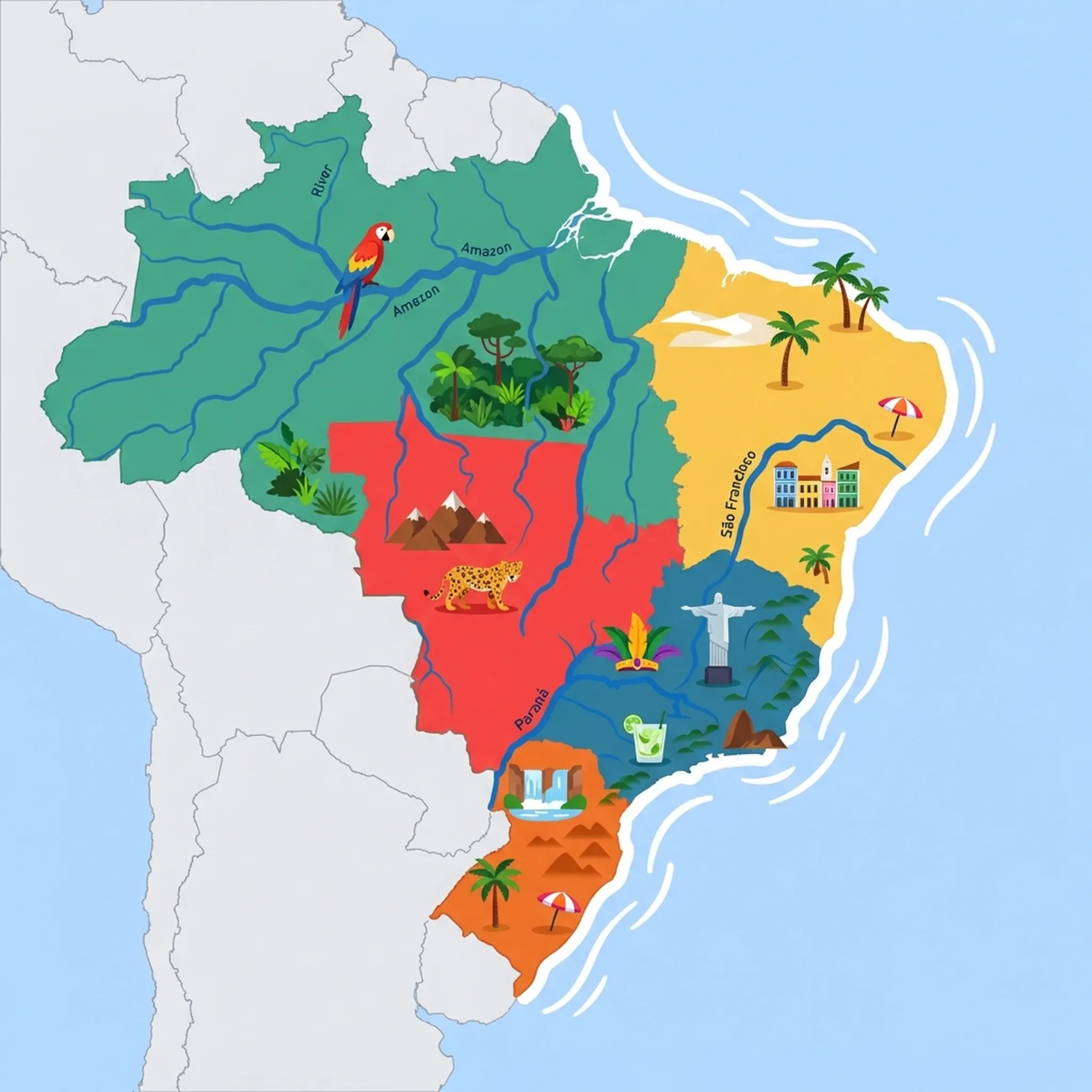
Click a region to explore
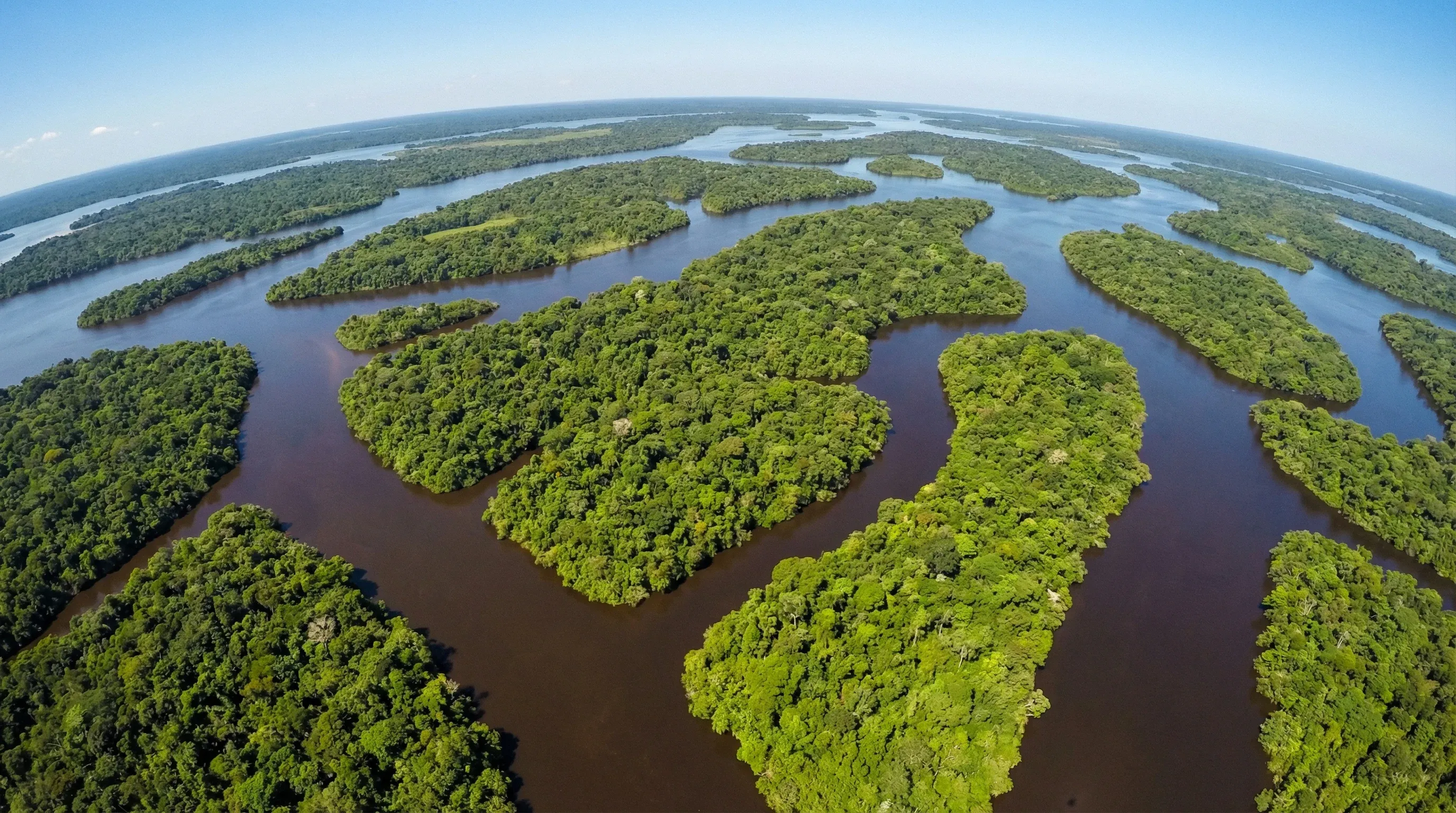
The North of Brazil is synonymous with the Amazon, a region of superlatives that feels more like a planet of its own than a mere travel destination. For families, this is an opportunity to step into the pages of an adventure novel. The sheer scale of the rivers—often so wide you cannot see the other side—and the density of the forest are humbling. While the "deep jungle" expeditions are suited for older teens, cities like Manaus and Belém offer accessible gateways where comfort and wilderness meet. You can stay in eco-lodges that float on the river, waking up to the sounds of howler monkeys, or take day trips to interact with indigenous communities in a respectful, educational setting.
Culturally, the North is distinct, with heavy indigenous influence in its food, language, and folklore. The legends of the forest, like the pink river dolphin that turns into a man, captivate children's imaginations. It is hot, humid, and wild, but navigating the Amazon via boat offers a cooling breeze and a relaxing pace that works well for families. Beyond the rainforest, the region also hosts the "Brazilian Caribbean" freshwater beaches in Alter do Chão and the stunning dunes of Jalapão, proving the North is more than just trees.
Key Attractions
Manaus is the primary hub, where the Meeting of Waters is a must-see natural phenomenon; the black Rio Negro and muddy Rio Solimões flow side by side for miles without mixing, a visual science lesson kids love. Nearby, Musa - Museu da Amazônia is a fantastic "living museum" with a 42-meter observation tower and trails that are safe and well-marked. For a true immersion, a boat trip to the Anavilhanas Archipelago National Park reveals a maze of 400 islands and river beaches.
In Belém, the Mangal das Garças is an ecological park in the city center filled with flamingos, herons, and butterflies, perfect for toddlers. Older kids enjoying history will appreciate the Fortaleza de São José de Macapá, a massive stone fortress guarding the mouth of the Amazon. For adventurous families, the freshwater beaches at Ilha do Amor in Alter do Chão offer safe swimming without the ocean's salt.
Practical Advice
The climate is hot and humid year-round. The "dry" season (June to November) is best for hiking and beaches, while the wet season (December to May) is better for boat trips through flooded forests. Yellow Fever vaccination is highly recommended (and sometimes required) for travelers to this region.
Food & Drink
Typical meal times: Lunch is early, often 11:30 am to 1:30 pm. Dinner runs from 7:00 pm to 9:00 pm.
Typical meal costs: Street food and market stalls are cheap (R$ 20–40), while sit-down river fish dinners cost R$ 70–120 (approx. $12–21 USD / €11–20 EUR) per person.
Dietary requirements: The diet is heavily fish-based. Vegetarians can enjoy abundant tropical fruits and manioc-based side dishes, but vegan main courses can be rare outside major cities. Be aware that many dishes use shrimp paste.
Signature dishes:
- Tacacá – A numbing soup made with jambu (a mouth-tingling herb), tucupi (yellow manioc broth), dried shrimp, and gum.
- Açaí – Unlike the sweet smoothie bowls abroad, here it is eaten as a savory side dish with fried fish and tapioca flour, earthy and unsweetened.
- Banda de Tambaqui – A massive rack of ribs from the Tambaqui fish, grilled over charcoal, tasting surprisingly like pork ribs.
Why this score?
As home to the world's largest rainforest, the region offers serious adventure involving deep-jungle trekking, multi-day riverboat journeys, and survival-style camping. Navigating the Amazon Basin requires significant planning and involves challenging humid terrain, making it one of the more rugged destinations for families in South America. The remoteness of the Anavilhanas and Jaú National Parks provides a genuine wilderness experience far from urban comforts.
Why this score?
Reliable medical services are concentrated almost exclusively in the major urban centers of Manaus and Belém, which have competent private hospitals. Outside these hubs, the vastness of the rainforest means that professional healthcare is virtually non-existent, requiring long boat or air transfers for emergencies. Language barriers are significant, and medical infrastructure in smaller river towns is basic and unsuited for complex international patient needs.
Why this score?
The Amazon is a bucket-list destination that draws a steady stream of international travelers to Manaus and Belém for jungle lodges and river cruises. Despite its global name recognition, the region represents a moderate slice of Brazil's total inbound tourism due to the cost and time required for travel. It remains a mix of domestic explorers and international adventure seekers rather than a mass-market destination.

While local food is inexpensive, logistics in the Amazon drive up costs. A high-quality jungle lodge package with transfers and meals costs between R$ 1,500–3,000 (approx. $260–525 USD / €240–490 EUR) per person for a 3-day package. City hotels are more affordable, around R$ 250–450 (approx. $45–80 USD / €40–75 EUR) per night.
Family Travel Notice
Minors, especially dual nationals, often require formal notarized authorization from both parents to enter or exit the country if not traveling with both guardians.

Getting Here & Around
Getting Here
- Airports – Eduardo Gomes International Airport (MAO) in Manaus and Val de Cans International Airport (BEL) in Belém are the main hubs.
- Boat – Long-distance river boats connect Belém, Santarém, and Manaus. It is a slow, multi-day traditional way to travel, often sleeping in hammocks.
- Driving – Generally not recommended. Roads like the BR-319 are notoriously difficult or impassable.
Getting Around
- Boat – The river is the highway. Speedboats (ajato) and slower regional boats connect towns. Tours to Meeting of Waters are exclusively by boat.
- Ride-Apps – Uber and 99 are available and cheap in Manaus and Belém for city transport.
- Walking – Essential for exploring the Mangal das Garças and historic city centers, though the heat can be intense.
Nearby Airports (34 airports)
Altamira
ATMAltamira
Val De Caes
BELBelem
Boa Vista
BVBBoa Vista
Vilhena
BVHVilhena
Breves Airport
BVSBreves
Coari Airport
CIZCoari
Carajas
CKSCarajas
Cruzeiro Do Sul
CZSCruzeiro Do Sul
Eirunepe Airport
ERNEirunepe
Tapuruquara Airport
IRZSanta Isabel Rio Negro
Cachimbo
ITBItaituba
Paragominas Airport
JPEParagominas
Ji-Parana
JPRJi-Parana
Labrea Airport
LBRLabrea
Maraba
MABMaraba
Eduardo Gomes International
MAOManaus
Maues Airport
MBZMaues
Macapa
MCPMacapa
Monte Dourado
MEUMonte Dourado
Manicore
MNXManicore
Cacoal Airport
OALCacoal
Ourilandia Airport
OIAOurilandia
Salinopolis Airport
OPPSalinopolis
Julio Belem Airport
PINParintins
Palmas
PMWPalmas
Porto de Moz Airport
PTQPorto de Moz
Governador Jorge Teixeira De Oliveira
PVHPorto Velho
Borba Airport
RBBBorba
Pres. Medici Airport
RBRRio Branco
Sao Gabriel da Cachoeira Airport
SJLSao Gabriel Cachoeira
Santa Maria
STMSantarem
Tefe
TFFTefe
Trombetas
TMTTrombetas
Tucurui
TURTucurui
View full flight map for Brazil →
Official Links

Packing List
Sudden torrential downpours are daily occurrences; electronics need absolute waterproof protection.
Essential for alligator spotting tours at night without attracting clouds of insects to your face.
Protection from both sun and mosquitoes is better achieved with clothing than chemical sprays in this humidity.
To keep in your camera bag or luggage; the humidity can fog up lenses and damage electronics rapidly.
Protects phones from sudden tropical downpours and sand, plus deters snatch-theft if worn under clothes.
Many sinks in budget or mid-range accommodation lack plugs; essential for washing kid's clothes.
The best way to remove sticky sand from children's feet and legs after a day at the beach.
English is rarely spoken outside luxury hotels; basic Portuguese is vital for taxis and food.
Required for eco-tours in the Amazon or Bonito to protect the delicate river ecosystems.

Activities & Best Times

Hiking, wildlife, outdoor exploration, ecotourism
As the world's most biodiverse wilderness, the region offers unparalleled immersion in rainforest ecosystems, accessible via high-end eco-lodges and river expeditions. The peak dry season (June-Oct) facilitates hiking and wildlife spotting, while the 'high water' shoulder months are ideal for exploring flooded forests by canoe.

Urban tourism, museums, historical sites, architecture
Cities like Manaus and Belém offer a sophisticated blend of colonial heritage, such as the Teatro Amazonas, and world-class culinary scenes focused on unique Amazonian ingredients. Visitors should target the drier months to comfortably explore open-air markets and historical waterfronts.

Beach resorts, marine activities: diving, snorkelling, kite surfing, wind surfing, sailing
The region features unique freshwater beaches in Santarém and coastal island beaches like Marajó, offering exotic landscapes far from mass-market tourism. These river beaches are highly seasonal, only emerging fully when water levels drop significantly between August and November.

Learning experiences, scientific sites, historical education
Home to globally significant research institutions like INPA and the Museu Emílio Goeldi, the region provides deep scientific insights into tropical biology and Amazonian ethnography. Peak visitation aligns with the dry season when outdoor botanical exhibits and research stations are most accessible.

Sport tourism, fitness activities, active recreation
Purpose-built infrastructure like the MUSA climbing tower and the cycling circuits of Utinga State Park cater to active families seeking structured physical adventure within the jungle. These activities are best enjoyed when lower humidity and reduced rainfall make physical exertion more comfortable.

Amusement parks, family entertainment venues
While the region hosts several large water and adventure parks catering to families, they primarily serve a regional demographic rather than international luxury standards. Peak periods align with local school holidays in July and December when facilities are fully operational.

Attractions (25 total)



Public Holidays & Calendar Next 12 months
Public holidays, festivals, cultural celebrations, and seasonal natural phenomena coming up in North Brazil & Amazon Basin over the next 12 months.
Loading holidays and events...

Travel Advisory
All major agencies agree that travelers should exercise a high degree of caution in Brazil. While tourism is generally feasible, significant risks from violent crime in urban areas, health hazards like tainted alcohol, and localized insecurity in border zones or favelas require constant vigilance.
Safety Topics
Traveller Advice (4 groups)

While same-sex relationships are legal, acceptance can vary widely; public displays of affection may attract negative attention or hostility in more conservative or rural communities.

Minors, especially dual nationals, often require formal notarized authorization from both parents to enter or exit the country if not traveling with both guardians.

Maintain high situational awareness in public, avoid displaying signs of wealth such as jewelry or smartphones, and never leave food or drinks unattended due to spiking risks.

Female travelers should be particularly cautious of harassment and are advised to travel in groups, especially when moving through urban areas at night.
Agency Summaries
Irish citizens are urged to be highly vigilant at all times, particularly during large public festivals, due to the high frequency of criminal activity in urban centers.
Australia maintains a high caution level because of prevalent violent crime, including robberies and carjackings. Travelers are alerted to recent spikes in methanol poisoning cases.
U.S. authorities recommend increased caution nationwide due to crime and kidnapping risks. Extreme danger (Level 4) exists in border regions and informal housing developments known as favelas.
British citizens are warned against non-essential travel to specific river areas in Amazonas State. General warnings are in place regarding street crime, favelas, and risks of tainted alcohol.
The Canadian government advises travelers to be highly cautious due to elevated crime rates and frequent violence in urban areas. Significant risks exist in specific Rio de Janeiro neighborhoods where all travel should be avoided.
New Zealand travelers should exercise elevated vigilance because of significant safety concerns related to violent crime, civil unrest, and potential health hazards like drink spiking.
Information is provided for general guidance only and does not constitute travel, safety, medical, or legal advice. Conditions may change. Users are responsible for independently verifying information before travel.