

Overview
⚠️ SAFETY WARNING: The British Indian Ocean Territory (BIOT) is currently in a state of geopolitical transition. In 2025, the UK agreed to transfer sovereignty of the Chagos Archipelago to Mauritius. As of early 2026, entry regulations are shifting. Tourism infrastructure does not exist. There are no hotels, restaurants, shops, or medical facilities. Access to Diego Garcia is strictly limited to military personnel. Access to the outer islands is restricted to private vessels with permits, which are currently subject to severe delays or suspension. Families should generally not plan travel here unless they are part of a self-sufficient, long-distance sailing expedition.
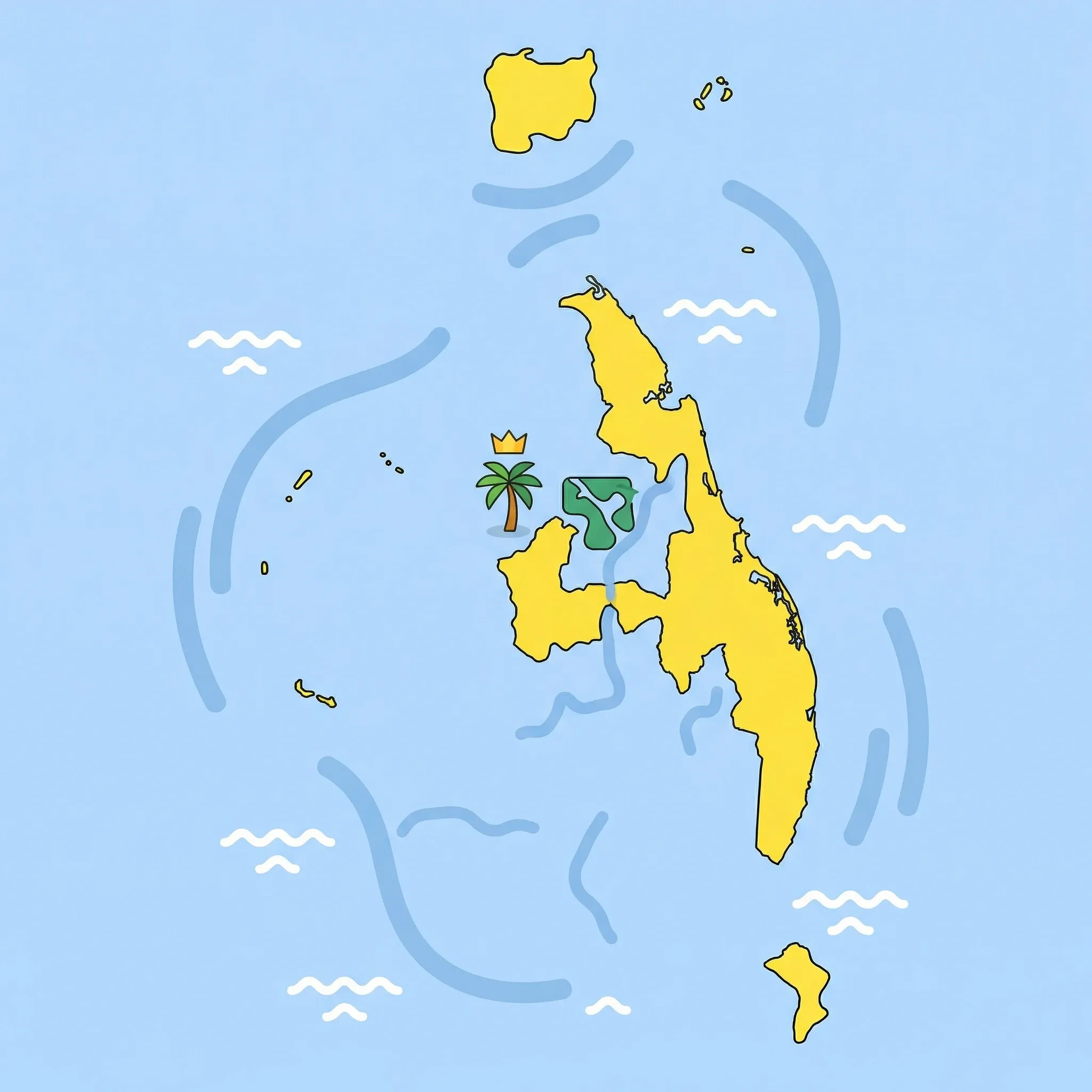
For the exceptionally rare few who visit by private yacht, the territory offers a glimpse of the Indian Ocean as it was centuries ago. The archipelago consists of 58 tiny islands centered around the Great Chagos Bank, the world's largest living coral structure. The environment is breathtakingly pristine, with crystal-clear waters, thriving shark populations, and coconut crab colonies. However, this is a wilderness experience in the truest sense-visitors must be entirely self-reliant for food, water, and medical safety.
Key Attractions
Because the territory is an uninhabited marine reserve, its 'attractions' are entirely natural and historical features found on the outer atolls. The Salomon Islands atoll is the most popular anchorage for cruising yachts. Here, families on expedition can explore the abandoned coconut plantations on Île Boddam, where ruins of a church and old jail remain from the era before the Chagossian eviction. The dense jungle has reclaimed much of the settlement, creating an eerie but fascinating atmosphere for exploration.
Peros Banhos, another major atoll, offers calmer lagoon waters perfect for snorkeling. The marine life here is legendary; the reefs are teeming with endemic coral species, manta rays, and turtles. Without commercial tourism, the sites remain undisturbed. Note that strict environmental rules apply: visitors cannot touch coral, remove shells, or disturb the coconut crabs (Birgus latro), which are the largest land-living arthropods in the world and a protected species here.
Practical Advice
Best time to visit: The safest window for sailing is during the non-cyclone season (May to October), though the southeast trade winds can be strong. The northwest monsoon (December to March) brings calmer winds but higher rainfall and potential cyclones.
Visas & Permits: A mooring permit is mandatory for any vessel entering the British Indian Ocean Territory. As of 2026, applications are processed via the BIOT Administration or the new Mauritian authorities, depending on the transition status. Processing takes months.
Health: There are no hospitals. Medical evacuation is extremely difficult and expensive. Families must carry a comprehensive medical kit and have specialist insurance.
Food & Drink
Typical meal times: N/A – There are no restaurants; meals are self-catered on your vessel.
Typical meal costs: N/A (approx. $0 USD / €0 EUR) – All food must be brought with you or caught sustainably.
Dietary requirements: Complete control – as you must provision your own ship, you can cater to any allergy or preference.
Family-friendly dining: N/A – Dining is strictly onboard your own yacht or a beach picnic (if permitted).
Signature dishes:
- Freshly Caught Pelagic Fish – For yachts with fishing permits, yellowfin tuna or wahoo caught in open water (away from protected reef zones) is the staple fresh protein.
- Ship's Provisions – The 'local' cuisine is whatever you packed in the Seychelles or Maldives before departure-canned goods, vacuum-sealed meats, and dry stores are the reality of Chagos dining.
- Coconut (strictly limited) – While coconuts are abundant, strict conservation rules often prohibit harvesting from certain nature reserve islands.
Safety
Travel to the British Indian Ocean Territory carries significant risk. The islands are hundreds of miles from the nearest support. Medical emergencies can be fatal due to the lack of airstrips (outside the restricted military base). Marine hazards include strong currents and healthy populations of sharks, including tiger and silvertip sharks, which can be aggressive. Families must supervise children constantly near the water. There is no mobile phone signal; a satellite phone is essential.

While there is no local economy to spend money in, visiting is effectively <b>luxury</b> due to the cost of getting there. A private yacht expedition costs thousands in fuel, insurance, and permits. Permit fees alone can cost around £200–500 (approx. $250–630 USD / €230–580 EUR) per week. There are no shops, so daily spending is zero.
Age Suitability





Why this score?
Reaching the Chagos Archipelago requires a serious open-ocean sailing expedition and total self-sufficiency in an isolated marine wilderness. The region is characterized by uninhabited atolls, extreme isolation, and a complete lack of support services, placing it in the highest tier of global adventure travel. Navigating these waters is reserved for experienced explorers seeking an untouched natural environment.
Why this score?
There are no civilian medical facilities, pharmacies, or emergency services available to visitors within the territory. While a military clinic exists on Diego Garcia, it is restricted to personnel, leaving independent sailors hundreds of miles from the nearest accessible hospital in the Maldives. Any medical issue requires self-treatment or an extremely difficult and long-distance evacuation.
Why this score?
The British Indian Ocean Territory is strictly controlled, with no commercial tourism infrastructure, hotels, or civilian airports. Access is limited to the military base on Diego Garcia or private yachts that must secure rare and expensive permits for the outer islands. Consequently, it receives almost no international visitors compared to established global destinations.
While there is no commercial economy to spend money in, the cost of visiting is 'luxury' due to the requirement of owning and operating a blue-water sailing vessel. Permit fees are payable to the BIOT Administration, typically costing around £200–500 (approx. $250–630 USD / €230–580 EUR) depending on the length of stay (usually limited to 28 days). There are no unexpected costs as there is nothing to buy.

Getting There & Around
Getting There
- By Sea (Private Yacht) – The only way for civilians to enter the British Indian Ocean Territory is by private sailing vessel. You must transit from the Maldives (approx. 300nm north) or Seychelles (approx. 1000nm west). A valid mooring permit is strictly required in advance.
- By Air (Military Only) – There are no commercial flights. The airfield on Diego Garcia is restricted to military and diplomatic traffic.
- Entry Requirements – A valid passport and an approved Mooring Permit are required. Permits are currently limited to 28 days. Check your government website for the latest visa requirements, or use the IATA Travel Centre entry-requirements checker.
Getting Around
- By Dinghy/Tender – The only way to move between your anchored yacht and the shore is your own small boat. Landings can be tricky due to coral heads and tides.
- On Foot – The islands are small enough to walk across, often in minutes. Sturdy reef shoes are essential for beach landings.
- No Public Transport – There are no cars, buses, trains, or taxis anywhere in the civilian-accessible zones of the British Indian Ocean Territory.

Packing List
There is absolutely no cellular coverage or Wi-Fi; this is your only link to the outside world.
You must be your own doctor; include antibiotics, suture kits, and epi-pens as the nearest hospital is days away.
The equatorial sun is intense and you cannot buy supplies locally; reef-safe formulas are mandatory.
Fresh water is not available on the uninhabited islands; you must rely entirely on your watermaker.
GPS can fail and electronic charts may lack detail for the complex coral heads in the atolls.

Public Holidays & Calendar Next 12 months
Public holidays, festivals, cultural celebrations, and seasonal natural phenomena coming up in British Indian Ocean Territory over the next 12 months.
Loading holidays and events...

Travel Advisory
The territory is considered safe for authorized personnel, with no specific internal security threats or high crime rates. However, access is strictly limited by administrative and military regulations rather than safety concerns.
Safety Topics
Traveller Advice (2 groups)

Private yacht crews must apply for a mooring permit at least six weeks in advance. These permits are only issued for safe passage through the outer islands and do not allow access to Diego Garcia.

Journalistic and media access to the territory is expressly prohibited by the administration.
Agency Summaries
The territory is not a leisure destination. Entry is strictly controlled, and there are no commercial travel options available. Non-military visitors, primarily yacht crews, must obtain specialized mooring permits at least six weeks before arrival. Access to the primary base on Diego Garcia is restricted to authorized military and official personnel only.
New Zealand does not publish a standalone advisory for this territory. Travelers are advised to adhere to the strict entry requirements set by the UK administration and be aware that consular support in the region is extremely limited.
There is no specific Irish travel advisory for the British Indian Ocean Territory. Visitors should follow the guidance of the UK Foreign, Commonwealth & Development Office, which emphasizes that the territory is not a tourist destination and requires prior authorization for all entry.
Australia does not provide a specific travel advisory for this destination. The territory is highly restricted for military use, and any potential visitors are encouraged to consult the British Indian Ocean Territory Administration for permission and safety guidance.
Canada does not maintain a dedicated advisory page for this territory due to its restricted military nature. It is generally considered a low-risk environment for authorized visitors, with the primary challenges being administrative and logistical rather than safety-related.
The United States refers to United Kingdom authorities for administrative control of the territory. Travelers are expected to follow local military and administrative regulations. No specific safety alerts are currently active for the region, although access remains restricted to official duty or authorized transit.
Information is provided for general guidance only and does not constitute travel, safety, medical, or legal advice. Conditions may change. Users are responsible for independently verifying information before travel.