

⚠️ SAFETY WARNING: Brunei is generally very safe (Level 1), but strict Sharia laws apply. Alcohol is banned from sale, and modest dress is essential. Friday prayers (12:00 pm – 2:00 pm) see all businesses close; plan your schedule accordingly.
Overview
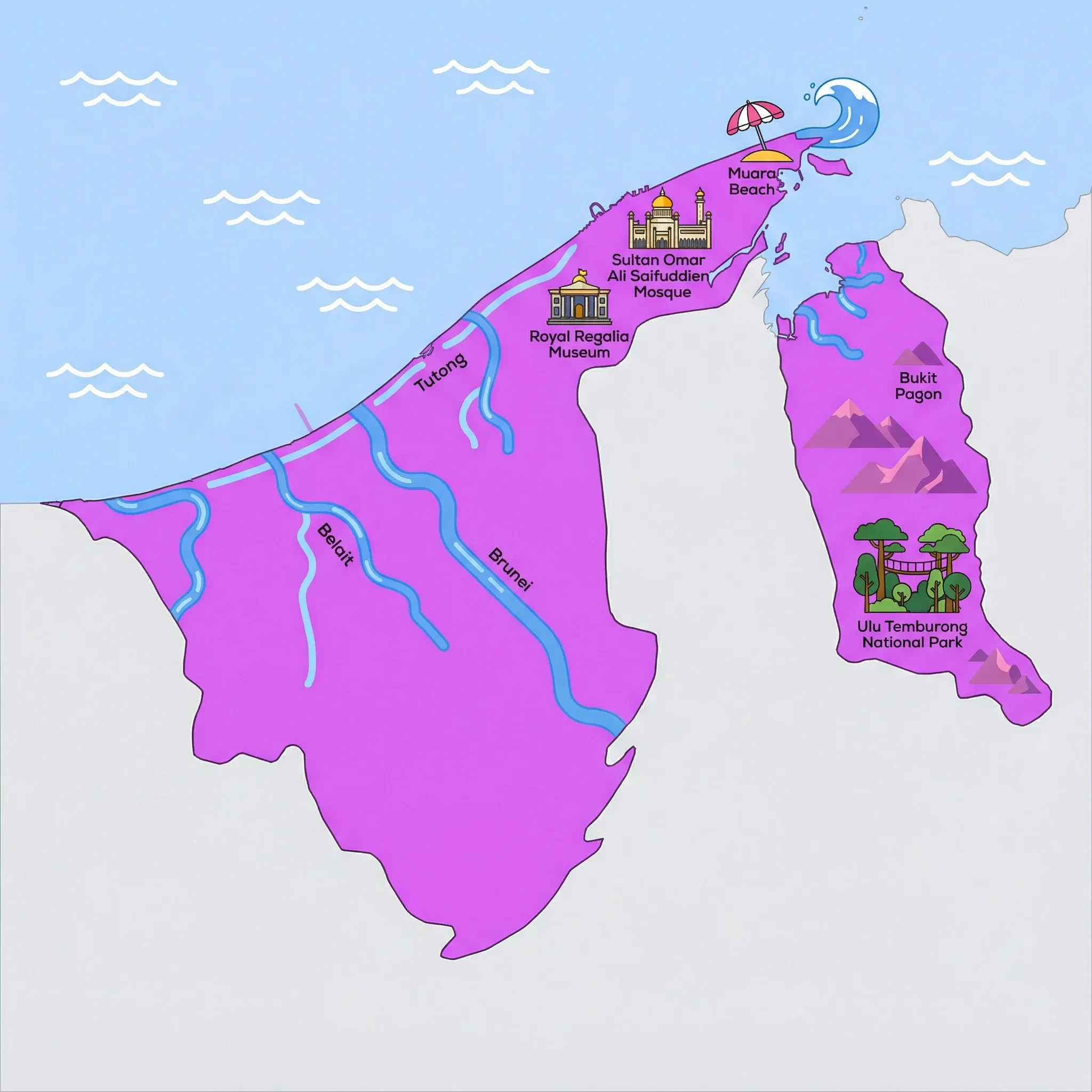
Brunei Darussalam, located on the northern coast of Borneo, is a small but wealthy sultanate that blends strict Islamic tradition with lush equatorial nature. For families, Brunei offers a calm, unhurried pace of life that stands in contrast to the chaotic traffic of its Southeast Asian neighbours. The capital, Bandar Seri Begawan, is clean and quiet, dominated by gleaming golden-domed mosques and the sprawling Kampong Ayer water village. Beyond the city, the untouched rainforests of Temburong provide accessible jungle adventures suitable for older children, while the oil town of Seria offers educational insight into the nation's wealth.
Culturally, Brunei is deeply conservative but very welcoming to families. Children are adored here, and the low crime rate makes it one of the safest places in Asia to travel with kids. While the lack of nightlife might bore solo backpackers, it is a bonus for parents seeking a wholesome environment. The country is split into two parts by the Malaysian district of Limbang, with the eastern exclave of Temburong now easily accessible via the spectacular Sultan Haji Omar 'Ali Saifuddien Bridge. From river safaris spotting rare monkeys to modern playgrounds, Brunei is a hidden gem for a relaxed family holiday.
Key Attractions
A boat ride to Kampong Ayer is the quintessential Bruneian experience. Known as the "Venice of the East," this historic settlement of stilt houses over the Brunei River is home to thousands of people. Families can hire a water taxi for a thrill, visit the Cultural & Tourism Gallery to learn about its history, and even spot wild proboscis monkeys in the nearby mangroves during a river safari. Back on dry land, the Eco-Corridor Park (Taman Mahkota Jubli Emas) offers a beautiful riverfront space for cycling and walking, with stunning views of the iconic Omar 'Ali Saifuddien Mosque.
For dedicated family fun, Jerudong Park Adventure Park is a must-visit. Once the playground of royals, it is now an accessible amusement park featuring a water park, rollercoasters, and family rides that come alive in the cooler evenings. In the oil-producing district of Belait, the Seria Energy Lab (formerly the Oil & Gas Discovery Centre) is a fantastic interactive science museum where kids can learn about physics, engineering, and geology through hands-on exhibits, making the drive out to Seria well worth the effort.
Nature-loving families should not miss Ulu Temburong National Park. Accessible by boat and vehicle, the park's famous canopy walk allows you to ascend steel towers into the treetops for a bird's-eye view of the virgin rainforest. It is an adventurous but safe day trip that exposes children to the sights and sounds of the jungle without the need for hardcore trekking.
Practical Advice
The best time to visit is during the drier months between February and April, though Brunei is hot and humid year-round (expect 30°C/86°F daily). Light, breathable clothing is essential, but remember to dress modestly-shoulders and knees should be covered in public areas, especially for women and teenage girls. On Fridays, virtually everything shuts down between 12:00 pm and 2:00 pm for prayers, so eat an early lunch. Tap water is generally safe in the capital but bottled water is recommended for short-term visitors.
Food & Drink
Typical meal times: Lunch is typically 12:00 pm to 1:30 pm, and dinner from 6:30 pm to 9:00 pm. Note that restaurants close strictly for Friday prayers.
Typical meal costs: $5–10 BND (approx. $3.75–7.50 USD / €3.50–7 EUR) for street food; $20–40 BND (approx. $15–30 USD / €14–28 EUR) for a mid-range restaurant meal.
Dietary requirements: All food is Halal. Vegetarian options are available but not ubiquitous; check menus for shrimp paste (belacan) which is common in vegetable dishes. Vegan options are limited outside major hotels.
Family-friendly dining: Bruneians love children, and eating out is a major family activity. Highchairs are common in malls and restaurants. The Gadong Night Market is a fantastic, chaotic, and cheap place to let kids try local treats.
Signature dishes:
- Ambuyat – The national dish made from sticky sago starch, eaten with a bamboo fork (chandas) and dipped into savoury sauces. Fun and messy for kids to try.
- Nasi Katok – A simple, beloved meal of white rice, fried chicken, and spicy sambal, often sold for just $1 BND.
- Buttermilk Prawns – A rich, creamy, and sweet local favourite often found in Chinese-Bruneian restaurants.
- Kelupis – Glutinous rice rolls wrapped in leaves, often served as a snack or side dish.

Brunei is a mid-range destination. While fuel and local street food are very cheap, accommodation and western dining are comparable to Western prices. A family of four can expect to spend around $250–350 BND (approx. $190–260 USD / €175–245 EUR) per day for a comfortable stay including mid-range hotel, meals, and transport.
Age Suitability





Did you know? Brunei welcomes approximately 4,000 international visitors per year. Most visitors come from East Asia and the Pacific.
Why this score?
The country offers high-quality rainforest experiences in the Temburong District, where Ulu Temburong National Park provides canopy walks and river excursions through pristine Borneo jungle. While these areas are rugged, the adventure is moderated by well-maintained visitor infrastructure and professional guides, making it accessible yet physically engaging for families.
Why this score?
Brunei possesses a high standard of healthcare supported by national oil wealth, featuring modern facilities such as the Raja Isteri Pengiran Anak Saleha (RIPAS) Hospital and the specialized Jerudong Park Medical Centre. Medical staff are generally well-trained and English-speaking, though the system is designed for the domestic population rather than functioning as a large-scale international medical tourism hub.
Why this score?
With only 3.5 thousand inbound tourists reported annually, Brunei remains a niche destination primarily visited by business travelers or as a brief cultural stopover. While it offers stunning landmarks like the Sultan Omar Ali Saifuddien Mosque and the historic Kampong Ayer, it lacks the mass international appeal and high-volume tourism infrastructure seen in neighboring Southeast Asian hubs.
Brunei is wealthier than its neighbors, so costs are higher than in Thailand or Indonesia but generally lower than in Singapore. The Brunei Dollar (BND) is pegged 1:1 to the Singapore Dollar (SGD). A mid-range family hotel room costs BND 80–150 (approx. $60–110 USD / €55–100 EUR) per night. Entry to museums is often free or very cheap, keeping activity costs low.

Getting There & Around
Getting There
- By Air – Brunei International Airport (BWN) is the main hub, served primarily by Royal Brunei Airlines. It connects to major Asian cities like Singapore, Kuala Lumpur, and London.
- By Land – You can drive into Brunei from the Malaysian state of Sarawak (Miri or Limbang). Expect border checks; queues can be long during weekends.
- By Sea – Ferries connect the Muara Ferry Terminal with the Malaysian island of Labuan.
- Entry Requirements – Visitors must complete an E-Arrival Card before entry. Many nationalities (EU, UK, US, Singapore) enter visa-free. Check your government website for the latest visa requirements, or use the IATA Travel Centre entry-requirements checker.
Getting Around
- Ride-Hailing – The Dart app is essential for families. It is Brunei's version of Uber/Grab (which do not operate here) and is the most reliable way to get around without a rental car.
- Water Taxis – Small speedboats connect the capital to Brunei's water villages. They are cheap ($1–2 BND) and a fun experience for kids, but ensure life jackets are available.
- Car Hire – Highly recommended for visiting Jerudong Park Adventure Park or driving to Seria. Petrol is incredibly cheap, roads are excellent, and driving is on the left.

Packing List
You will remove shoes frequently at mosques, some museums, and even some restaurants.
Public beaches and pools require modest dress; skimpy bikinis are culturally inappropriate.
Brunei accepts SGD at a 1:1 exchange rate, which is often easier to obtain before arrival.
Essential for keeping phones and wallets dry during the splashy water taxi rides.
Shorts are frowned upon in many places; light long trousers handle the heat and modesty rules best.

Activities & Best Times

Adventure & Nature
Very GoodHiking, wildlife, outdoor exploration, ecotourism
Home to the world-class Ulu Temburong National Park, Brunei offers pristine, untouched rainforest experiences with exceptional canopy walks. Peak visitation coincides with drier periods to ensure safe river boat navigation and manageable trekking conditions for families.

City & Cultural
GoodUrban tourism, museums, historical sites, architecture
The capital features stunning Islamic architecture and the authentic Kampong Ayer water village, offering a peaceful and unique cultural atmosphere. The experience is best during drier months when walking tours and boat trips around the water village are most comfortable.

Sports & Active
GoodSport tourism, fitness activities, active recreation
Brunei offers high-quality hiking infrastructure at Bukit Shahbandar and Bukit Patoi, providing well-preserved jungle trails for active families. These routes are optimal during drier months to avoid the hazardous, slippery conditions caused by high tropical rainfall.

Beach & Sea
MarginalBeach resorts, marine activities: diving, snorkelling, kite surfing, wind surfing, sailing
Brunei's coast offers clean, quiet beaches like Muara, but lacks the world-class resort infrastructure or diving fame found in regional neighbors like the Philippines. Calm seas and better underwater visibility are found during the drier windows of February-March and June-August.

Theme Park & Entertainment
MarginalAmusement parks, family entertainment venues
Jerudong Park Playground is a significant regional amusement center that offers family entertainment, though it lacks the scale of global benchmarks like Disney or Universal. Drier months are preferred as the facilities are primarily outdoors and subject to tropical downpours.

Educational & Exploratory
UnsuitableLearning experiences, scientific sites, historical education
A single energy lab does not constitute educational tourism. Educational destinations require multiple institutions (museums, science centers, universities). 'Internationally significant' overstates a niche industrial heritage site.

Road Trips & Scenic
UnsuitableScenic drives, countryside tours, route-based travel
Brunei is only 5,765 km² (smaller than Delaware). The cited examples are functional infrastructure, not tourist scenic drives. Road trip tourism requires substantial driving distances and genuinely scenic routes - this country is too small and lacks the scenic driving culture of larger nations.

Attractions (11 total)



Public Holidays & Calendar Next 12 months
Public holidays, festivals, cultural celebrations, and seasonal natural phenomena coming up in Brunei over the next 12 months.
Loading holidays and events...

Travel Advisory
Brunei is a safe and stable destination where standard travel security awareness is sufficient. All major agencies agree that there are no significant country-wide safety threats, though strict adherence to local laws and customs is essential.
Safety Topics
Traveller Advice (3 groups)

It is recommended to dress modestly in public areas, especially when visiting religious sites, to align with local customs and avoid giving offense.

Ensure you complete the mandatory e-arrival card and health declaration before arrival. Respect local cultural sensitivities, particularly regarding the monarchy and religious observances.

Homosexual acts are illegal and carry severe legal penalties. Discretion is highly advised in public spaces as local social attitudes are conservative.
Agency Summaries
The safety environment is stable, and standard precautions are sufficient. Mandatory requirements include a health declaration form and proof of medical insurance. Travelers should be aware of health risks such as insect-borne diseases and take preventive measures.
Standard safety vigilance is recommended. High importance is placed on respecting local religious and cultural traditions, especially concerning the Royal Family. Travelers should use caution regarding food and water hygiene.
The country is considered low-risk, but travelers must strictly adhere to local laws and social customs. Violent crime is rare. Visitors are encouraged to enroll in safety notification programs and ensure they have adequate insurance coverage.
No specific elevated warnings are in effect. Visitors should familiarize themselves with Sharia law before arrival. Since there is no local Irish embassy, consular support is provided through the mission in Singapore.
Brunei is generally safe for travelers, though visitors should maintain standard security awareness. Petty theft and burglaries occur occasionally, with a slight increase during major holiday seasons. All arrivals must register for an electronic arrival card before entry.
Travelers should follow typical safety routines as the overall risk level is low. Most visitors enter without visas for short stays, but strict legal regulations regarding alcohol, tobacco, and religious conduct are in place and must be respected.
Information is provided for general guidance only and does not constitute travel, safety, medical, or legal advice. Conditions may change. Users are responsible for independently verifying information before travel.