
⚠️ SAFETY WARNING: Due to persistent terrorist threats, high rates of kidnapping, and political volatility, government agencies (including the USA, UK, Canada, Australia, Ireland, and New Zealand) advise travelers to avoid all travel to Burkina Faso. The security situation is unpredictable, with risks extending even to the capital. Families are strongly urged to consult their own government's official travel advisory before considering a trip, as circumstances and risk assessments vary.
Burkina Faso lies in the heart of West Africa, a landlocked nation that bridges the encroaching Sahara desert in the north and the lush forests of the south. Known as the "Land of Upright People," it has long been celebrated for its rich cultural tapestry, holding a reputation as the continent's capital of cinema and craft. For families, the country offers a glimpse into a way of life defined by community, tradition, and artistic expression, particularly in the musical and storytelling heritage of the Mossi, Bobo, and Fulani peoples.
The landscape shifts dramatically from the arid, sandy plains of the Sahel North to the green, waterfall-filled escarpments of the Bobo-Dioulasso & Southwest region. While modern amenities are scarce outside the main cities, the country's charm lies in its raw, unpolished beauty and the genuine hospitality of its diverse ethnic groups. In safer times, the lively markets, distinctive Sudano-Sahelian architecture, and rhythms of djembe drums create an atmosphere that is unmistakably Burkinabè.
Key Attractions
In the capital, Ouagadougou & Central, the National Museum of Burkina Faso provides families with an essential introduction to the country's masks, costumes, and ancestral artifacts. Just outside the city, the Laongo Sculpture Park is a fascinating open-air gallery where granite outcrops have been carved by artists from around the world, offering a "treasure hunt" experience for children. Nature lovers in the city often visit Parc Urbain Bangr Weogo, a vast urban forest that serves as a green lung and educational center.
The southwest is the country's scenic jewel. Here, the UNESCO-listed Ruins of Loropéni offer a mystery of ancient stone fortifications that spark the imagination of young explorers. The region's natural wonders are equally compelling: the Cascades de Karfiguéla (Banfora Waterfalls) provide a stunning backdrop for picnics and swimming in designated pools, while the fantastical limestone formations of the Sindou Peaks look like something from a fantasy novel. For a wildlife encounter, a boat trip on Lake Tengrela offers the chance to spot hippopotamuses in their natural habitat.
Practical Advice
Best Time to Visit: The cool, dry season from November to February is the only comfortable time for families, as temperatures are manageable (25–30°C). The hot season (March–May) sees blistering heat, while the rainy season (June–October) can make unpaved roads impassable.
Visas & Health: A visa is required for almost all visitors and can often be applied for online or at embassies. A Yellow Fever vaccination certificate is mandatory for entry. Malaria prophylaxis is essential for all family members.
Food & Drink
Typical meal times: Lunch is the main meal, typically eaten from 12:00 pm to 2:30 pm. Dinner is a lighter, often communal affair, served from 7:00 pm to 9:00 pm.
Typical meal costs: Street food and local eateries are very affordable, with meals costing 500–1,500 XOF (approx. $0.80–2.50 USD / €0.75–2.30 EUR). A meal in a mid-range sit-down restaurant costs around 4,000–8,000 XOF (approx. $6.50–13 USD / €6–12 EUR).
Dietary requirements: Vegetarian options are relatively easy to find as meat is expensive and often an "add-on." Base dishes of rice, beans, and millet are common. However, verify that sauces are not made with fish or meat stock. Vegan travellers can rely on bean dishes and fresh fruit.
Family-friendly dining: Burkinabè culture loves children, and they are welcome everywhere. Highchairs are rare outside top international hotels. "Finger foods" like grilled chicken and skewered meat are popular with kids.
Signature dishes:
- Riz Gras – Literally "fat rice," this is a one-pot dish where rice is cooked in a rich tomato and vegetable broth, often with meat, similar to jollof rice.
- Tô – The national staple; a stiff porridge made from millet, sorghum, or corn flour, eaten by hand and dipped into various sauces (okra, baobab leaf, or peanut).
- Poulet Bicyclette – Grilled free-range chicken, famous for its firm texture and intense flavour, usually served with spicy condiments on the side.
- Babenda – A sour, fermented dish made from spinach, rice, and dawadawa (locust bean), often meat-free and unique to the region.
- Zoom-koom – A refreshing, milky-white beverage made from millet flour, ginger, and tamarind-a sweet treat children often enjoy.
Safety
The security situation in Burkina Faso is critical. Terrorist groups operate across vast swathes of the north, east, and border regions, frequently targeting schools, markets, and convoys. Kidnapping of foreigners for ransom is a primary threat. In the capital, Ouagadougou, large gatherings and hotels frequented by westerners have previously been targeted. If you must travel, use professional security, avoid all travel after dark, and maintain a low profile. Medical facilities are limited and evacuation insurance is non-negotiable.

While local goods are inexpensive, the cost of securing a safe trip is high. A typical day for a family might cost 30,000–50,000 XOF (approx. $50–80 USD / €45–75 EUR) for basic food and accommodation, but secure private transport and guides will significantly increase this budget. Cash is king; credit cards are rarely accepted.
Age Suitability




Did you know? Burkina Faso welcomes approximately 132,000 international visitors per year. Most visitors come from Africa.
Explore Regions
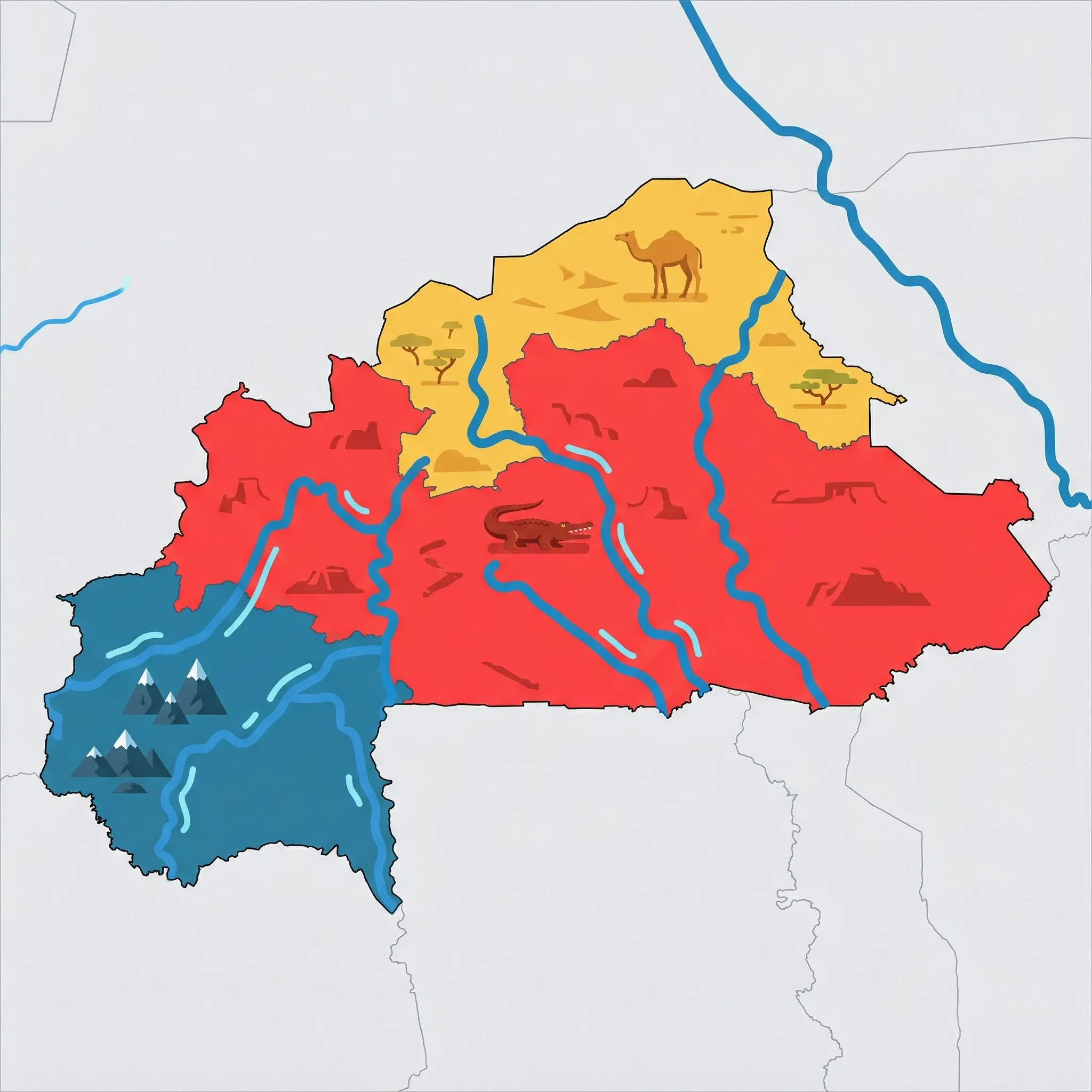
3 Regions
Bobo-Dioulasso & Southwest
Where ancient mud-brick architecture meets lush waterfalls and peaks 🕌💦
Ouagadougou & Central
The bustling city of arts, mopeds, and markets 🛵🎭
Sahel North
The golden sands where the Sahel meets the Sahara 🐪🌅
Click on a region marker to explore details. Use the dropdown to color regions by activity suitability.

Getting There & Around
Getting There
- By Air – The main gateway is Ouagadougou International Airport (OUA), receiving flights from Paris, Brussels, and regional capitals.
- By Land – Border crossings are extremely dangerous due to terrorist activity in border zones with Mali and Niger. Land entry is strongly discouraged.
- Entry Requirements – A visa is required for most nationalities. A Yellow Fever vaccination certificate is mandatory. Check your government website for the latest visa requirements, or use the IATA Travel Centre entry-requirements checker.
Getting Around
- Car Hire – Self-driving is not recommended due to security risks and confusing road layouts. Renting a 4x4 with an experienced local driver is the only viable option for families.
- Taxis – Green taxis in Ouagadougou are available but should be negotiated in advance. Shared taxis are common but often overcrowded and unsafe for tourists.
- Domestic Flights – Air travel is the safest way to move between major hubs like Ouagadougou and Bobo-Dioulasso, bypassing the dangerous roads.

Packing List
Mandatory for entry; you will be refused admission without the original card.
Power cuts are frequent and street lighting is minimal to non-existent.
English is rarely spoken outside of high-end hotels; basic French is essential.
ATMs are unreliable and credit cards are virtually useless outside the top hotel.
Essential during Harmattan season (Dec-Feb) when dust fog is heavy.
Running water is scarce and many meals (like Tô) are traditionally eaten by hand.

Activities & Best Times

Adventure & Nature
Very GoodHiking, wildlife, outdoor exploration, ecotourism
Dramatic geological formations like the Sindou Peaks and Karfiguéla Falls provide an authentic West African wilderness experience for intrepid families. Peak season coincides with the cooler dry period, while the heavy monsoon rains from July to September restrict access to remote trails.
The region features established urban-nature reserves like Bangr Weogo and the scenic granite formations of Ziniaré. Exploration is best during the dry season when trails are accessible, as heavy rains from June to September create muddy conditions and limited visibility.
The region features the iconic Oursi sand dunes and the Sahel Partial Faunal Reserve, offering authentic desert immersion for well-travelled families. Peak conditions align with the cooler dry season from November to February; the extreme pre-monsoon heat and subsequent rainy season make outdoor exploration difficult or impossible.

City & Cultural
Very GoodUrban tourism, museums, historical sites, architecture
Ouagadougou serves as the cultural heart of West Africa, featuring the National Museum and the unique Laongo Sculpture Park. The cooler, dry Harmattan months (Nov-Feb) provide the most comfortable conditions for exploring the city's vibrant street life and monuments.
Home to the UNESCO-listed Ruins of Loropéni and the Old Quarter of Sya, the region offers deep Sudanic-Sahelian heritage and vibrant artisan culture. Best visited in the cooler months to explore historic mud-brick sites; heavy rains in summer hinder outdoor walking tours and archaeological exploration.
While Gorom-Gorom market is regionally significant, calling it 'world-class' is inflated compared to internationally renowned markets like Marrakech or Istanbul. It's an important Sahelian market but not a top global cultural destination. The rating should reflect national/regional importance rather than international standing.

Sports & Active
GoodSport tourism, fitness activities, active recreation
Offers dedicated cycling routes around the Central Plateau and structured active zones in Bangr Weogo Urban Park. Activity is most enjoyable in the cooler winter months; the extreme heat of April and May makes intensive physical activity challenging for international travelers.
Purpose-built heritage trails around Sindou and Mount Tenakourou support cycling and hiking in a distinct landscape. Activity is concentrated in the coolest months to avoid the extreme pre-monsoon heat of April and the subsequent high-humidity rainy season.

Educational & Exploratory
MarginalLearning experiences, scientific sites, historical education

Festivals & Seasonal
MarginalEvents, celebrations, seasonal attractions

Road Trips & Scenic
MarginalScenic drives, countryside tours, route-based travel
The Central Plateau circuit offers a route-based exploration of Mossi culture and regional craftsmanship. Paved roads are best navigated in the dry season (Nov-Feb) to avoid potential washouts and difficult driving conditions during the summer rains.
Named scenic circuits like the Lobi Heritage Trail offer unique landscapes, though the infrastructure is rugged and requires robust vehicles. The dry season ensures road reliability, as unpaved sections become largely impassable during the May-September rainy season.
The Sahel Scenic Circuit offers a rugged, off-the-beaten-path driving experience through stark landscapes and remote settlements. Driving is only recommended during the dry season when tracks are firm; the rainy season (July-Sept) renders many unpaved routes impassable for standard international vehicles.
Theme Park & Entertainment
MarginalAmusement parks, family entertainment venues

Public Holidays & Calendar Next 12 months
Public holidays, festivals, cultural celebrations, and seasonal natural phenomena coming up in Burkina Faso over the next 12 months.
Loading holidays and events...

Climate & Weather
Bobo-Dioulasso & Southwest
Show Details
| Month | Temp °C | Rain | Humidity |
|---|
Ouagadougou & Central
Show Details
| Month | Temp °C | Rain | Humidity |
|---|
Sahel North
Show Details
| Month | Temp °C | Rain | Humidity |
|---|

Travel Advisory
All major international agencies currently advise against any travel to Burkina Faso due to severe security threats, including terrorism, kidnapping, and political instability.
Safety Topics
Traveller Advice (3 groups)

Aid workers and those in humanitarian sectors are at an increased risk of targeted kidnapping by extremist groups, particularly in border regions and the Sahel.

Same-sex relationships are illegal and can result in imprisonment, fines, or deportation for foreign nationals.

Female travellers should observe conservative dress and behavior standards to respect local cultural norms and avoid unwanted attention.
Agency Summaries
Avoid all travel to Burkina Faso because of persistent terrorist threats, high kidnapping risks, and political volatility.
The FCDO advises against all travel to the country due to the high risk of terrorist attacks, kidnapping, and political instability following military coups.
Australia advises against all travel to Burkina Faso due to the dangerous security situation, terrorism, and violent crime. Foreigners are specifically targeted for kidnapping.
New Zealanders are urged not to travel to Burkina Faso and those already there should consider leaving immediately due to extreme security risks.
Ireland strongly advises against all travel to Burkina Faso. The security situation remains volatile and unpredictable after recent political unrest.
Do not travel to Burkina Faso due to pervasive terrorism, crime, and the threat of kidnapping. The U.S. government has extremely limited ability to assist citizens outside of the capital.
Information is provided for general guidance only and does not constitute travel, safety, medical, or legal advice. Conditions may change. Users are responsible for independently verifying information before travel.