

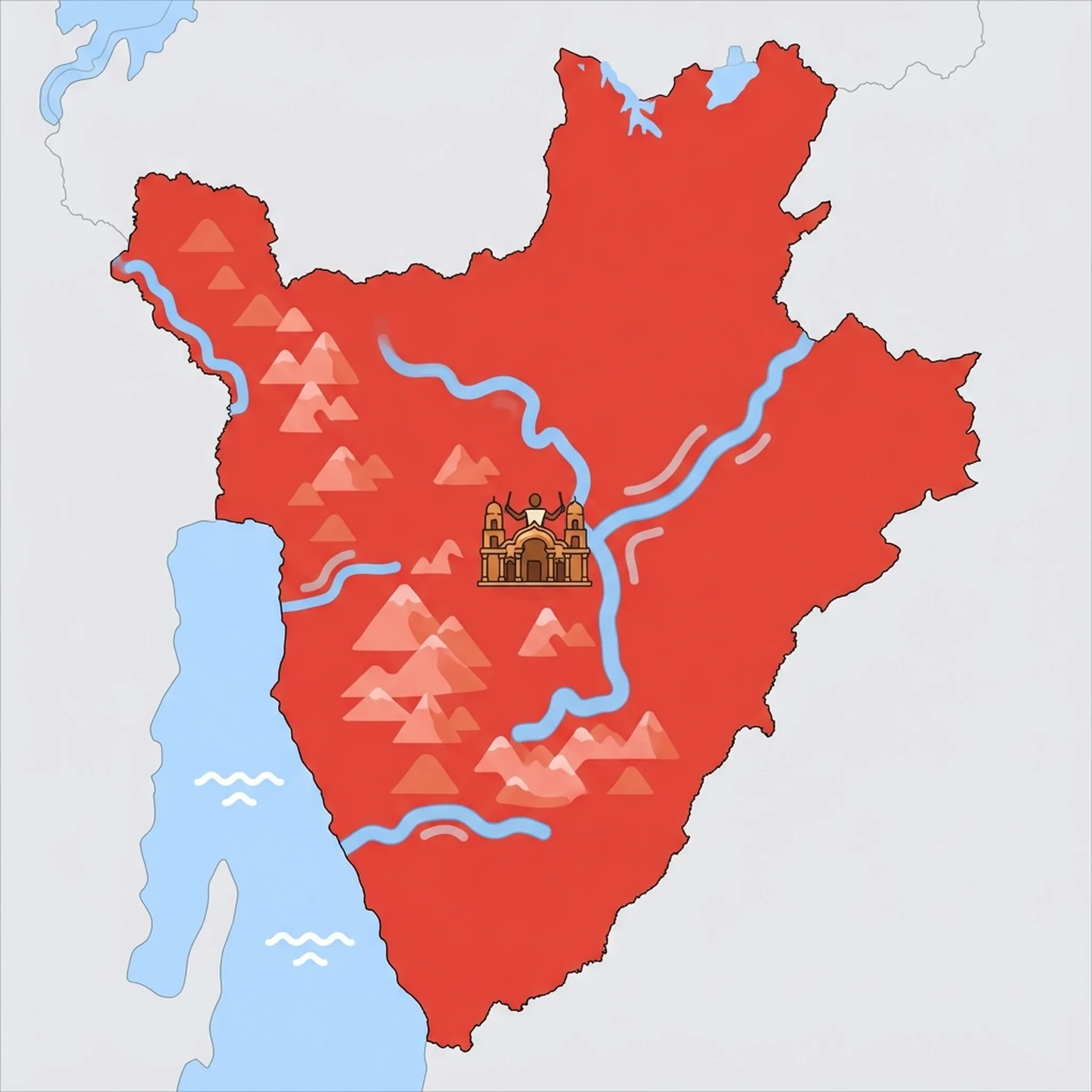
⚠️ SAFETY WARNING: Due to political volatility, crime, and the risk of civil unrest, government agencies (including the US, UK, and Canada) advise travelers to reconsider travel (L2/L3) to Burundi. Specific areas, particularly the provinces of Cibitoke and Bubanza and the borders with the DRC and Rwanda, are often designated as "Do Not Travel" zones due to armed conflict. Families are strongly urged to consult their own government's official travel advisory before considering a trip, as circumstances and risk assessments vary significantly.
For families with significant travel experience and a thirst for the path less beaten, Burundi offers a glimpse into an Africa largely untouched by mass tourism. This small, landlocked nation in the Great Rift Valley is defined by its verdant hills, the vast shimmering expanse of Lake Tanganyika, and a cultural heartbeat that thumps louder here than almost anywhere else on the continent. It is not a destination for a first-time family safari; infrastructure is basic, and navigating the logistics requires patience and a good driver. However, for those who make the journey, the reward is an intimate connection with a country known for its resilience and hospitality.
The cultural highlight for any visitor is undoubtedly the Gishora Drum Sanctuary. Here, the ancient tradition of the Royal Drummers-UNESCO-recognized and deeply spiritual-comes alive in a powerful display of athleticism and rhythm that mesmerizes children and adults alike. Beyond the drums, the country offers surprising relaxation along the beaches of Lake Tanganyika, where the water is warm and the sand is soft. While it lacks the Big Five game reserves of its neighbors, Burundi provides smaller, more accessible wildlife experiences, such as watching hippos in the Rusizi River, that are perfectly sized for younger attention spans.
Key Attractions
Gishora Drum Sanctuary is the absolute must-visit cultural site in Burundi. Located near the political capital, Gitega, this hilltop sanctuary preserves the ancient royal rituals of the Abatimbo (drummers). Families can watch a thunderous performance where drummers leap and spin with heavy drums balanced on their heads-a spectacle that children find thrilling. It is an educational immersion into the country's history and monarchy.
Rusizi National Park offers the most accessible wildlife viewing for families. Just a short drive from Bujumbura, this wetland reserve on the delta of the Rusizi River is best explored by boat. Children will be delighted to spot families of hippos wallowing in the shallows and Nile crocodiles sunning themselves on the banks, all without the long, exhausting drives typical of larger safari parks. The birdlife here is also exceptional, with migrating flocks often filling the sky.
Lake Tanganyika serves as the country's playground. The beaches near Bujumbura, particularly Saga Plage, are famous for their golden sands and beach bars. The water is generally calm and warm, making it inviting for swimming, though families should always check local advice regarding water safety and bilharzia. It is the perfect place to unwind on a Sunday, watching locals play football and enjoying fresh fish by the water's edge.
Karera Waterfalls provides a scenic adventure for active families. Located in the southeast, these four cascading falls are surrounded by lush forest and connected by walking trails. The hike is manageable for older children and leads to picturesque pools and viewpoints. It is a refreshing escape into nature that highlights the country's reputation as the "Switzerland of Africa" due to its rolling green landscapes.
Practical Advice
The best time to visit is during the dry seasons (June to August and December to January). A visa is required for almost all visitors and must be obtained from a Burundian embassy before travel; visas on arrival are generally not available or reliable. Malaria is prevalent, so prophylaxis is essential for the whole family, as is a Yellow Fever vaccination certificate for entry. Due to limited medical infrastructure, comprehensive travel insurance with evacuation cover is non-negotiable. Power cuts can be frequent, so pack accordingly.
Safety
Safety is a primary concern. Families should hire a reputable local driver and guide for all movements; self-driving is not recommended due to erratic traffic and police checkpoints. Avoid all travel after dark, even within cities. Stay away from political gatherings and demonstrations, which can turn violent quickly. Be aware that the border areas with the DRC and Rwanda are highly volatile. Always keep digital copies of your passports and visas, but carry the originals as police checks are common.
Food & Drink
Typical meal times: Lunch is usually served from 12:30 pm to 2:30 pm, and dinner from 7:00 pm to 9:30 pm.
Typical meal costs: A local meal costs around 5,000–15,000 BIF (approx. $1.70–5.20 USD / €1.60–4.80 EUR). A mid-range dinner for two with drinks costs roughly 60,000–100,000 BIF (approx. $21–35 USD / €19–32 EUR).
Dietary requirements: Vegetarian options are generally available, often centered around beans, plantains, and cassava. Vegan and gluten-free awareness is low, so it is best to stick to whole foods like grilled fish, rice, and vegetables. Nut allergies are rarely catered for specifically.
Family-friendly dining: Restaurants along Lake Tanganyika (especially at Saga Plage) are excellent for families, offering open spaces where kids can play in the sand while parents eat. Service can be slow (
Age Suitability




Did you know? Burundi welcomes approximately 299,000 international visitors per year. Most visitors come from Africa.
Why this score?
The region offers significant adventure due to its rugged Rift Valley terrain, including the summit of Mount Heha and the hippo-filled wetlands of Rusizi National Park. Navigating the country requires a high degree of self-reliance, as paved roads are limited to major arteries and organized tour operators are relatively scarce compared to established East African hubs.
Why this score?
Medical facilities in Burundi are very limited, with even the most advanced hospitals in Bujumbura struggling to meet international standards for complex care or emergency surgeries. Outside the economic capital, access to healthcare is minimal, and travelers must rely on comprehensive evacuation insurance as local services lack the specialized equipment and staff typically required by foreign families.
Why this score?
With fewer than 300,000 annual arrivals, Burundi remains a niche destination that is often overshadowed by its neighbors, Rwanda and Tanzania. While the Gishora Drum Sanctuary and Lake Tanganyika offer unique cultural and natural appeal, the tourism infrastructure is still in an early stage of development, catering mostly to intrepid regional travelers and business visitors.

While local produce and street transport are cheap, the "expat" or tourist standard of living is relatively expensive due to scarcity. A secure, family-friendly hotel room costs 250,000–450,000 BIF (approx. $85–155 USD / €80–145 EUR) per night. Private car hire with a driver is the biggest expense, costing around 150,000–250,000 BIF (approx. $50–85 USD / €48–80 EUR) per day.

Getting There & Around
Getting There
- By Air – Melchior Ndadaye International Airport (BJM) in Bujumbura is the main gateway. Major connections include Brussels Airlines (via Brussels), Ethiopian Airlines (via Addis Ababa), Kenya Airways (via Nairobi), and RwandAir (via Kigali).
- By Land – Border crossings exist from Rwanda and Tanzania, but the land border with Rwanda has been subject to closures and tensions; check current status immediately before travel. Crossing from the DRC is currently unsafe and should be avoided.
- Entry Requirements – A visa is strictly required for US, UK, and EU citizens and must be obtained from a Burundian mission abroad before departure. A Yellow Fever vaccination certificate is mandatory for entry. Check your government website for the latest visa requirements, or use the IATA Travel Centre entry-requirements checker.
Getting Around
- Private Car with Driver – The only recommended option for families. Renting a 4x4 with a local driver is essential for safety, navigating police checkpoints, and handling the often rough road conditions. It costs approximately 130,000–200,000 BIF (approx. $45–70 USD / €40–65 EUR) per day.
- Taxis – Available in Bujumbura and Gitega but should be negotiated in advance. For safety, it is better to have your hotel call a trusted taxi rather than hailing one on the street.
- Public Transport – Minibuses (matatus) and motorcycle taxis (boda-bodas) are the main mode of transport for locals but are not recommended for families due to poor safety standards, overcrowding, and high accident rates.
Official Links

Packing List
Banks and exchanges strictly reject USD notes older than 2006 (and often 2013) or with any tears/marks.
Power outages are frequent and street lighting is minimal to non-existent outside the city center.
Malaria is a year-round risk throughout the country; medication is essential for all family members.
Plugs are European style; charging points can be scarce so a power bank is also highly recommended.
Running water and soap are not always available in public restrooms or rural stops.

Activities & Best Times

Adventure & Nature
Very GoodHiking, wildlife, outdoor exploration, ecotourism
Features diverse Rift Valley ecosystems including the hippo-rich Rusizi National Park and the montane forests of Kibira. Peak season offers optimal wildlife viewing and trail accessibility, while the rainy seasons can make mountain tracks impassable.

City & Cultural
GoodUrban tourism, museums, historical sites, architecture
While Gishora Drum Sanctuary is significant, it is not UNESCO World Heritage listed (only on tentative list). The Source of the Nile monument, while historically notable, is a single landmark. Without major museums, multiple UNESCO sites, or substantial cultural infrastructure, 'very_good' overstates Burundi's international cultural standing. 'Good' more accurately reflects authentic cultural experiences without world-class density.

Relaxation & Wellness
GoodSpa retreats, wellness centers, peaceful getaways
The region possesses authentic natural hot springs such as Mugara and Ruhwa, providing a restorative experience for adventurous travelers. Facilities are rustic but offer genuine immersion in the local landscape, best enjoyed during the cooler dry months.
Road Trips & Scenic
GoodScenic drives, countryside tours, route-based travel
Scenic routes like the RN1 Highland Drive and the Lake Tanganyika coastal road offer breathtaking Rift Valley views. Dry months ensure safe driving conditions on winding mountain passes and clear visibility of the dramatic geography.

Sports & Active
GoodSport tourism, fitness activities, active recreation
Offers high-altitude trekking on Mount Heha and scenic cycling trails through the Teza tea plantations. These active pursuits are best undertaken when trails are firm and the humidity is lower during the long dry season.
Attractions (7 total)



Public Holidays & Calendar Next 12 months
Public holidays, festivals, cultural celebrations, and seasonal natural phenomena coming up in Burundi over the next 12 months.
Loading holidays and events...

Travel Advisory
All six major agencies agree that travel to Burundi should be reconsidered or limited to essential trips only. This consensus is driven by significant risks from political violence, terrorism, and high rates of violent crime, particularly in border regions.
Safety Topics
Traveller Advice (4 groups)

Same-sex relationships are criminalized in Burundi and can lead to imprisonment. Public displays of affection should be avoided to minimize the risk of harassment or legal action.

Maintain a high level of personal security awareness. Avoid large gatherings and demonstrations, which can turn violent without warning. Ensure you have comprehensive travel insurance that covers medical evacuation.

Female travellers should dress conservatively to respect local cultural norms and should avoid walking alone, especially after dark, to reduce the risk of harassment.

Humanitarian staff operating in border provinces face elevated risks of kidnapping and being caught in clashes between military forces and armed groups. Specialized security protocols are highly recommended.
Agency Summaries
New Zealand SafeTravel advises against non-essential travel to Burundi because of the risk of terrorism, political unrest, and violent crime. A 'do not travel' warning is in place for all border areas with Rwanda and the DRC.
The UK FCDO warns against all but essential travel to the country overall, with stricter 'do not travel' warnings for Bujumbura Mairie and border regions. The advisory cites risks from the neighboring DRC conflict and the potential for sudden security deterioration.
Global Affairs Canada advises against discretionary travel to Burundi due to high levels of violent crime, potential for political instability, and the impact of conflict in the adjacent Democratic Republic of the Congo. Authorities maintain a 'do not travel' advisory for provinces bordering Rwanda and the DRC.
The U.S. Department of State recommends reconsidering travel to Burundi because of crime, political violence, and substandard medical care. Movement for government employees is restricted, and some regions carry a Level 4 'Do Not Travel' warning due to armed conflict.
Ireland's DFA recommends avoiding non-essential travel to Burundi, noting an unpredictable security environment and limited consular support. Travellers are urged to stay informed via local news and maintain high vigilance.
Australia DFAT advises travellers to reconsider plans to visit Burundi due to the threat of terrorism and civil unrest. The border zones with the DRC and Rwanda are considered extremely dangerous and should be avoided entirely.
Information is provided for general guidance only and does not constitute travel, safety, medical, or legal advice. Conditions may change. Users are responsible for independently verifying information before travel.