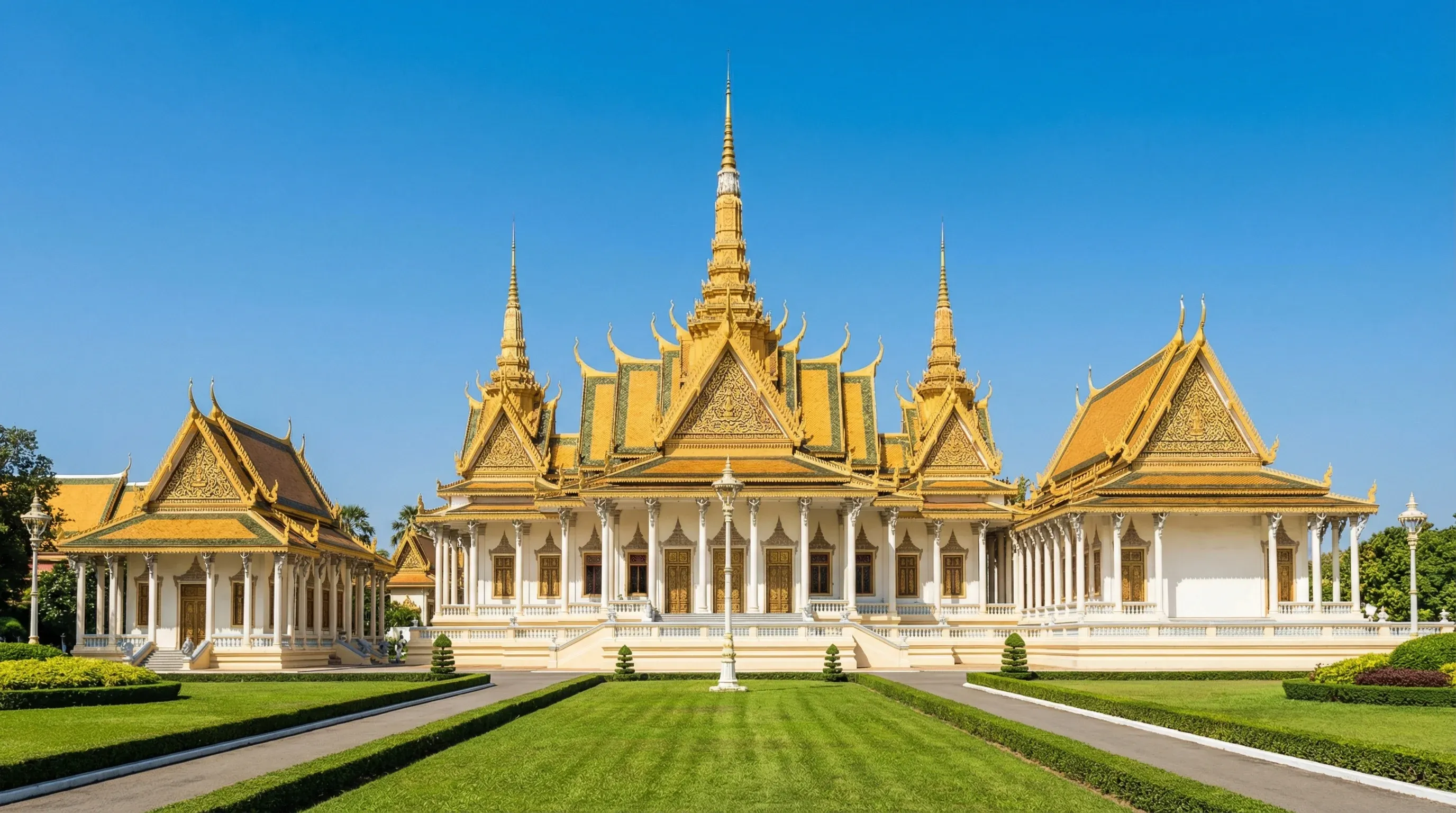

Phnom Penh
The bustling pearl of Asia where three rivers meet 🏙️🛶
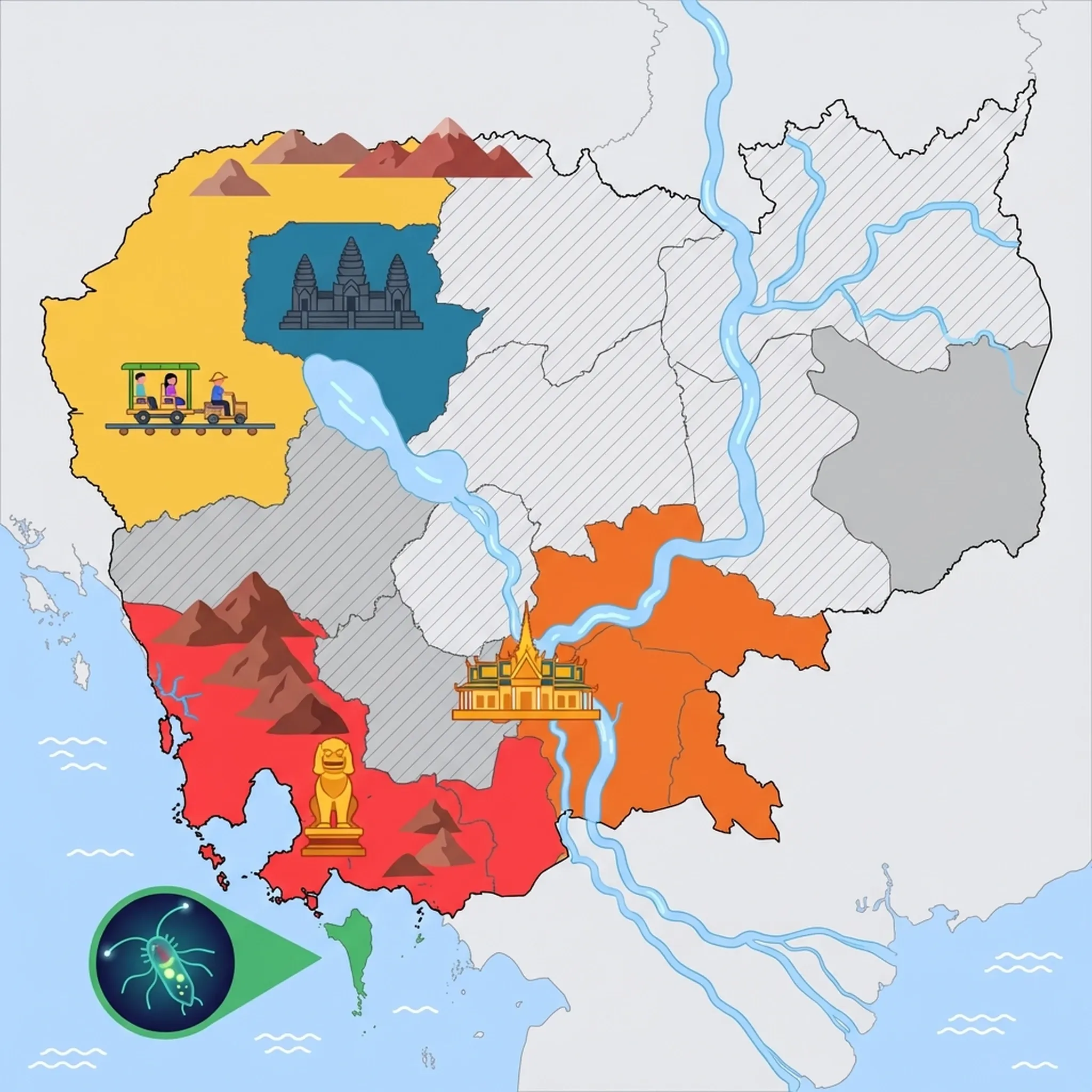
Click a region to explore
Phnom Penh is a city of contrasts that offers a steep but rewarding learning curve for traveling families. While the traffic is intense and the heat can be stifling, the city possesses a vibrant energy. The riverfront area, where the Mekong and Tonle Sap rivers meet, provides a breezy respite with wide promenades perfect for evening strolls. For children, the sight of saffron-robed monks, Tuk-tuks weaving through traffic, and markets stacked high with exotic fruits is an education in itself. It is a city that requires some patience to navigate, but offers high-quality museums and diverse food scenes that rural Cambodia lacks.
Culturally, this is where visitors grapple with Cambodia's royal heritage and its tragic recent past. While the Killing Fields and Tuol Sleng Genocide Museum are major sites, they are generally too harrowing for young children (recommended for mature teenagers only). However, the city is not defined solely by its history. There is a growing contemporary art scene, excellent indoor playgrounds for escaping the midday sun, and boat trips that offer a view of the city's developing skyline from the water.
Key Attractions
The crown jewel of the city is the Royal Palace. Its golden roofs and manicured gardens are visually stunning. Children will be intrigued by the Silver Pagoda, where the floor is lined with over 5,000 silver tiles. Dress codes are strict here, so ensure knees and shoulders are covered. Just north of the palace is Wat Phnom, the hilltop temple that gave the city its name. It is a lively spot where monkeys roam the trees (keep snacks hidden!) and locals come to pray for good luck, offering a great spot for kids to observe local customs.
For a shopping experience like no other, visit the Central Market (Phsar Thmei). This Art Deco landmark looks like a giant yellow spaceship. Inside, it is a maze of stalls selling everything from gems to electronics. It is a great place for kids to practice bargaining for souvenirs. Finally, a walk along Sisowath Quay in the early evening is a must. Families can join locals for aerobics classes on the pavement or buy snacks from street vendors while watching the boats drift by.
Practical Advice
The heat in Phnom Penh is intense. Plan sightseeing for the early morning (8:00 am to 11:00 am) and late afternoon. Use the middle of the day for hotel pools or air-conditioned malls. Traffic is daunting; never assume a pedestrian crossing is safe. Hold children's hands firmly and cross with a group of locals if possible. Grab (ride-hailing app) is essential for booking safe, price-fixed tuk-tuks.
Food & Drink
Typical meal times: Lunch is 12:00 pm to 2:00 pm. Dinner is lively and eaten later, typically 7:00 pm to 9:00 pm.
Typical meal costs: Street food is very cheap at 4,000–12,000 KHR (approx. $1–3 USD / €0.90–2.70 EUR). Mid-range bistro meals cost 32,000–60,000 KHR (approx. $8–15 USD / €7–13.50 EUR).
Dietary requirements: As the capital, Phnom Penh has the best variety of international food. Vegan, gluten-free, and halal options are widely available in the BKK1 and Riverside districts.
Signature dishes:
- Kuy Teav – A pork bone broth noodle soup, the quintessential Cambodian breakfast, served with herbs, lime, and bean sprouts.
- Bobor – A rice porridge (congee) often containing chicken or fish, mild and comforting for children with unsettled stomachs.
- Num Banh Chok – Rice noodles topped with a fish-based green curry gravy, refreshing and usually eaten in the mornings.
Why this score?
The capital is a dense urban environment where tourism is centered around museums, markets, and historical landmarks accessible by tuk-tuk. While river cruises and suburban cycling on Silk Island offer minor outdoor elements, the region lacks the ruggedness or wilderness associated with adventure travel.
Why this score?
Phnom Penh offers the highest standard of healthcare in Cambodia, with several international-standard hospitals like Royal Phnom Penh Hospital and Calmette Hospital. These facilities have English-speaking staff and sophisticated equipment, making the city the primary destination for medical tourism and emergencies within the country.
Why this score?
As the capital city and a primary gateway for international flights, Phnom Penh sees a high volume of both leisure and business travelers. The Royal Palace and riverside promenade are major draws, though it often serves as a short 1-2 day stopover for tourists focused on the ruins of Angkor.

Accommodation ranges from budget guesthouses ($15 USD) to luxury colonial hotels ($200+ USD). A family of four can eat well for 100,000–160,000 KHR (approx. $25–40 USD / €22–36 EUR) in a nice restaurant. Supermarket items (diapers, imported snacks) are relatively expensive compared to neighbors like Thailand.

Getting Here & Around
Getting Here
- Airport – Phnom Penh International Airport (PNH) is the main entry point. Taxis to the city center take 45–90 minutes depending on traffic.
- Bus – The hub for all national buses. National Road 6 (Heritage Highway) connects the capital to Siem Reap (approx. 6 hours).
- Boat – Express boats arrive from Vietnam (Chau Doc) via the Mekong River, a popular route for families traveling through Indochina.
Getting Around
- Tuk-tuk – The most fun way to travel. Use the Grab or PassApp apps to book them; this avoids haggling and ensures the driver knows the destination.
- Walking – Only recommended for short distances along the Sisowath Quay. Pavements elsewhere are often blocked by parked cars or stalls.
- Taxi – Air-conditioned car taxis are available and good for airport runs, but slower than tuk-tuks in heavy traffic.
Nearby Airports (1 airport)
Phnom Penh
PNHPhnom Penh
View full flight map for Cambodia →
Official Links

Packing List
Pollution and dust from construction and traffic can be heavy; useful for open-air tuk-tuk rides.
Stomach upsets are common for travelers in the city; good to have on hand for mild cases.
Required for entering the Royal Palace and Wats; shoulders and knees must be covered.
Essential after handling cash or riding in public transport before eating street food.
Old, torn, or marked US notes are frequently rejected by shops and banks; bring pristine small denominations.
You will remove your shoes constantly at temples and pagodas; laces become very frustrating.
Essential for sunrise temple walks (which start in total darkness) and navigating frequent island power cuts.
The humidity is extreme; water alone often isn't enough to prevent heat exhaustion in children.
Shoulders and knees must be covered at Angkor Wat; scarves are sometimes not accepted as sufficient cover.

Activities & Best Times

Hiking, wildlife, outdoor exploration, ecotourism
Offers high-quality wildlife conservation encounters and island excursions that provide authentic rural immersion for families. Best visited in the dry season to ensure trail accessibility and comfortable wildlife viewing conditions.

Urban tourism, museums, historical sites, architecture
A vibrant capital blending Khmer heritage with colonial architecture, featuring the world-class Royal Palace and National Museum. Peak conditions occur in the cooler dry season, while heavy monsoon rains in autumn can disrupt walking tours.

Scenic drives, countryside tours, route-based travel
Acts as a major hub for scenic national routes connecting to the Mekong Discovery Trail and the southern coast. Dry months provide the safest and most scenic driving conditions, while potential flooding in autumn can impact travel times.

Sport tourism, fitness activities, active recreation
Features dedicated cycling routes through rural island landscapes and international-standard water parks for active families. Conditions are optimal during the cooler dry season, whereas peak monsoon rainfall can degrade rural paths.

Learning experiences, scientific sites, historical education
Features specialized learning-oriented sites like the Safari Aquarium which provides family-friendly insights into Mekong biodiversity. Access is best in the dry season, as outdoor components are less comfortable during the peak monsoon.

Events, celebrations, seasonal attractions
Hosts the spectacular Bon Om Touk (Water Festival) in November and traditional Khmer New Year in April, providing unique cultural spectacles. Other months lack the internationally significant events required for this classification.
Attractions (11 total)



Public Holidays & Calendar Next 12 months
Public holidays, festivals, cultural celebrations, and seasonal natural phenomena coming up in Phnom Penh over the next 12 months.
Loading holidays and events...

Travel Advisory
The majority of major travel agencies recommend exercising a high degree of caution or increased vigilance when visiting Cambodia. This assessment is driven by persistent petty and violent crime in urban areas and significant regional security risks near international land borders.
Safety Topics
Traveller Advice (3 groups)

While same-sex relationships are not illegal, there are no specific legal protections against discrimination, and public displays of affection may draw unwanted negative attention.

There have been reports of harassment and sexual assault targeting foreigners. Female travellers should avoid walking alone after dark, particularly in isolated beach areas or quiet city streets.

Travellers are advised to stay on well-used paths in rural areas to avoid unexploded landmines and to use reputable transport services to minimize the risk of theft.
Agency Summaries
New Zealanders should be more cautious than usual due to the frequency of violent crime and potential for civil unrest. All travel to the Thailand-Cambodia border is discouraged.
The U.S. government recommends heightened awareness due to crime and the presence of landmines. A high-risk warning is in effect for regions bordering Thailand due to potential armed conflict.
Canadians are urged to be very vigilant due to a rise in opportunistic street crime. Specific areas near the Thai border should be avoided entirely because of territorial disputes and military activity.
Australia advises a high level of vigilance across the country due to unpredictable security conditions and crime. Reconsider travel to border provinces affected by recent military tensions.
While general travel is permitted, the FCDO warns against visiting the land border with Thailand. Crime is a concern in tourist hubs, and visitors should be aware of lower health and safety standards.
Irish citizens are advised to be cautious of violent crime and civil unrest. The border region with Thailand is considered dangerous and should be avoided.
Information is provided for general guidance only and does not constitute travel, safety, medical, or legal advice. Conditions may change. Users are responsible for independently verifying information before travel.