
Douala & Littoral
The energetic gateway where urban pulses meet thundering waterfalls 🌊
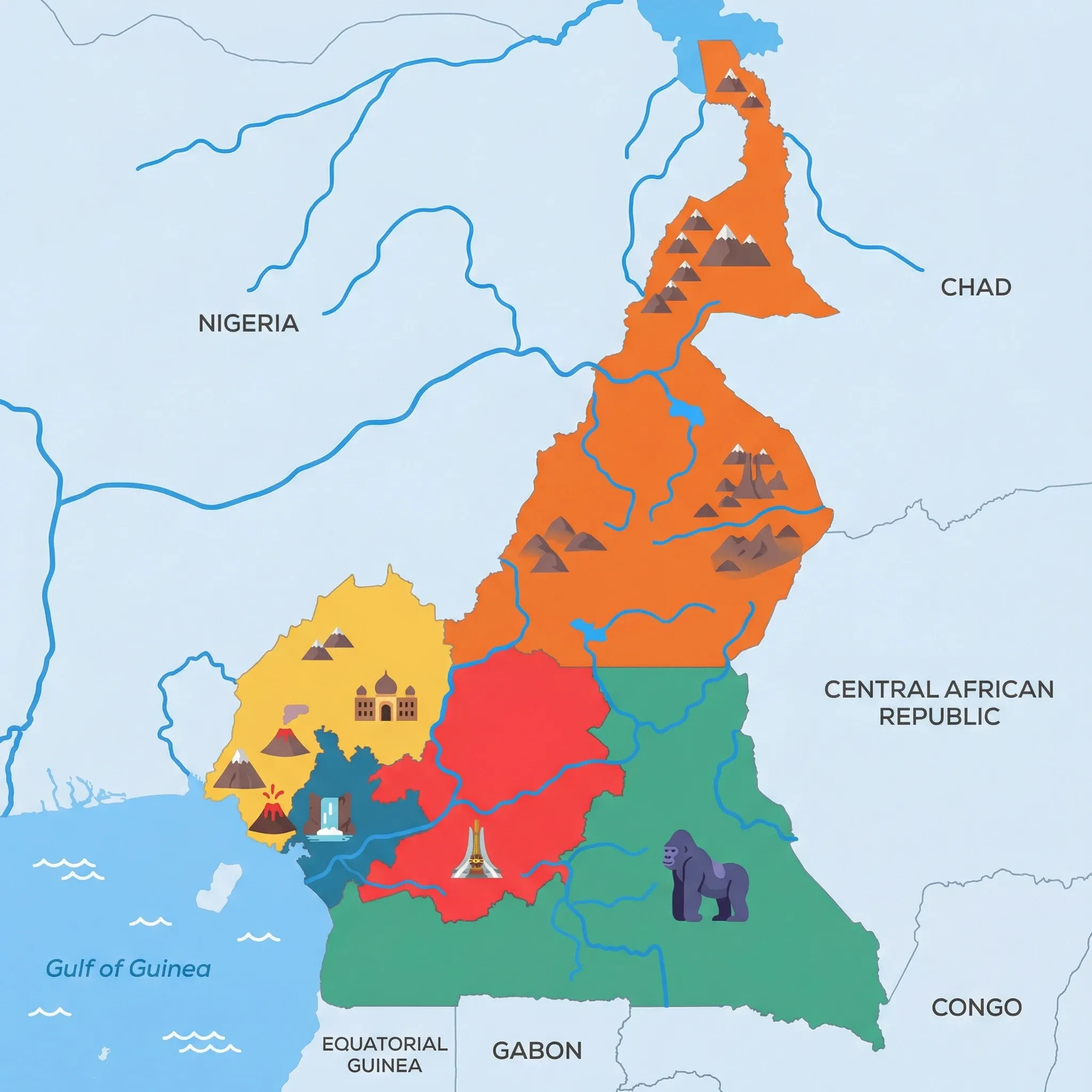
Click a region to explore
⚠️ SAFETY WARNING: Due to high rates of urban crime, including armed robbery and carjacking, government agencies (including the USA, UK, and Australia) advise travelers to exercise increased caution or reconsider travel to Douala. The risk is particularly high after dark and in isolated areas like Bonaberi. Families are strongly urged to consult their own government's official travel advisory before considering a trip, as circumstances and risk assessments vary.
Douala is a city of intensity, heat, and hustle. As the economic capital of Cameroon, it sits on the banks of the Wouri River and serves as the primary entry point for most international flights. For families, the city itself can be overwhelming due to traffic and humidity, but it possesses a vibrant energy that defines modern urban Africa. The Littoral region surrounding the city offers a stark contrast, featuring lush plantations, crater lakes, and some of the most impressive waterfalls in Central Africa.
While the city center focuses on commerce, the surrounding Littoral region provides excellent day-trip opportunities for adventurous families. The climate is equatorial and humid year-round, meaning visitors should be prepared for sudden downpours and sticky heat. Culturally, this is the home of the Sawa people, known for their connection to the water and the annual Ngondo festival held on the river banks.
Key Attractions
Within the city limits, the most significant cultural stop is Doual'art. This non-profit center for contemporary art is a fascinating space for older children and teens to see how modern African artists interpret their history and future, often through large-scale public installations scattered around the city. It offers a quiet, thoughtful break from the chaotic streets of the Akwa district.
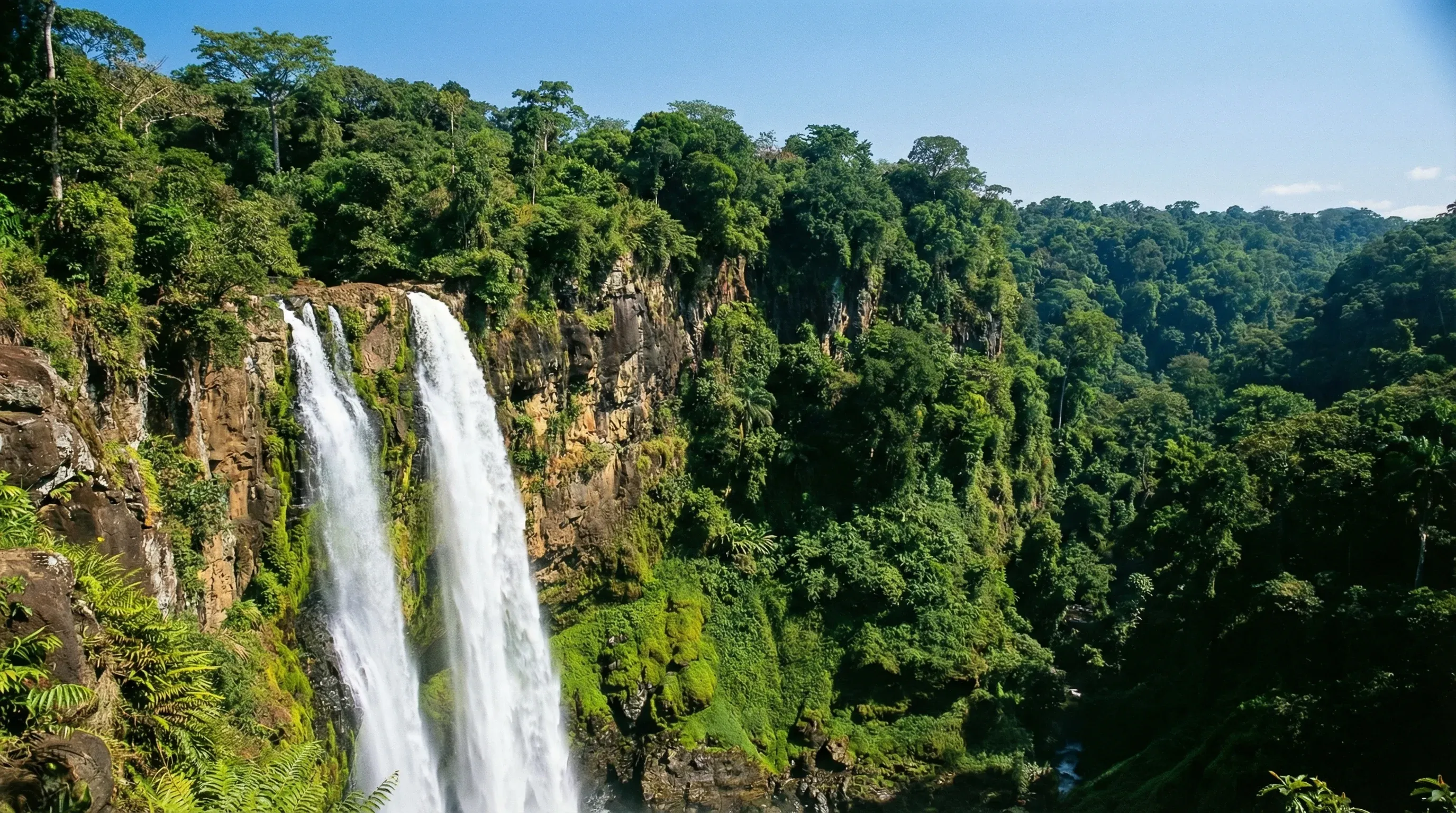
Just outside the city, the region transforms into a natural playground. While not in the immediate city center, the Ekom-Nkam Waterfalls are the region's crown jewel, famous for being a filming location for 'Greystoke: The Legend of Tarzan.' The twin cascades plunging 80 meters into the jungle are a spectacular sight that captivates children. Mount Manengouba offers a different experience with its twin crater lakes—one blue, one green—accessible via a hike that is suitable for active families with older children.
Practical Advice
The best time to visit is during the dry season (November to February), though the heat is constant. Traffic in Douala is notorious; families should allow double the expected time to get anywhere. Use hotel-arranged transport rather than hailing street taxis for safety. Malaria prophylaxis is essential.
Food & Drink
Typical meal times: Lunch is usually taken between 12:30 pm and 2:30 pm, while dinner is a late affair, often starting from 7:30 pm to 9:30 pm.
Typical meal costs: A mid-range meal for a family of four costs approximately 25,000–45,000 XAF (approx. $40–75 USD / €38–68 EUR). Street food is much cheaper but requires caution regarding hygiene.
Dietary requirements: Seafood is abundant, so shellfish allergies must be communicated clearly. Vegetarian options are available in international restaurants in Bonanjo and Akwa but can be limited to sides like plantains and rice in local spots.
Signature dishes:
- Ndolé – The national dish, consisting of bitterleaf stewed with nuts, spices, and either fish, beef, or shrimp.
- Miondo – Fermented cassava paste wrapped in leaves, similar to a very thin, firm dumpling, perfect for dipping in sauces.
- Poulet braisé – Spicy charcoal-grilled chicken found on street corners, usually served with fried plantains (alloco).
Why this score?
The region offers a mix of urban density and accessible natural wonders like the Manengouba twin crater lakes. While the terrain can be rugged during the rainy season, established roads and tour operators make these outdoor experiences manageable for prepared families.
Why this score?
Douala hosts some of Cameroon's most advanced private medical facilities, which are the most likely in the country to accommodate international insurance. However, the overall quality remains basic compared to global standards, with specialized care and English-speaking staff limited to a few top-tier clinics.
Why this score?
As the country's primary economic hub and international flight gateway, this region sees the highest volume of foreign arrivals, though many are for business. While sites like the Ekom-Nkam Waterfalls and Mount Manengouba attract dedicated travelers, the region remains a niche destination on a global scale.

Douala is the most expensive city in Cameroon for services. International standard hotels range from 80,000–150,000 XAF (approx. $130–245 USD / €120–230 EUR) per night. Local transport is cheap, but secure private transport commands a premium. Imported goods in supermarkets are priced similarly to Europe.

Getting Here & Around
Getting Here
- Airports – Douala International Airport (DLA) is the country's busiest hub, with direct flights from Paris, Brussels, and regional African capitals.
- Train – The 'InterCity' train connects to Yaoundé. It is generally safer and more comfortable than the bus, taking roughly 4–5 hours.
- Driving – Connected to Yaoundé via the RN3 highway. The road is paved but accident-prone; hiring a driver is strongly recommended over self-driving.
Getting Around
- Taxis – Shared yellow taxis are ubiquitous but unsafe for tourists carrying valuables. Private hotel taxis or hired drivers are necessary for families.
- Walking – Not recommended for families due to lack of sidewalks, aggressive traffic, and safety concerns, except within the secured Doual'art area or specific hotel grounds.
- Car Hire – Rental with a driver is the standard and safest method for exploring the wider Littoral region.
Nearby Airports (1 airport)
Douala
DLADouala
View full flight map for Cameroon →
Official Links

Packing List
To keep electronics and cameras dry in the extreme 90%+ humidity.
Sudden, intense tropical downpours can soak through backpacks in minutes.
Malaria risk is high and constant; aggressive protection is needed day and night.
Power cuts are frequent in the city; essential for navigating hotels during outages.
Mandatory for all visitors to Mefou National Park to protect the primates from human diseases.
Power cuts are frequent in all cities; essential for navigating hotels or streets at night.
Tap water is not potable anywhere; this saves buying endless plastic bottles.
English is widely spoken in the Northwest but French is dominant in key tourist areas like Kribi and Yaoundé.
You will physically not be allowed to leave the airport without showing this original document.
The XAF currency is pegged to the Euro; it is the easiest foreign currency to exchange.

Activities & Best Times

Hiking, wildlife, outdoor exploration, ecotourism
Home to the unique Twin Lakes of Mount Manengouba and the biodiverse Douala-Edéa National Park, offering rare volcanic and rainforest landscapes. Peak dry season (December-February) is essential for navigable trails and clear views of the crater lakes, while the monsoon rains render nature expeditions difficult.

Urban tourism, museums, historical sites, architecture
Douala serves as a significant hub for contemporary African art through institutions like Doual'art, complemented by historic colonial architecture like La Pagode. The vibrant urban culture is best explored during the drier months when street life and outdoor exhibitions are at their most active.

Beach resorts, marine activities: diving, snorkelling, kite surfing, wind surfing, sailing
Offers authentic coastal escapes like Manoka Island and Yoyo Beach, characterized by dark volcanic sands and a lack of mass-market commercialization. Visiting is ideal in the dry season to ensure calm seas and sunny conditions, as heavy littoral rains significantly degrade the beach experience from June to October.

Sport tourism, fitness activities, active recreation
Features challenging hiking routes such as the Mount Nlonako and Mount Manengouba ascents, which provide high-altitude physical engagement. These activities are safest and most rewarding during the peak dry months when visibility is high and trail conditions are stable.

Scenic drives, countryside tours, route-based travel
The Western Highlands Scenic Corridor offers a gateway to dramatic landscapes, though road conditions can be challenging for families used to international standards. The dry season is critical for road safety and to ensure the spectacular vistas are not obscured by heavy cloud cover or rain.
Amusement parks, family entertainment venues
Local entertainment venues like Giga World provide family leisure options but lack the scale or world-class production of international theme parks. Best visited during festive peak windows in December and January when the parks are most active and weather is conducive to outdoor play.
Attractions (9 total)



Public Holidays & Calendar Next 12 months
Public holidays, festivals, cultural celebrations, and seasonal natural phenomena coming up in Douala & Littoral over the next 12 months.
Loading holidays and events...

Travel Advisory
Five out of six major agencies recommend a baseline of high caution for the country, while noting severe regional escalations where travel is discouraged or prohibited.
Safety Topics
Traveller Advice (2 groups)

Women should avoid traveling solo, particularly at night, and be aware of potential harassment. Dressing conservatively is recommended to align with local cultural norms.

Same-sex relationships are illegal and can lead to imprisonment. Societal discrimination is widespread, and travelers should avoid public displays of affection and maintain a low profile regarding their sexual orientation.
Agency Summaries
Travelers should remain extremely vigilant due to frequent violent crime and ongoing regional instability. Specific areas including the Far North, North-West, and South-West regions should be avoided entirely because of active conflict and kidnapping risks. Non-essential travel to the North and Adamaoua regions is also discouraged.
Heightened vigilance is necessary throughout the country due to civil unrest, crime, and health concerns. Certain regions are classified as Level 4 (Do Not Travel) due to severe risks of armed violence, terrorism, and kidnapping, particularly in the Far North and English-speaking Western provinces.
There are major safety concerns related to terrorism, kidnapping, and carjackings. While the overall level is 2 out of 4, visitors are strongly warned to avoid the Far North and Western regions where active conflict and piracy are prominent threats.
The UK government restricts travel to several regions including the Far North, North-West, and South-West due to terrorism and political violence. Travelers in permitted areas should be aware of a high risk of violent crime, particularly after dark, and potential spillover from neighboring conflicts.
Ireland maintains a high alert status for Cameroon, advising against all non-essential travel to northern and western regions. Citizens are warned of dangerous security conditions and the limited capacity of the embassy to provide assistance in crisis areas.
Australian citizens are advised to exercise significant caution across the country due to threats of violent crime and civil disorder. Extremist activity in border regions and the Anglophone crisis in the West pose severe risks, leading to 'Do Not Travel' warnings for those specific areas.
Information is provided for general guidance only and does not constitute travel, safety, medical, or legal advice. Conditions may change. Users are responsible for independently verifying information before travel.