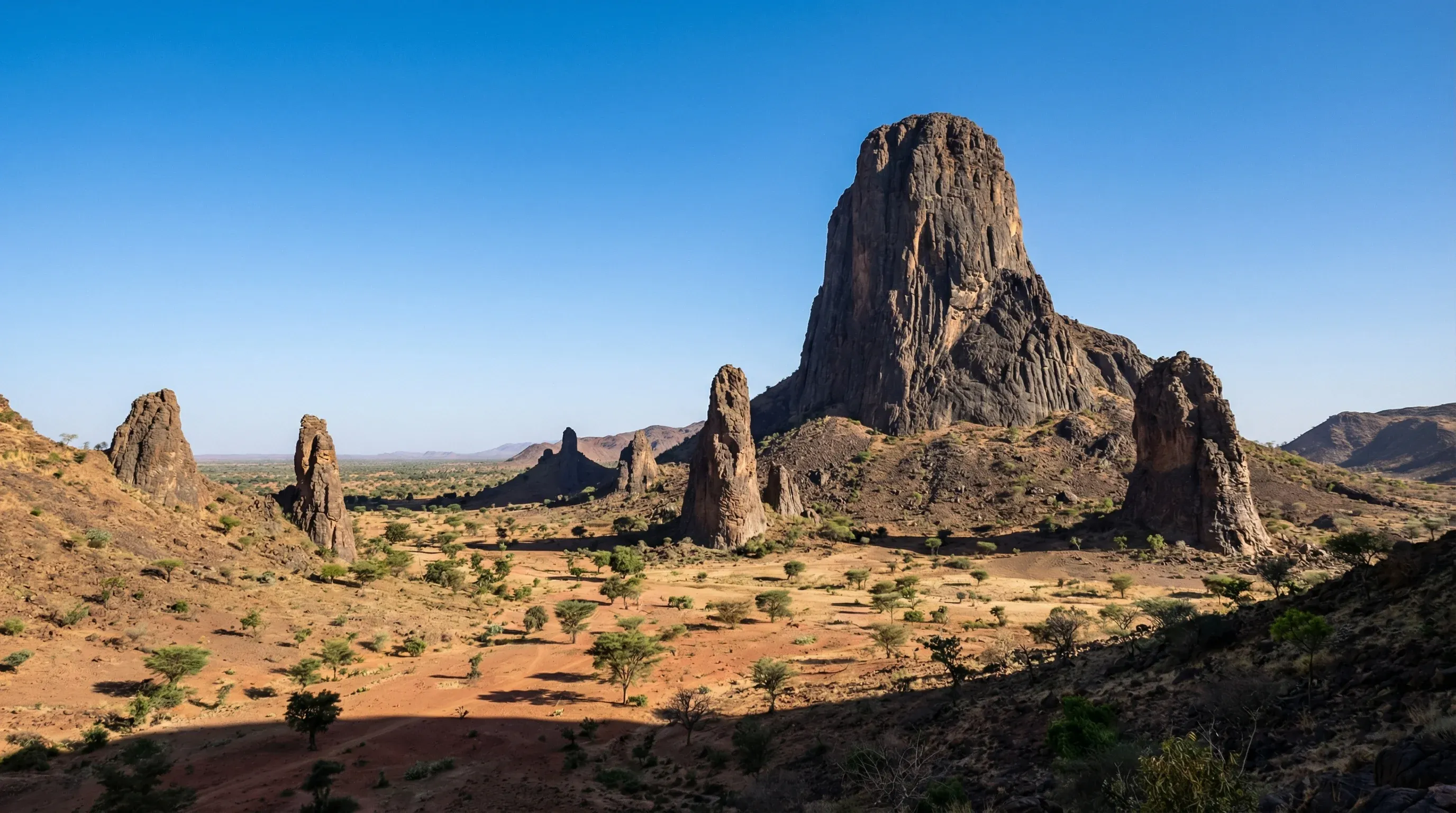

Northern Cameroon
A land of lunar peaks and ancient savannah kingdoms 🦁
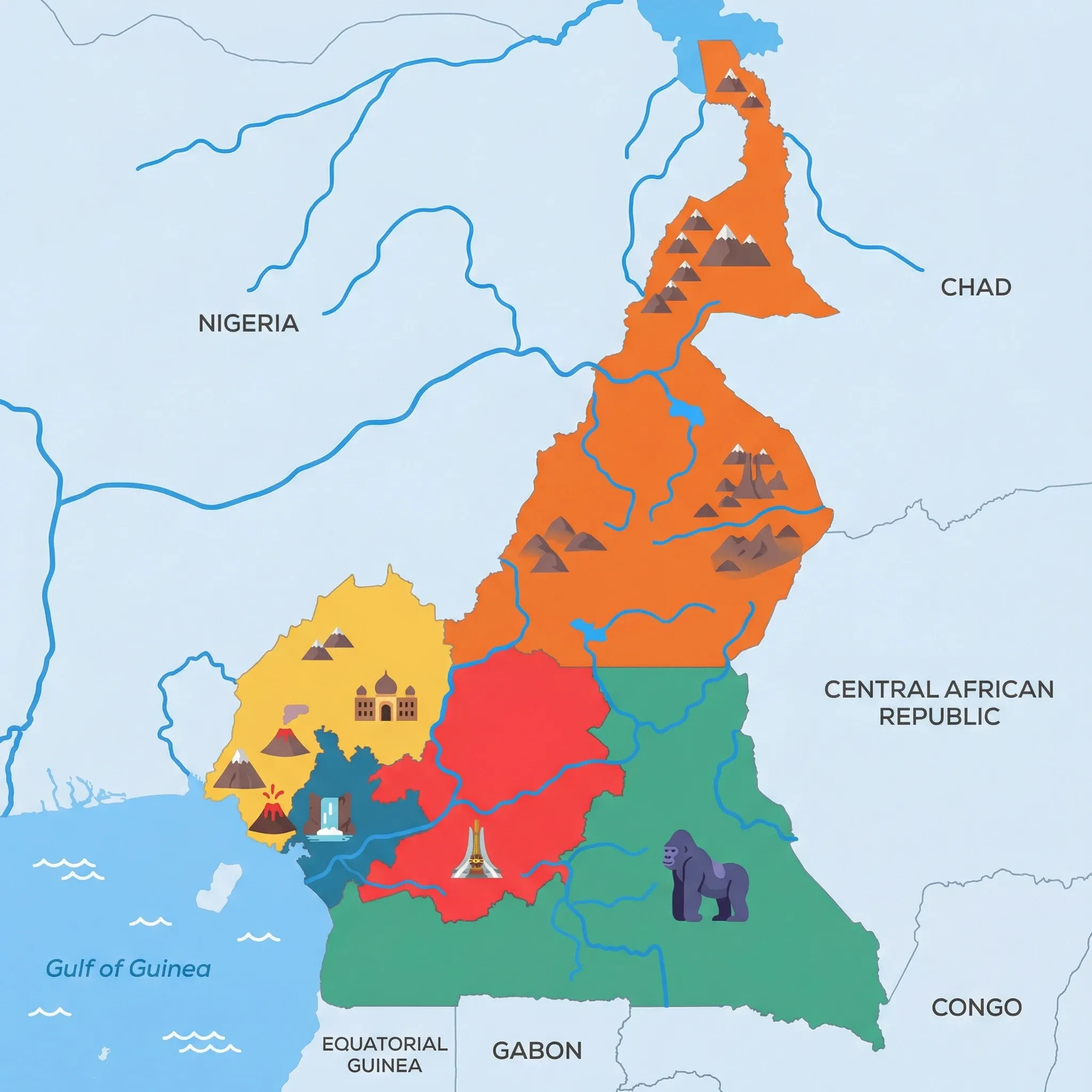
Click a region to explore
⚠️ SAFETY WARNING: Due to active terrorism (Boko Haram), high risks of kidnapping, and armed banditry, government agencies (including the USA, UK, Canada, and Australia) have issued 'Do Not Travel' (Level 4) advisories for the Far North and parts of the North region. The security situation is extremely volatile. Families are strongly urged to consult their own government's official travel advisory before considering a trip, as travel to this region is currently considered highly dangerous.
The Northern region of Cameroon is culturally and geographically distinct from the rest of the nation. As you move north, the rainforests fade into the savannah and eventually the semi-arid Sahel. This is a region of immense beauty, characterized by traditional round mud-brick architecture, equestrian culture, and some of the most spectacular rock formations in Africa. The heat here is dry and intense, and the culture is predominantly Islamic, influenced by the powerful local Lamidats (sultanates).
In stable times, this region is the jewel of Cameroonian tourism. The rhythm of life is slower here, dictated by the sun and the seasons. The landscape is dotted with baobab trees and rocky outcrops, providing a cinematic backdrop that feels entirely different from the humid south. While access is currently severely restricted due to security, the region remains the custodian of some of Cameroon's most significant heritage.
Key Attractions
The most iconic destination is Waza National Park. Traditionally the best place in Central Africa to see elephants, giraffes, and lions, this biosphere reserve covers vast savannahs. While tourism infrastructure has suffered, the park remains a critical ecological sanctuary. The sight of elephants gathering at waterholes during the dry season is the definitive image of the region.
Further west in the Mandara Mountains lies Rhumsiki Village. Famous for the Kapsiki Peak, a volcanic plug that rises like a needle from the landscape, the views here are often described as lunar. It is a place of myths and traditional crab sorcery, where local diviners predict the future. To the southeast, the Lamidat de Rey-Bouba is a UNESCO-listed provisional site. This sprawling palace complex, ruled by a powerful Lamido, offers a window into the feudal history of the north, with high mud walls and intricate traditional architecture that has survived for centuries.
Practical Advice
The climate is hot and dry, with temperatures often exceeding 40°C (104°F). The best time to visit (security permitting) is the cool dry season from December to February. Modest dress is essential due to conservative local customs. Photography of government buildings or military personnel is strictly prohibited and enforced.
Food & Drink
Typical meal times: Meals are often eaten communally. Lunch is around 1:00 pm to 2:00 pm, and dinner is served after sunset prayers, typically 7:00 pm to 8:30 pm.
Typical meal costs: Food is inexpensive. A hearty local meal costs 1,500–3,000 XAF (approx. $2.50–5.00 USD / €2.30–4.50 EUR). Western options are scarce outside major hotels in Maroua or Garoua.
Dietary requirements: Halal food is the standard. Vegetarian options are based on millet, sorghum, and vegetables, but meat is a prestige item often served to guests. Dairy (fresh milk and yoghurt) is common due to the cattle-herding culture.
Signature dishes:
- Boule de mil – A thick millet porridge that serves as the staple starch, eaten with various sauces.
- Soya – Spicy, skewered beef grilled over open fires, arguably the best in the country due to the high quality of northern cattle.
- Foléré – A refreshing, sweet drink made from hibiscus flowers (sorrel), popular with children and perfect for the hot climate.
Why this score?
The landscape is characterized by the extreme, lunar-like volcanic peaks of Rhumsiki and the vast, harsh Sahelian plains. Visiting this region requires high levels of self-sufficiency and resilience due to the remote terrain, lack of services, and challenging climate.
Why this score?
Medical infrastructure in the north is extremely limited and frequently lacks essential supplies or specialized personnel. In the event of an emergency, the distance to adequate care in the south and the security situation make medical evacuation significantly difficult.
Why this score?
Once a highlight of West African tourism due to Waza National Park and the Mandara Mountains, the region is currently almost entirely avoided by foreign tourists due to severe security risks and conflict. Infrastructure has deteriorated, and travel advisories from most nations list the area as a 'do not travel' zone.

The cost of living is lower than in the south, but the logistical cost of safe travel (private 4x4, security escorts, guides) makes tourism expensive. A decent hotel room costs 25,000–45,000 XAF (approx. $40–75 USD / €38–68 EUR). Market food is very cheap, often under 1,000 XAF ($1.65 USD).

Getting Here & Around
Getting Here
- Airports – Garoua International Airport (GOU) and Maroua Salak Airport (MVR) receive domestic flights from Douala and Yaoundé via Camair-Co.
- Train – The railway ends at Ngaoundéré (in Adamaoua). From there, travelers traditionally take paved roads north to Garoua, though this route is currently subject to security checks.
- Driving – Distances are vast. The road network connects the main cities, but road conditions vary and military checkpoints are frequent.
Getting Around
- Car – A 4x4 with a knowledgeable local driver/guide is mandatory for navigating between Waza National Park and the rocky terrain of Rhumsiki Village.
- Public Transport – Minibuses connect towns, but they are often overcrowded and unsafe for tourists under current conditions.
Nearby Airports (3 airports)
Garoua
GOUGaroua
Maroua Salak
MVRMaroua
Ngaoundere
NGENgaoundere
View full flight map for Cameroon →

Packing List
Essential for protection against the 'Harmattan' dust winds and sun.
Clean bottled water can be scarce in remote villages like Rhumsiki.
Long sleeves and trousers are required to respect local Muslim culture.
The Sahelian sun is far more intense than in the cloudy south.
Mandatory for all visitors to Mefou National Park to protect the primates from human diseases.
Power cuts are frequent in all cities; essential for navigating hotels or streets at night.
Tap water is not potable anywhere; this saves buying endless plastic bottles.
English is widely spoken in the Northwest but French is dominant in key tourist areas like Kribi and Yaoundé.
You will physically not be allowed to leave the airport without showing this original document.
The XAF currency is pegged to the Euro; it is the easiest foreign currency to exchange.

Activities & Best Times

Hiking, wildlife, outdoor exploration, ecotourism
Home to iconic Sahelian megafauna in Waza and Bouba Njida National Parks, plus the unique volcanic landscapes of Rhumsiki. Peak visitation occurs during the dry season when wildlife congregates at waterholes; the rainy season renders most park tracks impassable.

Urban tourism, museums, historical sites, architecture
Features extraordinary architectural heritage like the Musgum Shell Huts and the culturally rich Sultanates of the North. Travel is best during the cooler dry months to comfortably explore artisanal markets and traditional villages without extreme heat or heavy rain.

Scenic drives, countryside tours, route-based travel
The Mandara Mountains offer some of West Africa's most spectacular scenic drives through lunar-like landscapes. Peak months provide the best visibility and safest road conditions, whereas the rainy season poses significant transit risks on unpaved secondary routes.

Sport tourism, fitness activities, active recreation
Excellent opportunities for trekking and scrambling around the Kapsiki Plateau and Mount Oupay. Physical activity is only recommended in the cooler harmattan season; the extreme pre-monsoon heat of April and May presents a high risk of heat exhaustion for families.




Public Holidays & Calendar Next 12 months
Public holidays, festivals, cultural celebrations, and seasonal natural phenomena coming up in Northern Cameroon over the next 12 months.
Loading holidays and events...

Travel Advisory
Five out of six major agencies recommend a baseline of high caution for the country, while noting severe regional escalations where travel is discouraged or prohibited.
Safety Topics
Traveller Advice (2 groups)

Women should avoid traveling solo, particularly at night, and be aware of potential harassment. Dressing conservatively is recommended to align with local cultural norms.

Same-sex relationships are illegal and can lead to imprisonment. Societal discrimination is widespread, and travelers should avoid public displays of affection and maintain a low profile regarding their sexual orientation.
Agency Summaries
Travelers should remain extremely vigilant due to frequent violent crime and ongoing regional instability. Specific areas including the Far North, North-West, and South-West regions should be avoided entirely because of active conflict and kidnapping risks. Non-essential travel to the North and Adamaoua regions is also discouraged.
Heightened vigilance is necessary throughout the country due to civil unrest, crime, and health concerns. Certain regions are classified as Level 4 (Do Not Travel) due to severe risks of armed violence, terrorism, and kidnapping, particularly in the Far North and English-speaking Western provinces.
There are major safety concerns related to terrorism, kidnapping, and carjackings. While the overall level is 2 out of 4, visitors are strongly warned to avoid the Far North and Western regions where active conflict and piracy are prominent threats.
The UK government restricts travel to several regions including the Far North, North-West, and South-West due to terrorism and political violence. Travelers in permitted areas should be aware of a high risk of violent crime, particularly after dark, and potential spillover from neighboring conflicts.
Ireland maintains a high alert status for Cameroon, advising against all non-essential travel to northern and western regions. Citizens are warned of dangerous security conditions and the limited capacity of the embassy to provide assistance in crisis areas.
Australian citizens are advised to exercise significant caution across the country due to threats of violent crime and civil disorder. Extremist activity in border regions and the Anglophone crisis in the West pose severe risks, leading to 'Do Not Travel' warnings for those specific areas.
Information is provided for general guidance only and does not constitute travel, safety, medical, or legal advice. Conditions may change. Users are responsible for independently verifying information before travel.