
Western Highlands
Misty mountains and the rhythm of royal drums 👑
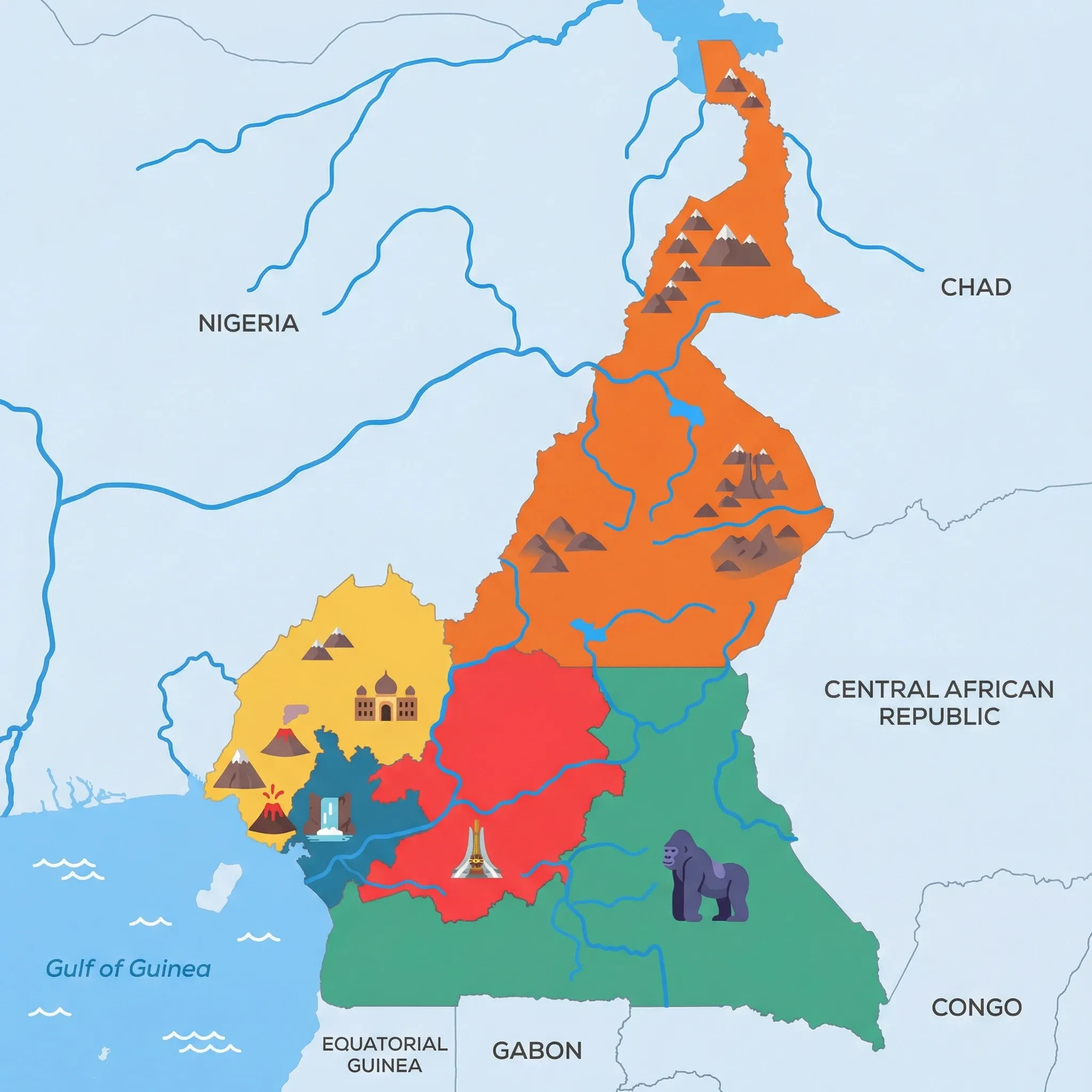
Click a region to explore
⚠️ SAFETY WARNING: Due to ongoing armed conflict (the 'Anglophone Crisis') and high risks of kidnapping and violence, government agencies (including the USA, UK, and Canada) have issued 'Do Not Travel' (Level 4) advisories for the Northwest and Southwest regions. The West Region (Francophone area around Bafoussam/Foumban) is relatively calmer but remains unpredictable. Families are strongly urged to consult their own government's official travel advisory before considering a trip.
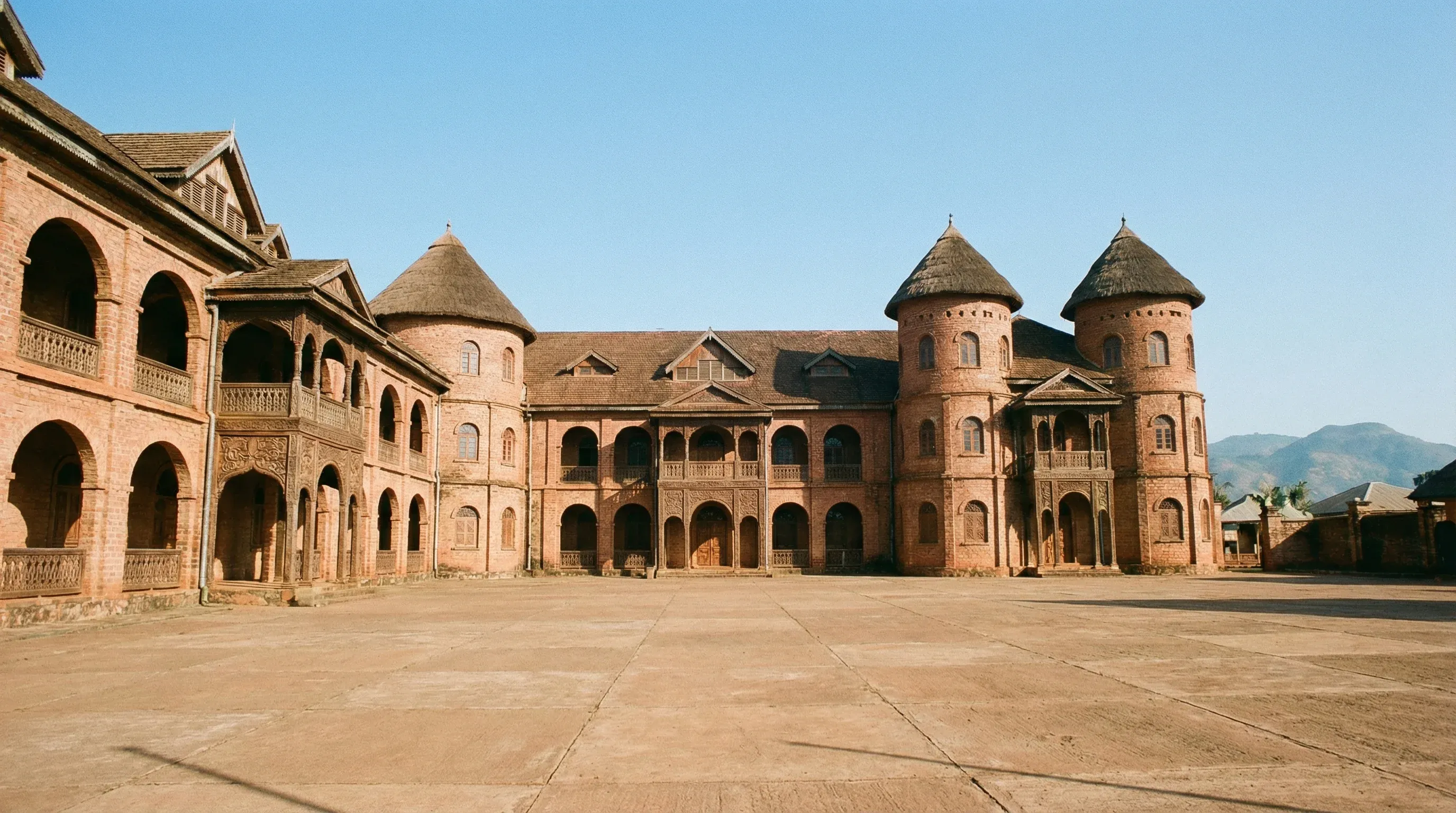
The Western Highlands offer a striking change in climate and culture. Rising high above the coastal plains, the air here is cool and fresh, often misty in the mornings. The landscape is a patchwork of terraced farms, volcanic crater lakes, and rolling green hills known as the 'Grassfields.' This topography has fostered independent, powerful chiefdoms (Chefferies) that maintain their own laws, architecture, and distinct traditions alongside the modern state.
For families interested in anthropology and history, this is the most significant region in Cameroon. The traditional palaces are active political centers, not just museums. The people here are renowned for their craftsmanship in wood carving, beadwork, and bronze casting. While the conflict has made the English-speaking parts (Bamenda) largely inaccessible, the Francophone West (Bafoussam and Foumban) still offers a window into this rich highland culture, provided travelers remain vigilant.
Key Attractions
The epicenter of culture in the accessible West is the Foumban Royal Palace. It is the seat of the Bamoun dynasty, one of the oldest in Africa. Families can visit the palace museum to see royal thrones, war gear, and the famous 'Queen's Bell.' The sultanate is a living institution, and if you are lucky, you might see the Sultan and his entourage.
Nearby, the Musée de Civilisations in Dschang offers a state-of-the-art look at the history of Cameroon's peoples, situated on the edge of a sacred lake. For a look at traditional architecture, the Chefferie de Bandjoun is a spectacular example of a Grassfields palace, with its high, conical thatched roofs and carved wooden pillars. Nature lovers might look toward Mount Oku in the Northwest, though access is currently heavily restricted; it is home to unique bird species and a sacred crater lake.
Practical Advice
The climate is much cooler than the coast; evenings can be genuinely cold (15°C/59°F). The best time to visit is the dry season (November to March). Funerals in this region are massive, colorful cultural celebrations often held on weekends—if invited, it is a privilege to attend.
Food & Drink
Typical meal times: Breakfast is heavy (often leftovers or bean fritters). Lunch is 12:00 pm to 2:00 pm. Dinner is 7:00 pm to 9:00 pm.
Typical meal costs: Very affordable. A filling meal of taro and sauce costs 1,500–2,500 XAF (approx. $2.50–4.00 USD / €2.30–3.80 EUR) in a local 'tourne-dos' restaurant.
Dietary requirements: This is an agricultural hub, so fresh vegetables are abundant. However, many sauces use meat stock or smoked fish. Vegan options require careful specification.
Signature dishes:
- Achu (Taro with Yellow Sauce) – The signature dish of the region. Pounded cocoyam served with a yellow limestone-based spiced soup, usually eaten with fingers.
- Koki – A steamed pudding made from black-eyed peas and bright red palm oil, spicy and savory.
- Nkui – A sticky, stringy soup made from tree bark and spices, traditionally given to women after childbirth but enjoyed by all.
Why this score?
The region's high-altitude volcanic landscape and steep, rolling 'grassfields' offer significant physical challenges for hikers and explorers. The combination of mountainous terrain and current travel complexities makes this a highly adventurous destination for intrepid travelers.
Why this score?
Cities like Bafoussam have regional hospitals that can provide basic emergency stabilization, but resources are often stretched thin. The ongoing unrest in parts of the highlands further complicates access to medical services and reliable transport for injured travelers.
Why this score?
Ongoing socio-political instability in the Anglophone regions has decimated what was once a vibrant cultural tourism circuit centered on Bamenda and the Ring Road. Most international visitors now stick to safer areas, leaving the spectacular highland palaces and mist-covered hills largely unvisited.

The West is significantly cheaper than Douala or Yaoundé. A decent hotel is 15,000–30,000 XAF (approx. $25–50 USD / €23–45 EUR). Entrance fees to palaces and museums are modest, usually 2,000–5,000 XAF ($3.30–8.00 USD) per person.

Getting Here & Around
Getting Here
- Bus – Major bus lines connect Yaoundé and Douala to Bafoussam (West Region). The journey takes 5–6 hours on paved but winding roads.
- Airports – Bafoussam Airport (BFX) has intermittent flights from Douala via Camair-Co.
- Driving – The road from Douala is paved. However, driving into the Northwest (Bamenda) is currently dangerous due to roadblocks and conflict.
Getting Around
- Taxi – Shared taxis are the norm in Bafoussam.
- Walking – Towns like Foumban are walkable and full of artisan workshops, but hire a local guide to navigate cultural etiquette.
- Attraction Links – Access to sites like Foumban Royal Palace is best done via a hired car and driver for the day.
Nearby Airports (1 airport)
Bafoussam
BFXBafoussam
View full flight map for Cameroon →

Packing List
The highlands are significantly cooler than the coast; nights can be chilly.
The terrain is hilly and often muddy; sandals are not suitable for palace grounds.
ATMs can be unreliable and card payment is non-existent outside major hotels.
Rain in the highlands comes suddenly and is often cold.
Mandatory for all visitors to Mefou National Park to protect the primates from human diseases.
Power cuts are frequent in all cities; essential for navigating hotels or streets at night.
Tap water is not potable anywhere; this saves buying endless plastic bottles.
English is widely spoken in the Northwest but French is dominant in key tourist areas like Kribi and Yaoundé.
You will physically not be allowed to leave the airport without showing this original document.
The XAF currency is pegged to the Euro; it is the easiest foreign currency to exchange.

Activities & Best Times

Hiking, wildlife, outdoor exploration, ecotourism
Dramatic volcanic landscapes, including Mount Oku and the Manengouba crater lakes, provide unique high-altitude wilderness experiences. Trekking is optimal in the dry season; however, the intense rainfall and fog of the wet season (Jun-Sep) make trails hazardous and obscure scenic vistas.

Urban tourism, museums, historical sites, architecture
The region features world-class living heritage at the Royal Palace of Foumban and the Bamileke Chefferies, offering profound architectural and historical depth. The dry season (Nov-Feb) is peak for cultural exploration, as heavy highland rains from June to September hinder travel between chiefdoms.

Scenic drives, countryside tours, route-based travel
The Ring Road and Route des Chefferies are iconic African driving circuits offering spectacular mountain scenery and access to remote kingdoms. Travel is strictly recommended for the dry season to avoid severe road degradation and safety issues caused by the heavy highland monsoon.

Sport tourism, fitness activities, active recreation
Challenging high-altitude cycling and trekking routes, such as the Bamenda Ring Road circuit, offer a rigorous physical experience for active families. The dry season provides the only reliable window for safe activity, with wet season rains making the terrain impassable for sports.

Events, celebrations, seasonal attractions
The biennial Nguon Festival in Foumban is a major display of Bamoun culture and traditional power. It typically occurs in the dry season (Nov-Dec), which is the only period offering significant internationally-scaled cultural events in the region.

Spa retreats, wellness centers, peaceful getaways
Natural volcanic hot springs like Nzu offer restorative properties, though facilities are rustic compared to international spa standards. Visit during the cooler dry months for comfort, as high humidity and heavy rain significantly detract from the outdoor bathing experience mid-year.

Attractions (10 total)



Public Holidays & Calendar Next 12 months
Public holidays, festivals, cultural celebrations, and seasonal natural phenomena coming up in Western Highlands over the next 12 months.
Loading holidays and events...

Travel Advisory
Five out of six major agencies recommend a baseline of high caution for the country, while noting severe regional escalations where travel is discouraged or prohibited.
Safety Topics
Traveller Advice (2 groups)

Women should avoid traveling solo, particularly at night, and be aware of potential harassment. Dressing conservatively is recommended to align with local cultural norms.

Same-sex relationships are illegal and can lead to imprisonment. Societal discrimination is widespread, and travelers should avoid public displays of affection and maintain a low profile regarding their sexual orientation.
Agency Summaries
Travelers should remain extremely vigilant due to frequent violent crime and ongoing regional instability. Specific areas including the Far North, North-West, and South-West regions should be avoided entirely because of active conflict and kidnapping risks. Non-essential travel to the North and Adamaoua regions is also discouraged.
Heightened vigilance is necessary throughout the country due to civil unrest, crime, and health concerns. Certain regions are classified as Level 4 (Do Not Travel) due to severe risks of armed violence, terrorism, and kidnapping, particularly in the Far North and English-speaking Western provinces.
There are major safety concerns related to terrorism, kidnapping, and carjackings. While the overall level is 2 out of 4, visitors are strongly warned to avoid the Far North and Western regions where active conflict and piracy are prominent threats.
The UK government restricts travel to several regions including the Far North, North-West, and South-West due to terrorism and political violence. Travelers in permitted areas should be aware of a high risk of violent crime, particularly after dark, and potential spillover from neighboring conflicts.
Ireland maintains a high alert status for Cameroon, advising against all non-essential travel to northern and western regions. Citizens are warned of dangerous security conditions and the limited capacity of the embassy to provide assistance in crisis areas.
Australian citizens are advised to exercise significant caution across the country due to threats of violent crime and civil disorder. Extremist activity in border regions and the Anglophone crisis in the West pose severe risks, leading to 'Do Not Travel' warnings for those specific areas.
Information is provided for general guidance only and does not constitute travel, safety, medical, or legal advice. Conditions may change. Users are responsible for independently verifying information before travel.