
Yaoundé & Centre
The city of seven hills and sanctuary for primates 🦍
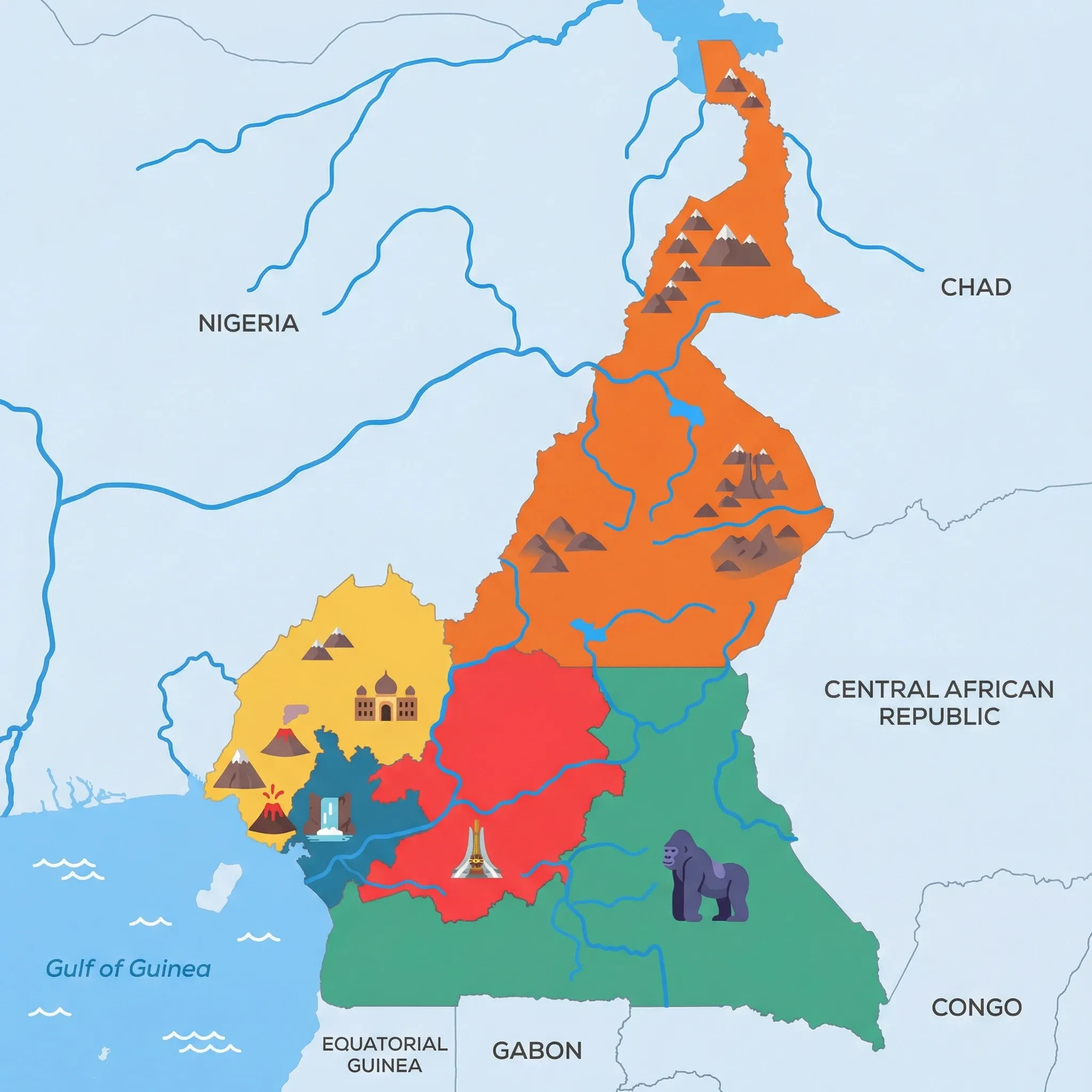
Click a region to explore
Yaoundé offers a softer landing for families visiting Cameroon. Spread across seven lush hills, the capital city sits at a higher altitude than Douala, providing a slightly cooler and less oppressive climate. It is the administrative heart of the country, characterized by broad boulevards, government monuments, and a generally more relaxed pace of life. While it has its share of urban chaos, the abundance of greenery and hills gives it a distinct character.
For traveling families, the Centre region is arguably the best base for a mix of culture and nature. The city itself hosts the best museums in the country, while a short drive of less than an hour transports you into deep secondary rainforest. The region is predominantly Francophone and is the traditional home of the Beti-Pahuin peoples. It feels safer and more organized than the commercial capital, making it a good starting point for acclimatizing to Central Africa.
Key Attractions
The undisputed highlight for children is Mefou National Park (run by Ape Action Africa). Located just 45 minutes from the city, this sanctuary protects gorillas, chimpanzees, and mandrills rescued from the bushmeat trade. Unlike a zoo, the animals live in massive forest enclosures. Walking the forest trails to see a silverback gorilla in a natural setting is an educational and emotional experience that directly supports conservation.
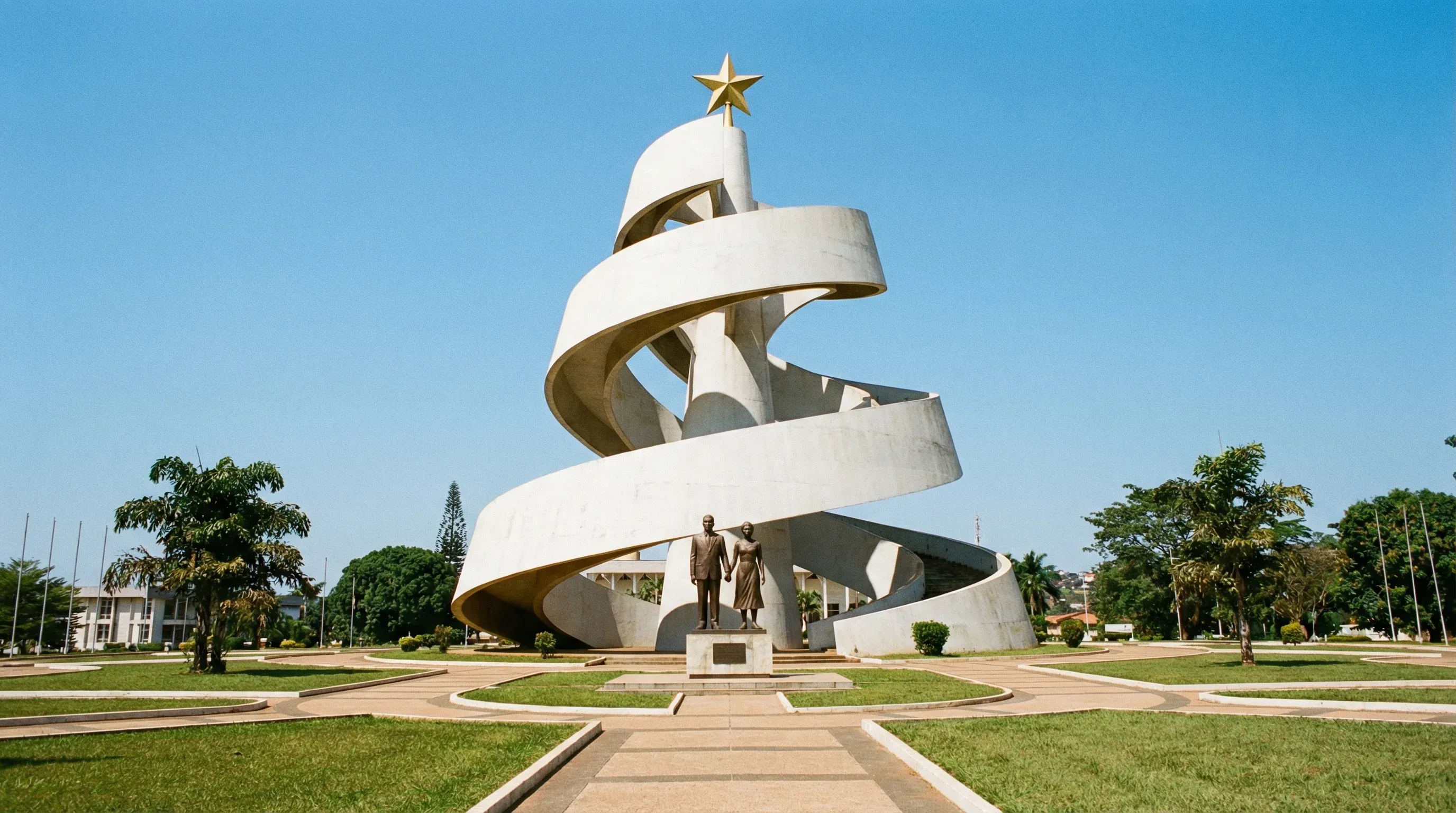
Back in the city, the National Museum of Cameroon is a must-visit. Housed in the grand former presidential palace, it contains a comprehensive collection of masks, statues, and royal artifacts from all of Cameroon's 250+ ethnic groups. It provides excellent context for the rest of your trip. Nearby, the Reunification Monument is an architectural spiral celebrating the joining of Anglophone and Francophone Cameroon, offering interesting photo opportunities and history lessons for older kids.
Practical Advice
Yaoundé is hilly; walking can be tiring for little legs. Taxis are easy to find. The wet seasons (September–October and April–May) bring heavy rains that can disrupt traffic. As the diplomatic center, it has good medical facilities compared to the rest of the country.
Food & Drink
Typical meal times: Lunch breaks are long (government offices close), typically 1:00 pm to 3:00 pm. Dinner is served from 7:30 pm onwards.
Typical meal costs: Mid-range dining is accessible. A family meal costs 20,000–40,000 XAF (approx. $33–66 USD / €30–60 EUR). High-end expat restaurants in the Bastos district will cost double that.
Dietary requirements: The Bastos neighborhood has Italian, Chinese, and Lebanese restaurants catering to various diets. Local food is cassava-heavy. Gluten-free is easy (yams, plantains, rice), but vegan requires explaining 'no fish stock'.
Signature dishes:
- Poulet DG – 'Directeur Général' Chicken. A stew of chicken, plantains, carrots, and green beans. Originally a status dish for the elite, now a beloved family staple.
- Eru – A vegetable soup made from diverse wild greens, cooked with palm oil and crayfish (actually from the Southwest but extremely popular in Yaoundé).
- Bâton de Manioc – Fermented cassava wrapped in leaves, a sour and firm side dish essential to any grilled fish meal.
Why this score?
The 'city of seven hills' provides moderate outdoor opportunities like the Mount Fébé trails, which are relatively accessible compared to the deep interior. The adventure here is more about navigating the local urban culture and humid forest fringes rather than extreme wilderness survival.
Why this score?
Yaoundé features several of the country's best hospitals, including some with experience treating the diplomatic community. While better than the rural provinces, facilities still face frequent shortages and may not meet the expectations of travelers used to Western healthcare systems.
Why this score?
As the political capital, Yaoundé receives a steady flow of international diplomatic and NGO-related travel, though leisure tourism is secondary. The Mefou Primate Sanctuary is the primary draw for families, offering one of the more accessible wildlife experiences in the country.

Yaoundé offers a wide range of prices. You can eat for $2 on the street or $50 in a hotel. Accommodation is slightly cheaper than Douala; a good family hotel room is 60,000–100,000 XAF (approx. $100–165 USD / €90–150 EUR). Entry to Mefou park is priced for tourists (approx. 15,000 XAF / $25 USD per adult) to support the charity.

Getting Here & Around
Getting Here
- Airports – Yaoundé Nsimalen International Airport (NSI) is modern and less chaotic than Douala. It receives major international carriers like Air France and Brussels Airlines.
- Train – The central station connects to Ngaoundéré (North) and Douala (Littoral). The express train to Douala is reliable.
- Driving – It is the central node of Cameroon's road network. The road to the airport is a wide, modern highway.
Getting Around
- Taxis – Yellow shared taxis are the main transport. For families, 'Dépôt' (hiring the whole taxi) is affordable and safer; expect to pay 2,500–3,500 XAF ($4–6 USD) per hour.
- Car Hire – Recommended for visiting Mefou National Park, as no public transport goes directly to the sanctuary gate.
- Walking – The city center near the National Museum of Cameroon is walkable, but the hills make wider exploration on foot difficult.
Nearby Airports (1 airport)
Yaounde Nsimalen
NSIYaounde
View full flight map for Cameroon →
Official Links

Packing List
Yaoundé is the administrative capital; people dress sharply. Shorts are considered very casual.
The city is elevated and rainforest-adjacent; showers are frequent and heavy.
The city is built on seven hills; taxi rides involve constant winding up and down.
Essential for spotting primates high in the trees at Mefou National Park.
Mandatory for all visitors to Mefou National Park to protect the primates from human diseases.
Power cuts are frequent in all cities; essential for navigating hotels or streets at night.
Tap water is not potable anywhere; this saves buying endless plastic bottles.
English is widely spoken in the Northwest but French is dominant in key tourist areas like Kribi and Yaoundé.
You will physically not be allowed to leave the airport without showing this original document.
The XAF currency is pegged to the Euro; it is the easiest foreign currency to exchange.

Activities & Best Times

Urban tourism, museums, historical sites, architecture
Yaoundé serves as a regional cultural hub with the impressive National Museum and significant architectural landmarks like the Reunification Monument. The city is best explored during the drier seasons to fully appreciate the vibrant street markets and historic sites without the disruption of peak rainfall.

Hiking, wildlife, outdoor exploration, ecotourism
Mefou National Park offers high-quality primate sanctuary experiences, while sites like Ebogo provide unique river-forest immersion. The dry months of Dec-Feb provide the most reliable trail access before heavy tropical rains make forest navigation difficult.

Sport tourism, fitness activities, active recreation
Hiking routes at Mount Fébé and Mount Eloundem provide active outdoor challenges for families seeking fitness. These trails are best tackled during the main dry season to avoid the slippery and hazardous conditions caused by heavy precipitation in April-May and Sept-Oct.

Learning experiences, scientific sites, historical education
The Mvog-Betsi Zoological Garden provides basic educational engagement regarding local species and conservation, though it lacks the scale of global top-tier institutions. It is a secondary attraction most suitable for family visits during dry weather windows.

Scenic drives, countryside tours, route-based travel
Short scenic routes like the drive to Mount Fébé or Akono Cathedral offer beautiful forest vistas and historic architecture. Travel is significantly more comfortable and safer in the dry season, as rain can rapidly deteriorate road visibility and conditions.




Public Holidays & Calendar Next 12 months
Public holidays, festivals, cultural celebrations, and seasonal natural phenomena coming up in Yaoundé & Centre over the next 12 months.
Loading holidays and events...

Travel Advisory
Five out of six major agencies recommend a baseline of high caution for the country, while noting severe regional escalations where travel is discouraged or prohibited.
Safety Topics
Traveller Advice (2 groups)

Women should avoid traveling solo, particularly at night, and be aware of potential harassment. Dressing conservatively is recommended to align with local cultural norms.

Same-sex relationships are illegal and can lead to imprisonment. Societal discrimination is widespread, and travelers should avoid public displays of affection and maintain a low profile regarding their sexual orientation.
Agency Summaries
Travelers should remain extremely vigilant due to frequent violent crime and ongoing regional instability. Specific areas including the Far North, North-West, and South-West regions should be avoided entirely because of active conflict and kidnapping risks. Non-essential travel to the North and Adamaoua regions is also discouraged.
Heightened vigilance is necessary throughout the country due to civil unrest, crime, and health concerns. Certain regions are classified as Level 4 (Do Not Travel) due to severe risks of armed violence, terrorism, and kidnapping, particularly in the Far North and English-speaking Western provinces.
There are major safety concerns related to terrorism, kidnapping, and carjackings. While the overall level is 2 out of 4, visitors are strongly warned to avoid the Far North and Western regions where active conflict and piracy are prominent threats.
The UK government restricts travel to several regions including the Far North, North-West, and South-West due to terrorism and political violence. Travelers in permitted areas should be aware of a high risk of violent crime, particularly after dark, and potential spillover from neighboring conflicts.
Ireland maintains a high alert status for Cameroon, advising against all non-essential travel to northern and western regions. Citizens are warned of dangerous security conditions and the limited capacity of the embassy to provide assistance in crisis areas.
Australian citizens are advised to exercise significant caution across the country due to threats of violent crime and civil disorder. Extremist activity in border regions and the Anglophone crisis in the West pose severe risks, leading to 'Do Not Travel' warnings for those specific areas.
Information is provided for general guidance only and does not constitute travel, safety, medical, or legal advice. Conditions may change. Users are responsible for independently verifying information before travel.