

Spanning six time zones and the world's longest coastline, Canada is a colossus of natural beauty and family-friendly adventure. For parents, it offers the reassuring combination of safety, cleanliness, and modern infrastructure, while for children, it is a real-life storybook of wildlife and discovery. The country's geography is defined by its diversity: the rainforests and mountains of British Columbia & Pacific Coast, the golden prairies, the granite shield of Ontario & Great Lakes, and the distinct French culture of Québec. Whether you are spotting whales in the Atlantic or skiing in the Rockies, the scale of the landscape is humbling and inspiring.
Culturally, Canada is celebrated for its inclusivity and politeness. Families will find a warm welcome everywhere from cosmopolitan Toronto to tiny fishing villages in Nova Scotia. The Indigenous heritage is a profound part of the Canadian experience; learning about First Nations, Métis, and Inuit history provides a meaningful layer to any trip. While distances are vast, the journey is often part of the fun, with scenic drives that reveal moose grazing by the roadside and glaciers glittering in the distance. It is a destination that encourages families to unplug and reconnect with nature without sacrificing comfort.
Key Attractions
In the west, Banff Sunshine Village offers accessible high-alpine adventure where families can hike through wildflower meadows in summer or learn to ski in winter. Nearby, the Capilano Suspension Bridge Park in Vancouver thrills older kids with its treetop walkways and cliff-hanging bridges suspended high above a temperate rainforest. For a dive into history, the Britannia Mine Museum provides an exciting underground train ride that brings the country's mining past to life.
Central Canada boasts some of the country's most iconic family spots. Canada's Wonderland near Toronto is the nation's premier theme park, featuring massive rollercoasters and a dedicated kid's zone. In Ottawa, the Canada Science and Technology Museum engages curious minds with interactive locomotives and space exhibits. Wildlife lovers should not miss African Lion Safari, where you can drive through game reserves to see lions, giraffes, and cheetahs up close.
Heading east, the fairytale-like Château Frontenac dominates the skyline of Québec City, offering a touch of European magic. Families can explore the Aquarium du Québec to see polar bears and walruses, or head to the coast to visit Cavendish Beach on Prince Edward Island, famous for its red sands and connection to Anne of Green Gables. In Manitoba, the Assiniboine Park Zoo features the Journey to Churchill exhibit, providing a rare chance to watch polar bears swim overhead in glass tunnels.
Practical Advice
Summer (June to August) is the peak season for camping, hiking, and road trips, though it brings crowds and higher prices. The shoulder seasons of May and September offer cooler weather but fewer tourists. Winter is magical for snow sports but requires serious cold-weather gear. Healthcare is excellent but expensive for non-residents, so comprehensive travel insurance is essential. Tap water is safe to drink nationwide.
Food & Drink
Typical meal times: Lunch is typically 12:00 pm to 1:30 pm, and dinner is served from 5:30 pm to 8:00 pm.
Typical meal costs: CAD 25–50 (approx. $18–36 USD / €16–33 EUR) per person for a main course and drink in a casual sit-down restaurant.
Dietary requirements: Canada is exceptional for dietary needs. Vegetarian, vegan, and gluten-free options are widely available in cities and most towns. Restaurants are legally required to be allergen-aware and are generally very accommodating to requests.
Family-friendly dining: Highchairs and booster seats are standard in almost all restaurants. Kids' menus ("children's portions") are ubiquitous, often featuring grilled cheese, chicken fingers, or pasta. Family diners and pub-style restaurants are very welcoming to noise and activity.
Signature dishes:
- Poutine – Crispy french fries topped with fresh cheese curds and smothered in hot brown gravy.
- Butter Tarts – A flaky pastry shell filled with a super-sweet, gooey mixture of butter, sugar, and syrup (sometimes with raisins or pecans).
- Nanaimo Bars – A no-bake dessert bar from BC with a wafer crumb base, custard-flavoured butter icing middle, and chocolate ganache top.
- Tourtière – A savoury meat pie originating from Québec, spiced with cinnamon, cloves, and allspice, typically eaten in winter.
- Bannock – A traditional Indigenous flatbread, often fried or baked, that is delicious with jam or as a side to soup.
Family Travel Notice
When a child is traveling with only one parent, it is strongly recommended to carry a signed consent letter from the non-traveling parent. Border officials may interview minors to prevent international child abduction.

Canada is a developed nation with costs comparable to the USA or Western Europe. A family of four can expect to spend around CAD 500–800 (approx. $355–570 USD / €330–530 EUR) per day including mid-range accommodation, car rental, meals, and activities. Fuel and domestic flights can be surprisingly expensive, though national park entry fees are reasonable for families.
Age Suitability





Did you know? Canada welcomes approximately 19.9 million international visitors per year. Most visitors come from Americas.

Explore Regions
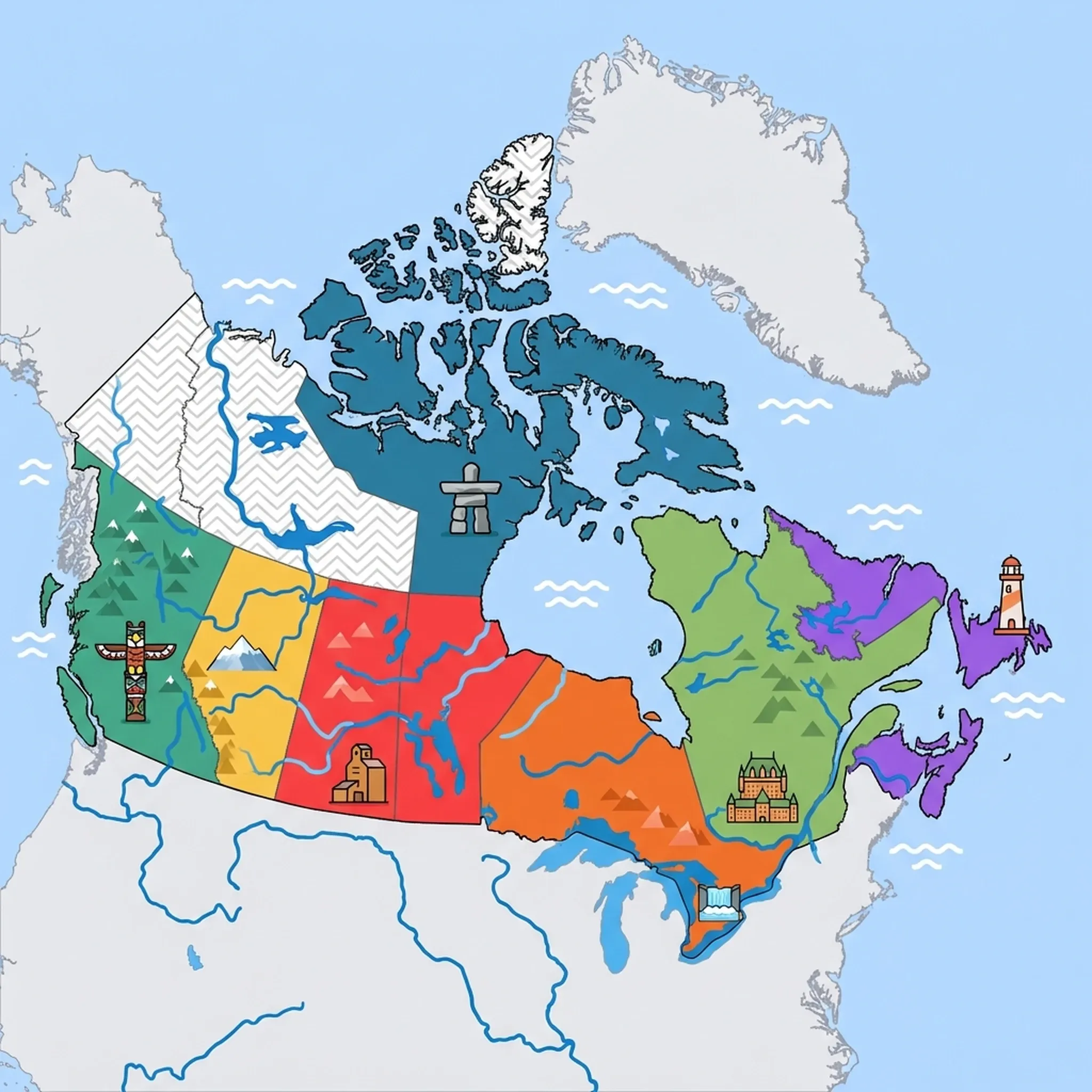
7 Regions
Alberta & Canadian Rockies
Dino digs, cowboy culture, and mountain peaks 🏔️🦕🤠
Atlantic Canada
Lighthouses, red cliffs, and the world's highest tides 🦞🌊⚓
British Columbia & Pacific Coast
Rainforests, whales, and mountain summits 🌲🐳🚠
Northern Canada & Arctic
Aurora lights, gold rush history, and the midnight sun 🌌🦌❄️
Ontario & Great Lakes
Big cities, bigger waterfalls, and endless lakes 🏙️🌊🎢
Prairies & Interior Plains
Big skies, bison herds, and warm hospitality 🌾🐃☀️
Québec
Old world charm, french culture, and winter magic 🏰🥐⚜️
Click on a region marker to explore details. Use the dropdown to color regions by activity suitability.

Getting There & Around
Getting There
- By Air – Major gateways include Toronto Pearson (YYZ), Vancouver (YVR), and Montréal-Trudeau (YUL). These hubs connect directly to Europe, Asia, and the Americas.
- By Land – Families driving from the USA can cross at numerous border points. Ensure every family member has a passport; birth certificates alone are often insufficient for land crossings for older children.
- Entry Requirements – Most visa-exempt visitors (except US citizens) need an Electronic Travel Authorization (eTA) to fly into Canada. It costs CAD 7 and is valid for five years. Check your government website for the latest visa requirements, or use the IATA Travel Centre entry-requirements checker.
Getting Around
- Car Hire – Essential for exploring Alberta & Canadian Rockies and rural areas. Distances are vast, so plan for long driving days. Child seats are legally required for young children.
- Trains – VIA Rail offers scenic but often slow and expensive routes across the country. It is more of a travel experience than a quick commuter option, though the corridor between Toronto and Québec is efficient.
- Domestic Flights – Given the country's size, flying is often the only practical way to hop between regions, such as from Ontario & Great Lakes to the West Coast. Air Canada and WestJet are the main carriers.
- Ferries – Extensive ferry networks connect British Columbia & Pacific Coast islands and Atlantic provinces. They are family-friendly, often with play areas and cafeterias.
Official Links

Packing List
Essential for hiking in June/July to protect against intense black flies and mosquitoes in rural areas.
It is polite and customary to remove shoes when entering Canadian homes and many accommodations.
Reduces severe glare from snow in winter and lakes/ocean in summer.
The air in the Prairies, Rockies, and North is extremely dry year-round; skin cracks easily.
Crucial for safely spotting bears, moose, and whales from a distance in national parks.
Keeps valuables safe during popular family activities like canoeing, kayaking, or rainy coastal hikes.

Activities & Best Times

Adventure & Nature
ExcellentHiking, wildlife, outdoor exploration, ecotourism
With 18 supporting attractions including Pacific Rim and Haida Gwaii, BC offers world-class immersion in temperate rainforests and coastal wilderness. Peak conditions for hiking and wildlife viewing occur from June to September when alpine trails are accessible and weather is most stable.
Offers vast wilderness experiences from whale watching in the St. Lawrence to the dramatic cliffs of the Gaspé Peninsula. Optimal conditions occur from June through the spectacular autumn foliage in October, while late spring can be hampered by mud and insects.
A world-class destination for wilderness immersion, featuring iconic hiking trails like the Chilkoot and elite aurora borealis viewing in Yellowknife. Peak periods align with the midnight sun for hiking and the clear, dark skies of March and September for the Northern Lights.

City & Cultural
ExcellentUrban tourism, museums, historical sites, architecture
Vancouver and Victoria provide a sophisticated blend of urban culture and world-renowned botanical gardens like Butchart Gardens. The summer months offer the best walking weather and vibrant street life, while spring and autumn are ideal for visiting the region's historic sites and museums.
Features a unique blend of European heritage and North American vibrancy, highlighted by UNESCO-listed Québec City and Montreal's world-class culinary and museum scene. Tourism peaks during the summer festival season and the iconic winter festivities in December and February.
Toronto and Ottawa offer world-class cosmopolitan experiences, historic architecture at Parliament Hill, and a diverse culinary scene. Summer months provide vibrant street life and outdoor festivals, while December is peak for festive markets and holiday heritage events.

Ski & Snow
ExcellentWinter sports, ski resorts, snow activities
Whistler Blackcomb is globally recognized as one of the world's premier ski destinations, hosted the 2010 Winter Olympics, and offers the most extensive lift-accessed terrain in North America. The current 'good' rating severely undervalues BC's position as a top-tier international ski destination. 'Excellent' is appropriate for world-class, internationally sought-after ski experiences.
Lake Louise, Sunshine Village, and other Alberta resorts are internationally recognized and hosted World Cup events. While not at Whistler's tier, they represent excellent ski experiences with reliable snow and spectacular scenery. 'Very_good' better reflects their national prominence and international recognition.
Reliable maritime snowpacks at Marble Mountain and Crabbe Mountain provide solid winter sport opportunities for families. The season peaks mid-winter with established infrastructure, though vertical drop and scale are modest compared to alpine destinations.

Educational & Exploratory
Very GoodLearning experiences, scientific sites, historical education
Home to internationally significant facilities like the Montreal Biodome and Science Centre, which offer immersive learning in world-class architectural settings. These indoor attractions are accessible most of the year, with peak demand aligning with family holiday periods.
Internationally significant facilities like the Vancouver Aquarium and Science World offer destination-level learning for families. While these are indoor venues, peak visitation occurs during the international summer holiday window when full programming is available.
Home to major institutions like the Royal Ontario Museum and the Canadian Museum of Nature which offer globally significant natural history and science collections. While largely indoor, accessibility is best during the warmer months and shoulder seasons.

Sports & Active
Very GoodSport tourism, fitness activities, active recreation
The region features premier infrastructure for mountain biking and iconic long-distance hiking like the West Coast Trail. Peak season is driven by the dry summer window essential for technical terrain, with shoulder months offering good conditions for lower-elevation cycling and trail running.
Dedicated infrastructure like the Cabot Trail's cycling routes and coastal adventure centers provide exceptional opportunities for active families. Summer months offer stable weather and fully operational facilities for world-class cycling and hiking.
Boasts the Route Verte, North America's most extensive cycling network, alongside diverse activities like canyoning and luge. The summer and early autumn provide ideal conditions for using this extensive infrastructure before winter closures.

Beach & Sea
GoodBeach resorts, marine activities: diving, snorkelling, kite surfing, wind surfing, sailing
Tofino’s Long Beach and Vancouver’s urban beaches offer authentic coastal recreation and world-class surfing. International family appeal is highest in July and August when air temperatures are warmest, though water remains cool year-round.
Rugged and scenic coastlines offer authentic maritime experiences at Cavendish and Peggy's Cove, though water temperatures are cold by global standards. The season is short, peaking when air temperatures and coastal facilities are at their prime in July and August.
While featuring beautiful coastal areas like those in the Magdalen Islands, the short swimming season and cold water temperatures limit its appeal for dedicated international beach travelers. Peak visitation is strictly limited to the height of summer in July and August.

Festivals & Seasonal
GoodEvents, celebrations, seasonal attractions
Hosts the globally influential Toronto International Film Festival (TIFF) in September and the unique Winterlude festival in February. Seasonal peaks align strictly with these specific cultural events and the summer carnival season.
Features unique global attractions such as Iceberg Alley in late spring and the Celtic Colours festival in October. These windows offer high authenticity and unique experiences that justify international travel despite the short event durations.
Host to globally recognized events like the Montreal International Jazz Festival and the Québec Winter Carnival. Timing is critical as visitation is driven by specific event windows in mid-summer and the peak of winter in February.

Relaxation & Wellness
GoodSpa retreats, wellness centers, peaceful getaways
BC features unique natural hot spring experiences, from the developed pools at Radium to remote wilderness springs like Hot Springs Cove. The summer peak ensures reliable access to remote sites, while shoulder months offer a quieter, atmospheric experience.
Centred on the Eclipse Nordic Hot Springs, providing a high-quality thermal bath experience often paired with aurora viewing. The peak experience is during the coldest months when the contrast between the hot water and sub-zero air creates a unique atmospheric effect.
Known for historic natural thermal hot springs such as Banff Upper Hot Springs, offering a traditional restorative experience. These facilities are most popular for relaxation during the freezing winter months and peak summer tourism periods.

Road Trips & Scenic
GoodScenic drives, countryside tours, route-based travel
Iconic routes such as the Sea to Sky Highway and the Pacific Rim Highway provide world-class scenic driving through mountain and coastal landscapes. Summer offers the safest conditions and best visibility for the diverse vistas of the Okanagan and coastal corridors.
The Niagara Parkway and Lake Superior Circle Tour offer spectacular scenic driving opportunities, particularly during the October leaf-peeping season. Winter conditions make long-distance scenic driving hazardous and are generally avoided by international tourists.
The Cabot Trail and Viking Trail are celebrated scenic routes that offer world-class coastal views and authentic rural culture. Peak months include the height of summer for visibility and October for the region's famous autumn foliage.

Theme Park & Entertainment
GoodAmusement parks, family entertainment venues
With 6 supporting attractions including Playland and Cultus Lake Adventure Park, the region offers solid family entertainment. These parks are highly seasonal, with peak operations and international visitation centered on the summer school holiday months.
Canada's Wonderland is a major international-standard park, complemented by the intensive entertainment infrastructure of the Niagara Falls corridor. These facilities are primarily seasonal, with most attractions closing or having limited operations during the harsh winter months.
Features major attractions like La Ronde and several significant water parks that offer high-quality family entertainment. These venues operate seasonally, with the warmest summer months of July and August being the only time all aquatic and outdoor facilities are fully optimal.

Public Holidays & Calendar Next 12 months
Public holidays, festivals, cultural celebrations, and seasonal natural phenomena coming up in Canada over the next 12 months.
Loading holidays and events...
Climate & Weather
Alberta & Canadian Rockies
Show Details
| Month | Temp °C | Rain | Humidity |
|---|
Atlantic Canada
Show Details
| Month | Temp °C | Rain | Humidity |
|---|
British Columbia & Pacific Coast
Show Details
| Month | Temp °C | Rain | Humidity |
|---|
Northern Canada & Arctic
Show Details
| Month | Temp °C | Rain | Humidity |
|---|
Ontario & Great Lakes
Show Details
| Month | Temp °C | Rain | Humidity |
|---|
Prairies & Interior Plains
Show Details
| Month | Temp °C | Rain | Humidity |
|---|

Travel Advisory
All major international agencies reach a consensus that Canada is a safe destination requiring only standard safety awareness. There are no active high-level warnings for the country.
Safety Topics
Traveller Advice (3 groups)

When a child is traveling with only one parent, it is strongly recommended to carry a signed consent letter from the non-traveling parent. Border officials may interview minors to prevent international child abduction.

Dual nationals must ensure they carry the correct passport for entry; specifically, Canadian-British or Canadian-Irish citizens must use their Canadian passport to avoid travel disruptions.

Individuals participating in winter sports in Alberta or British Columbia should monitor avalanche reports and avoid closed trails. Always inform others of your itinerary before heading into remote or mountainous areas.
Agency Summaries
The security environment is considered stable and comparable to Australia. Visitors are advised to monitor local media for updates on forest fires during warmer months and to prepare for hazardous driving conditions in winter. Petty theft, particularly from parked vehicles in cities, is a known issue.
Travelers should remain vigilant regarding the global threat of terrorism, which may target public spaces in Canada. While recreational cannabis is legal domestically, it remains strictly prohibited to transport it across international borders. Minor street crime is noted in large metropolitan areas and popular tourist sites.
New Zealand highlights the importance of staying informed about the national terrorism threat level. Travelers should be prepared for extreme weather events, including snowstorms in winter and wildfires in spring/summer. General awareness of credit card scams and bag snatching in urban centers is recommended.
Ireland advises its citizens to take standard safety measures when visiting. Essential requirements include obtaining an Electronic Travel Authorization (eTA) for air travel. Dual Irish-Canadian citizens are specifically reminded that they must use a Canadian passport to enter the country to avoid boarding denials.
Canada is classified as a safe destination where travelers should follow standard safety procedures. Major points of caution include strictly adhering to Canadian firearm regulations, which are significantly more restrictive than those in the United States, and ensuring all required entry documentation is presented at border crossings.
Information is provided for general guidance only and does not constitute travel, safety, medical, or legal advice. Conditions may change. Users are responsible for independently verifying information before travel.