
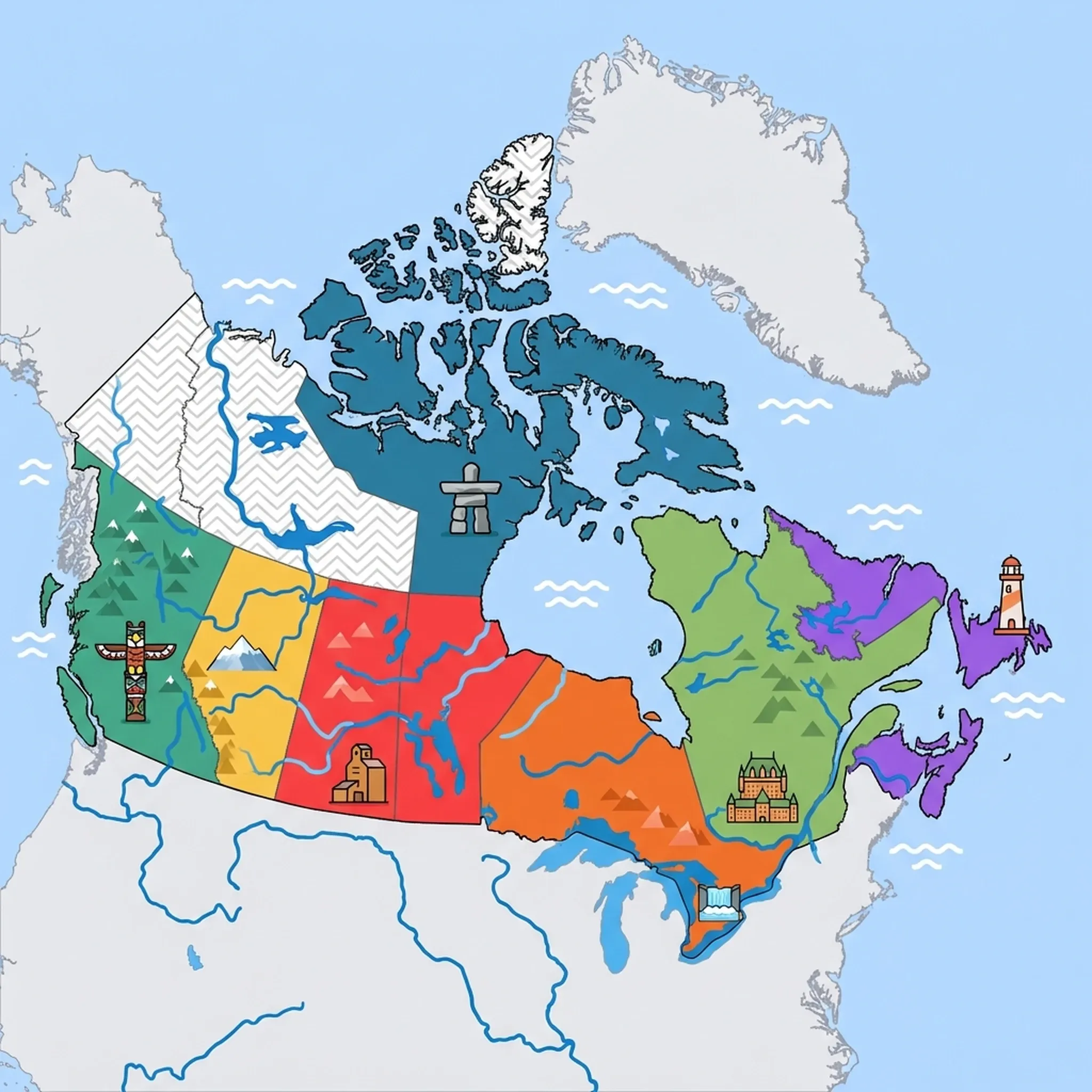
Click a region to explore
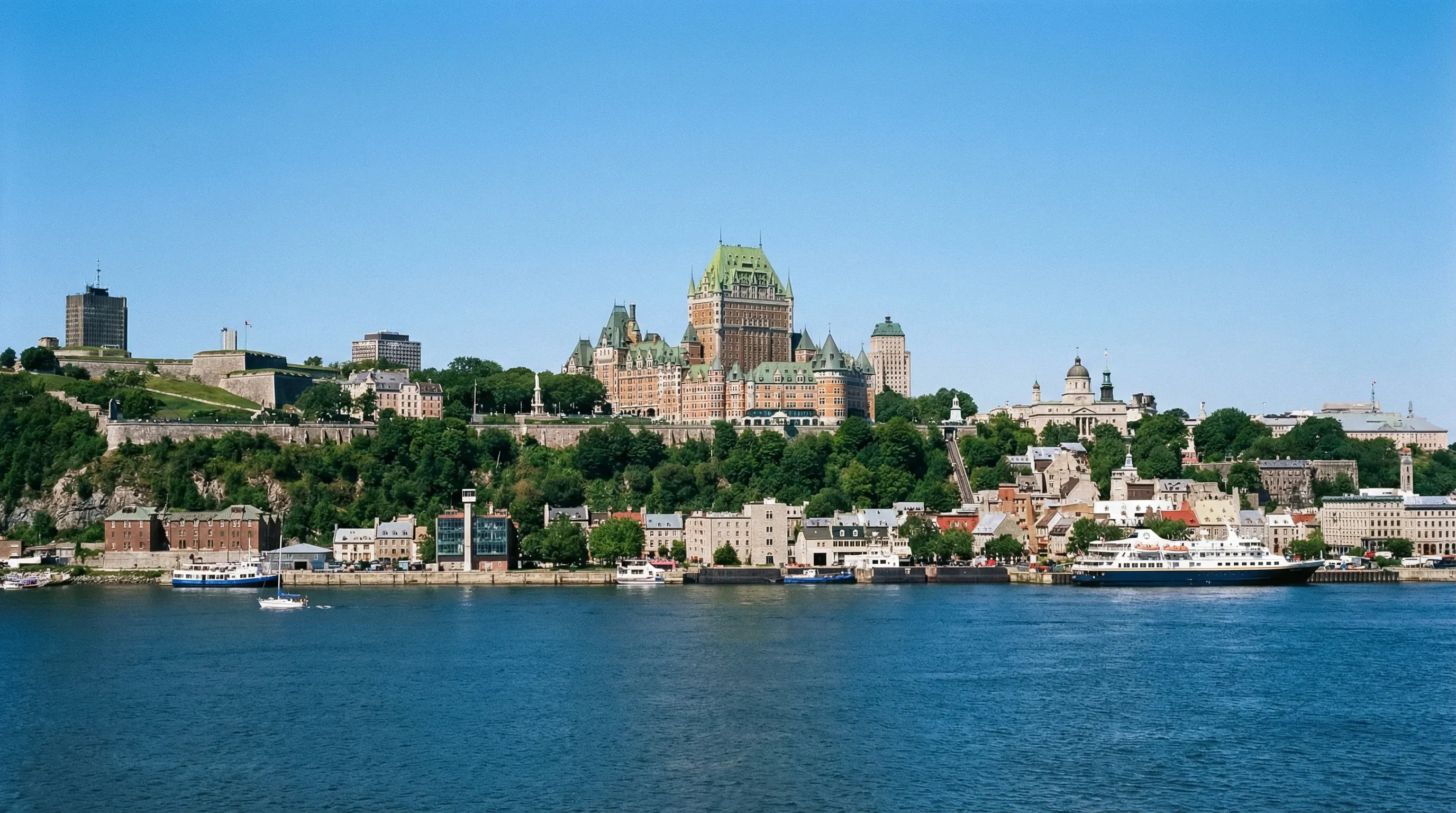
Québec is distinct within Canada—a francophone nation within a nation that offers a completely different cultural experience. For families, it is an opportunity to expose children to a different language and history without leaving the continent. The vibe here is European: café terraces spill onto cobblestone streets, old stone buildings line the rivers, and food is treated with reverence. Montréal is a vibrant, artistic metropolis where festivals happen almost every week, while Québec City looks like a fairytale town straight out of a Disney movie, dominated by the most photographed hotel in the world, the Château Frontenac.
Beyond the cities, the landscape is lush and inviting. The St. Lawrence River is the lifeline of the province, widening into a massive estuary where whales congregate. In winter, Québec embraces the cold like nowhere else; instead of hiding indoors, families flock to winter carnivals, slide down ice runs, and go dog sledding. The 'Joie de vivre' (joy of living) is palpable here. Locals are passionate and expressive, and while French is the official language, English is widely spoken in tourist areas, making it an easy cultural adventure for families.
Key Attractions
In Québec City, the Aquarium du Québec is a hit, but the real magic is walking the walls of the Fortifications of Québec National Historic Site. Just outside the city, the Montmorency Falls are higher than Niagara and offer a suspension bridge and zip line. For thrill-seekers, La Ronde in Montréal is a massive Six Flags amusement park located on an island in the river.
Nature lovers should head to Gaspésie National Park for hiking in the high mountains or La Mauricie National Park for quintessential canoe-camping. In the Laurentians, Le P'tit Train du Nord offers a gentle, flat cycling path built on an old railway line that is perfect for family bike rides.
Practical Advice
Language: In Montréal and Québec City, service is bilingual. In rural areas, a few words of French ('Bonjour', 'Merci') go a long way in earning goodwill. Winters are snowy and cold; cars must have winter tires by law from December to March. The construction holiday (last two weeks of July) sees everything booked solid—avoid if possible.
Food & Drink
Typical meal times: Lunch 12:00 pm to 2:00 pm; Dinner 6:00 pm to 9:00 pm. Restaurants linger over meals; do not expect 'rush' service.
Typical meal costs: Moderate. A family bistro meal: $90–130 CAD (approx. $66–96 USD / €60–88 EUR). Wine/alcohol is sold in corner stores (dépanneurs).
Dietary requirements: Good in cities. Rural Québec loves dairy and pork, but modern restaurants are adaptable. Nut allergies are taken very seriously.
Signature dishes:
- Poutine – The most famous export: fries topped with fresh cheese curds (which must squeak) and brown gravy. Found everywhere from shacks to high-end bistros.
- Montréal Smoked Meat – Kosher-style cured beef brisket, stacked high on rye bread with mustard. Schwartz's Deli is the pilgrimage site.
- Tourtière – A savory meat pie (usually pork and beef) seasoned with cloves and cinnamon, traditionally eaten at Christmas but available year-round.
- Montréal Bagels – Smaller, denser, and sweeter than NY bagels, boiled in honey water and baked in wood-fired ovens.
Why this score?
The Laurentian Mountains and Gaspé Peninsula provide scenic outdoor activities like skiing and coastal hiking, but they are very well-integrated with tourist services. The adventure level is comfortable for families, emphasizing cultural immersion alongside accessible nature.
Why this score?
Montréal is home to prestigious university-affiliated hospitals like the McGill University Health Centre and the Jewish General Hospital. The healthcare system is highly advanced, though visitors may encounter language barriers in more rural, monolingual French-speaking areas.
Why this score?
Old Québec and Montréal are unique cultural draws, offering a European atmosphere that attracts significant international interest from the US and Francophone countries. Major events like the Montréal Jazz Festival and the Québec Winter Carnival are global-scale attractions.

Generally cheaper than Ontario or BC. A nice hotel is $180–250 CAD (approx. $133–185 USD / €120–170 EUR). Dining offers great value for the quality. Family passes for museums are common.
Family Travel Notice
When a child is traveling with only one parent, it is strongly recommended to carry a signed consent letter from the non-traveling parent. Border officials may interview minors to prevent international child abduction.

Getting Here & Around
Getting Here
- Airports – Montréal-Trudeau (YUL) is a major international hub. Québec City (YQB) serves the capital.
- Train – VIA Rail connects Montréal and Québec City efficiently (3 hours).
- Driving – Easy access from Ontario, New York, and Vermont.
Getting Around
- Public Transport – Montréal's Metro is excellent. Québec City is best explored on foot or by the La Route Verte cycling network.
- Car – Necessary for the Gaspé Peninsula or Laurentians.
- Ferry – The Traverse Québec-Lévis offers great views of the Château Frontenac.
Nearby Airports (30 airports)
Akulivik
AKVAkulivik
Baie Comeau
YBCBaie Comeau
Bagotville
YBGLa Baie
Blanc Sablon
YBXBlanc Sablon
La Grande
YGLLa Grande
Gaspe
YGPGaspe
Havre Saint-Pierre Airport
YGVHavre St. Pierre
Kuujjuarapik
YGWKuujjuarapik
Kangirsuk
YKGKangirsuk
Schefferville
YKLSchefferville
Waskaganish
YKQWaskaganish
Chisasibi
YKUChisasibi
Chapais Airport
YMTChibougamau
Wemindji
YNCWemindji
Nemiscau Airport
YNSNemiscau
Inukjuak
YPHInukjuak
Aupaluk
YPJAupaluk
Port Menier
YPNPort-Menier
Puvirnituq Airport
YPXPovungnituk
Quebec Jean Lesage International
YQBQuebec
Quaqtaq
YQCQuaqtaq
Tasiujuaq
YTQTasiujuaq
Umiujag
YUDUmiujaq
Rouyn Noranda
YUYRouyn
Bonaventure Airport
YVBBonaventure
Val D Or
YVOVal D'Or
Kuujjuaq
YVPKuujjuaq
Salluit
YZGSalluit
East Main
ZEMEast Main
Gethsemani
ZGSLa Romaine
View full flight map for Canada →
Official Links

Packing List
Old Québec (Vieux-Québec) is full of uneven cobblestones and steep hills.
Not strictly necessary in cities, but locals appreciate the effort immensely.
Winter temperatures can hit -30°C; you need thermal base layers, not just a coat.
Essential for hiking in June/July to protect against intense black flies and mosquitoes in rural areas.
It is polite and customary to remove shoes when entering Canadian homes and many accommodations.
Reduces severe glare from snow in winter and lakes/ocean in summer.
The air in the Prairies, Rockies, and North is extremely dry year-round; skin cracks easily.
Crucial for safely spotting bears, moose, and whales from a distance in national parks.
Keeps valuables safe during popular family activities like canoeing, kayaking, or rainy coastal hikes.

Activities & Best Times

Hiking, wildlife, outdoor exploration, ecotourism
Offers vast wilderness experiences from whale watching in the St. Lawrence to the dramatic cliffs of the Gaspé Peninsula. Optimal conditions occur from June through the spectacular autumn foliage in October, while late spring can be hampered by mud and insects.

Urban tourism, museums, historical sites, architecture
Features a unique blend of European heritage and North American vibrancy, highlighted by UNESCO-listed Québec City and Montreal's world-class culinary and museum scene. Tourism peaks during the summer festival season and the iconic winter festivities in December and February.

Learning experiences, scientific sites, historical education
Home to internationally significant facilities like the Montreal Biodome and Science Centre, which offer immersive learning in world-class architectural settings. These indoor attractions are accessible most of the year, with peak demand aligning with family holiday periods.

Sport tourism, fitness activities, active recreation
Boasts the Route Verte, North America's most extensive cycling network, alongside diverse activities like canyoning and luge. The summer and early autumn provide ideal conditions for using this extensive infrastructure before winter closures.

Events, celebrations, seasonal attractions
Host to globally recognized events like the Montreal International Jazz Festival and the Québec Winter Carnival. Timing is critical as visitation is driven by specific event windows in mid-summer and the peak of winter in February.

Scenic drives, countryside tours, route-based travel
The Gaspésie Tour and Whale Route offer iconic scenic drives through rugged coastal landscapes and charming rural villages. These routes are best experienced from July through the October harvest season to ensure full accessibility of services and optimal visibility.

Winter sports, ski resorts, snow activities
Provides the best skiing in Eastern North America at resorts like Mont-Tremblant, featuring high-quality infrastructure and authentic alpine villages. The season is most reliable from January through March, with spring skiing often available into April.
Amusement parks, family entertainment venues
Features major attractions like La Ronde and several significant water parks that offer high-quality family entertainment. These venues operate seasonally, with the warmest summer months of July and August being the only time all aquatic and outdoor facilities are fully optimal.
Beach resorts, marine activities: diving, snorkelling, kite surfing, wind surfing, sailing
While featuring beautiful coastal areas like those in the Magdalen Islands, the short swimming season and cold water temperatures limit its appeal for dedicated international beach travelers. Peak visitation is strictly limited to the height of summer in July and August.

Attractions (56 total)



Public Holidays & Calendar Next 12 months
Public holidays, festivals, cultural celebrations, and seasonal natural phenomena coming up in Québec over the next 12 months.
Loading holidays and events...

Travel Advisory
All major international agencies reach a consensus that Canada is a safe destination requiring only standard safety awareness. There are no active high-level warnings for the country.
Safety Topics
Traveller Advice (3 groups)

When a child is traveling with only one parent, it is strongly recommended to carry a signed consent letter from the non-traveling parent. Border officials may interview minors to prevent international child abduction.

Dual nationals must ensure they carry the correct passport for entry; specifically, Canadian-British or Canadian-Irish citizens must use their Canadian passport to avoid travel disruptions.

Individuals participating in winter sports in Alberta or British Columbia should monitor avalanche reports and avoid closed trails. Always inform others of your itinerary before heading into remote or mountainous areas.
Agency Summaries
The security environment is considered stable and comparable to Australia. Visitors are advised to monitor local media for updates on forest fires during warmer months and to prepare for hazardous driving conditions in winter. Petty theft, particularly from parked vehicles in cities, is a known issue.
Travelers should remain vigilant regarding the global threat of terrorism, which may target public spaces in Canada. While recreational cannabis is legal domestically, it remains strictly prohibited to transport it across international borders. Minor street crime is noted in large metropolitan areas and popular tourist sites.
New Zealand highlights the importance of staying informed about the national terrorism threat level. Travelers should be prepared for extreme weather events, including snowstorms in winter and wildfires in spring/summer. General awareness of credit card scams and bag snatching in urban centers is recommended.
Ireland advises its citizens to take standard safety measures when visiting. Essential requirements include obtaining an Electronic Travel Authorization (eTA) for air travel. Dual Irish-Canadian citizens are specifically reminded that they must use a Canadian passport to enter the country to avoid boarding denials.
Canada is classified as a safe destination where travelers should follow standard safety procedures. Major points of caution include strictly adhering to Canadian firearm regulations, which are significantly more restrictive than those in the United States, and ensuring all required entry documentation is presented at border crossings.
Information is provided for general guidance only and does not constitute travel, safety, medical, or legal advice. Conditions may change. Users are responsible for independently verifying information before travel.