

Rising from the Atlantic Ocean off the coast of West Africa, Cape Verde is an archipelago of ten volcanic islands that defies easy categorization. For families, it offers a safe and fascinating bridge between cultures, mixing Portuguese colonial history with a vibrant African soul. The country is defined by its dramatic contrasts: the flat, arid islands of Sal and Boa Vista are famous for their turquoise waters and resort comforts, while the mountainous interiors of Santiago and Santo Antão offer spectacular hiking and lush scenery. The climate is dry and temperate year-round, thanks to cooling trade winds that make even the hottest days comfortable for children.
Culturally, the islands are incredibly welcoming to children. The local philosophy of Morabeza-creole for hospitality-means families are greeted with warmth everywhere. Music is the heartbeat of the nation, and older kids will enjoy the rhythmic beats of funaná and morna drifting from local cafes. While the infrastructure is developing, the laid-back "No Stress" vibe allows families to disconnect from the rush of modern life. Whether you are building sandcastles on endless dunes, spotting nesting turtles, or exploring the crater of an active volcano, Cape Verde provides an adventure that feels both exotic and secure.
Key Attractions
For a quintessential beach experience, Santa Monica Beach on Boa Vista is unmissable; its 18km of pristine white sand offers plenty of space for children to run free, though swimming should be supervised due to waves. On São Vicente, the calm, shallow waters of Baía das Gatas are far safer for younger swimmers and host a famous music festival in August. Families seeking history should visit Cidade Velha on Santiago, a UNESCO World Heritage site where children can walk through the ruins of the first European colonial outpost in the tropics and learn about the region's pirate history at the clifftop fortress.
Nature-loving families will be awestruck by Fogo, dominated by the majestic Pico do Fogo volcano. Even if you don't hike to the summit, visiting the Chã das Caldeiras Village inside the crater offers a surreal experience where kids can see houses built from lava rock and play in black volcanic ash. For greener landscapes, the Serra Malagueta Natural Park on Santiago provides accessible trails with monkeys and birds to spot. On the dramatic island of Santo Antão, the fairytale clifftop setting of Fontainhas Village-often cited as one of the villages with the best views in the world-is a visual highlight that feels like a step back in time.
Practical Advice
Best Time to Visit: Cape Verde is a year-round destination, but the best time for families is often April to June or October to mid-December when the winds are lighter. The windy season (November to March) is great for kite-surfing but can make swimming rough. Health & Safety: No specific vaccinations are mandatory for direct arrivals from Europe/USA, but check current rules if transiting through mainland Africa. Tap water is not potable; stick to bottled water. The sun is extremely strong-high SPF is essential. Logistics: "Island hopping" requires patience as domestic flights can be delayed. It is often best to pick one or two islands rather than trying to see too many.
Food & Drink
Typical meal times: Lunch is usually served from 12:30 pm to 3:00 pm, and dinner from 7:00 pm to 10:00 pm. Service is relaxed and can be slower than in Western countries.
Typical meal costs: 800–1,500 CVE (approx. $8–15 USD / €7–14 EUR) for a main dish in a local restaurant. Tourist-oriented places charge 1,800–2,800 CVE (approx. $18–28 USD / €16–25 EUR).
Dietary requirements: Vegetarian options are becoming more common in tourist hubs like Sal and Boa Vista but can be limited to omelets or side salads in rural areas. Gluten-free awareness is low; stick to naturally GF dishes like grilled fish, rice, and vegetables. Dairy is not heavily used in main meals.
Family-friendly dining: Children are welcome everywhere. Highchairs are standard in resorts but rare in local tascas. Most restaurants will happily cook a plain grilled chicken or fish with fries (batata frita) for kids.
Signature dishes:
- Cachupa – The national dish, a slow-cooked stew of corn (hominy), beans, cassava, and sweet potato, often with fish or meat. The "refogada" version (fried leftovers with an egg) is a popular breakfast.
- Grilled Fresh Tuna – Cape Verde has some of the world's best tuna, often served simply grilled with lime and boiled vegetables.
- Queijo de Cabra com Doce de Papaia – A simple, kid-friendly dessert of mild local goat cheese served with sweet papaya jam.
- Buzio – A rich stew made from shellfish, popular on islands like Santiago and São Vicente.
Family Travel Notice
Families should take extra care with food and water hygiene due to recent spikes in Shigella and Salmonella infections reported in returning tourists.

While cheaper than Europe, Cape Verde relies heavily on imports, keeping prices moderate rather than budget. A family of four should budget 15,000–22,000 CVE (approx. $150–220 USD / €135–200 EUR) per day for mid-range accommodation, meals, and activities. Resort packages in Sal or Boa Vista can offer better value than independent island-hopping.
Age Suitability





Did you know? Cape Verde welcomes approximately 785,000 international visitors per year. Most visitors come from Europe.

Explore Regions
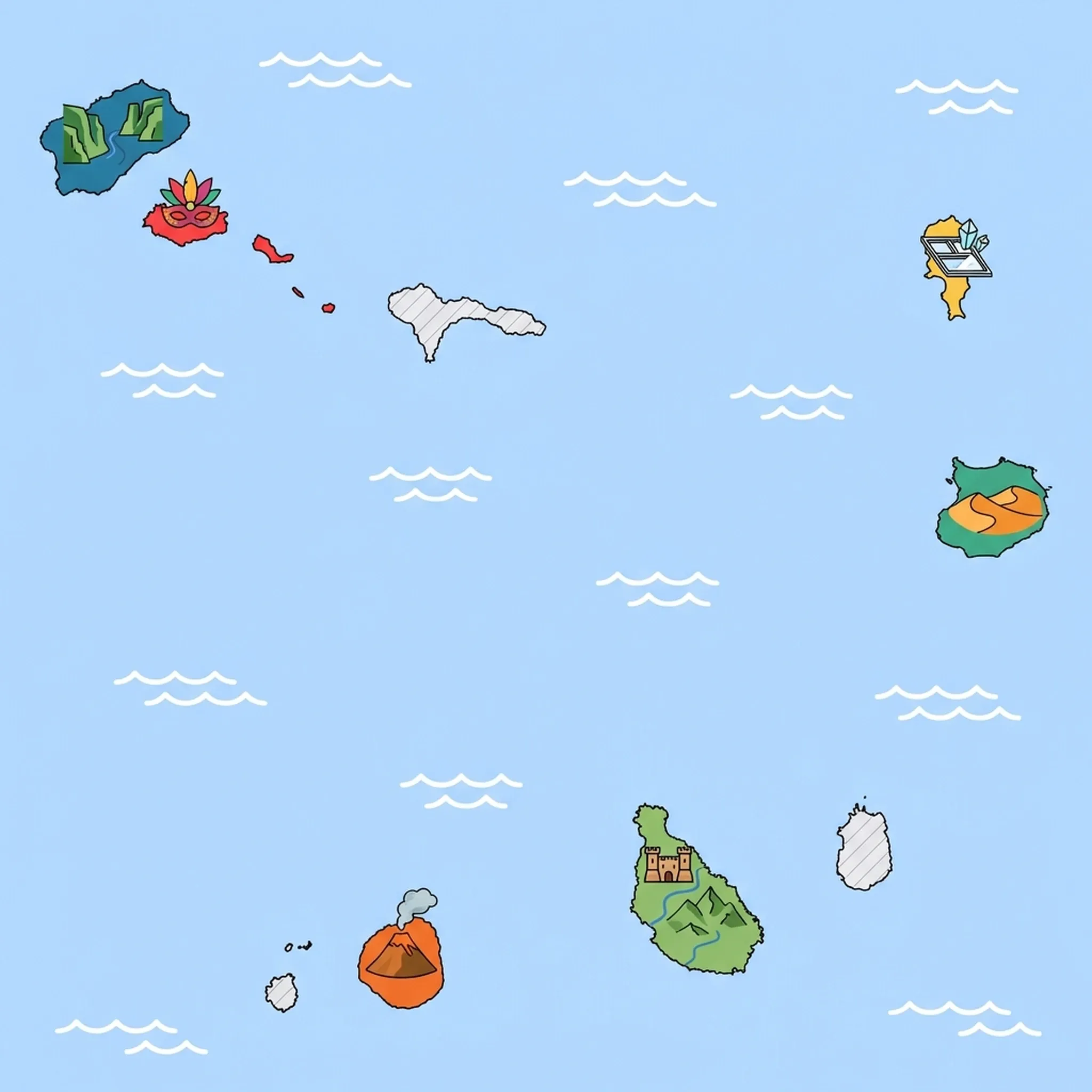
6 Regions
Boa Vista
Endless golden dunes and turquoise waters 🐢
Fogo
Living on the edge of a volcano 🌋
Sal
Sun, salt, and easy breezy family fun ☀️
Santiago
The soul of the islands: History, mountains, and markets 🇨🇻
Santo Antão
Vertical peaks and emerald valleys ⛰️
São Vicente
The rhythm of the islands: Music, art, and carnival 🎶
Click on a region marker to explore details. Use the dropdown to color regions by activity suitability.

Getting There & Around
Getting There
- By Air – International flights arrive at Amílcar Cabral International Airport (SID) on Sal and Aristides Pereira International Airport (BVC) on Boa Vista, mainly from Europe (TUI, TAP Air Portugal). Nelson Mandela International Airport (RAI) on Santiago serves regular flights from Lisbon, Boston, and West Africa.
- Entry Requirements – US, UK, and EU citizens are generally visa-exempt for stays up to 30 days but MUST complete the EASE online pre-registration at least 5 days before travel and pay the Airport Security Tax (TSA). Check your government website for the latest visa requirements, or use the IATA Travel Centre entry-requirements checker.
Getting Around
- Domestic Flights – The fastest way to move between distant islands like Sal and Santiago. Schedules can be changeable, so book flexible connections.
- Ferries – Operated by CV Interilhas. Reliable and affordable for shorter crossings, such as the 60-minute scenic trip between São Vicente and Santo Antão. Longer routes can be rough for those prone to seasickness.
- Aluguers – Shared minibuses that act as collective taxis. They are the cheapest and most authentic way to travel locally. You simply flag one down and pay a small fixed fare (usually under €2).
- Taxis – Plentiful in towns and resorts. Agree on the fare before starting the journey or ensure the meter is used.
Official Links

Packing List
Essential for protecting feet from sharp volcanic rocks and sea urchins common on many non-resort beaches.
Strong trade winds make evenings surprisingly chilly, and mountain areas like Fogo and Santo Antão are cold at altitude.
Inter-island ferry crossings can be very rough, and mountain roads are steep and winding.
Specific brands are hard to find and expensive; stock in local supermarkets is inconsistent.
Power cuts can occur on smaller islands; useful for keeping phones charged during long hiking days.

Activities & Best Times

Adventure & Nature
ExcellentHiking, wildlife, outdoor exploration, ecotourism
As West Africa's premier trekking destination, the island offers dramatic volcanic landscapes and lush valleys like Paúl that provide a world-class, authentic wilderness experience. The dry peak season ensures optimal trail safety and clear vistas, while the late summer months are often too humid and rainy for comfortable exploration.
Offers dramatic volcanic landscapes including Monte Verde and Viana Volcano; the cooler dry months provide perfect conditions for trekking. August and September are less ideal due to heat and potential trail washouts from seasonal rains.
Features unique volcanic landscapes like the Buracona Blue Eye and significant biodiversity conservation projects. Peak months offer ideal conditions for coastal hiking and cycling, while the shoulder months coincide with the turtle nesting season.

City & Cultural
Very GoodUrban tourism, museums, historical sites, architecture
Mindelo is the cultural heart of Cape Verde, offering sophisticated art galleries like CNAD and a famous music scene. Peak season aligns with the cooler months and the vibrant February Carnival, while the late summer humid period sees reduced city activity.
The iconic cliffside village of Fontainhas and the historic center of Ponta do Sol offer sophisticated travelers a glimpse into a unique, preserved mountain culture. These cultural sites are best visited during the dry season to avoid the heavy mists and humidity that can obscure the island's famous architectural views in late summer.
Distinctive cultural experiences in the Sal Rei historic center and traditional villages like Povoação Velha provide an authentic look at island life. The atmosphere is most vibrant during the dry winter months when the colonial architecture is best explored on foot.

Sports & Active
Very GoodSport tourism, fitness activities, active recreation
Home to world-class surfing infrastructure at Ponta Preta and dedicated cycling routes that attract international athletes. The peak season is defined by the reliable trade winds necessary for the island's primary sporting identity.
Focuses on organized trekking and hiking routes around the island's peaks and natural parks. The infrastructure is solid for active families, with the best conditions found during the stable, cooler weather of the Cape Verdean winter.
The island's internationally recognized trekking and mountain cycling routes provide significant vertical challenges for active families. These activities are best pursued during the cooler, drier months to ensure physical comfort and peak performance on the island's demanding terrain.

Beach & Sea
GoodBeach resorts, marine activities: diving, snorkelling, kite surfing, wind surfing, sailing
Features unique spots like the Baía das Gatas natural lagoon and Laginha urban beach, with peak conditions during the breezy dry season ideal for wind sports. September is classified as off-peak due to higher humidity and the region's primary rainfall window.
Remote volcanic beaches like Tarrafal de Monte Trigo offer an exclusive and rugged coastal experience far from mass tourism. Peak months align with the driest periods for reliable sun, whereas the rainy season can complicate travel logistics to these isolated coastal enclaves.
Sal offers consistent trade winds and expansive white sand beaches, making it a premier destination for wind and kite surfing. The peak months align with the 'windy season' and comfortable air temperatures for European winter escapes.

Road Trips & Scenic
GoodScenic drives, countryside tours, route-based travel
The island circuit provides spectacular coastal views and mountain ascents on well-maintained scenic roads. Driving is most pleasant during the dry months when visibility is high and temperatures are comfortable for stopping at viewpoints.
The Estrada da Corda is a legendary scenic route featuring cobblestone engineering and breathtaking ridge-line views across volcanic craters. Driving conditions are most spectacular and safe when visibility is high during the dry season, avoiding the clouds and slippery surfaces common in August and September.
Defined scenic circuits like the Northern Shipwreck route offer adventurous 4x4 driving through dunes and volcanic landscapes. Best experienced when visibility is high and temperatures are moderate during the dry season.

Educational & Exploratory
GoodLearning experiences, scientific sites, historical education
Internationally significant conservation efforts at Project Biodiversity and the industrial history of the Pedra de Lume salt pans provide unique learning experiences. Peak months reflect the critical turtle nesting and hatching period for scientific engagement.
The Fogo Natural Park Visitor Centre provides significant scientific insight into volcanic geology and endemic biodiversity for inquisitive families. Facility accessibility and island infrastructure are most reliable during the main tourism season outside of the rainy months.
The Grandvaux Barbosa National Botanical Garden and the visitor center at Serra Malagueta provide valuable ecological insights, though they are secondary to the broader cultural sites. Conditions are most comfortable for educational exploration during the dry season when humidity is lowest.

Festivals & Seasonal
MarginalEvents, celebrations, seasonal attractions

Public Holidays & Calendar Next 12 months
Public holidays, festivals, cultural celebrations, and seasonal natural phenomena coming up in Cape Verde over the next 12 months.
Loading holidays and events...

Climate & Weather
Boa Vista
Show Details
| Month | Temp °C | Rain | Humidity |
|---|
Fogo
Show Details
| Month | Temp °C | Rain | Humidity |
|---|
Sal
Show Details
| Month | Temp °C | Rain | Humidity |
|---|
Santiago
Show Details
| Month | Temp °C | Rain | Humidity |
|---|
Santo Antão
Show Details
| Month | Temp °C | Rain | Humidity |
|---|
São Vicente
Show Details
| Month | Temp °C | Rain | Humidity |
|---|

Travel Advisory
The majority of international agencies classify Cape Verde as a destination requiring only standard safety awareness. However, several agencies highlight elevated crime in Praia and specific health risks, suggesting travellers remain vigilant.
Safety Topics
Traveller Advice (3 groups)

Ensure you have comprehensive travel insurance that includes medical air evacuation, as healthcare facilities are limited and inter-island transport for emergencies can be difficult.

Female travellers should be cautious as sexual assaults have been reported. It is advised to avoid walking alone in isolated areas or on beaches after dark.

Families should take extra care with food and water hygiene due to recent spikes in Shigella and Salmonella infections reported in returning tourists.
Agency Summaries
Travellers should be extra vigilant due to high crime rates. Offences like theft and muggings are common in major urban centres and tourist spots across the islands of Santiago, Sal, and Boa Vista.
While crime levels are generally low, petty theft and muggings occur in Praia and on Sal and Boa Vista islands. Recent health alerts indicate an increase in gastrointestinal infections among visitors.
Cabo Verde is considered a safe destination for most visitors. However, increased caution is advised specifically in the capital city of Praia due to a higher prevalence of crime.
Vigilance is necessary due to specific health risks and crime. Health authorities have highlighted concerns regarding Zika virus transmission and high rates of Hepatitis C.
General safety conditions are stable, but travellers are encouraged to stay informed about local risks and maintain standard safety awareness throughout their stay.
No specific travel advisory is in effect for Cabo Verde. Visitors should follow standard safety routines and ensure they have robust travel insurance covering medical evacuations.
Information is provided for general guidance only and does not constitute travel, safety, medical, or legal advice. Conditions may change. Users are responsible for independently verifying information before travel.