
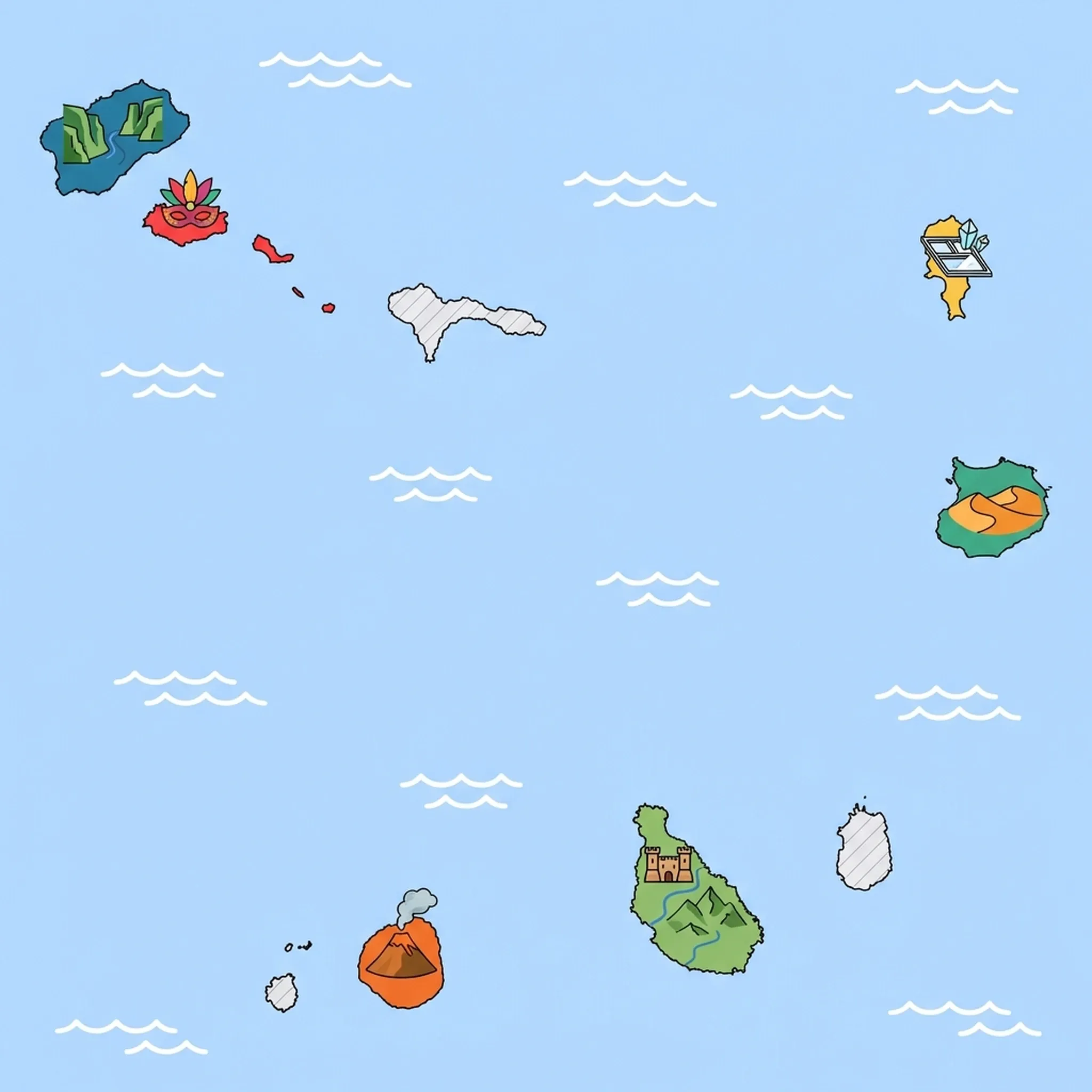
Click a region to explore
Overview
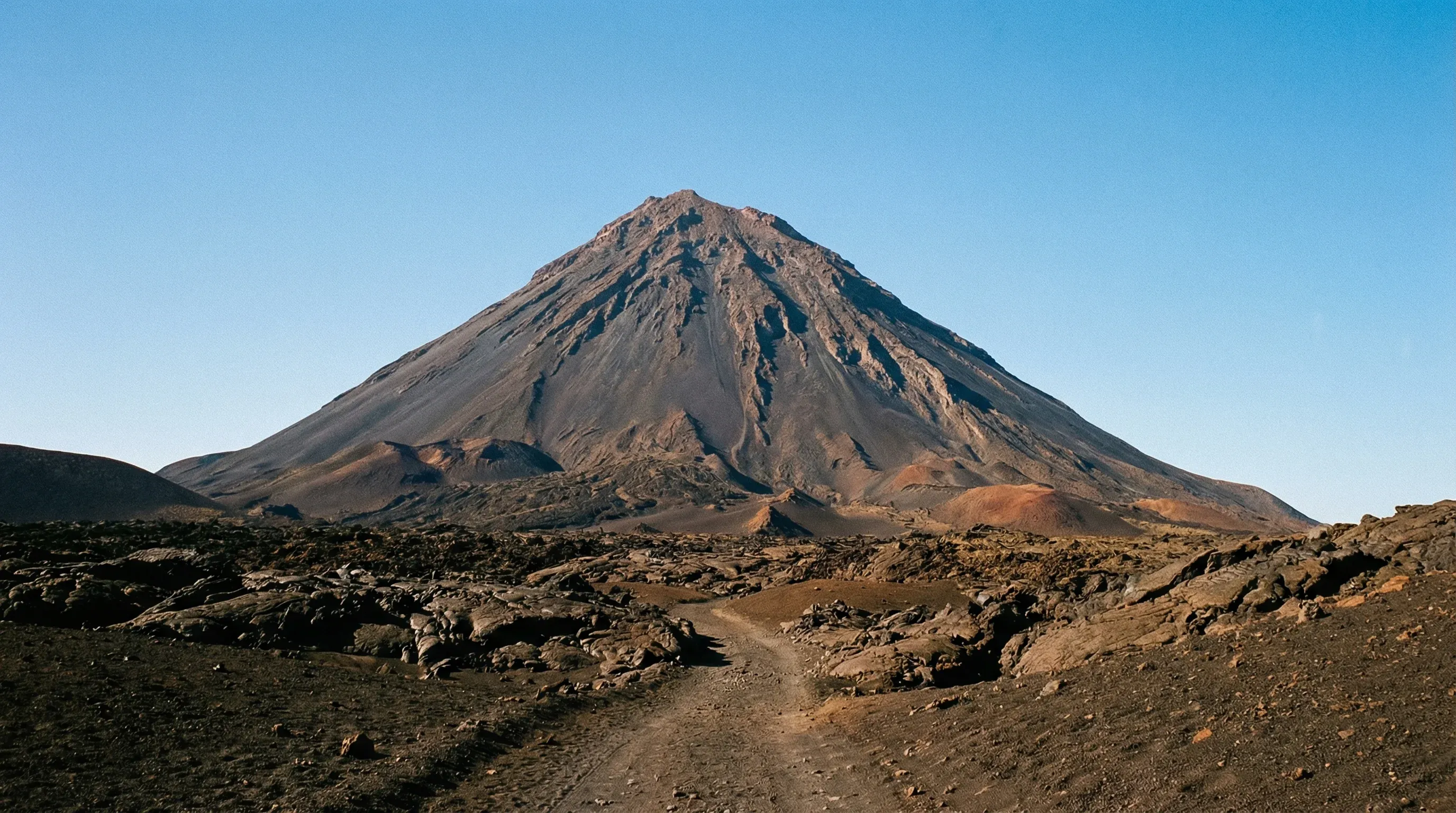
Fogo is an island of stark, dramatic beauty that feels like a different planet. Dominated by a massive active volcano, the geography here is defined by black lava flows, fertile vineyards, and coffee plantations. For families with older children or teenagers, this is a giant geology classroom come to life. The sensation of driving up through the clouds and descending into the lunar-like landscape of the crater is an experience no child will forget. Unlike the beach islands, Fogo is about exploration, hiking, and rural culture.
The culture here is deeply connected to the volcano. The people of the Chã (the crater) have a unique resilience, having rebuilt their lives on top of fresh lava from the 2014 eruption. While the volcano is the star, the main town of São Filipe is arguably the prettiest in the archipelago, with well-preserved colonial mansions (sobrados) and cobbled streets that tell stories of the island's wealthy past. It's a place to walk, learn, and taste—especially the famous local grape juice and wine.
Key Attractions
The absolute must-do is visiting Chã das Caldeiras Village. This community lives inside the volcanic crater. Families can walk over the cooling lava flows from 2014, seeing rooftops barely poking out from the rock—a sobering and fascinating sight. Dominating the view is the majestic Pico do Fogo. While summiting the peak is a strenuous hike suitable only for fit teens and parents, there are many easier, flatter trails around the crater floor where kids can crunch over volcanic cinders and explore 'mini' craters.
Practical Advice
Fogo is best visited as a 2-3 day trip from Santiago. The crater gets cold at night due to the altitude, so bring warm layers. Hiking boots or sturdy sneakers are non-negotiable; flip-flops will not survive the lava rocks.
Food & Drink
Typical meal times: Lunch 12:00 pm to 2:00 pm; Dinner 7:00 pm to 9:30 pm.
Typical meal costs: Meals are reasonable, around 700–1,200 CVE (approx. $7–12 USD / €6.50–11 EUR) per person.
Dietary requirements: Local diet is heavy on meat and fish. Vegetarians can rely on side dishes of beans, manioc, and vegetables, but strict vegan options are rare.
Signature dishes:
- Djagacida – A rich stew made with cornmeal and beans, traditionally cooked with pork or sausage.
- Fogo Wine (Manecom) – A chaotic, potent wine produced inside the crater; for kids, there is delicious fresh grape juice.
- Coffee – Fogo produces some of the world's best coffee; parents should definitely try a cup after a meal.
Why this score?
Home to the active Pico do Fogo, the island provides high-level adventure centered on climbing the 2,829-meter volcanic peak. Staying within the Chã das Caldeiras crater, surrounded by recent lava flows and rugged volcanic soil, offers a raw and physically demanding experience for travelers.
Why this score?
Healthcare is very limited, with the main hospital in São Filipe offering only fundamental services. The remote nature of the volcanic crater and the limited English-speaking medical staff make it a challenging environment for families with significant medical needs.
Why this score?
Fogo is an emerging niche destination primarily visited by hikers and volcano enthusiasts rather than mass-market tourists. The island's economy is centered more on agriculture and wine than international leisure tourism, resulting in a low but dedicated visitor flow.

Fogo is generally affordable. A night in a 'funco' (traditional stone roundhouse) in the crater costs about 3,000–5,000 CVE (approx. $30–50 USD / €27–45 EUR). Transport is the main expense; a private taxi return trip to the volcano can cost 4,000–6,000 CVE (approx. $40–60 USD / €36–54 EUR).
Family Travel Notice
Families should take extra care with food and water hygiene due to recent spikes in Shigella and Salmonella infections reported in returning tourists.

Getting Here & Around
Getting Here
- Airports – São Filipe Airport (SFL) has daily connections from Praia (Santiago). The flight is short (30 mins) and spectacular.
- Ferry – The ferry from Praia takes about 3-4 hours. The sea crossing can be very rough; flying is strongly recommended for families with kids to avoid seasickness.
Getting Around
- Aluguer (Minibus) – Shared vans run from São Filipe to the crater (Chã das Caldeiras Village) usually once a day in the morning, returning in the afternoon.
- Private Taxi – The most convenient way for families to reach the volcano. Drivers act as guides and can stop for photos.
Nearby Airports (1 airport)
Sao Filipe Airport
SFLSao Filipe
View full flight map for Cape Verde →
Official Links

Packing List
Nights in the crater (Chã das Caldeiras) are high-altitude and can drop below 10°C, much colder than the coast.
Volcanic sharp rocks ('aa' lava) will shred sandals and cut toes instantly.
Electricity in the crater villages can be intermittent or generator-based; street lighting is minimal.
The air in the volcanic crater is extremely dry and dusty.
Essential for protecting feet from sharp volcanic rocks and sea urchins common on many non-resort beaches.
Strong trade winds make evenings surprisingly chilly, and mountain areas like Fogo and Santo Antão are cold at altitude.
Inter-island ferry crossings can be very rough, and mountain roads are steep and winding.
Specific brands are hard to find and expensive; stock in local supermarkets is inconsistent.
Power cuts can occur on smaller islands; useful for keeping phones charged during long hiking days.

Activities & Best Times

Hiking, wildlife, outdoor exploration, ecotourism
Offers a unique and authentic volcanic landscape centered on the active Pico do Fogo and the Chã das Caldeiras crater. Peak months provide optimal temperatures and visibility for trekking, while heavy rains in August and September make trails through volcanic ash unstable and unpleasant.

Urban tourism, museums, historical sites, architecture
São Filipe is one of Cape Verde's most authentic colonial towns with its distinctive 'sobrado' architecture and living crater culture. The dry, cooler months are ideal for exploring urban heritage, whereas peak summer humidity and seasonal rains detract from the walking experience.

Sport tourism, fitness activities, active recreation
Provides challenging, world-class hiking routes including the summit of Pico do Fogo and the steep descent to Mosteiros. These high-intensity activities are best suited to the cooler months, as heavy tropical rainfall in August and September can create dangerous conditions on volcanic slopes.

Beach resorts, marine activities: diving, snorkelling, kite surfing, wind surfing, sailing
Features dramatic volcanic black sand beaches and natural pools like Salinas de São Jorge, though rough Atlantic swells limit swimming. Spring months offer the best balance of rising temperatures and calmer sea conditions before the late summer rain season.

Learning experiences, scientific sites, historical education
The Fogo Natural Park Visitor Centre provides significant scientific insight into volcanic geology and endemic biodiversity for inquisitive families. Facility accessibility and island infrastructure are most reliable during the main tourism season outside of the rainy months.

Scenic drives, countryside tours, route-based travel
The spectacular drive from São Filipe into the volcanic crater is a world-class scenic route, though the island's road network is limited. Optimal visibility and road safety are found in the dry season, with heavy late-summer rains occasionally causing washouts on steep terrain.




Public Holidays & Calendar Next 12 months
Public holidays, festivals, cultural celebrations, and seasonal natural phenomena coming up in Fogo over the next 12 months.
Loading holidays and events...

Travel Advisory
The majority of international agencies classify Cape Verde as a destination requiring only standard safety awareness. However, several agencies highlight elevated crime in Praia and specific health risks, suggesting travellers remain vigilant.
Safety Topics
Traveller Advice (3 groups)

Ensure you have comprehensive travel insurance that includes medical air evacuation, as healthcare facilities are limited and inter-island transport for emergencies can be difficult.

Female travellers should be cautious as sexual assaults have been reported. It is advised to avoid walking alone in isolated areas or on beaches after dark.

Families should take extra care with food and water hygiene due to recent spikes in Shigella and Salmonella infections reported in returning tourists.
Agency Summaries
Travellers should be extra vigilant due to high crime rates. Offences like theft and muggings are common in major urban centres and tourist spots across the islands of Santiago, Sal, and Boa Vista.
While crime levels are generally low, petty theft and muggings occur in Praia and on Sal and Boa Vista islands. Recent health alerts indicate an increase in gastrointestinal infections among visitors.
Cabo Verde is considered a safe destination for most visitors. However, increased caution is advised specifically in the capital city of Praia due to a higher prevalence of crime.
Vigilance is necessary due to specific health risks and crime. Health authorities have highlighted concerns regarding Zika virus transmission and high rates of Hepatitis C.
General safety conditions are stable, but travellers are encouraged to stay informed about local risks and maintain standard safety awareness throughout their stay.
No specific travel advisory is in effect for Cabo Verde. Visitors should follow standard safety routines and ensure they have robust travel insurance covering medical evacuations.
Information is provided for general guidance only and does not constitute travel, safety, medical, or legal advice. Conditions may change. Users are responsible for independently verifying information before travel.