
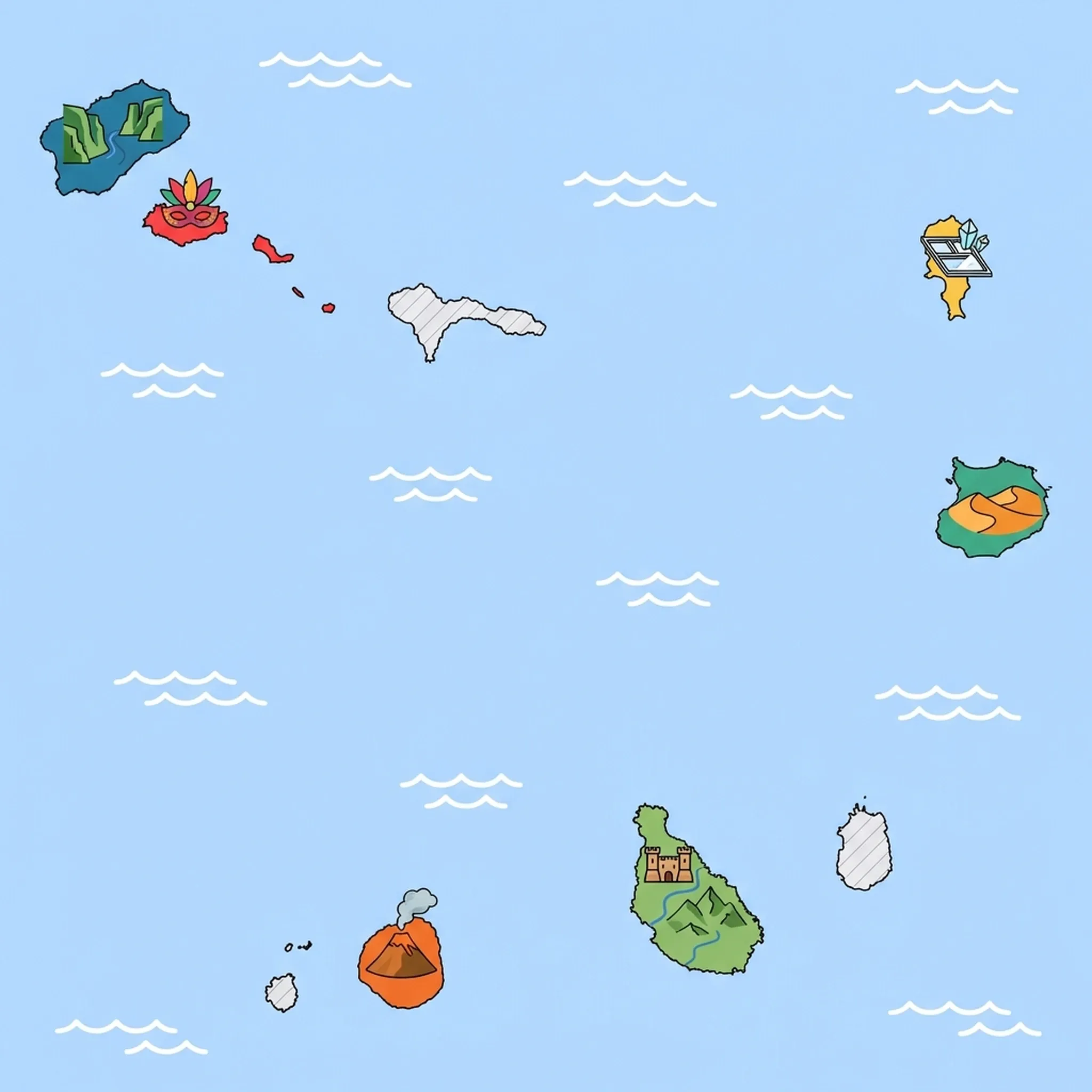
Click a region to explore
Overview
Sal is the most developed island for tourism, making it the easiest entry point for families visiting Cape Verde. The geography is strikingly flat and desert-like—do not expect lush jungles here. Instead, Sal offers a moonscape of brown earth surrounded by some of the most stunning turquoise water in the Atlantic. For parents, the main draw is the convenience: Santa Maria, the main tourist hub, is walkable, safe, and packed with restaurants, while the beaches are wide with soft, white sand.
The island is famous for its trade winds, making it a global capital for kitesurfing. While this might be advanced for small kids, watching the colorful kites fill the sky is entertainment in itself. Sal is also about "No Stress"—the island's unofficial motto. You can spend days just building sandcastles, but short trips to the interior reveal the island's history of salt production and unique geological features like mirages in the desert interior.
Key Attractions
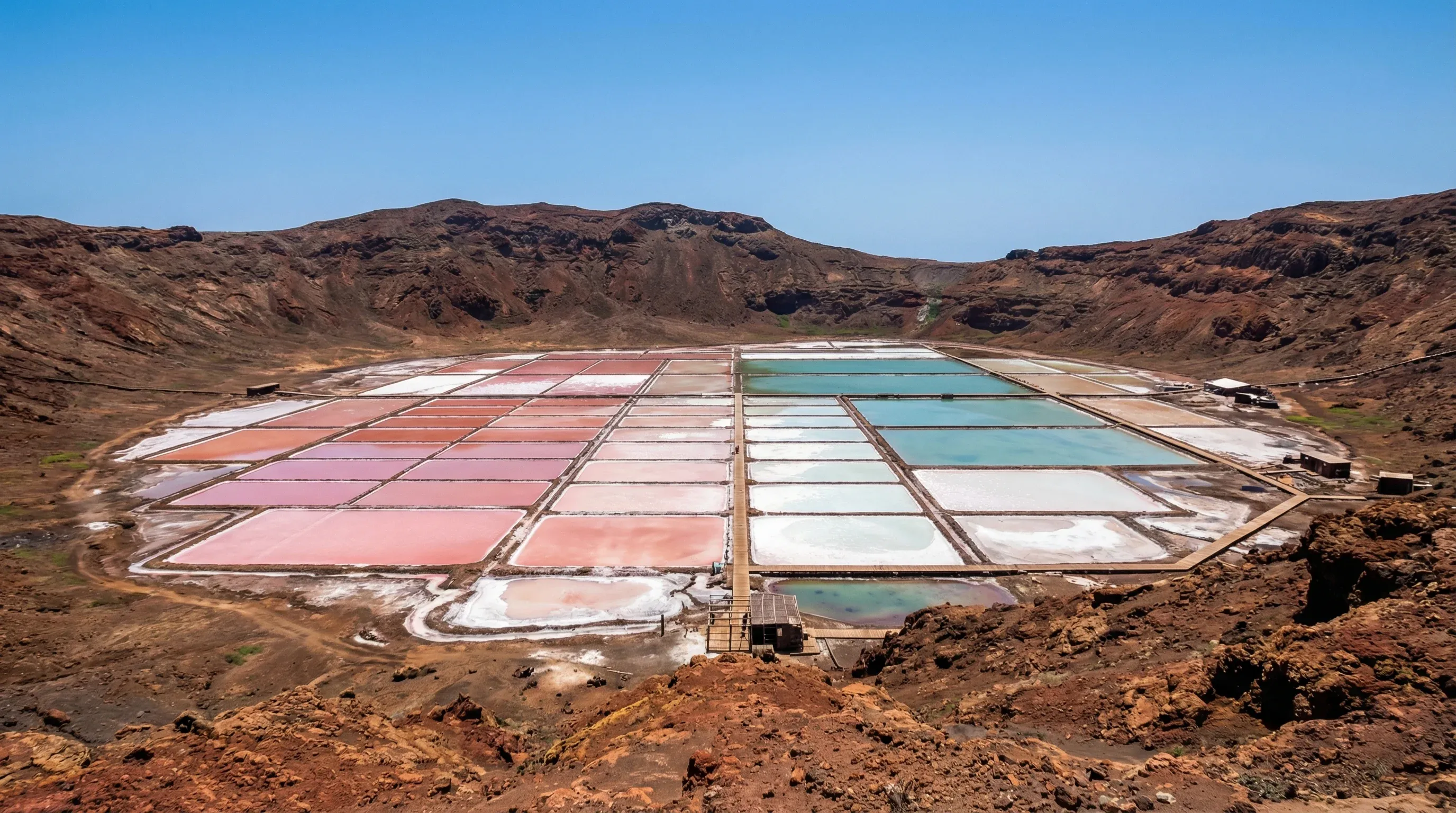
While Sal is small, it packs in some fun excursions. The Pedra de Lume Salt Pans are located inside an extinct volcano crater. The water here is 26 times saltier than the sea, allowing families to float on the surface just like in the Dead Sea—a fun and giggly experience for kids (just don't get the water in your eyes!). Another highlight is Shark Bay, where you can wade in shallow water and see lemon sharks swimming around your ankles. They are harmless to humans, and seeing wild sharks this close is a thrill for older children. Buracona, or the "Blue Eye," is a natural pool where sunlight creates a stunning underwater electric-blue reflection at midday.
Practical Advice
Sal is windy, especially from December to April. This keeps the heat manageable but means you need to hold onto your sunhats. The sun is deceptively strong due to the wind, so high SPF is essential. Tap water is desalinated; it's safe for brushing teeth but bottled water is better for drinking.
Food & Drink
Typical meal times: Lunch 12:30 pm to 3:00 pm; Dinner 7:00 pm to 10:30 pm.
Typical meal costs: Tourist prices apply in Santa Maria. Main dishes range from 1,000–2,000 CVE (approx. $10–20 USD / €9–18 EUR).
Dietary requirements: Excellent for dietary needs. Santa Maria has many European-owned restaurants offering vegan, gluten-free, and kid-friendly menus (pizza/pasta) alongside local food.
Signature dishes:
- Garoupa Grelhada – Grilled Grouper is the king of fish here, usually served fresh with vegetables and rice.
- Carpaccio de Atum – Raw tuna carpaccio, often served as a starter, taking advantage of the incredibly fresh catch.
- Doce de Papaya – A sweet papaya jam often served with goat cheese for dessert.
Why this score?
Adventure on Sal is mostly curated and beach-oriented, such as wading with lemon sharks at Shark Bay or kitesurfing. The island's flat, arid geography makes it easy to navigate via tour operators, offering a low-stakes outdoor experience suitable for all ages.
Why this score?
Due to its high volume of tourists, Sal has better private clinic options and more English-speaking staff than most other islands. While basic emergencies can be handled locally in Santa Maria or Espargos, complex procedures still require transfer to the capital or Europe.
Why this score?
Sal is the primary tourism hub of Cape Verde, receiving the majority of the country's international arrivals via its well-connected airport. The town of Santa Maria is a recognized international beach destination with a high concentration of all-inclusive resorts and established tourism infrastructure.

Sal is the most expensive island in Cape Verde due to tourism. Supermarket items and restaurant meals are priced near European levels. A family dinner with drinks can easily cost 6,000–9,000 CVE (approx. $60–90 USD / €55–80 EUR). However, budget local eateries ('snack-bars') still exist if you look for them away from the beach front.
Family Travel Notice
Families should take extra care with food and water hygiene due to recent spikes in Shigella and Salmonella infections reported in returning tourists.

Getting Here & Around
Getting Here
- Airports – Amílcar Cabral International Airport (SID) is the main international gateway to the country, with direct flights from Lisbon, London, and other European hubs.
- Ferry – Ferries connect Sal to Boa Vista and São Vicente, but the journey is long and often delayed. Flying is the standard way to arrive.
Getting Around
- Taxis – Blue and yellow taxis are everywhere in Santa Maria. A trip within town costs about 300–400 CVE ($3–4 USD).
- Island Tours – The best way to see the sights (Salt Pans, Blue Eye) is to book a half-day "island tour" in a 4x4 or minibus.
- Walking – Santa Maria is compact and flat, making it very stroller-friendly compared to other islands.
Nearby Airports (1 airport)
Amilcar Cabral International Airport
SIDSal
View full flight map for Cape Verde →
Official Links

Packing List
Shark Bay requires walking on sharp volcanic rocks in shallow water to see the sharks.
The constant trade winds will tangle long hair instantly; essential for comfort.
The salt pans are extremely saline; a single drop in a child's eye stings badly.
To stop your beach towels from blowing away in the strong trade winds.
Essential for protecting feet from sharp volcanic rocks and sea urchins common on many non-resort beaches.
Strong trade winds make evenings surprisingly chilly, and mountain areas like Fogo and Santo Antão are cold at altitude.
Inter-island ferry crossings can be very rough, and mountain roads are steep and winding.
Specific brands are hard to find and expensive; stock in local supermarkets is inconsistent.
Power cuts can occur on smaller islands; useful for keeping phones charged during long hiking days.

Activities & Best Times

Hiking, wildlife, outdoor exploration, ecotourism
Features unique volcanic landscapes like the Buracona Blue Eye and significant biodiversity conservation projects. Peak months offer ideal conditions for coastal hiking and cycling, while the shoulder months coincide with the turtle nesting season.

Sport tourism, fitness activities, active recreation
Home to world-class surfing infrastructure at Ponta Preta and dedicated cycling routes that attract international athletes. The peak season is defined by the reliable trade winds necessary for the island's primary sporting identity.

Beach resorts, marine activities: diving, snorkelling, kite surfing, wind surfing, sailing
Sal offers consistent trade winds and expansive white sand beaches, making it a premier destination for wind and kite surfing. The peak months align with the 'windy season' and comfortable air temperatures for European winter escapes.

Urban tourism, museums, historical sites, architecture
The vibrant fishing culture of Palmeira and the historic pier of Santa Maria offer an authentic Cape Verdean atmosphere known as Morabeza. Tourism activity is highest when the weather is dry and pleasant, avoiding the humid, hot summer months.

Learning experiences, scientific sites, historical education
Internationally significant conservation efforts at Project Biodiversity and the industrial history of the Pedra de Lume salt pans provide unique learning experiences. Peak months reflect the critical turtle nesting and hatching period for scientific engagement.

Scenic drives, countryside tours, route-based travel
The Sal Island Grand Circuit offers a rugged 4x4 experience through lunar-like landscapes and salt flats. Driving conditions are most enjoyable in the cooler, dry season when visibility is highest across the flat terrain.

Attractions (1 total)



Public Holidays & Calendar Next 12 months
Public holidays, festivals, cultural celebrations, and seasonal natural phenomena coming up in Sal over the next 12 months.
Loading holidays and events...

Travel Advisory
The majority of international agencies classify Cape Verde as a destination requiring only standard safety awareness. However, several agencies highlight elevated crime in Praia and specific health risks, suggesting travellers remain vigilant.
Safety Topics
Traveller Advice (3 groups)

Ensure you have comprehensive travel insurance that includes medical air evacuation, as healthcare facilities are limited and inter-island transport for emergencies can be difficult.

Female travellers should be cautious as sexual assaults have been reported. It is advised to avoid walking alone in isolated areas or on beaches after dark.

Families should take extra care with food and water hygiene due to recent spikes in Shigella and Salmonella infections reported in returning tourists.
Agency Summaries
Travellers should be extra vigilant due to high crime rates. Offences like theft and muggings are common in major urban centres and tourist spots across the islands of Santiago, Sal, and Boa Vista.
While crime levels are generally low, petty theft and muggings occur in Praia and on Sal and Boa Vista islands. Recent health alerts indicate an increase in gastrointestinal infections among visitors.
Cabo Verde is considered a safe destination for most visitors. However, increased caution is advised specifically in the capital city of Praia due to a higher prevalence of crime.
Vigilance is necessary due to specific health risks and crime. Health authorities have highlighted concerns regarding Zika virus transmission and high rates of Hepatitis C.
General safety conditions are stable, but travellers are encouraged to stay informed about local risks and maintain standard safety awareness throughout their stay.
No specific travel advisory is in effect for Cabo Verde. Visitors should follow standard safety routines and ensure they have robust travel insurance covering medical evacuations.
Information is provided for general guidance only and does not constitute travel, safety, medical, or legal advice. Conditions may change. Users are responsible for independently verifying information before travel.