

Overview
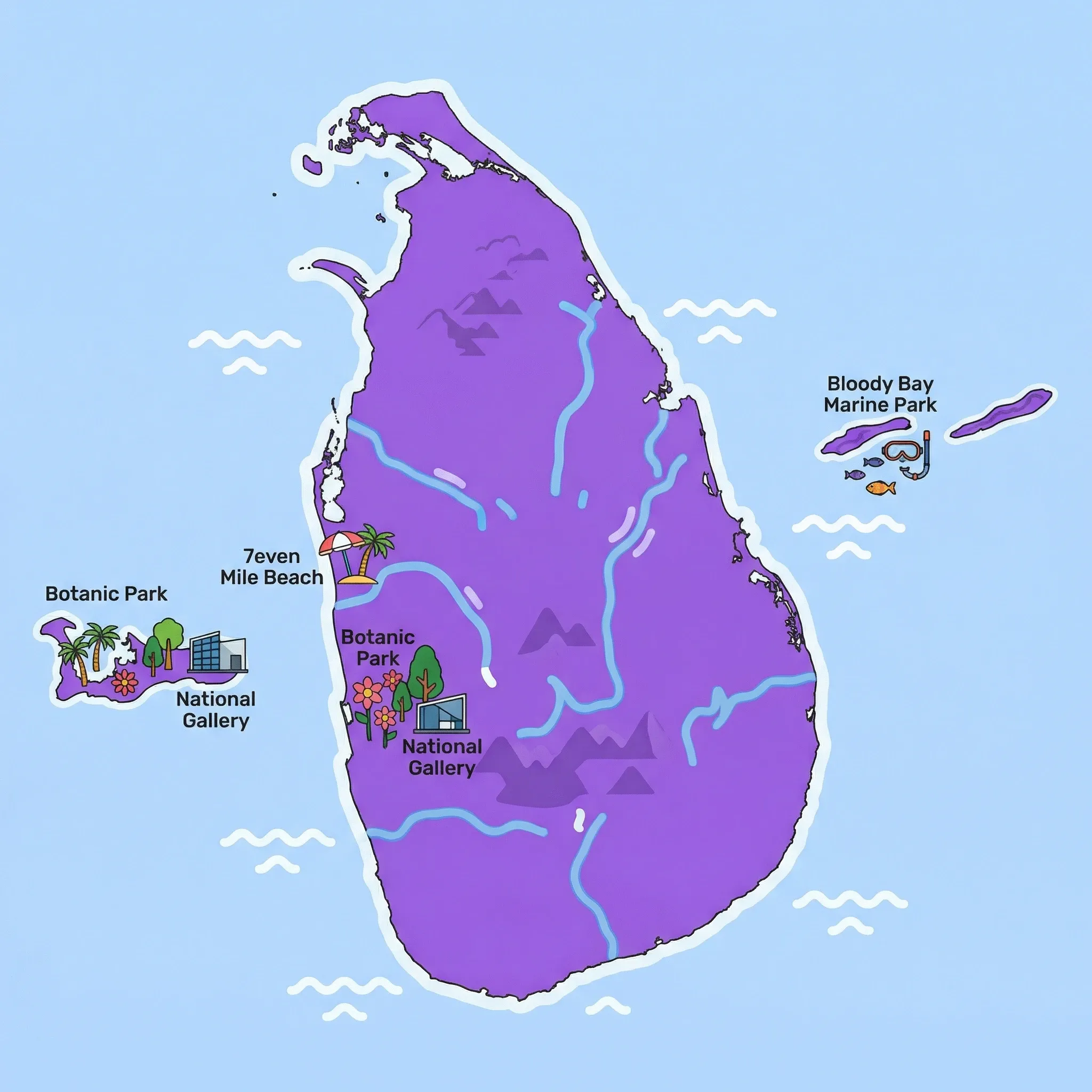
The Cayman Islands is a British Overseas Territory comprised of three islands: Grand Cayman, Cayman Brac, and Little Cayman. For families, Grand Cayman is the primary destination, offering a perfect mix of modern infrastructure, safety, and natural beauty. The island is remarkably flat, making it easy to explore, and is known for having one of the highest standards of living in the Caribbean. The vibe here is "barefoot luxury"-relaxed but efficient, with excellent roads, drinkable tap water, and a welcoming atmosphere that feels very familiar to North American and British travelers.
What sets Cayman apart for families is the accessibility of its underwater world. The water clarity is legendary, often exceeding 100 feet of visibility, which makes snorkeling an absolute joy for children. Beyond the beaches, the culture is a polite blend of British formality and Caribbean warmth. You can drive on the left past cricket pitches and roundabouts, then stop for fresh mangoes and jerk chicken by the roadside. It is an exceptionally safe destination with low crime rates, allowing teenagers a degree of freedom that is rare in other parts of the region.
Key Attractions
The crown jewel of the islands is Seven Mile Beach on Grand Cayman. Often voted one of the best beaches in the world, its calm, shallow turquoise waters are perfect for toddlers and beginning swimmers, while the soft coral sand stretches for miles without interruption. Just a short boat ride away lies Stingray City, a unique sandbar where families can stand waist-deep in the open ocean as dozens of friendly southern stingrays glide around them-a truly magical wildlife encounter that children will never forget.
For a hands-on animal experience, the Cayman Turtle Centre is a must-visit. It functions as both a conservation facility and an adventure park, where kids can see turtles of all sizes, swim in a lagoon with fish, and even come face-to-face with a crocodile. Those seeking a quieter day should head to the Queen Elizabeth II Royal Botanic Park to spot the endangered Grand Cayman Blue Iguana, a dragon-like creature found nowhere else on earth. Finally, history buffs can explore Pedro St. James National Historic Site, the "Birthplace of Democracy in the Cayman Islands," offering panoramic ocean views and a glimpse into 18th-century island life.
Practical Advice
The best time to visit is between December and April, when the weather is dry and not too hot. Hurricane season runs from June to November. English is the official language. Cars drive on the left, which is important to remember if you rent a vehicle. Tap water is desalinated and perfectly safe to drink. The currency is the Cayman Islands Dollar (KYD), which is pegged to the US Dollar (1 KYD = 1.25 USD). While USD is accepted everywhere, you will often receive change in KYD, and the exchange rate used by shops may be less favorable than the bank rate.
Food & Drink
Typical meal times: Lunch is typically served from 12:00 pm to 2:30 pm, and dinner from 6:00 pm to 9:30 pm. Sunday Brunch is a massive local tradition, often running from 11:30 am to 3:00 pm.
Typical meal costs: Lunch CI$12–20 (approx. $15–25 USD / €14–23 EUR), Dinner CI$30–60+ (approx. $36–72+ USD / €33–66+ EUR). Prices in Grand Cayman can be high, comparable to New York or London.
Dietary requirements: Excellent. As a high-end destination, restaurants are very accustomed to vegetarian, vegan, gluten-free, and allergy-specific requests. Supermarkets are stocked with familiar US and UK brands.
Family-friendly dining: Most restaurants are very welcoming to children, offering kids' menus and highchairs. "Fish fry" spots and beach bars are particularly relaxed options for noisy toddlers.
Signature dishes:
- Conch Stew – The meat of the large sea snail slow-cooked with peppers, onions, and spices, often served with white rice or plantains.
- Cayman Style Beef – Shredded beef slow-cooked in its own juices until tender, a traditional dish often served at holidays.
- Fish Rundown – A rich, flavorful stew where fish and vegetables are cooked down in coconut milk and spices.
- Heavy Cake (Cassava Cake) – A dense, sweet dessert made from grated cassava (tapioca root), coconut milk, and spices-a true local comfort food.

The Cayman Islands is an upscale destination. A family of four can expect to spend around CI$400–600 (approx. $480–720 USD / €440–660 EUR) per day for accommodation, car rental, and meals. Supermarket prices are high as almost everything is imported.
Age Suitability





Did you know? Cayman Islands welcomes approximately 284,000 international visitors per year. Most visitors come from Americas.
Why this score?
As a low-lying coral archipelago, the terrain is mostly flat and highly developed, offering a safe and manicured environment rather than rugged wilderness. While it provides excellent diving and snorkeling opportunities, the lack of significant elevation or remote interior makes it more of a leisure destination than an adventure one.
Why this score?
The territory offers some of the highest standards of healthcare in the Caribbean, anchored by modern facilities like Health City Cayman Islands and the Cayman Islands Hospital. Medical services are world-class, English-speaking, and well-equipped to handle emergencies, making it a reliable destination for international tourists and families.
Why this score?
The Cayman Islands attracts around 284,000 stay-over visitors annually, placing it as a solid mid-tier international destination with a focus on luxury and cruise tourism. Iconic attractions like Seven Mile Beach and Stingray City ensure a steady flow of travelers, though its total volume is modest compared to global giants like Cancun or the Bahamas.
The Cayman Islands is one of the most expensive destinations in the Caribbean. The currency is the Cayman Islands Dollar (KYD), which is pegged to the US Dollar (1 KYD = 1.20 USD). Prices in shops and restaurants are often listed in both. A casual lunch for a family costs KYD 50–70 (approx. $60–85 USD / €55–80 EUR), while hotel rates are significantly higher than the regional average.

Getting There & Around
Getting There
- By Air – Flights arrive at Owen Roberts International Airport (GCM) on Grand Cayman. It is well-connected to the US (Miami, New York, Houston) and London (via Nassau).
- By Sea – George Town is a major port of call for cruise ships. Passengers tender to shore in the centre of the capital.
- Entry Requirements – US, Canadian, and British citizens do not need a visa for tourism but must present a valid passport. Check your government website for the latest visa requirements, or use the IATA Travel Centre entry-requirements checker.
Getting Around
- Car Hire – The most convenient way for families to explore Cayman Islands. Driving is on the left-hand side. US and UK licenses are valid for short visits.
- Public Buses – Grand Cayman has a reliable and safe minivan bus system. Look for buses with colored circle numbers (e.g., Yellow #1). Fares are low (CI$2–5 per person) and you can flag them down anywhere along the route.
- Taxis – Available at hotels and airports but can be very expensive. Rates are fixed per trip rather than metered, so confirm the price before getting in.

Packing List
Crucial for protecting the delicate coral reefs; the sun is extremely strong year-round.
Many shore entry points have sharp 'ironshore' rock formations and urchins.
Tiny biting midges called 'no-see-ums' are common on beaches at dusk and dawn.
The UV index is very high; provides sun protection while snorkeling for long periods.
Tap water is safe but expensive to buy in plastic; keeps water cold in the tropical heat.
Water clarity is world-class, making it perfect for photos at Stingray City.

Activities & Best Times

Adventure & Nature
Very GoodHiking, wildlife, outdoor exploration, ecotourism
The Mastic Trail and unique species like the Blue Iguana provide high-quality nature immersion in a distinct tropical ecosystem. These natural attractions are best explored during the dry season when trails are stable and heat is manageable for family trekking.

Beach & Sea
Very GoodBeach resorts, marine activities: diving, snorkelling, kite surfing, wind surfing, sailing
Seven Mile Beach is internationally renowned and consistently ranked among the Caribbean's best beaches. Stingray City is a globally unique attraction. 'Good' significantly understates the beach/sea quality - this should be 'very_good' at minimum, potentially 'excellent'.

Sports & Active
Very GoodSport tourism, fitness activities, active recreation
Cayman Islands is world-renowned for diving (wall diving, Stingray City, wreck diving including the Kittiwake). The diving infrastructure and marine conditions are exceptional. 'Good' understates the international reputation - should be 'very_good'.

City & Cultural
MarginalUrban tourism, museums, historical sites, architecture
Cayman Islands is a small Caribbean territory without significant cultural institutions, museums, or UNESCO heritage. Pedro St. James is a single historic site. 'Good' overstates the cultural offering - 'marginal' is more appropriate for limited heritage attractions.

Educational & Exploratory
MarginalLearning experiences, scientific sites, historical education
Purpose-built conservation facilities like the Blue Iguana Conservation and the Cayman Turtle Centre offer specialized scientific engagement. While unique, these are smaller-scale facilities best visited during the cooler, drier months of the high season.

Road Trips & Scenic
MarginalScenic drives, countryside tours, route-based travel
The East End and Cayman Brac Bluff offer short but scenic coastal driving routes that reveal the islands' quieter, authentic side. Drivers should prioritize the dry season to ensure peak visibility and avoid potential storm-related road hazards.




Public Holidays & Calendar Next 12 months
Public holidays, festivals, cultural celebrations, and seasonal natural phenomena coming up in Cayman Islands over the next 12 months.
Loading holidays and events...

Travel Advisory
All major agencies categorize the Cayman Islands at their lowest risk level, advising standard safety awareness and precautions typical for international travel.
Safety Topics
Traveller Advice (3 groups)

Ensure you have a return ticket and proof of sufficient funds upon arrival. Secure valuables in hotel safes and be vigilant in tourist areas to avoid petty theft. Purchase comprehensive travel insurance that covers expensive local medical costs and potential air evacuation.

While generally safe, travellers should be aware of local social attitudes and legal frameworks which may differ from those in their home countries.

Be cautious of reported incidents of sexual assault and harassment. It is recommended to avoid walking alone on isolated beaches or in unlit areas after dark. Do not leave food or drinks unattended due to the risk of spiking.
Agency Summaries
Travellers should maintain standard safety awareness. The territory is generally safe with a low crime rate, though petty theft and occasional demonstrations occur. Hurricane season and seismic activity are environmental factors to consider.
The islands are categorized at the lowest advisory level. Visitors should follow standard safety routines. Crime rates affecting tourists are low, and medical care is generally high quality but expensive.
Australia advises travellers to use common sense and standard security measures. Risks are comparable to those found in Australian cities, though environmental hazards like tropical storms exist.
New Zealand does not have a specific travel advisory for the islands, indicating a standard risk level. Focus is placed on health precautions regarding mosquito-borne illnesses and hurricane preparedness.
As a British Overseas Territory, the UK provides guidance on entry requirements and safety without a specific heightened risk rating. Travellers are advised to monitor weather alerts during hurricane season.
The security environment is considered stable and similar to Ireland. Travellers should stay informed via local news and ensure they have comprehensive insurance.
Information is provided for general guidance only and does not constitute travel, safety, medical, or legal advice. Conditions may change. Users are responsible for independently verifying information before travel.