
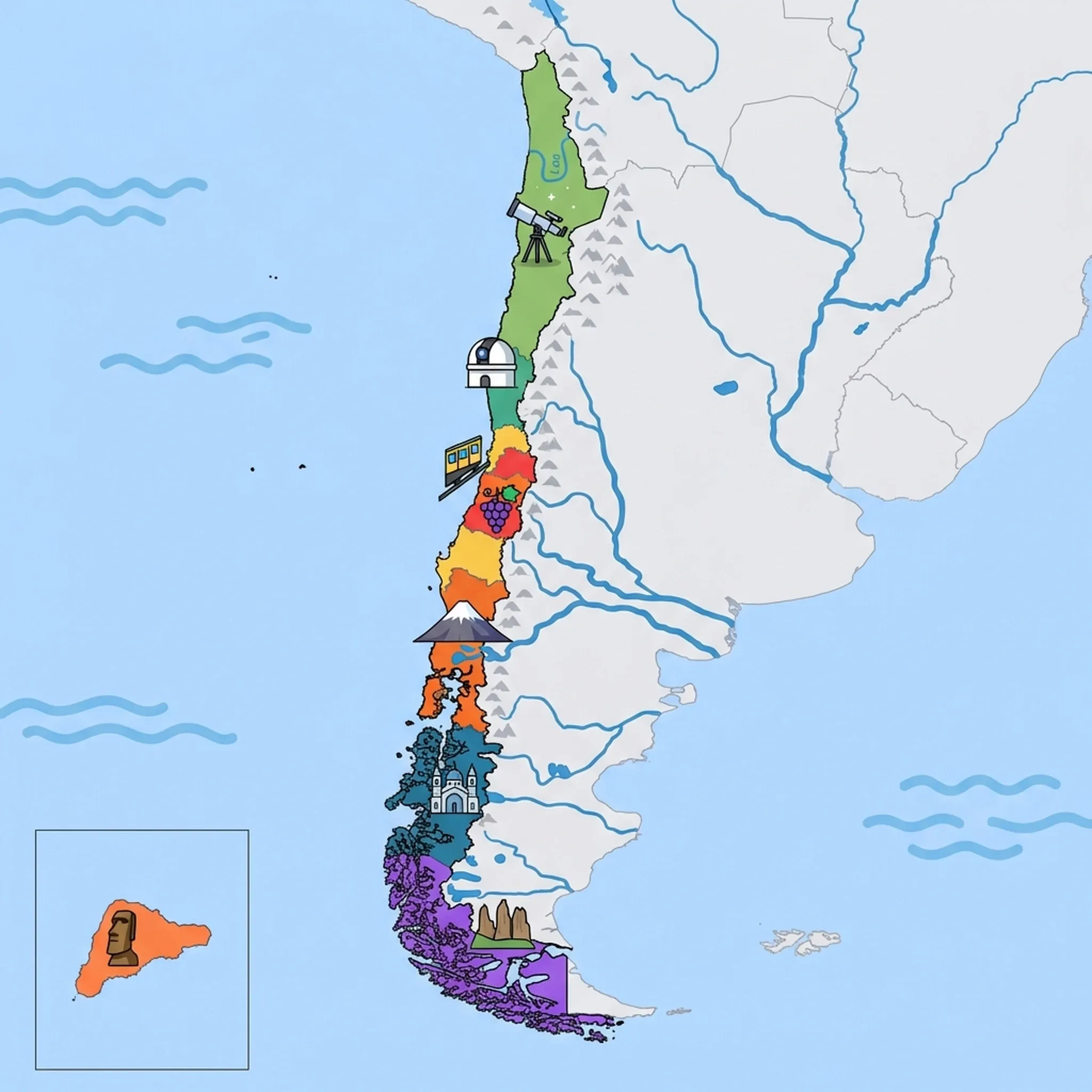
Click a region to explore
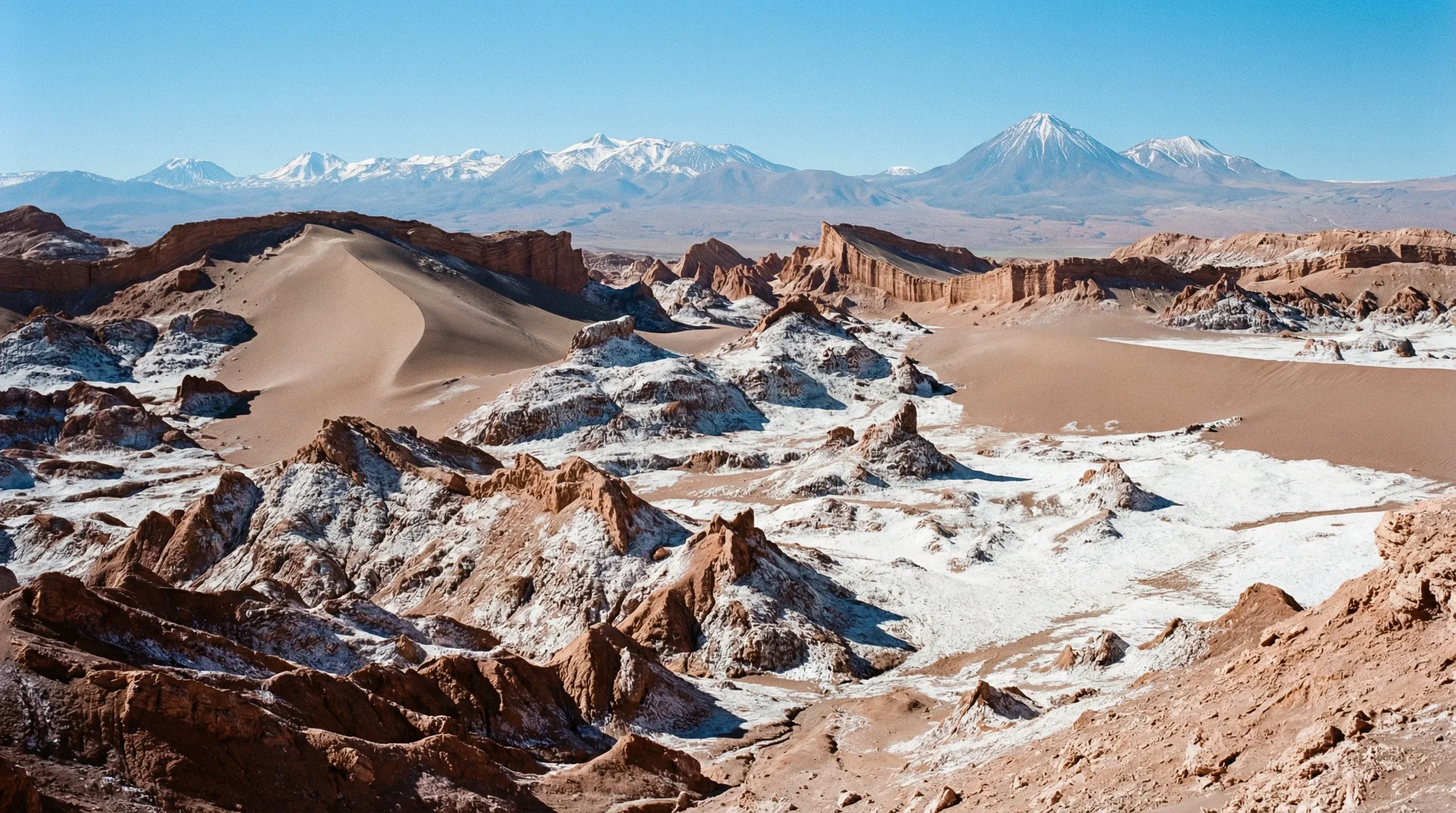
The Atacama Desert is not just the driest non-polar desert in the world; it is a playground of geological wonders that captures the imagination of children and adults alike. For families, this region offers a surreal adventure where the earth cracks, steams, and glistens with salt. The vast, rust-coloured landscapes against the piercing blue Andean sky create a visual contrast that feels almost alien. While the environment is extreme, the town of San Pedro de Atacama serves as a comfortable and bohemian oasis base, filled with adobe architecture, dusty streets, and family-friendly eateries. The dry air preserves history remarkably well, and the sheer scale of the volcanoes and salt flats teaches children about the raw power of nature in a way no textbook can.
Visiting the Atacama is an exercise in acclimatisation and wonder. The days are brilliantly sunny and warm, perfect for exploring, while nights drop to freezing temperatures, revealing a canopy of stars so dense it looks like spilt milk. Families can float effortlessly in high-salinity lagoons, watch geysers erupt at dawn, and scramble over sand dunes. It is an active holiday destination best suited for children who enjoy the outdoors and can handle some car travel between sites. The blend of indigenous Atacameño culture and stunning geography makes every excursion an educational experience.
Key Attractions
The region's most iconic site for families is undoubtedly the Valle de la Luna (Moon Valley). Best visited in the late afternoon, its caverns, steep sand dunes, and salt sculptures turn vibrant shades of violet and gold at sunset, providing a magical backdrop for family photos. For a wildlife encounter, the Reserva Nacional Los Flamencos is essential; seeing pink flamingos reflect in the mirror-like waters of the salt flat is a serene moment kids cherish. Active families should brave the early morning cold to witness the El Tatio Geysers, a geothermal field of 80 fumaroles that steam aggressively at sunrise—just be sure to keep little ones at a safe distance. Finally, a dip in the Puritama Hot Springs offers a relaxing reward after days of hiking, with warm pools connected by waterfalls hidden at the bottom of a canyon.
Practical Advice
San Pedro de Atacama sits at 2,400 metres, and tours go much higher. Take it slow for the first two days to avoid altitude sickness. Hydration is critical; the air is incredibly dry. The best time to visit is spring (September–November) or autumn (March–May) when temperatures are moderate. Avoid the Bolivian Winter (January–February) when sudden rains can close parks.
Food & Drink
Typical meal times: Lunch is usually served from 1:00 pm to 3:30 pm, and dinner runs from 7:30 pm to 10:00 pm.
Typical meal costs: A main dish in San Pedro typically costs CLP 12.000–18.000 (approx. $12–19 USD / €11–17 EUR). Prix-fixe lunches are better value at CLP 8.000–12.000 (approx. $8–12 USD / €7–11 EUR).
Dietary requirements: San Pedro is very tourist-friendly with many vegetarian and vegan options, including quinoa-based dishes. Gluten-free is increasingly available in better restaurants.
Signature dishes:
- Patasca – A hearty, spicy stew made with mote (corn), potatoes, and meat (beef, pork, or llama), perfect for warming up after a cold geyser tour.
- Rica-Rica Ice Cream – A local dessert flavoured with the rica-rica herb, which grows wild in the desert and tastes like a mix of mint and thyme.
- Charqui – Dried, salted meat (jerky), often made from llama or horse, a traditional snack that dates back to pre-Columbian times.
Why this score?
The region features high-altitude environments, active geyser fields, and rugged desert terrain that present significant physical challenges. Families must contend with thin air at 4,000+ meters and extreme temperature fluctuations while exploring remote salt flats and volcanic formations.
Why this score?
San Pedro has basic emergency clinics, but the nearest hospital is located in Calama, approximately 100 kilometers away. For any complex medical emergencies or specialized care, a medical evacuation to Santiago is typically required, limiting the region's safety net for vulnerable travelers.
Why this score?
San Pedro de Atacama is a premier global bucket-list destination, attracting significant numbers of international travelers to its unique landscapes. While it is Chile's second most famous region, its remote desert location and specialized focus keep its absolute visitor numbers lower than major European or Asian hubs.

San Pedro is one of Chile's most expensive destinations due to its remote location and popularity. Basic accommodation starts around CLP 80.000–120.000 (approx. $85–125 USD / €80–115 EUR) per night. Guided tours are the main expense, costing CLP 30.000–60.000 (approx. $32–64 USD / €30–60 EUR) per person per excursion. Entrance fees to sites like the geysers are additional.
Family Travel Notice
Chile enforces very strict border controls for minors. Parents travelling alone with children must carry notarized authorization from the other parent and an original birth certificate.

Getting Here & Around
Getting Here
- Airports – The gateway is El Loa Airport (CJC) in Calama. From here, it is a 1.5-hour transfer across the desert to San Pedro de Atacama.
- Bus – Long-distance buses run from Santiago to Calama (approx. 22–24 hours), but for families, flying is strongly recommended.
- Driving – Exploring the Ruta 23 Altiplanic Lagoons Drive requires a vehicle, but most families opt for organised tours from San Pedro due to the remote nature of the roads.
Getting Around
- Tours – Most families book guided tours (shared or private) to attractions like Valle de la Luna to avoid navigating unmarked desert roads.
- Bicycle – San Pedro is bike-friendly; you can rent bikes to ride to the nearby Pukará de Quitor fortress (approx. 3km from town).
- Walking – The town of San Pedro itself is small and pedestrian-friendly, though dusty.
Nearby Airports (4 airports)
Cerro Moreno International
ANFAntofagasta
Chacalluta
ARIArica
El Loa
CJCCalama
Chamonate
CPOCopiapo
View full flight map for Chile →

Packing List
The extreme aridity (often 10% humidity) causes nosebleeds in children.
Skin cracks rapidly in the dry desert air; apply multiple times a day.
Dawn excursions to geysers are frequently below freezing (-10°C is common).
Preserves night vision for stargazing without attracting bugs or blinding others.
The ozone layer is thinner over Chile; UV radiation is extreme even on cloudy days.
The Atacama Desert is one of the driest places on Earth and can cause nosebleeds.
Many hostels, cabins, and older hotels in remote areas lack plugs for sinks/baths.
Chile uses Type L (3 pins in a row) or Type C. Standard US/UK plugs won't fit.
Essential for the winding Andes mountain roads and boat trips in the south.
Even in summer, desert nights and Patagonian winds are freezing cold.

Activities & Best Times

Hiking, wildlife, outdoor exploration, ecotourism
A world-class destination for high-altitude trekking, salt flat exploration, and lunar landscapes in Moon Valley. The 'Altiplanic Winter' in January and February brings unpredictable rain and road closures, making spring and autumn the optimal times for immersion.

Urban tourism, museums, historical sites, architecture
San Pedro de Atacama offers an authentic adobe-built historic center and deep indigenous Likan Antai heritage. Clear, stable weather outside of the brief rainy season is best for exploring archaeological sites like Pukará de Quitor.

Sport tourism, fitness activities, active recreation
World-recognized cycling circuits through Devil's Throat and Moon Valley provide exceptional desert sport infrastructure. Sophisticated travelers should avoid mid-summer due to the risk of flash floods affecting trail safety and access.

Beach resorts, marine activities: diving, snorkelling, kite surfing, wind surfing, sailing
The Pacific coast near Antofagasta features dramatic formations like La Portada and calm waters at Hornitos. Peak southern summer offers the most comfortable conditions for coastal recreation, though the Humboldt Current keeps water temperatures cool year-round.

Learning experiences, scientific sites, historical education
Home to the ALMA Observatory and world-class astro-tourism centers, the region provides unique scientific engagement. The driest months offer the highest atmospheric clarity for stargazing, while summer clouds can obstruct observations.

Scenic drives, countryside tours, route-based travel
Scenic drives like Ruta 23 to the Altiplanic Lagoons offer some of the most dramatic mountain vistas in South America. Travel is best in shoulder seasons when visibility is high and mountain passes are not closed due to Altiplanic winter storms.

Spa retreats, wellness centers, peaceful getaways
Natural thermal oases like Puritama Hot Springs provide high-quality restorative experiences in spectacular desert canyons. Peak visits align with milder temperatures that avoid the extreme summer rains and winter freezes of the high Altiplano.

Amusement parks, family entertainment venues
The region offers limited theme park infrastructure, primarily centered on local aquatic centers in Calama. These facilities lack the international scale and novelty required to attract sophisticated global travelers beyond a brief stop.

Attractions (14 total)



Public Holidays & Calendar Next 12 months
Public holidays, festivals, cultural celebrations, and seasonal natural phenomena coming up in Atacama Desert & Altiplano over the next 12 months.
Loading holidays and events...

Travel Advisory
Four out of six major agencies recommend exercising increased caution or a high degree of vigilance. The primary concerns are civil unrest, frequent public demonstrations that may turn violent, and prevalent street crime. While the country is generally safe for travel, specific southern regions face emergencies due to wildfires.
Safety Topics
Traveller Advice (3 groups)

Chile enforces very strict border controls for minors. Parents travelling alone with children must carry notarized authorization from the other parent and an original birth certificate.

Always carry a copy of your identification and keep original documents in a secure location. Avoid all large gatherings, particularly on Friday afternoons when protests are most common in urban centers.

While Santiago is relatively safe for solo women, dressing conservatively is suggested to avoid unwanted attention. Be cautious in rural areas where solo foreign women are less common.
Agency Summaries
The U.S. government advises heightened awareness due to rising rates of violent crime and the unpredictability of large-scale public protests.
Australia recommends extra vigilance due to security threats from civil disturbances and violent criminal activity, including specialized theft tactics.
While no general travel restriction is in place, the assessment suggests a likely threat of terrorism and warns of severe environmental hazards like wildfires.
New Zealanders are warned of significant security concerns regarding theft and potential violence during urban civil unrest.
Travellers should be extremely vigilant in Chile because of persistent civil unrest, frequent demonstrations, and high levels of street crime.
Standard safety measures are recommended, though visitors must avoid all political gatherings as participation can lead to immediate deportation.
Information is provided for general guidance only and does not constitute travel, safety, medical, or legal advice. Conditions may change. Users are responsible for independently verifying information before travel.