
Northern Patagonia (Carretera Austral)
Wild rivers and hanging glaciers 🌲🚙
Click a region to explore
Northern Patagonia, traversed by the legendary Carretera Austral (Southern Highway), is not a destination for the faint of heart, but it offers a profound connection with nature for adventurous families. This is a land of intense contrasts: temperate rainforests filled with giant ferns and ancient trees give way to roaring turquoise rivers and massive ice fields. The isolation here is part of the charm. There are no large cities, only small, resilient pioneer towns where wood smoke drifts from chimneys and life moves at a slower pace. For children, the landscape feels like a scene from Jurassic Park—wild, overgrown, and spectacularly green.
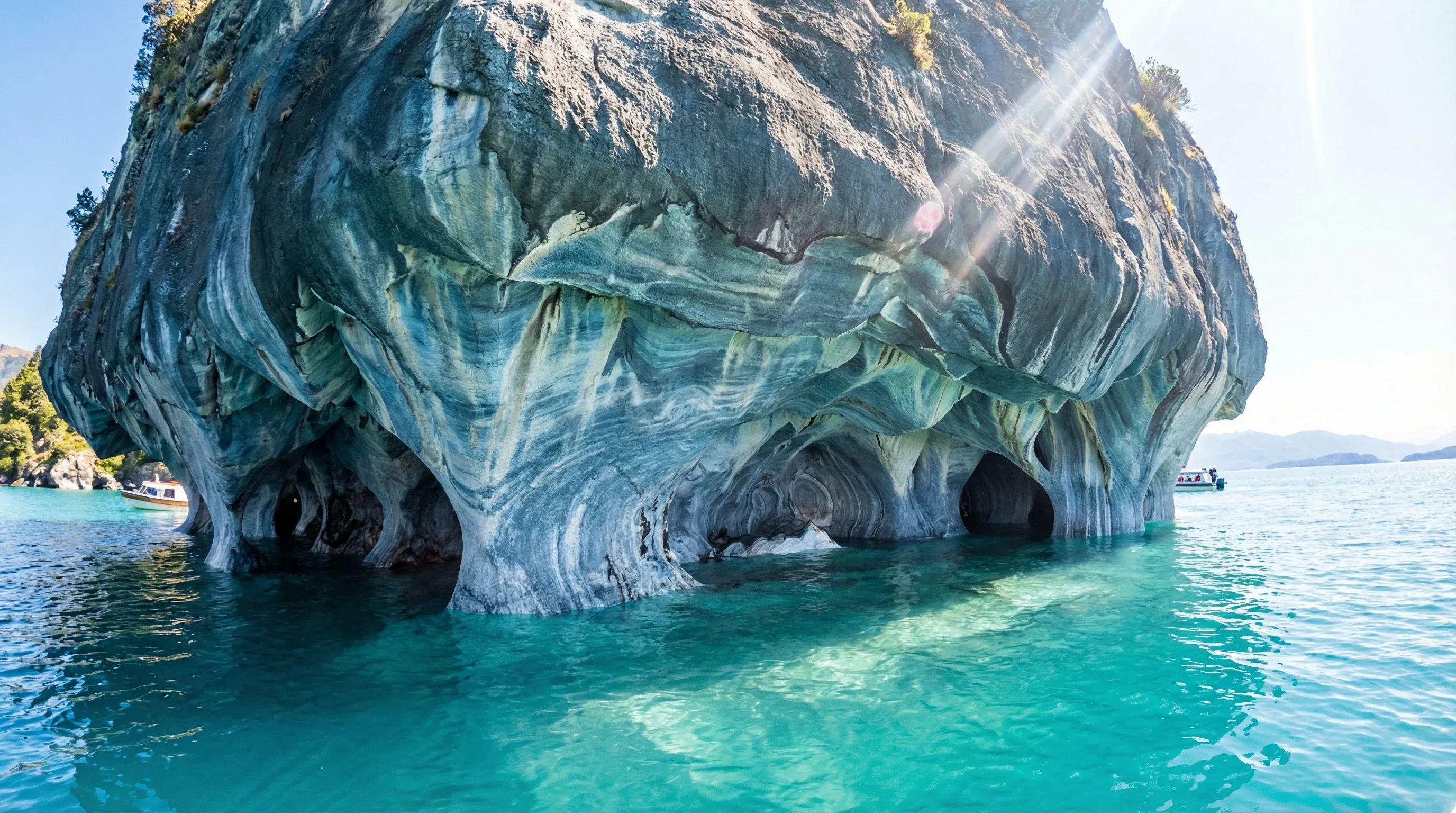
Travel here is an expedition. The distances are long and often on gravel roads, but the scenery is so distracting that the drive becomes the activity. Families can stop for roadside picnics beside waterfalls that would be national landmarks in any other country. The region is safe and welcoming, with a culture deeply rooted in rural hospitality. It is an ideal region for older children and teens who can handle hiking and longer car rides, offering opportunities to kayak to marble caves, walk on ice, or spot the elusive Huemul deer.
Key Attractions
The visual highlight for most families is the Queulat Hanging Glacier (Ventisquero Colgante) in Queulat National Park. A moderate hike through an 'enchanted forest' of mossy trees leads to a viewpoint where you can watch ice calve off a cliff into a lagoon below. Further south, the Caleta Tortel offers a unique experience; this village has no streets, only wooden boardwalks over the water, which kids find fascinating to navigate. Near Coyhaique, the Regional Museum of Aysén is surprisingly excellent, housed in a historic wool company building, telling the story of the pioneers in a way that engages young imaginations. For a true bucket-list experience, a boat trip to the San Rafael Glacier navigates through icebergs of all shapes and sizes.
Practical Advice
The best time to visit is December to February. Even in summer, rain is frequent and heavy—this is a rainforest, after all. ATMs are scarce outside the main town of Coyhaique, so carry plenty of cash. This region requires a rented 4x4 or high-clearance vehicle.
Food & Drink
Typical meal times: Lunch 1:00 pm to 2:30 pm, Dinner 8:00 pm to 10:00 pm. Roadside 'picadas' often serve food all afternoon.
Typical meal costs: Main dishes cost CLP 12.000–18.000 (approx. $13–19 USD / €12–18 EUR). Groceries in remote towns are 20-30% more expensive than in Santiago.
Dietary requirements: Options can be limited in small villages, relying heavily on meat and potatoes. Vegetarians should stock up on supplies in Coyhaique.
Signature dishes:
- Cordero al Palo – Lamb slow-roasted vertically over an open wood fire, the quintessential Patagonian feast.
- Nalca – A prehistoric-looking plant with giant leaves; the stalk is eaten raw with salt (like rhubarb) and is often sold by street vendors.
- Sopaipillas sureñas – Unlike the pumpkin version in the north, these are savory fried bread squares, essential for rainy afternoons.
Why this score?
As one of the world's last great wilderness frontiers, it offers a high-stakes adventure involving dense rainforests, hanging glaciers, and unpredictable weather. The Carretera Austral requires high self-sufficiency and resilience, as large sections of the route remain remote and undeveloped.
Why this score?
Medical infrastructure is extremely sparse, consisting mostly of basic rural health posts and a modest regional hospital in Coyhaique. In many parts of the region, access to emergency care can be delayed by several hours due to difficult terrain and limited transport options.
Why this score?
This remains one of Chile's least visited regions by international tourists due to its extreme isolation and the difficulty of navigating its unpaved roads. It appeals primarily to dedicated overland travelers and adventure enthusiasts rather than general family tourists or organized tour groups.

Due to logistics and isolation, costs are high. Fuel is expensive. A decent cabin sleeps 4 for CLP 100.000–150.000 (approx. $105–160 USD / €100–150 EUR). Car rental is the biggest line item, often exceeding CLP 80.000 (approx. $85 USD / €80 EUR) per day for a pickup truck.
Family Travel Notice
Chile enforces very strict border controls for minors. Parents travelling alone with children must carry notarized authorization from the other parent and an original birth certificate.

Getting Here & Around
Getting Here
- Airports – Balmaceda Airport (BBA) is the main hub, located 45 mins from Coyhaique. Flight time from Santiago is approx. 2.5 hours.
- Ferry – Families can take a scenic ferry from Puerto Montt to Puerto Chacabuco (approx. 24 hours), a mini-cruise experience through the fjords.
- Driving – The region is defined by the Carretera Austral. You can drive south from Puerto Montt, but it requires multiple ferry crossings.
Getting Around
- Car – Essential. A high-clearance vehicle (SUV or pickup) is highly recommended as many parts of the Carretera Austral are gravel (ripio).
- Ferry – Local ferries (barcazas) are needed to cross certain fjords or lakes; booking in advance during January/February is crucial.
- Bus – Public buses exist but are infrequent and not recommended for families with young children due to lack of flexibility.
Nearby Airports (1 airport)
Balmaceda
BBABalmaceda
View full flight map for Chile →
Official Links

Packing List
Rain is horizontal and frequent; jeans will get soaked and stay cold.
To keep electronics and spare clothes dry during boat trips and rainy hikes.
ATMs are non-existent in villages like Tortel; cards often don't work.
Horseflies (tábanos) are large and aggressive in January; bring strong spray.
The ozone layer is thinner over Chile; UV radiation is extreme even on cloudy days.
The Atacama Desert is one of the driest places on Earth and can cause nosebleeds.
Many hostels, cabins, and older hotels in remote areas lack plugs for sinks/baths.
Chile uses Type L (3 pins in a row) or Type C. Standard US/UK plugs won't fit.
Essential for the winding Andes mountain roads and boat trips in the south.
Even in summer, desert nights and Patagonian winds are freezing cold.

Activities & Best Times

Hiking, wildlife, outdoor exploration, ecotourism
A global pinnacle for wilderness immersion, featuring iconic hanging glaciers and the unique Marble Caves in Laguna San Rafael and Cerro Castillo parks. Peak summer offers the only reliable access for families to explore these remote ecosystems before heavy winter rains and snow restrict travel.

Urban tourism, museums, historical sites, architecture
While Caleta Tortel is unique, rating the entire region 'excellent' for city/cultural based on one stilted village is internationally inflated. Very_good is more appropriate.

Sport tourism, fitness activities, active recreation
Renowned for world-class trekking on the Cerro Castillo circuit and iconic cycling routes along the Carretera Austral. The infrastructure is highly seasonal, with optimal trail conditions and active adventure centers operating almost exclusively from late spring through early autumn.

Spa retreats, wellness centers, peaceful getaways
Home to high-end natural thermal complexes like Termas del Ventisquero, providing world-class relaxation in a pristine rainforest setting. While hot springs are enjoyable in cooler weather, the peak window aligns with regional transport availability and broader resort operations.

Scenic drives, countryside tours, route-based travel
The Carretera Austral is one of the world's most celebrated scenic drives, offering unparalleled landscape diversity. Summer provides the safest driving conditions on predominantly unpaved roads and ensures that essential ferry connections along the route are in full operation.
Beach resorts, marine activities: diving, snorkelling, kite surfing, wind surfing, sailing
Lakeside beaches like Chile Chico offer a rare microclimate, though they remain niche destinations for international families compared to tropical alternatives. Recreation is strictly limited to the height of summer when water temperatures are at their most tolerable.

Learning experiences, scientific sites, historical education
Features significant research-focused facilities like the Regional Museum of Aysén and the Museum of Patagonia, detailing the region's unique natural history. These sites serve as excellent supplementary educational stops during the primary southern summer travel season.

Winter sports, ski resorts, snow activities
Offers an authentic but basic skiing experience at Centro de Ski El Fraile, catering mainly to local enthusiasts. The limited infrastructure and short season mean it lacks the world-class facilities typically sought by internationally experienced ski families.

Attractions (14 total)



Public Holidays & Calendar Next 12 months
Public holidays, festivals, cultural celebrations, and seasonal natural phenomena coming up in Northern Patagonia (Carretera Austral) over the next 12 months.
Loading holidays and events...

Travel Advisory
Four out of six major agencies recommend exercising increased caution or a high degree of vigilance. The primary concerns are civil unrest, frequent public demonstrations that may turn violent, and prevalent street crime. While the country is generally safe for travel, specific southern regions face emergencies due to wildfires.
Safety Topics
Traveller Advice (3 groups)
Chile enforces very strict border controls for minors. Parents travelling alone with children must carry notarized authorization from the other parent and an original birth certificate.

Always carry a copy of your identification and keep original documents in a secure location. Avoid all large gatherings, particularly on Friday afternoons when protests are most common in urban centers.

While Santiago is relatively safe for solo women, dressing conservatively is suggested to avoid unwanted attention. Be cautious in rural areas where solo foreign women are less common.
Agency Summaries
The U.S. government advises heightened awareness due to rising rates of violent crime and the unpredictability of large-scale public protests.
Australia recommends extra vigilance due to security threats from civil disturbances and violent criminal activity, including specialized theft tactics.
While no general travel restriction is in place, the assessment suggests a likely threat of terrorism and warns of severe environmental hazards like wildfires.
New Zealanders are warned of significant security concerns regarding theft and potential violence during urban civil unrest.
Travellers should be extremely vigilant in Chile because of persistent civil unrest, frequent demonstrations, and high levels of street crime.
Standard safety measures are recommended, though visitors must avoid all political gatherings as participation can lead to immediate deportation.
Information is provided for general guidance only and does not constitute travel, safety, medical, or legal advice. Conditions may change. Users are responsible for independently verifying information before travel.