
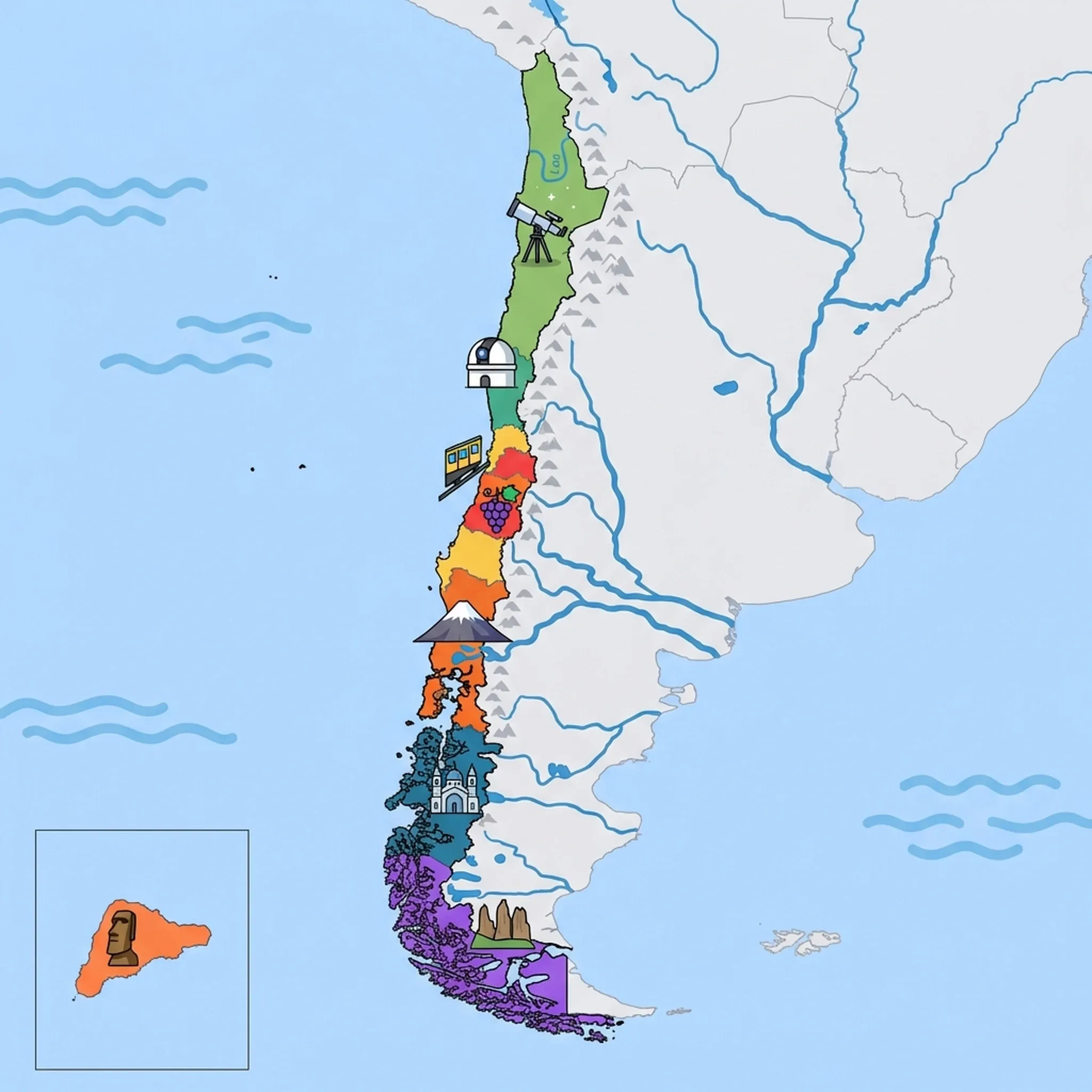
Click a region to explore
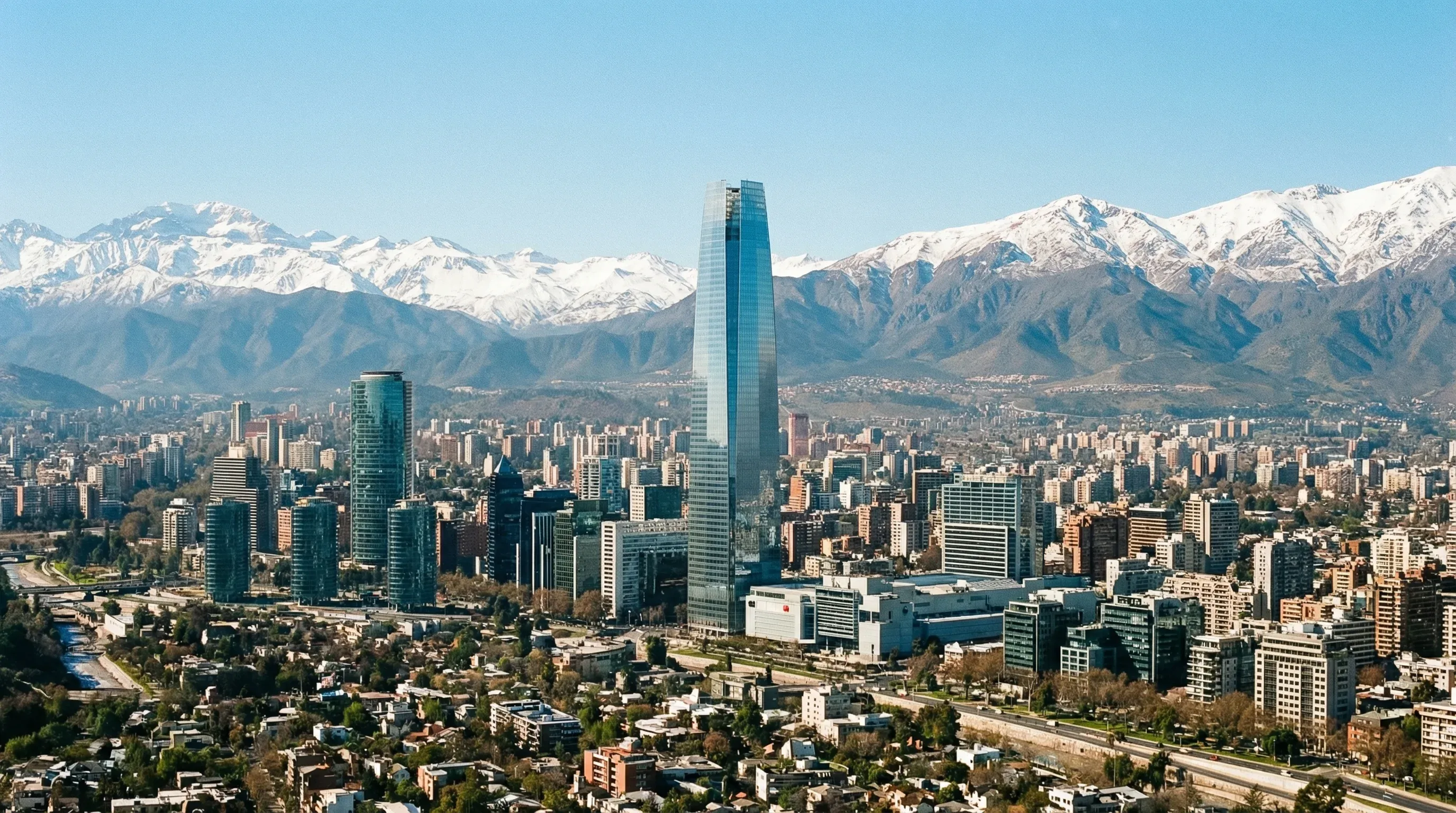
Santiago is often treated as a mere stopover, but for families, it is a destination rich with culture, green spaces, and easy mountain access. The city sits in a bowl surrounded by the majestic Andes mountains, which provide a stunning snowy backdrop in winter. It is a modern, safe, and clean capital with excellent infrastructure. For children, the city is surprisingly green, filled with massive parks like Parque Bicentenario where they can feed koi fish and flamingos. The metro system is efficient and stroller-friendly in newer stations, making it easy to zip between attractions.
Beyond the urban core, the Central Valley offers immediate access to nature. Within 90 minutes, you can be high in the Andes building a snowman at El Colorado or walking through the Maipo Canyon. The city blends history with modernity; you can watch the Changing of the Guard at the presidential palace and then visit a cutting-edge interactive museum in the same afternoon. While summer can be hot, the city comes alive with outdoor festivals and ice cream shops on every corner. It's an easy, comfortable introduction to South America for families.
Key Attractions
A must-do is Cerro San Cristóbal, the city's largest green lung. Families can take a historic funicular up to the summit statue, visit the mountaintop zoo, and take a cable car (Teleférico) across the hills for amazing views. The Museo Interactivo Mirador (MIM) is widely considered one of the best children's museums in South America, with huge earthquake simulators and bubble exhibits. For thrill-seekers, Fantasilandia is a classic amusement park located inside O'Higgins Park. If visiting in winter (June–September), a day trip to La Parva or El Colorado allows kids to experience snow sports just an hour from the city centre.
Practical Advice
Spring (Sept–Nov) and Autumn (March–May) are ideal. Summer (Jan–Feb) is hot (30°C+) and many locals leave the city, making it quieter but drier. Winter brings smog and rain, but also snow in the nearby mountains. Avoid rush hour (7–9 am, 6–8 pm) on the Metro.
Food & Drink
Typical meal times: Lunch 1:00 pm to 3:00 pm. Dinner is late, rarely starting before 8:00 pm.
Typical meal costs: Business lunches ('colación') cost CLP 6.000–9.000 (approx. $6–9 USD / €6–9 EUR). Dinner with wine CLP 20.000–30.000 (approx. $21–32 USD / €20–30 EUR).
Dietary requirements: Very easy. Santiago is cosmopolitan with extensive vegan, vegetarian, and gluten-free options, and allergen labelling is mandatory on supermarket products.
Signature dishes:
- Completo Italiano – A hot dog loaded with avocado, tomato, and mayonnaise (colours of the Italian flag). A messy favourite for kids.
- Pastel de Choclo – A corn casserole with a filling of beef, chicken, onions, olive, and hard-boiled egg. Sweet and savoury.
- Mote con Huesillo – A non-alcoholic drink/dessert sold at street stands, made of dried peaches, husked wheat, and cinnamon syrup.
Why this score?
The region is largely urban and developed, though the nearby Andes offer skiing and day-trekking in areas like Cajon del Maipo. While some outdoor activities are available, they are generally conducted within easy reach of the city's extensive infrastructure and services.
Why this score?
Santiago offers the best medical care in South America, with world-class private facilities like Clínica Alemana frequently hosting international patients. Multilingual staff, advanced specialties, and high standards of emergency response make it a safe hub for travelers with medical concerns.
Why this score?
As the primary gateway and economic engine of Chile, Santiago receives the highest volume of international visitors in the country. It is a well-known South American hub that combines business travel with significant cultural and leisure tourism.

Santiago has a wide range of prices. You can eat cheap street food for CLP 3.000 (approx. $3 USD / €3 EUR) or dine in luxury. Accommodation in safe family districts (Providencia, Las Condes) runs CLP 70.000–120.000 (approx. $75–125 USD / €70–120 EUR) per night. Metro rides are cheap (approx $0.80 USD).
Family Travel Notice
Chile enforces very strict border controls for minors. Parents travelling alone with children must carry notarized authorization from the other parent and an original birth certificate.

Getting Here & Around
Getting Here
- Airports – Arturo Merino Benítez (SCL) is the main international gateway. Taxis and transfer vans (Transvip) are safe and readily available.
- Train – Trains from the south arrive at Estación Central. The fast train from Chillán is a good option if coming from the south.
- Bus – Major terminals (Alameda, San Borja) connect to all of Chile and Mendoza, Argentina.
Getting Around
- Public Transport – The Metro is clean, safe, and extensive. You need a 'Bip!' card to travel. Children under roughly 1.10m travel free on the Metro.
- Taxi/Rideshare – Uber and Cabify work very well in Santiago and are generally safer than hailing street taxis.
- Car – Not recommended within the city due to traffic and parking, but useful for day trips to Embalse El Yeso.
Nearby Airports (2 airports)
Carriel Sur International
CCPConcepcion
Arturo Merino Benítez International Airport
SCLSantiago
View full flight map for Chile →
Official Links

Packing List
Chile uses specific 3-pin plugs; Type C (Europlug) works but Type L is the grounded standard.
If visiting in winter (June-August), smog can be heavy and irritate sensitive lungs.
Tap water in Santiago is safe to drink but high in minerals; carrying water is essential in summer heat.
The ozone layer is thinner over Chile; UV radiation is extreme even on cloudy days.
The Atacama Desert is one of the driest places on Earth and can cause nosebleeds.
Many hostels, cabins, and older hotels in remote areas lack plugs for sinks/baths.
Chile uses Type L (3 pins in a row) or Type C. Standard US/UK plugs won't fit.
Essential for the winding Andes mountain roads and boat trips in the south.
Even in summer, desert nights and Patagonian winds are freezing cold.

Activities & Best Times

Hiking, wildlife, outdoor exploration, ecotourism
Access to Andean foothills and high-quality wildlife centers like Buin Zoo provide excellent nature immersion for families. Peak season spans the dry spring and summer months, while winter rainfall frequently limits trail accessibility and visibility.

Urban tourism, museums, historical sites, architecture
A vibrant hub featuring exceptional pre-Columbian art and sophisticated dining in historic neighborhoods. Summer offers the best atmosphere for street life, whereas winter months suffer from poor air quality and cold, rainy conditions that degrade the urban experience.

Sport tourism, fitness activities, active recreation
Offers world-class road cycling on the Farellones switchbacks and managed adventure activities in the Maipo Valley. The dry summer climate is ideal for high-intensity activity, while winter conditions restrict most outdoor sports to lower elevations.

Learning experiences, scientific sites, historical education
The Museo Interactivo Mirador (MIM) and the Natural History Museum are destination-level facilities for curious families. While indoor attractions are technically year-round, they are best visited during the pleasant peak tourist season when city logistics are most reliable.

Events, celebrations, seasonal attractions
Lollapalooza Chile and Santiago a Mil are major international events. Marginal rating undervalues their significance.

Spa retreats, wellness centers, peaceful getaways
Thermal baths like Baños Colina offer authentic Andean relaxation with dramatic high-altitude vistas. Access is optimal during the warmer months, as the high mountain passes can be dangerous or closed due to snow during the winter.

Scenic drives, countryside tours, route-based travel
Iconic routes through Cajón del Maipo and the winding Paso Los Libertadores offer spectacular scenic driving. Clear skies and snow-free roads in summer provide the safest and most visually rewarding conditions for international visitors.

Winter sports, ski resorts, snow activities
Home to world-class resorts like Valle Nevado and El Colorado, offering high-altitude Andean powder and modern infrastructure. The season is strictly concentrated in winter, with the best coverage typically occurring in July and August.

Amusement parks, family entertainment venues
Features internationally recognized concepts like KidZania and major regional parks like Fantasilandia. Peak visitation aligns with the clear weather and school holidays of the Chilean summer, while winter months see reduced operations and less pleasant conditions for outdoor parks.

Attractions (35 total)



Public Holidays & Calendar Next 12 months
Public holidays, festivals, cultural celebrations, and seasonal natural phenomena coming up in Santiago & Central Valley over the next 12 months.
Loading holidays and events...

Travel Advisory
Four out of six major agencies recommend exercising increased caution or a high degree of vigilance. The primary concerns are civil unrest, frequent public demonstrations that may turn violent, and prevalent street crime. While the country is generally safe for travel, specific southern regions face emergencies due to wildfires.
Safety Topics
Traveller Advice (3 groups)

Chile enforces very strict border controls for minors. Parents travelling alone with children must carry notarized authorization from the other parent and an original birth certificate.

Always carry a copy of your identification and keep original documents in a secure location. Avoid all large gatherings, particularly on Friday afternoons when protests are most common in urban centers.

While Santiago is relatively safe for solo women, dressing conservatively is suggested to avoid unwanted attention. Be cautious in rural areas where solo foreign women are less common.
Agency Summaries
The U.S. government advises heightened awareness due to rising rates of violent crime and the unpredictability of large-scale public protests.
Australia recommends extra vigilance due to security threats from civil disturbances and violent criminal activity, including specialized theft tactics.
While no general travel restriction is in place, the assessment suggests a likely threat of terrorism and warns of severe environmental hazards like wildfires.
New Zealanders are warned of significant security concerns regarding theft and potential violence during urban civil unrest.
Travellers should be extremely vigilant in Chile because of persistent civil unrest, frequent demonstrations, and high levels of street crime.
Standard safety measures are recommended, though visitors must avoid all political gatherings as participation can lead to immediate deportation.
Information is provided for general guidance only and does not constitute travel, safety, medical, or legal advice. Conditions may change. Users are responsible for independently verifying information before travel.