
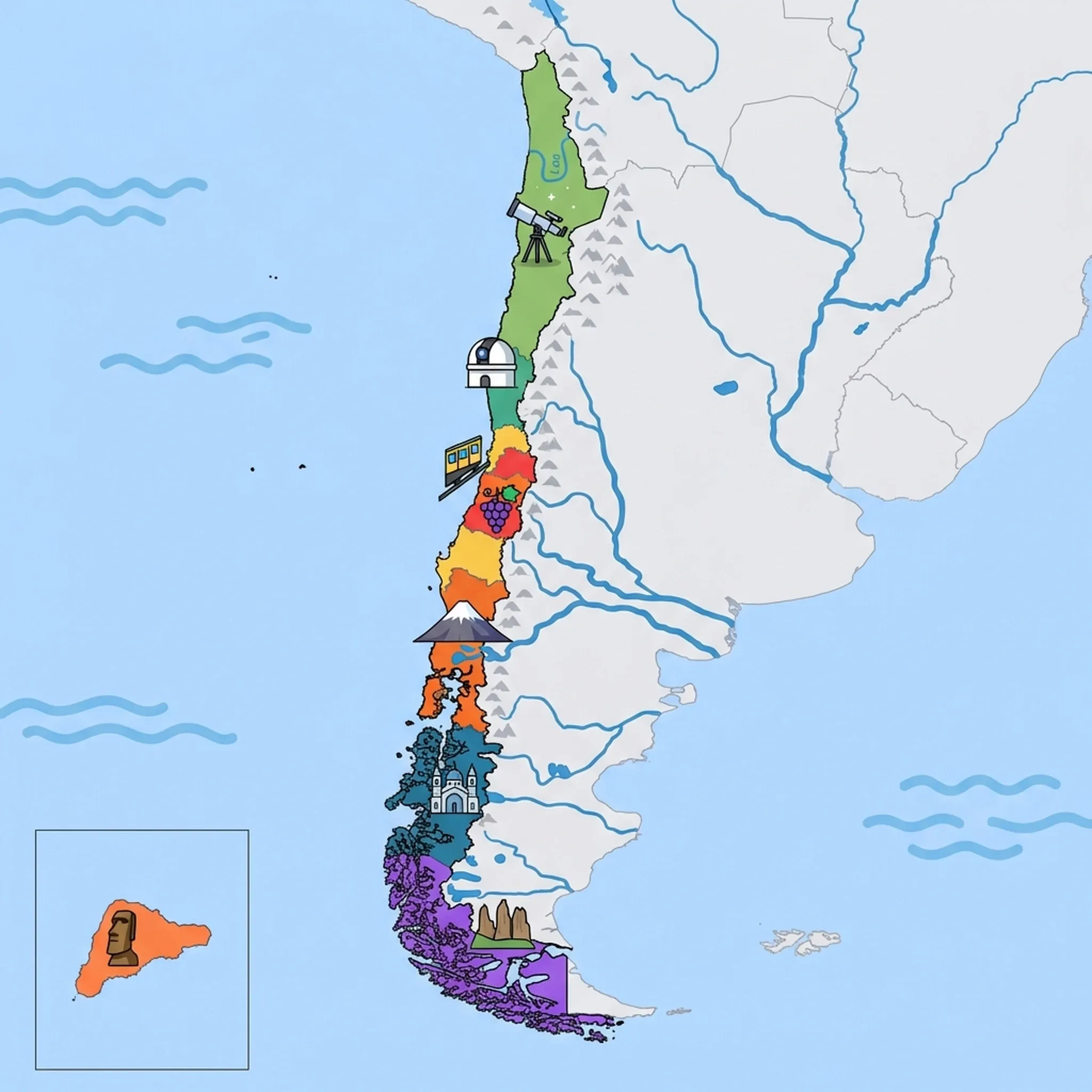
Click a region to explore
Southern Patagonia is the crown jewel of Chilean tourism, a place of mythic proportions that leaves a lasting impact on children. The scale of nature here is humbling: winds that can lean you sideways, icebergs the size of buildings, and mountains that shoot vertically out of the steppe. While the weather is notoriously unpredictable—you can experience four seasons in a single day—this adds to the excitement. Watching a cloud front sweep across the pampas or hearing the thunderous crack of the Grey Glacier is spectacular. Puerto Natales serves as a funky, cosy base camp with great pizza places and hot chocolate shops, while Punta Arenas offers rich history as a major port city on the Strait of Magellan.
Wildlife is a massive draw. Unlike many places where animals are hidden, here they are visible. Guanacos (wild llamas) graze by the roadside, condors circle overhead, and rhea (ostrich-like birds) sprint across the plains. For families, the region is well-developed for tourism, with good roads and comfortable lodges, but it still feels wild. It teaches resilience and appreciation for the environment. A trip here is about getting outside, getting wind-swept, and seeing the planet in its rawest form.
Key Attractions
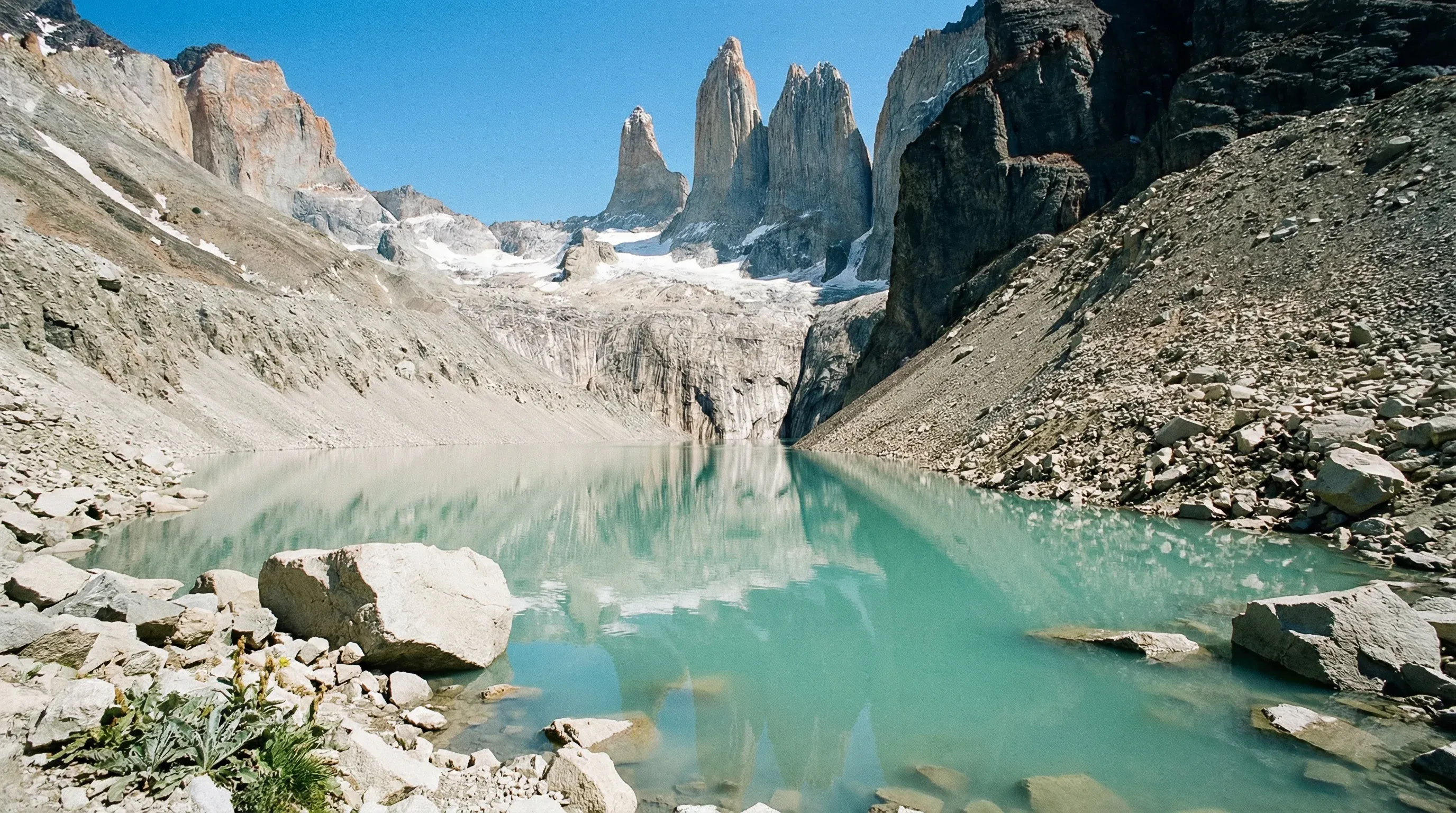
The undisputed highlight is Torres del Paine National Park. While the full hiking circuits are demanding, families can easily drive to stunning viewpoints, take easy walks to the Salto Grande waterfall, and see the 'Horns' of Paine. From Punta Arenas, a boat trip to Los Pingüinos Natural Monument (Magdalena Island) is essential; you can walk on a designated path right through a colony of 60,000 penguins who are completely unfazed by humans. History buffs will enjoy Fuerte Bulnes, a reconstructed wooden fort that shows the harsh reality of early settlers. A visit to the Museo Regional de Magallanes in a lavish mansion gives a glimpse into the wealthy wool-baron era.
Practical Advice
Visit between October and April. January and February are the busiest and windiest months. Book accommodation and car rentals months in advance. Dress in layers: base layer, fleece, and a high-quality wind/rain shell are mandatory for everyone, including kids.
Food & Drink
Typical meal times: Lunch 1:00 pm to 3:00 pm, Dinner 7:30 pm to 10:00 pm. Cafes are open all day for cake and coffee.
Typical meal costs: Expensive. A pizza or burger costs CLP 12.000–16.000 (approx. $13–17 USD / €12–16 EUR). King Crab dishes can be CLP 25.000+ (approx. $26 USD / €25 EUR).
Dietary requirements: Good. Puerto Natales has become a foodie hub with many vegetarian and vegan options catering to international hikers.
Signature dishes:
- Centolla (King Crab) – The local delicacy, sweet and tender, usually served simply with lemon or mayonnaise, or in a chupe (stew).
- Cordero Magallánico – Slow-roasted lamb, famous because the animals graze on salty coirón grass, naturally seasoning the meat.
- Calafate Sour – A variation of Pisco Sour made with the local calafate berry. Legend says if you eat the berry, you will return to Patagonia.
Why this score?
This region is defined by extreme weather, massive glaciers, and some of the world's most famous multi-day trekking circuits. The physical demands of the terrain and the isolation of the national parks provide a top-tier adventure experience for visiting families.
Why this score?
The regional capital of Punta Arenas and the gateway town of Puerto Natales have hospitals capable of treating common injuries and emergencies. However, the vast distances between the national parks and these urban centers mean that emergency response times can be slow in the backcountry.
Why this score?
Torres del Paine is a globally recognized icon of nature tourism, attracting hundreds of thousands of international hikers annually. Despite its remote southern location, it is a primary driver of Chile's international tourism brand and maintains a high volume of foreign visitors.

This is Chile's most expensive region. Demand exceeds supply in summer. Budget hostels exist, but family lodges typically cost CLP 150.000–250.000 (approx. $160–265 USD / €150–250 EUR) per night. Park entry fees are high (approx. $35 USD per adult). Car rental is very pricey, often over CLP 70.000 per day.
Family Travel Notice
Chile enforces very strict border controls for minors. Parents travelling alone with children must carry notarized authorization from the other parent and an original birth certificate.

Getting Here & Around
Getting Here
- Airports – Fly to Presidente Carlos Ibáñez (PUQ) in Punta Arenas (3.5 hours from Santiago). Some seasonal flights go directly to Puerto Natales (PNT).
- Bus – Buses connect Punta Arenas to Puerto Natales (3 hours). It is a reliable and scenic service.
- Driving – Ruta 9 connects the main towns. It is paved and in good condition, unlike the gravel roads inside the national park.
Getting Around
- Car – Essential for families wanting to explore Torres del Paine at their own pace. Rent in Punta Arenas for better rates.
- Bus – Buses run from Puerto Natales into the National Park, but once there, you are limited to the bus schedule, which can be tough with kids.
- Tours – Full-day van tours are available but can be long (10+ hours) for younger children.
Nearby Airports (3 airports)
Puerto Natales
PNTPuerto Natales
Carlos Ibanez Del Campo International
PUQPunta Arenas
Aeropuerto Capitan Fuentes Martinez
WPRPorvenir
View full flight map for Chile →

Packing List
Wind gusts can reach 100km/h; umbrellas are useless and dangerous here.
The UV is high and the wind will blow unsecured glasses off your face.
Trails are often muddy and wet; dry feet are key to happy kids.
The water in streams inside the park is some of the cleanest in the world.
The ozone layer is thinner over Chile; UV radiation is extreme even on cloudy days.
The Atacama Desert is one of the driest places on Earth and can cause nosebleeds.
Many hostels, cabins, and older hotels in remote areas lack plugs for sinks/baths.
Chile uses Type L (3 pins in a row) or Type C. Standard US/UK plugs won't fit.
Essential for the winding Andes mountain roads and boat trips in the south.
Even in summer, desert nights and Patagonian winds are freezing cold.

Activities & Best Times

Hiking, wildlife, outdoor exploration, ecotourism
A premier global wilderness destination anchored by Torres del Paine, offering unique glacial vistas and iconic granite towers. Peak visitation occurs during the austral summer when all trails and remote lodges are fully operational.

Urban tourism, museums, historical sites, architecture
Punta Arenas provides a sophisticated, authentic look into the maritime and ranching history of the Strait of Magellan. The peak season aligns with the warmest months when historical sites and museums are most accessible for urban exploration.

Sport tourism, fitness activities, active recreation
Features world-renowned trekking infrastructure with the W and O circuits in Torres del Paine, attracting elite hikers globally. The season is strictly defined by trail safety and the operational window of mountain refugios.

Learning experiences, scientific sites, historical education
Offers specialized natural history and archaeological insights at significant sites like Cueva del Milodón and the Salesiano Museum. These facilities serve as major learning hubs for the region's unique biodiversity and human history during the tourist season.

Scenic drives, countryside tours, route-based travel
Ruta 9 provides a dramatic and scenic driving corridor through the Patagonian backbone toward the Paine massif. Safe driving conditions and optimal visibility are concentrated in the summer months, with winter posing severe wind and ice risks.
Beach resorts, marine activities: diving, snorkelling, kite surfing, wind surfing, sailing
While not a traditional swimming destination, the coastal promenades and glacial beaches like Playa Grey offer distinctive scenic maritime recreation. Conditions are only suitable for outdoor coastal activities during the peak of the austral summer.
Attractions (18 total)



Public Holidays & Calendar Next 12 months
Public holidays, festivals, cultural celebrations, and seasonal natural phenomena coming up in Southern Patagonia over the next 12 months.
Loading holidays and events...

Travel Advisory
Four out of six major agencies recommend exercising increased caution or a high degree of vigilance. The primary concerns are civil unrest, frequent public demonstrations that may turn violent, and prevalent street crime. While the country is generally safe for travel, specific southern regions face emergencies due to wildfires.
Safety Topics
Traveller Advice (3 groups)

Chile enforces very strict border controls for minors. Parents travelling alone with children must carry notarized authorization from the other parent and an original birth certificate.

Always carry a copy of your identification and keep original documents in a secure location. Avoid all large gatherings, particularly on Friday afternoons when protests are most common in urban centers.

While Santiago is relatively safe for solo women, dressing conservatively is suggested to avoid unwanted attention. Be cautious in rural areas where solo foreign women are less common.
Agency Summaries
The U.S. government advises heightened awareness due to rising rates of violent crime and the unpredictability of large-scale public protests.
Australia recommends extra vigilance due to security threats from civil disturbances and violent criminal activity, including specialized theft tactics.
While no general travel restriction is in place, the assessment suggests a likely threat of terrorism and warns of severe environmental hazards like wildfires.
New Zealanders are warned of significant security concerns regarding theft and potential violence during urban civil unrest.
Travellers should be extremely vigilant in Chile because of persistent civil unrest, frequent demonstrations, and high levels of street crime.
Standard safety measures are recommended, though visitors must avoid all political gatherings as participation can lead to immediate deportation.
Information is provided for general guidance only and does not constitute travel, safety, medical, or legal advice. Conditions may change. Users are responsible for independently verifying information before travel.