
The Lake District & Chiloé
Volcanoes, myths, and monkey puzzles 🌋🌊
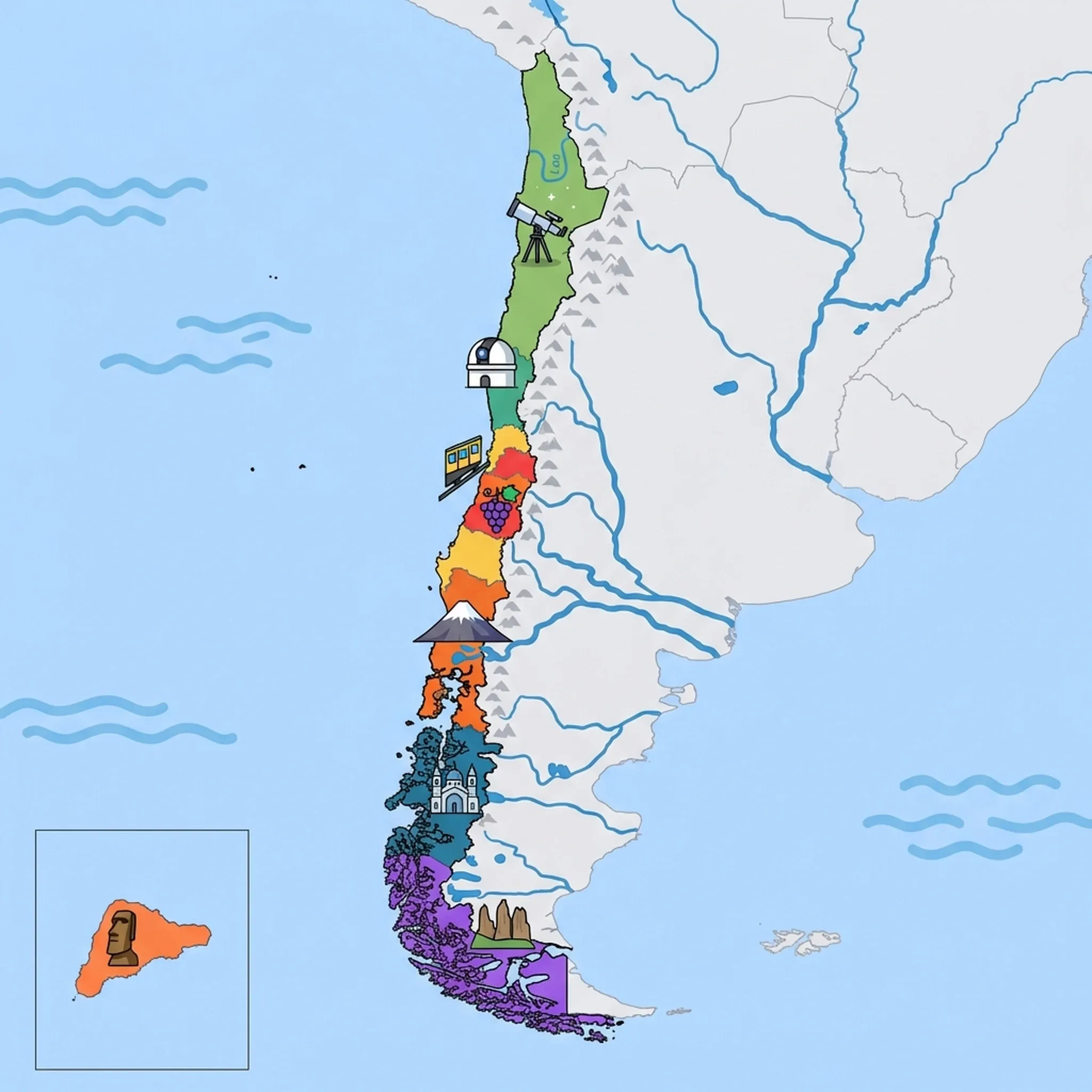
Click a region to explore
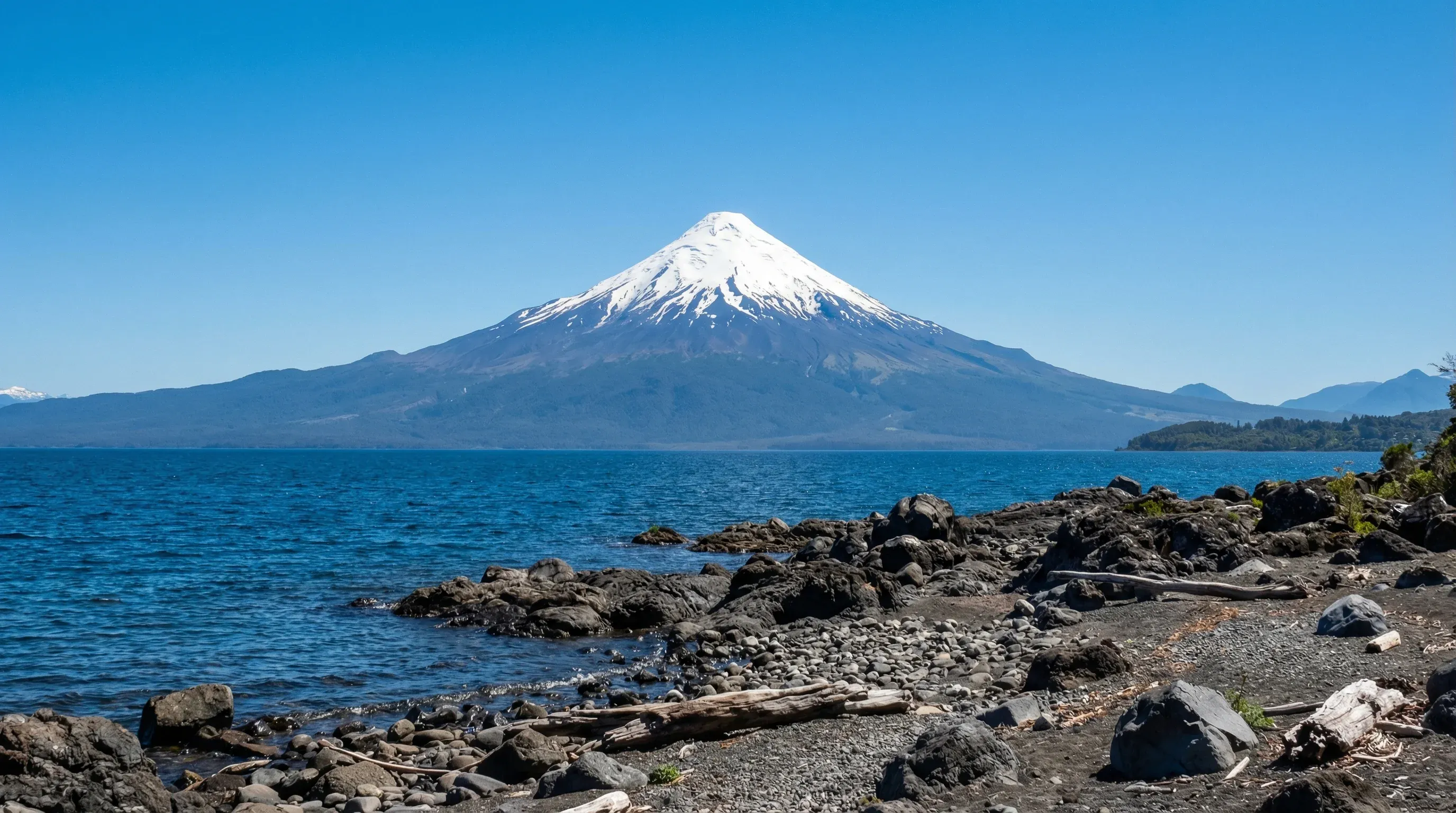
The Lake District and Chiloé offer two distinct but complementary experiences. The mainland is Chile's adventure playground: picture-perfect volcanoes reflect in vast lakes, and towns like Pucón and Puerto Varas show a strong German heritage with their architecture and obsession with 'kuchen' (cake). It is a manicured, lush region that feels very accessible for families. You can spend mornings kayaking and afternoons soaking in geothermal hot springs. The infrastructure is excellent, and the scenery is gentle enough for small children but grand enough to impress anyone.
Cross the channel to Chiloé, and you enter a world of myths and legends. This archipelago has a distinct culture, famous for its palafitos (houses on stilts), UNESCO wooden churches, and folklore involving ghost ships and forest trolls (the 'Trauco') that kids find spooky and fascinating. Chiloé is greener, wetter, and more rustic. Driving through the rolling hills feels like visiting the Shire. Together, these areas offer a perfect mix of outdoor activity and cultural immersion. Whether it's seeing penguins share a beach with otters or skiing on a volcano, the variety here is unmatched.
Key Attractions
In the Lake District, the Saltos del Petrohué are unmissable; easy boardwalks lead to thundering waterfalls set against the backdrop of Osorno Volcano. Families can drive halfway up the volcano to play in the snow (in winter) or just admire the view. Museo Colonial Alemán de Frutillar is a beautiful open-air museum with waterwheels and gardens that lets kids explore the region's German pioneer history. On Chiloé, the Monumento Natural Islotes de Puñihuil is unique—it's one of the few places where Humboldt and Magellanic penguins nest side-by-side; boat trips here are safe and easy. For a magical walk, the Muelle de las Almas (Dock of Souls) offers a cliff-top art installation with stunning ocean views.
Practical Advice
Rain is inevitable, even in summer. January and February are the driest and warmest months. If visiting Chiloé, bring cash as cards are not accepted in rural areas. Pucón gets very crowded in February; book ahead.
Food & Drink
Typical meal times: Lunch 1:00 pm to 3:00 pm. 'Once' (afternoon tea/dinner) is a huge tradition here, served 5:00 pm to 8:00 pm.
Typical meal costs: Moderate. Lunch runs CLP 8.000–12.000 (approx. $8–12 USD / €8–12 EUR). A slice of kuchen is CLP 3.000–4.000 (approx. $3–4 USD / €3–4 EUR).
Dietary requirements: Generally good. Chiloé is potato central (hundreds of varieties), so gluten-free carbs are easy to find, though bread is ubiquitous.
Signature dishes:
- Curanto – A massive stew of shellfish, meat, potatoes, and dumplings, traditionally cooked in a pit in the ground (on Chiloé) or in a pot (Pulmay).
- Kuchen – Fruit tarts introduced by German settlers, usually berry or nut-filled, found in every cafe in Puerto Varas and Frutillar.
- Milcao – A fried potato pancake made from a mix of raw grated and cooked mashed potatoes, often filled with pork crackling.
Why this score?
The region offers a high level of outdoor adventure, including climbing active volcanoes, whitewater rafting, and hiking through ancient Araucaria forests. While services are professional and well-organized, the natural environment is wild and presents genuine physical challenges.
Why this score?
Cities such as Temuco, Valdivia, and Puerto Montt host high-quality regional hospitals and several private clinics. The medical infrastructure is well-integrated and accustomed to treating tourists, though advanced specialized care may still be referred to the capital.
Why this score?
This region is a powerhouse for both domestic and international tourism, famous for its volcano-and-lake scenery and European-influenced architecture. It attracts a consistent flow of international travelers who use Pucón or Puerto Varas as bases for outdoor recreation and cultural exploration.

Prices are reasonable compared to Patagonia. A cabin for 4 costs CLP 70.000–120.000 (approx. $75–125 USD / €70–120 EUR). Dining out is good value, especially the 'Once' (heavy tea) which can replace dinner. National Park fees are low (approx $5-8 USD).
Family Travel Notice
Chile enforces very strict border controls for minors. Parents travelling alone with children must carry notarized authorization from the other parent and an original birth certificate.

Getting Here & Around
Getting Here
- Airports – Temuco (ZCO) for Pucón, Puerto Montt (PMC) for Puerto Varas and Chiloé. Flights from Santiago take 1.5 hours.
- Bus – Overnight buses from Santiago are popular and comfortable ('Salon Cama'), taking 10–12 hours.
- Driving – The Pan-American Highway (Route 5) runs through the entire region. To reach Chiloé, you take a 30-minute ferry from Pargua to Chacao (no reservation needed).
Getting Around
- Car – The best way to see the lakes and Chiloé. Roads are generally paved, though secondary roads in Chiloé can be gravel.
- Ferry – Essential for crossing to Chiloé and navigating between islands.
- Bus – Reliable between major towns (e.g., Puerto Montt to Puerto Varas), but difficult for reaching national parks.
Nearby Airports (5 airports)
Mocopulli Airport
MHCCastro
El Tepual International
PMCPuerto Montt
Pichoy Airport
ZALValdivia
Temuco Airport
ZCOTemuco
Canal Bajo Carlos Hott Siebert
ZOSOsorno
View full flight map for Chile →

Packing List
It rains a lot, even in summer. 'Valdivian rain' is famous for its intensity.
Trails can be muddy and volcanic ash is slippery.
For the many thermal baths (Termas) in the volcanic areas.
The ozone layer is thinner over Chile; UV radiation is extreme even on cloudy days.
The Atacama Desert is one of the driest places on Earth and can cause nosebleeds.
Many hostels, cabins, and older hotels in remote areas lack plugs for sinks/baths.
Chile uses Type L (3 pins in a row) or Type C. Standard US/UK plugs won't fit.
Essential for the winding Andes mountain roads and boat trips in the south.
Even in summer, desert nights and Patagonian winds are freezing cold.

Activities & Best Times

Hiking, wildlife, outdoor exploration, ecotourism
Home to world-class temperate rainforests, the Huilo Huilo Biological Reserve, and iconic volcanoes; it offers an authentic wilderness experience that ranks among the best globally for families.

Urban tourism, museums, historical sites, architecture
The UNESCO wooden churches of Chiloé and the German heritage of Puerto Varas provide a highly unique and authentic cultural atmosphere distinct from other South American regions.

Sport tourism, fitness activities, active recreation
Exceptional for organized sports like kayaking, volcano climbing, and canopy tours; facilities at Huilo Huilo and Pucón are internationally recognized for quality and safety.

Learning experiences, scientific sites, historical education
Volcanic history and biodiversity sites with scientific engagement merit 'good' rating, not marginal.

Spa retreats, wellness centers, peaceful getaways
Renowned for high-quality natural hot springs like Termas Geométricas, which provide world-class restorative experiences in striking architectural and natural settings.

Scenic drives, countryside tours, route-based travel
The Ruta Interlagos and Northern Carretera Austral provide spectacular scenic driving through lake and mountain landscapes, though winter rainfall frequently impacts road conditions.

Winter sports, ski resorts, snow activities
The region features unique skiing opportunities on active volcanoes like Villarrica and Osorno, though infrastructure is more focused on regional rather than elite international tourism.
Beach resorts, marine activities: diving, snorkelling, kite surfing, wind surfing, sailing
Lake and estuary beaches like Playa Grande and Frutillar offer scenic freshwater swimming during the peak austral summer, though they lack the year-round warmth of international beach destinations.
Amusement parks, family entertainment venues
Features regional attractions like the Chiloé Mythological Trail and Pleistocene Park, but these are small-scale and lack the international standards of major global theme parks.

Attractions (23 total)



Public Holidays & Calendar Next 12 months
Public holidays, festivals, cultural celebrations, and seasonal natural phenomena coming up in The Lake District & Chiloé over the next 12 months.
Loading holidays and events...

Travel Advisory
Four out of six major agencies recommend exercising increased caution or a high degree of vigilance. The primary concerns are civil unrest, frequent public demonstrations that may turn violent, and prevalent street crime. While the country is generally safe for travel, specific southern regions face emergencies due to wildfires.
Safety Topics
Traveller Advice (3 groups)
Chile enforces very strict border controls for minors. Parents travelling alone with children must carry notarized authorization from the other parent and an original birth certificate.

Always carry a copy of your identification and keep original documents in a secure location. Avoid all large gatherings, particularly on Friday afternoons when protests are most common in urban centers.

While Santiago is relatively safe for solo women, dressing conservatively is suggested to avoid unwanted attention. Be cautious in rural areas where solo foreign women are less common.
Agency Summaries
The U.S. government advises heightened awareness due to rising rates of violent crime and the unpredictability of large-scale public protests.
Australia recommends extra vigilance due to security threats from civil disturbances and violent criminal activity, including specialized theft tactics.
While no general travel restriction is in place, the assessment suggests a likely threat of terrorism and warns of severe environmental hazards like wildfires.
New Zealanders are warned of significant security concerns regarding theft and potential violence during urban civil unrest.
Travellers should be extremely vigilant in Chile because of persistent civil unrest, frequent demonstrations, and high levels of street crime.
Standard safety measures are recommended, though visitors must avoid all political gatherings as participation can lead to immediate deportation.
Information is provided for general guidance only and does not constitute travel, safety, medical, or legal advice. Conditions may change. Users are responsible for independently verifying information before travel.