

Overview
China is a destination of epic proportions, offering families a travel experience unlike anywhere else on Earth. Spanning from the frozen Northeast China borders to the tropical beaches of South China & Pearl River Delta, the country is a kaleidoscope of landscapes. For families, the real magic lies in the blend of history and modernity. You can walk through ancient temples in the morning and watch dazzling light shows on skyscrapers by night. The climate varies wildly-hot and humid summers in the south, dry and cold winters in the north-so timing your visit is key, with spring and autumn offering the most comfortable weather for exploring.
Culturally, China is incredibly family-centric. Children are adored here, and locals will often go out of their way to make young travelers feel welcome. While the language barrier can be a challenge, the infrastructure is world-class; high-speed trains make crossing vast distances easy and comfortable, and cities are safer than most Western capitals. Whether you are seeking the educational value of imperial history in the Capital Region & North China Plain or the pure fun of world-class theme parks, China delivers an adventure that is both exotic and surprisingly accessible.
Key Attractions
For most families, the highlight of a trip to China is the wildlife. The Chengdu Research Base of Giant Panda Breeding is an absolute must-visit, allowing children to see pandas of all ages in a semi-natural habitat. If your itinerary is focused on the north, the Beijing Zoo also offers excellent panda viewing opportunities alongside a vast collection of other animals. For marine life enthusiasts, Chimelong Ocean Kingdom in Zhuhai is one of the world's largest aquariums and theme parks, featuring whale sharks and spectacular rides.
China is also home to exceptional theme parks and cultural sites that capture children's imaginations. Hong Kong Disneyland remains a top choice for a magical family day out, blending classic Disney charm with unique Chinese elements. For a more active cultural experience, the legendary Shaolin Temple allows kids to see the birthplace of Kung Fu. In the east, the China Dinosaurs Park provides a thrilling mix of science and amusement rides that dino-obsessed kids will love.
Nature in China often looks like a painting come to life. The Elephant Trunk Hill in Guilin is a whimsical natural arch that delights children with its resemblance to an elephant drinking from the river. For a bird's-eye view of modern China, the soaring Canton Tower in Guangzhou lights up the night sky and offers incredible observation decks. Meanwhile, families interested in history and architecture can explore the serene Hongcun Ancient Village, a UNESCO site that feels like stepping back into a simpler time.
Practical Advice
Visas & Entry: Entry rules have relaxed significantly. Citizens of many European and Asian countries now enjoy 15-day or 30-day visa-free entry. For others, the 144-hour visa-free transit policy allows short stays in major regions like Shanghai and Beijing without a full visa. Always check the latest lists before booking.
Digital Logistics: Google, WhatsApp, and Western social media are blocked. Install a reliable VPN before you arrive. Payment is almost entirely digital-download Alipay or WeChat Pay and link your international credit card; cash is rarely used.
Health & Comfort: Tap water is not safe to drink; stick to bottled or boiled water. Public toilets often lack toilet paper and soap, so carry your own supplies. The best times to visit are April–May and September–October.
Food & Drink
Typical meal times: Lunch is generally served from 12:00 pm to 2:00 pm, and dinner from 6:00 pm to 8:30 pm. Restaurants close earlier than in the West, often by 9:00 pm.
Typical meal costs: ¥150–300 (approx. $20–42 USD / €19–38 EUR) for a family meal in a mid-range restaurant. Street food snacks cost ¥10–30 (approx. $1.40–4.20 USD / €1.30–3.80 EUR).
Dietary requirements: Vegetarian dishes are common, but strict vegans must be careful of lard or meat stock. Nut allergies are not well-understood in local eateries; carry a translated allergy card. Halal food is widely available in cities (look for green signs).
Family-friendly dining: Dining is communal with sharing dishes on a "Lazy Susan," which kids love. Highchairs are standard in malls but rare in small local shops. Staff are usually very tolerant of energetic children.
Signature dishes:
- Peking Duck – Crispy roast duck carved table-side, wrapped in pancakes with cucumber and sweet bean sauce.
- Xiao Long Bao (Soup Dumplings) – Steamed dumplings filled with pork and hot broth; fun but tricky to eat!
- Sweet and Sour Pork (Guolourou) – A Cantonese classic with bright orange sauce that appeals to picky eaters.
- Hot Pot – Cook-your-own meat and veggies in broth; ask for a "split pot" to keep one side non-spicy for the kids.
- Biang Biang Noodles – Thick, hand-pulled noodles from Xi'an that are fun to watch being made.

China offers excellent value. A family of four can expect to spend around ¥1,200–2,000 (approx. $165–275 USD / €150–250 EUR) per day. This covers mid-range hotels, high-speed train travel, and generous family meals. Local transport and food are very affordable, while entry fees for major theme parks like Disney or Chimelong are comparable to Western prices.
Age Suitability





Did you know? China welcomes approximately 8.0 million international visitors per year. Most visitors come from East Asia and the Pacific.

Explore Regions
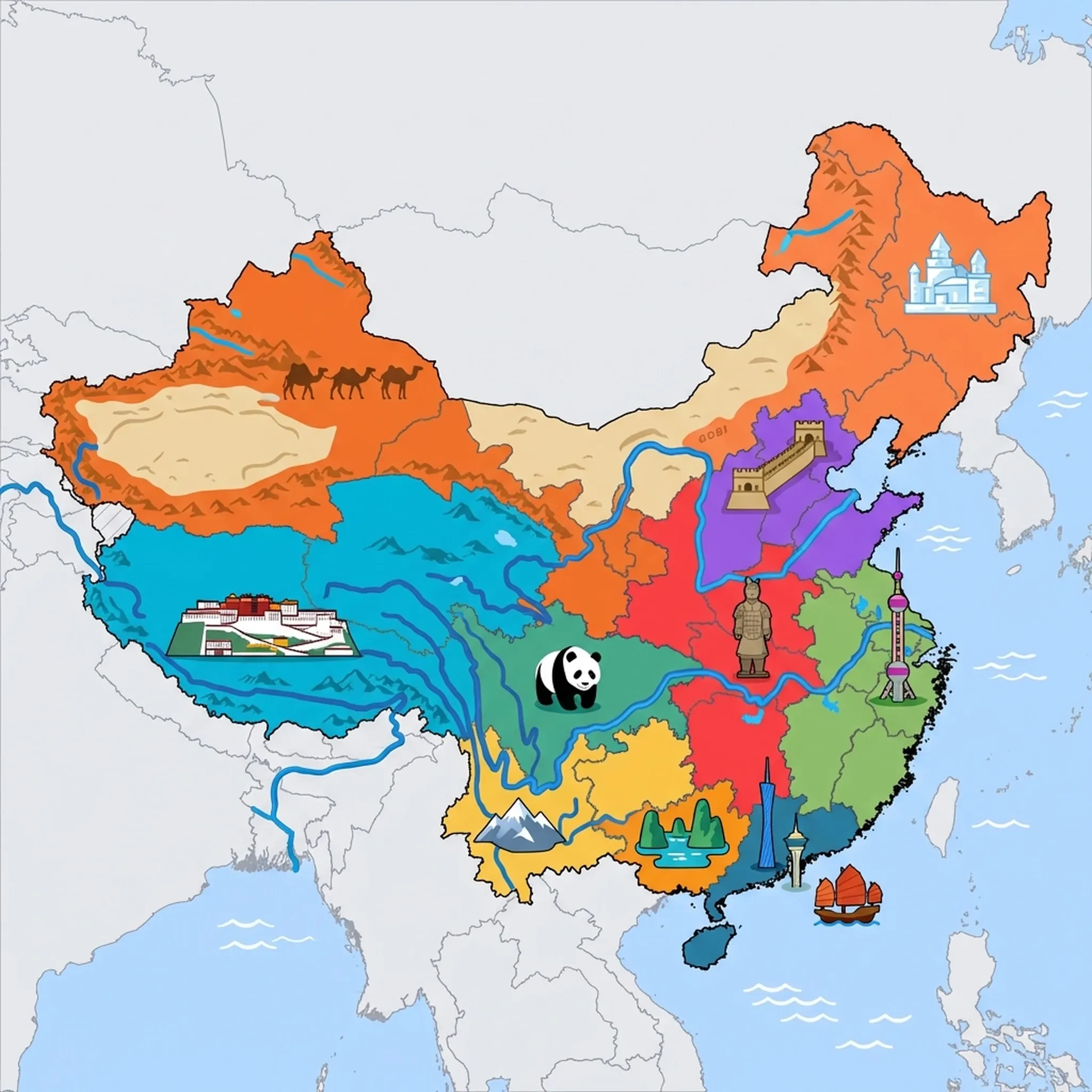
12 Regions
Capital Region & North China Plain
Where imperial dragons meet futuristic skylines 🐲🏙️
Central China & Yellow River Heartland
The ancient cradle of kung fu and legends 🥋🐉
East China & Yangtze Delta
Futuristic skylines meets ancient water towns 🏙️⛵
Guangxi Karst & Southern Hills
Where mountains float on rivers of glass 🏞️🛶
Hong Kong SAR
A neon jungle with a wild tropical heart 🌃🏝️
Macau SAR
Where Portuguese forts meet panda parks 🇵🇹🐼
Northeast China
A frozen kingdom of ice castles and tigers ❄️🐯
Northwest China & Silk Road
Camel rides through history's greatest desert 🐪🏜️
Sichuan Basin & Upper Yangtze
Home of pandas and spicy pots 🐼🌶️
South China & Pearl River Delta
Tropical cities, ancient castles, and dim sum 🥟🌴
Tibetan Plateau
A spiritual journey to the roof of the world 🏔️🙏
Yunnan Plateau & Ethnic Highlands
Rainbow cultures south of the clouds 🌈☁️
Click on a region marker to explore details. Use the dropdown to color regions by activity suitability.

Getting There & Around
Getting There
- By Air – Major gateways include Beijing (PEK/PKX), Shanghai (PVG), and Guangzhou (CAN). Hong Kong Disneyland is easily reached via Hong Kong International Airport (HKG).
- By Train – The high-speed rail link from Hong Kong West Kowloon to mainland cities is a popular entry route for families combining HK with the mainland. International trains from neighbors exist but are slow.
- Entry Requirements – Many EU and Asian citizens now have 15 or 30-day visa-free entry. Others need a visa (Category L for tourists) or can use the 144-hour visa-free transit if flying through major hubs to a third country. Check your government website for the latest visa requirements, or use the IATA Travel Centre entry-requirements checker.
Getting Around
- High-Speed Train (HSR) – The jewel of China travel. Trains up to 350 km/h connect major hubs like East China & Yangtze Delta with incredible punctuality. Children under 1.2m travel free; those 1.2–1.5m get 50% off.
- Metro – Major cities like Beijing and Shanghai have massive, clean, and cheap subway systems with English signage. It is the best way to beat traffic.
- Ride-Hailing – DiDi is the local Uber. The app has an English version and accepts international credit cards. It is safe, cheap, and essential for families.
- Domestic Flights – Useful for long hops, such as reaching Northwest China & Silk Road, though delays are more common than on trains.

Packing List
Most public restrooms do not provide paper; carry your own packs at all times.
Soap is frequently missing from public washrooms, even in malls.
Western-style deodorant is rare in local convenience stores; bring your preferred brand.
You will use your phone for everything (maps, translation, payment), draining battery fast.
Familiar brands like Calpol or Tylenol are hard to find; bring your own supply.

Activities & Best Times

Adventure & Nature
ExcellentHiking, wildlife, outdoor exploration, ecotourism
Home to the iconic Huangshan (Yellow Mountain) and West Lake, this region offers world-class trekking and scenery. Spring and autumn provide the best visibility and comfortable temperatures, while the high humidity and heat of mid-summer can be taxing.
The region features world-class hiking infrastructure with the MacLehose and Lantau Trails providing dramatic vistas and diverse ecosystems. The dry, cool winter months are optimal for trail exploration, while extreme humidity and heat make summer trekking unsuitable for most families.
The region offers world-class wilderness immersion, from the tropical rainforests of Xishuangbanna to the high-altitude trails of Tiger Leaping Gorge. Peak months provide clear views of the snow-capped peaks and dry conditions, while the rainy summer creates lush, albeit wetter, landscapes.

City & Cultural
ExcellentUrban tourism, museums, historical sites, architecture
A powerhouse of culture ranging from Shanghai's modern skyline to Suzhou's UNESCO-listed classical gardens. Peak periods align with pleasant walking weather; the 'Plum Rain' season in June and oppressive summer heat are less ideal for urban exploration.
Hong Kong is a premier global hub for culture and gastronomy, featuring iconic sites like Victoria Peak and the historic Tai Kwun complex. Autumn and early winter provide the most comfortable climate for exploring the city's dense urban fabric and street markets.
Features authentic UNESCO Heritage sites like Lijiang and Dali, offering a high-quality window into Naxi and Bai cultures. Spring and autumn offer the most pleasant weather for exploring these historic urban centers away from the winter cold.

Educational & Exploratory
Very GoodLearning experiences, scientific sites, historical education
Boasts world-leading facilities like the Shanghai Astronomy Museum and Shanghai Natural History Museum that are standalone international draws. These indoor venues are accessible year-round, though school holiday periods see the highest engagement.
Home to the UNESCO-listed Chengjiang Fossil Site and major natural history museums, providing internationally significant scientific learning opportunities. Facilities are most comfortably accessible during the warmer, more humid months, avoiding the freezing winter highland temperatures.
The region hosts massive, destination-level institutions like the China Science and Technology Museum and the National Museum of China. Peak months coincide with summer holidays and golden weeks when educational programming is most active for visiting families.

Sports & Active
Very GoodSport tourism, fitness activities, active recreation
Moganshan and Qiandao Lake serve as major hubs for organized outdoor activities and adventure parks. Conditions are optimal in the mild spring and autumn, while extreme summer humidity and winter cold are unsuitable for high-intensity activity.
Excellent infrastructure for organized sports, including championship-standard hiking routes and advanced water parks, caters to active families. The temperate months provide the necessary conditions for physical exertion, avoiding the peak heat of the tropical summer.
With Olympic-grade infrastructure and iconic routes like the Jinshanling Great Wall hike, the region is a hub for active sport tourism. Ideal conditions occur in the shoulder seasons of spring and autumn to avoid the summer humidity and the frigid winter winds.

Theme Park & Entertainment
Very GoodAmusement parks, family entertainment venues
Anchored by Shanghai Disneyland and China Dinosaurs Park, the region is a premier hub for high-quality family entertainment. Peak visitation follows school holidays and favorable weather, while June rains and winter cold deter some visitors.
Universal Studios Beijing is a flagship international destination with world-class production values. Peak visitation aligns with pleasant outdoor temperatures, while the deep winter causes many outdoor attractions to close or become unappealing.
Home to the world-renowned Harbin Ice and Snow World and major parks like Dalian Discoveryland. Seasonal appeal is concentrated in the mid-winter ice festival and the warm summer school holiday window.

Beach & Sea
GoodBeach resorts, marine activities: diving, snorkelling, kite surfing, wind surfing, sailing
Well-maintained urban beaches like Repulse Bay and Stanley offer high-quality facilities and easy accessibility for families. Peak season occurs when sea temperatures are warm enough for swimming, though visitors must monitor the summer typhoon alerts.
Dalian offers the region's best coastal recreation with unique geological formations and major marine parks. The suitable window for beach activity is brief, limited to the height of summer when water temperatures peak.
Beihai and Weizhou Island provide clean, accessible coastal recreation with unique volcanic scenery. The summer months offer the warmest waters for swimming, but the region lacks the year-round warmth and ultra-luxury infrastructure of top-tier global beach destinations.

Festivals & Seasonal
GoodEvents, celebrations, seasonal attractions
Hong Kong's Chinese New Year celebrations, Dragon Boat Festival, and Mid-Autumn Festival are internationally recognized cultural events that draw significant tourism. These are authentic, high-quality cultural experiences that exceed 'marginal' threshold. The region's festivals are well-organized, accessible, and culturally significant enough to warrant 'good' rating.
The Shanghai International Film Festival in June and the Qiantang River Tidal Bore in September are unique international draws. Seasonal timing is strictly tied to these specific event windows and the traditional Lunar New Year celebrations.
The Lunar New Year (Spring Festival) temple fairs in Beijing are internationally significant cultural events. These are highly specific to the lunar calendar, usually occurring in January or February, with few other globally-relevant festivals during the year.

Relaxation & Wellness
GoodSpa retreats, wellness centers, peaceful getaways
Established hot spring clusters in Tangshan and Huangshan provide high-end restorative experiences. The wellness season peaks in the cooler months when the thermal baths are most appealing, contrasting with the sweltering humid summer.
Established geothermal destinations like Tengchong provide authentic thermal bath experiences that are highly restorative during the cold winter months. These facilities lose their appeal during the warmer, more humid summer season.
Historic hot spring clusters in Chicheng and Tianjin provide a high-quality thermal bath culture. These facilities are most popular and effective during the cold winter months, offering a stark and restorative contrast to the sub-zero outdoor temperatures.

Road Trips & Scenic
GoodScenic drives, countryside tours, route-based travel
The Southern Anhui heritage roads and Qiandao Lake circuits offer beautiful scenery through ancient villages and lakeside vistas. Spring blooms and autumn colors provide the best visual experience, while summer rains and winter fog can impact road safety and visibility.
Scenic routes such as the Island South Coastal Route offer unique perspectives of the territory's rugged coastline and lush mountains. These drives are best experienced in the dry season when visibility is highest and the risk of heavy tropical downpours is minimal.
The G214 and Erhai Loop offer some of China's most scenic highland driving. Peak months provide optimal visibility for mountain vistas; summer is avoided due to heavy monsoon rains and potential landslide risks on highland roads.

Ski & Snow
GoodWinter sports, ski resorts, snow activities
High-altitude resorts at Jade Dragon Snow Mountain and Shangri-La provide unique, reliable snow coverage during the winter. While limited in terrain compared to the Alps, the cultural backdrop of the Tibetan plateau offers a unique family experience.
The 2022 Winter Olympic venues at Thaiwoo and Wanlong offer high-standard infrastructure and reliable artificial snow-making. The season is strictly limited to the cold winter months, with facilities typically closing by late March.
Hosts China's most established ski resorts, including Wanda Changbaishan and Songhua Lake, with modern lifts and reliable sub-zero temperatures. The season is strictly defined by the cold window from late November through March.

Public Holidays & Calendar Next 12 months
Public holidays, festivals, cultural celebrations, and seasonal natural phenomena coming up in China over the next 12 months.
Loading holidays and events...
Climate & Weather
Capital Region & North China Plain
Show Details
| Month | Temp °C | Rain | Humidity |
|---|
Central China & Yellow River Heartland
Show Details
| Month | Temp °C | Rain | Humidity |
|---|
East China & Yangtze Delta
Show Details
| Month | Temp °C | Rain | Humidity |
|---|
Guangxi Karst & Southern Hills
Show Details
| Month | Temp °C | Rain | Humidity |
|---|
Hong Kong SAR
Show Details
| Month | Temp °C | Rain | Humidity |
|---|
Macau SAR
Show Details
| Month | Temp °C | Rain | Humidity |
|---|

Travel Advisory
All major agencies recommend exercising a high degree of caution. This is primarily driven by the risk of arbitrary law enforcement, potential exit bans, and heightened security measures in specific autonomous regions.
Safety Topics
Traveller Advice (4 groups)

While not illegal, there are no legal protections against discrimination. Public displays of affection are generally discouraged as they may draw unwanted attention or social stigma in more conservative areas.

All foreign visitors must register their place of residence with the local Public Security Bureau within 24 hours of arrival. Always carry your passport, as police frequently conduct random identification checks.

China is generally considered safe for women travelling alone, but standard personal security precautions should be taken, particularly when using late-night transport or in crowded tourist areas.

Media professionals face a high risk of surveillance, harassment, and potential detention. Reporting on sensitive political topics or visiting restricted areas like Xinjiang can lead to immediate intervention by security forces.
Agency Summaries
Travellers should remain vigilant due to the unpredictable application of local regulations. Heightened risks exist for those with familial or ethnic connections to sensitive regions like Xinjiang, where arbitrary detention and surveillance are more prevalent. Dual nationality is not legally recognized, which can severely limit access to consular assistance.
The State Department advises increased vigilance in Mainland China because of the arbitrary enforcement of domestic laws, which includes the use of exit bans. These bans may be applied to foreign nationals involved in business or civil disputes, often without a clear legal process or notification.
While most visits are trouble-free, there is a risk of arbitrary detention under broadly defined national security laws. Foreigners may face increased scrutiny, particularly when visiting minority-heavy areas or if they have backgrounds in government, NGOs, or media. Visa-free entry for short stays is currently available for British citizens through 2026.
Safety and security concerns are higher than in New Zealand, particularly regarding local law enforcement and surveillance. Identification must be carried at all times, and tourists are often targeted by elaborate tea house or massage scams involving exorbitant bills and threats.
Irish citizens are advised to be cautious due to the potential for exit bans and arbitrary detention. Entry procedures may include medical screenings or temperature checks. It is vital to comply with all visa regulations and stay mindful of the specific periods of stay allowed by local authorities.
Authorities have previously detained foreign citizens on vague grounds of endangering national security. The security situation in Tibet and Xinjiang is particularly tense, with significant police presence and movement restrictions. Travellers should also be aware of sophisticated phone scams targeting foreign residents.
Information is provided for general guidance only and does not constitute travel, safety, medical, or legal advice. Conditions may change. Users are responsible for independently verifying information before travel.