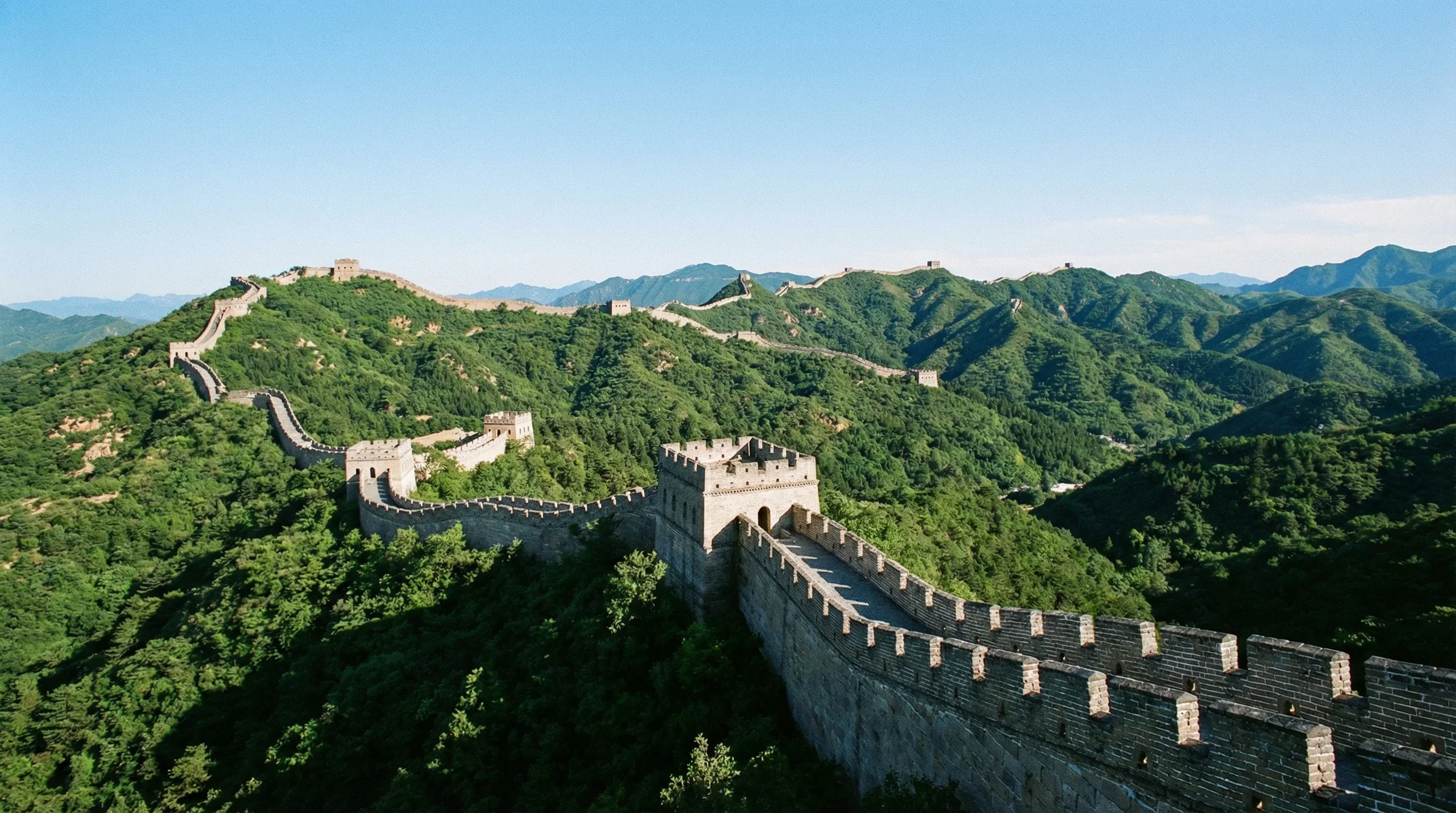

Capital Region & North China Plain
Where imperial dragons meet futuristic skylines 🐲🏙️
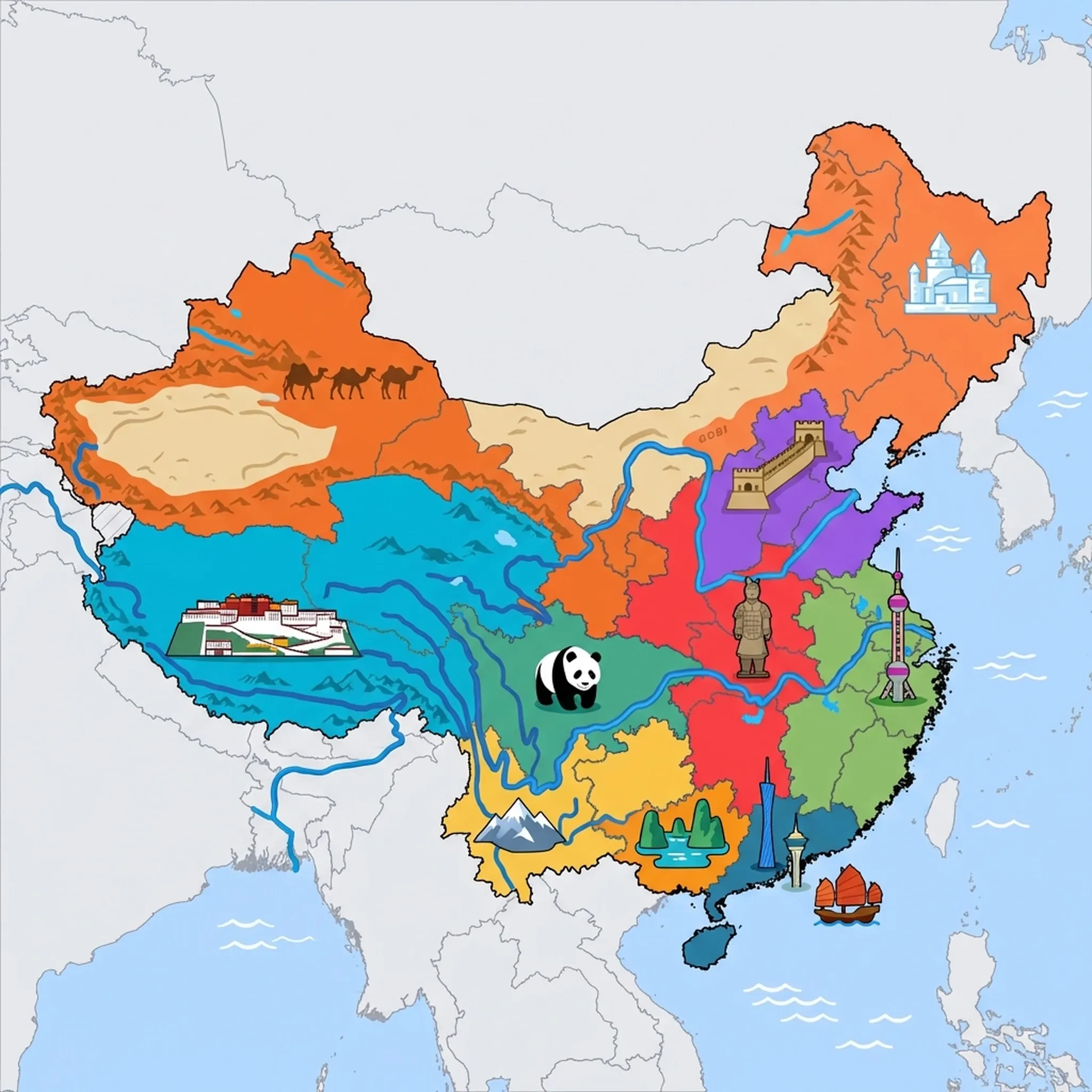
Click a region to explore
Overview
The Capital Region and North China Plain represent the historical and political core of China, a vast landscape where ancient dynasties ruled for millennia. For families, this region offers an unparalleled history lesson brought to life. The geography shifts from the flat, fertile plains of Hebei to the rugged Yan Mountains in the north, which cradle the Great Wall. Beijing, the capital, is a sprawling metropolis that seamlessly blends 3,000 years of history with cutting-edge modernity. Winters here are crisp and cold, often dusted with snow, while springs bring blooming flowers to the imperial gardens. It is a place of grand scale—massive palaces, wide avenues, and monuments that leave children wide-eyed.
Beyond the history, the region is incredibly family-friendly, with modern infrastructure making travel easy. The high-speed rail network connects major hubs like Tianjin and Shanxi efficiently. Culturally, this is the home of standard Mandarin, Peking Opera, and some of the country's most iconic culinary traditions. Families will find a welcoming atmosphere where children are doted on, and the blend of educational sites with world-class entertainment parks ensures that energetic kids remain engaged throughout the trip.
Key Attractions
No trip to this region is complete without visiting the Forbidden City. This massive imperial palace complex is surprisingly kid-friendly, with plenty of open space to run and intriguing dragon statues to spot. Just north of the city, the Mutianyu Great Wall offers a less crowded experience than other sections, and the famous toboggan ride down the mountain is a thrill that families talk about for years. For a change of pace, the Happy Valley Beijing theme park provides world-class roller coasters and entertainment.
In neighboring Shanxi province, the Hanging Temple (Xuankong Temple) defies gravity, clinging to a sheer cliff face in a way that fascinates engineering-minded teenagers. Back in Beijing, the China Science and Technology Museum is an interactive wonderland perfect for rainy days, while the Beijing Aquarium remains one of the largest inland aquariums in the world, hosting spectacular marine exhibits that captivate younger children.
Practical Advice
The best times to visit are spring (April–May) and autumn (September–October) when temperatures are mild and skies are blue. Summer (June–August) can be hot and crowded, while winter is very cold but offers the chance to see snow on the Great Wall. Book tickets for major attractions like the Forbidden City at least 7 days in advance via official WeChat mini-programs or travel agents, as they sell out instantly.
Food & Drink
Typical meal times: Lunch is typically served from 11:30 am to 1:30 pm, and dinner from 5:30 pm to 8:30 pm. Local restaurants often close promptly after these hours.
Typical meal costs: A meal for a family of four costs roughly ¥200–400 (approx. $28–55 USD / €25–50 EUR) in a standard restaurant.
Dietary requirements: Wheat-based foods (noodles, dumplings) dominate here. Vegetarians can find options easily in Buddhist restaurants or by requesting dishes without meat, though broth may still contain animal products. Nut allergies are less common but require vigilance.
Signature dishes:
- Peking Roast Duck – The region's most famous dish, featuring crispy skin served with thin pancakes, scallions, and sweet bean sauce.
- Zhajiangmian – Chewy hand-pulled wheat noodles topped with a rich, savory soybean paste and fresh vegetable garnishes.
- Tanghulu – Candied hawthorn berries on a stick, a crunchy and sweet street food snack that kids adore.
Why this score?
While hiking the unrestored sections of the Great Wall offers a physical challenge, the region is highly developed with sophisticated transport and luxury amenities. Most family-oriented 'adventure' here, such as the Mutianyu toboggan, is well-regulated and safe for children. The ruggedness is largely tempered by high-speed rail access and high-end tourism services throughout the North China Plain.
Why this score?
Beijing is home to China's most prestigious medical institutions, including the Peking Union Medical College Hospital which has dedicated international wings. Many hospitals offer 24-hour English-speaking services and direct billing with global insurance providers. Families have access to world-class specialized care that rivals major Western capitals.
Why this score?
As the home of the Great Wall and the Forbidden City, this region is a mandatory stop for nearly every international visitor to China. Beijing serves as the primary international gateway, hosting millions of foreign tourists annually who come for world-class historical sites and cultural heritage. The infrastructure is highly developed, specifically catering to non-Chinese speakers with extensive English signage and international hotel chains.

Beijing is more expensive than rural China but affordable compared to Western capitals. A comfortable family hotel room costs ¥600–1,200 (approx. $85–165 USD / €75–150 EUR) per night. Public transport is incredibly cheap, with subway rides costing ¥3–7 (approx. $0.40–1.00 USD / €0.35–0.90 EUR). Entry fees for major sites like the Great Wall are reasonable, usually under ¥60 (approx. $8 USD / €7 EUR).

Getting Here & Around
Getting Here
- Airports – Beijing Capital International Airport (PEK) and the massive Beijing Daxing International Airport (PKX) are major global hubs connecting to cities worldwide.
- Train – High-speed trains connect Beijing to Shanghai (4.5 hours) and Xi'an (4 hours). The region is the central node of China's rail network.
- Driving – Major expressways link the capital to surrounding provinces, though traffic restrictions in Beijing make driving challenging for tourists.
Getting Around
- Subway – Beijing and Tianjin have massive, bilingual subway systems that are cheap, safe, and the fastest way to navigate traffic.
- High-Speed Train – The intercity train between Beijing and Tianjin takes just 30 minutes, making day trips incredibly easy.
- Walking – While sites like the Forbidden City are walkable internally, the distances between city districts are vast, so combine walking with public transport.
Nearby Airports (28 airports)
Qinhuangdao Beidaihe Airport
BPEQinhuangdao
Puning Airport
CDEChengde
Changzhi Airport
CIHChangzhi
Datong Airport
DATDatong
Dongying Airport
DOYDongying
Handan Airport
HDGHandan
Heze Mudan Airport
HZAHeze
Jining Da'an Airport
JNGJining
Linfen Qiaoli Airport
LFQQiaoli
Luliang Airport
LLVLuliang
Linyi Airport
LYILinyi
Beijing Capital International Airport
PEKBeijing
Daxing International Airport
PKXBeijing
Rizhao Shanzihe Airport
RIZRizhao
Shijiazhuang Daguocun International Airport
SJWShijiazhuang
Senipah Airport
SZHShuozhou
Qingdao Jiaodong International Airport
TAOQingdao
Jinan Yaoqiang International Airport
TNAJinan
Tianjin Binhai International Airport
TSNTianjin
Tangshan Sannuhe Airport
TVSTangshan
Taiyuan Wusu International Airport
TYNTaiyuan
Weifang Airport
WEFWeifang
Weihai Airport
WEHWeihai
Wutaishan Airport
WUTXinzhou
Xingtai Airport
XNTXingtai
Zhangxiao
YCUYuncheng
Penglai International Airport
YNTYantai
Zhangjiakou Ningyuan Airport
ZQZZhangjiakou
View full flight map for China →

Packing List
Air quality can fluctuate significantly; essential for sensitive groups
Essential for accessing blocked western apps and websites (install before arrival)
Distances in palaces and parks are immense; you will walk 15k+ steps daily
Public restrooms often lack toilet paper and soap
Most public restrooms do not provide paper; carry your own packs at all times.
Soap is frequently missing from public washrooms, even in malls.
Western-style deodorant is rare in local convenience stores; bring your preferred brand.
You will use your phone for everything (maps, translation, payment), draining battery fast.
Familiar brands like Calpol or Tylenol are hard to find; bring your own supply.

Activities & Best Times

Hiking, wildlife, outdoor exploration, ecotourism
Home to the Great Wall's wild sections and the sacred peaks of Mount Wutai, offering world-class hiking and immersion in ancient landscapes. Spring and autumn provide ideal visibility and mild temperatures, whereas the winter is biting and summer months can be uncomfortably humid.

Urban tourism, museums, historical sites, architecture
Beijing is a global cultural heavyweight featuring the Forbidden City and a cutting-edge contemporary art scene in District 798. Autumn is the most celebrated season for urban exploration, while the extreme winter cold makes city walking difficult for families.

Learning experiences, scientific sites, historical education
The region hosts massive, destination-level institutions like the China Science and Technology Museum and the National Museum of China. Peak months coincide with summer holidays and golden weeks when educational programming is most active for visiting families.

Sport tourism, fitness activities, active recreation
With Olympic-grade infrastructure and iconic routes like the Jinshanling Great Wall hike, the region is a hub for active sport tourism. Ideal conditions occur in the shoulder seasons of spring and autumn to avoid the summer humidity and the frigid winter winds.

Amusement parks, family entertainment venues
Universal Studios Beijing is a flagship international destination with world-class production values. Peak visitation aligns with pleasant outdoor temperatures, while the deep winter causes many outdoor attractions to close or become unappealing.

Spa retreats, wellness centers, peaceful getaways
Historic hot spring clusters in Chicheng and Tianjin provide a high-quality thermal bath culture. These facilities are most popular and effective during the cold winter months, offering a stark and restorative contrast to the sub-zero outdoor temperatures.

Scenic drives, countryside tours, route-based travel
Routes like the Grassland Heaven Road offer scenic vistas of rolling hills and heritage sites. The high season for driving is summer when the grasslands are lush, as winter renders the landscape brown and roads can be hazardous with ice.

Winter sports, ski resorts, snow activities
The 2022 Winter Olympic venues at Thaiwoo and Wanlong offer high-standard infrastructure and reliable artificial snow-making. The season is strictly limited to the cold winter months, with facilities typically closing by late March.

Beach resorts, marine activities: diving, snorkelling, kite surfing, wind surfing, sailing
Coastal areas like Beidaihe and Aranya offer developed beach experiences, though they lack the marine biodiversity of global benchmarks. Summer provides the only viable window for swimming, while winter temperatures are far too low for coastal recreation.

Events, celebrations, seasonal attractions
The Lunar New Year (Spring Festival) temple fairs in Beijing are internationally significant cultural events. These are highly specific to the lunar calendar, usually occurring in January or February, with few other globally-relevant festivals during the year.
Attractions (38 total)



Public Holidays & Calendar Next 12 months
Public holidays, festivals, cultural celebrations, and seasonal natural phenomena coming up in Capital Region & North China Plain over the next 12 months.
Loading holidays and events...

Travel Advisory
All major agencies recommend exercising a high degree of caution. This is primarily driven by the risk of arbitrary law enforcement, potential exit bans, and heightened security measures in specific autonomous regions.
Safety Topics
Traveller Advice (4 groups)

While not illegal, there are no legal protections against discrimination. Public displays of affection are generally discouraged as they may draw unwanted attention or social stigma in more conservative areas.

All foreign visitors must register their place of residence with the local Public Security Bureau within 24 hours of arrival. Always carry your passport, as police frequently conduct random identification checks.

China is generally considered safe for women travelling alone, but standard personal security precautions should be taken, particularly when using late-night transport or in crowded tourist areas.

Media professionals face a high risk of surveillance, harassment, and potential detention. Reporting on sensitive political topics or visiting restricted areas like Xinjiang can lead to immediate intervention by security forces.
Agency Summaries
Travellers should remain vigilant due to the unpredictable application of local regulations. Heightened risks exist for those with familial or ethnic connections to sensitive regions like Xinjiang, where arbitrary detention and surveillance are more prevalent. Dual nationality is not legally recognized, which can severely limit access to consular assistance.
The State Department advises increased vigilance in Mainland China because of the arbitrary enforcement of domestic laws, which includes the use of exit bans. These bans may be applied to foreign nationals involved in business or civil disputes, often without a clear legal process or notification.
While most visits are trouble-free, there is a risk of arbitrary detention under broadly defined national security laws. Foreigners may face increased scrutiny, particularly when visiting minority-heavy areas or if they have backgrounds in government, NGOs, or media. Visa-free entry for short stays is currently available for British citizens through 2026.
Safety and security concerns are higher than in New Zealand, particularly regarding local law enforcement and surveillance. Identification must be carried at all times, and tourists are often targeted by elaborate tea house or massage scams involving exorbitant bills and threats.
Irish citizens are advised to be cautious due to the potential for exit bans and arbitrary detention. Entry procedures may include medical screenings or temperature checks. It is vital to comply with all visa regulations and stay mindful of the specific periods of stay allowed by local authorities.
Authorities have previously detained foreign citizens on vague grounds of endangering national security. The security situation in Tibet and Xinjiang is particularly tense, with significant police presence and movement restrictions. Travellers should also be aware of sophisticated phone scams targeting foreign residents.
Information is provided for general guidance only and does not constitute travel, safety, medical, or legal advice. Conditions may change. Users are responsible for independently verifying information before travel.