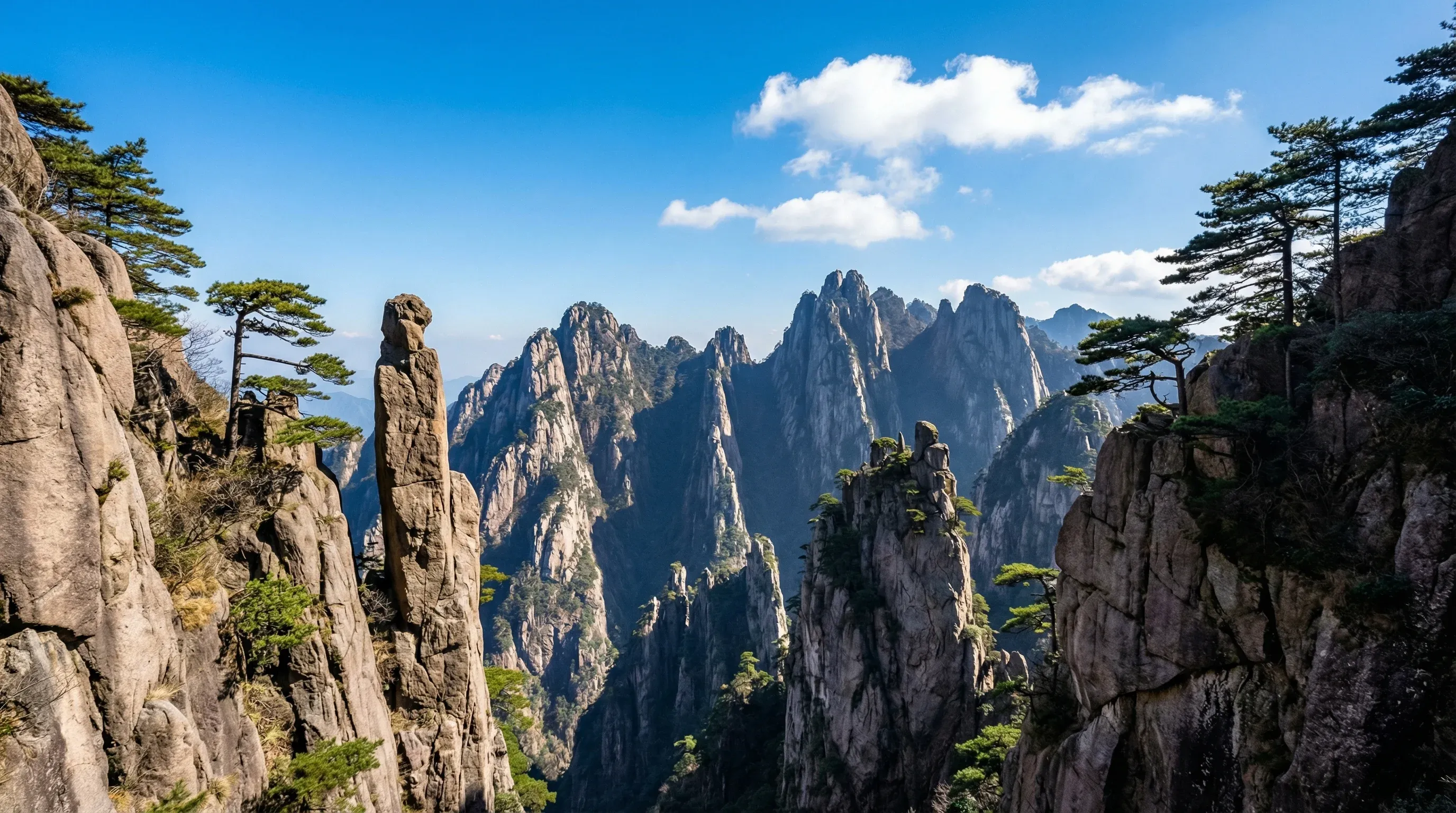

East China & Yangtze Delta
Futuristic skylines meets ancient water towns 🏙️⛵
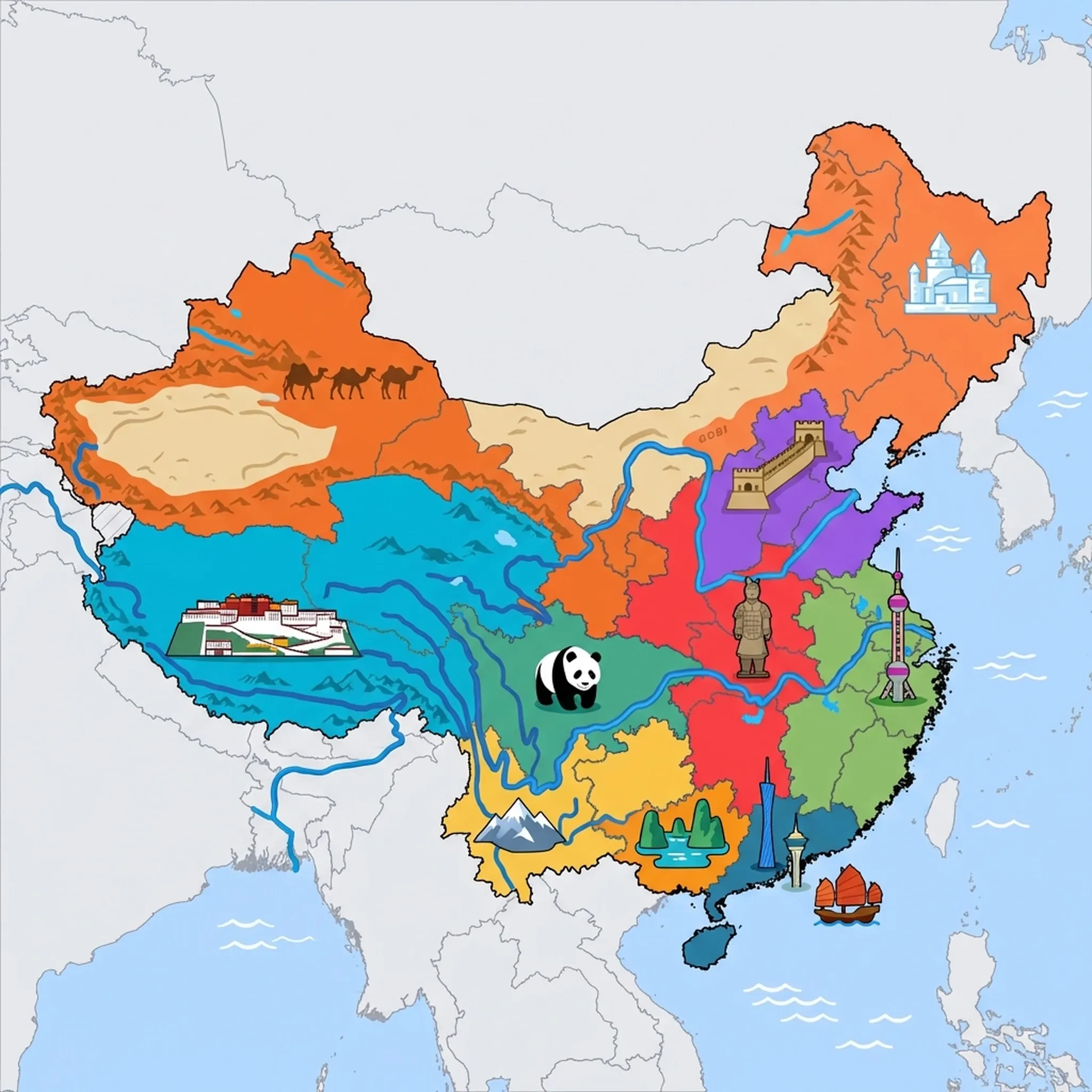
Click a region to explore
Overview
East China and the Yangtze Delta represent the most prosperous and modern face of China, yet they remain deeply rooted in tradition. For families, this is the easiest entry point into the country. The region is defined by water—from the mighty Yangtze River meeting the ocean at Shanghai to the tranquil canals of Suzhou and the misty West Lake in Hangzhou. The contrast is stark and exciting: one day you can be in the world's highest observation decks, and the next, floating on a bamboo raft through a village that time forgot.
The region is incredibly well-connected and safe, with a mild, four-season climate, though summers can be humid and rainy (the 'plum rains'). It caters brilliantly to children, boasting some of Asia's best theme parks, zoos, and museums. Culturally, it is sophisticated and refined; this is the land of silk, tea, and scholars. For parents, the blend of top-tier hotels, diverse dining (including plenty of western options), and efficient transport makes it a stress-free destination for a family holiday.
Key Attractions
Shanghai is a playground for families. Shanghai Disneyland is a must-visit, offering a unique Chinese spin on the classic magic. In the city center, the Oriental Pearl TV Tower has a glass-bottomed observation deck that thrills brave kids. Educational stops are plentiful; the Shanghai Natural History Museum is world-class, and the Shanghai Ocean Aquarium features one of the longest underwater tunnels in the world.
Beyond the city, the Mount Huangshan (Yellow Mountain) offers a mythical landscape of granite peaks and pine trees that looks like a fantasy movie set—cable cars make it accessible for families. In Suzhou, the Lingering Garden provides a perfect, bite-sized introduction to classical Chinese rockeries and ponds where kids can explore maze-like paths. Dinosaur lovers should not miss the China Dinosaurs Park in Changzhou.
Practical Advice
Spring (March–May) and Autumn (October–November) are beautiful. Avoid the first week of October (National Day) and Chinese New Year, as crowds at places like the Bund and Disneyland are overwhelming. High-speed trains run like a metro system between cities; you can get from Shanghai to Suzhou in 25 minutes.
Food & Drink
Typical meal times: Lunch 11:30 am to 2:00 pm, dinner 5:30 pm to 9:00 pm. Shanghai has options available 24/7.
Typical meal costs: Mid-to-high. A family meal in a mall restaurant costs ¥300–600 (approx. $40–85 USD / €38–75 EUR). Fine dining is expensive.
Dietary requirements: Very accommodating. Sweet and sour flavors are common and kid-friendly. Western, vegan, and allergy-aware restaurants are easy to find in Shanghai.
Signature dishes:
- Xiao Long Bao – Steamed soup dumplings from Shanghai, delicate skins filled with pork and hot, savory broth.
- Squirrel-shaped Mandarin Fish – A Suzhou specialty; deboned fish deep-fried to look like a squirrel and covered in sweet and sour sauce—kids love the shape and taste.
- Dongpo Pork – Braised pork belly squares, tender, sweet, and savory, famous in Hangzhou.
Why this score?
This is one of the most urbanized and densely populated regions on earth, offering very little in the way of rugged wilderness. Adventure is largely restricted to managed experiences like climbing the stairs of Huangshan or walking through manicured bamboo forests. The seamless high-speed rail network and urban focus make it an extremely low-stress, non-rugged destination.
Why this score?
Shanghai offers some of the best medical care in Asia, with numerous JCI-accredited international hospitals like United Family and Parkway. These facilities operate entirely in English and cater specifically to the needs of foreign families and expatriates. Outside the core cities, provincial healthcare remains high-quality but with more significant language barriers.
Why this score?
Shanghai is a global financial and tourism powerhouse, ranking alongside cities like Tokyo and Dubai for international arrivals. The surrounding 'water towns' and the classical gardens of Suzhou are iconic draws that maintain a high, year-round flow of foreign tourists. The presence of Shanghai Disneyland further cements its status as a top-tier destination for international families.

Shanghai is the most expensive city in mainland China. Family hotels range from ¥800–2,000 (approx. $110–275 USD / €100–250 EUR). However, food can still be cheap if you stick to local joints. Ticket prices for theme parks like <a data-attraction-id="38300">Shanghai Disneyland</a> are comparable to Western prices, around ¥475–799 (approx. $65–110 USD / €60–100 EUR) per person.

Getting Here & Around
Getting Here
- Airports – Shanghai Pudong (PVG) is a primary global entry point. Shanghai Hongqiao (SHA) handles mostly domestic flights.
- Train – The region has the densest high-speed rail network in the world. Trains from Beijing take just 4.5 hours.
- Ferry – Ferries connect Shanghai to nearby islands and Japan/Korea, though air/train is preferred for general travel.
Getting Around
- Metro – Shanghai, Hangzhou, Nanjing, and Suzhou all have extensive, English-friendly metro systems linking major sites like the Shanghai Museum.
- Maglev – The Maglev train from Pudong Airport is an attraction in itself, hitting speeds of 430km/h.
- Walking – The Bund and the canal streets of water towns are best explored on foot.
Nearby Airports (34 airports)
Anqing Airport
AQGAnqing
Changzhou
CZXChangzhou
Fuyang Airport
FUGFuyang
Hefei Xinqiao Airport
HFEHefei
Hangzhou Xiaoshan International Airport
HGHHangzhou
Huai'an Lianshui Airport
HIAHuai'an
Luqiao Airport
HYNTaizhou
Jingdezhen Airport
JDZJingdezhen
Jinggangshan Airport
JGSJi'An
Jiujiang Lushan Airport
JIUJiujiang
Quanzhou Airport
JJNJinjiang
Chizhou Jiuhuashan Airport
JUHChizhou
Quzhou Airport
JUZQuzhou, Zhejiang Province
Nanchang Airport
KHNNanchang
Ganzhou Airport
KOWGanzhou
Longyan Airport
LCXLongyan
Lianyungang Airport
LYGLianyungang
Ningbo Lishe International Airport
NGBNingbo
Lu Kou Airport
NKGNanjing
Nantong Airport
NTGNantong
Shanghai Pudong International Airport
PVGShanghai
Shanghai
SHAShanghai
Sanqingshan Airport
SQDShangrao
Sanming Shaxian Airport
SQJSanming
Tunxi International Airport
TXNTunxi
Xuanzhou Airport
WHAWuhu
Nanping Wuyishan Airport Airport
WUSWuyishan
Wuxi Airport
WUXWuxi
Xiamen Gaoqi International Airport
XMNXiamen
Xuzhou Guanyin Airport
XUZXuzhou
Yichun Mingyueshan Airport
YICYichun
Yiwu Airport
YIWYiwu
Yancheng Airport
YNZYancheng
Yangzhou Taizhou Airport
YTYYangzhou
View full flight map for China →

Packing List
Sudden downpours are common, especially during the 'Plum Rain' season in June
Shanghai has many upscale venues with dress codes unlike rural China
English levels are better here but taxi drivers still need Chinese addresses
Crowded historic streets and canal bridges in water towns are not stroller-friendly
Most public restrooms do not provide paper; carry your own packs at all times.
Soap is frequently missing from public washrooms, even in malls.
Western-style deodorant is rare in local convenience stores; bring your preferred brand.
You will use your phone for everything (maps, translation, payment), draining battery fast.
Familiar brands like Calpol or Tylenol are hard to find; bring your own supply.

Activities & Best Times

Hiking, wildlife, outdoor exploration, ecotourism
Home to the iconic Huangshan (Yellow Mountain) and West Lake, this region offers world-class trekking and scenery. Spring and autumn provide the best visibility and comfortable temperatures, while the high humidity and heat of mid-summer can be taxing.

Urban tourism, museums, historical sites, architecture
A powerhouse of culture ranging from Shanghai's modern skyline to Suzhou's UNESCO-listed classical gardens. Peak periods align with pleasant walking weather; the 'Plum Rain' season in June and oppressive summer heat are less ideal for urban exploration.

Learning experiences, scientific sites, historical education
Boasts world-leading facilities like the Shanghai Astronomy Museum and Shanghai Natural History Museum that are standalone international draws. These indoor venues are accessible year-round, though school holiday periods see the highest engagement.

Sport tourism, fitness activities, active recreation
Moganshan and Qiandao Lake serve as major hubs for organized outdoor activities and adventure parks. Conditions are optimal in the mild spring and autumn, while extreme summer humidity and winter cold are unsuitable for high-intensity activity.

Amusement parks, family entertainment venues
Anchored by Shanghai Disneyland and China Dinosaurs Park, the region is a premier hub for high-quality family entertainment. Peak visitation follows school holidays and favorable weather, while June rains and winter cold deter some visitors.

Spa retreats, wellness centers, peaceful getaways
Established hot spring clusters in Tangshan and Huangshan provide high-end restorative experiences. The wellness season peaks in the cooler months when the thermal baths are most appealing, contrasting with the sweltering humid summer.

Scenic drives, countryside tours, route-based travel
The Southern Anhui heritage roads and Qiandao Lake circuits offer beautiful scenery through ancient villages and lakeside vistas. Spring blooms and autumn colors provide the best visual experience, while summer rains and winter fog can impact road safety and visibility.

Beach resorts, marine activities: diving, snorkelling, kite surfing, wind surfing, sailing
Coastal areas like Putuoshan offer sandy beaches, though water visibility is often low due to Yangtze River sediment. Peak visitation occurs during the hot summer months for domestic recreation, while winter is too cold for coastal activities.

Events, celebrations, seasonal attractions
The Shanghai International Film Festival in June and the Qiantang River Tidal Bore in September are unique international draws. Seasonal timing is strictly tied to these specific event windows and the traditional Lunar New Year celebrations.

Winter sports, ski resorts, snow activities
Small-scale ski resorts such as Daming Mountain provide winter sport opportunities using primarily artificial snow. The season is short, limited to the coldest weeks of winter, and lacks the scale of international alpine destinations.

Attractions (36 total)



Public Holidays & Calendar Next 12 months
Public holidays, festivals, cultural celebrations, and seasonal natural phenomena coming up in East China & Yangtze Delta over the next 12 months.
Loading holidays and events...

Travel Advisory
All major agencies recommend exercising a high degree of caution. This is primarily driven by the risk of arbitrary law enforcement, potential exit bans, and heightened security measures in specific autonomous regions.
Safety Topics
Traveller Advice (4 groups)

While not illegal, there are no legal protections against discrimination. Public displays of affection are generally discouraged as they may draw unwanted attention or social stigma in more conservative areas.

All foreign visitors must register their place of residence with the local Public Security Bureau within 24 hours of arrival. Always carry your passport, as police frequently conduct random identification checks.

China is generally considered safe for women travelling alone, but standard personal security precautions should be taken, particularly when using late-night transport or in crowded tourist areas.

Media professionals face a high risk of surveillance, harassment, and potential detention. Reporting on sensitive political topics or visiting restricted areas like Xinjiang can lead to immediate intervention by security forces.
Agency Summaries
Travellers should remain vigilant due to the unpredictable application of local regulations. Heightened risks exist for those with familial or ethnic connections to sensitive regions like Xinjiang, where arbitrary detention and surveillance are more prevalent. Dual nationality is not legally recognized, which can severely limit access to consular assistance.
The State Department advises increased vigilance in Mainland China because of the arbitrary enforcement of domestic laws, which includes the use of exit bans. These bans may be applied to foreign nationals involved in business or civil disputes, often without a clear legal process or notification.
While most visits are trouble-free, there is a risk of arbitrary detention under broadly defined national security laws. Foreigners may face increased scrutiny, particularly when visiting minority-heavy areas or if they have backgrounds in government, NGOs, or media. Visa-free entry for short stays is currently available for British citizens through 2026.
Safety and security concerns are higher than in New Zealand, particularly regarding local law enforcement and surveillance. Identification must be carried at all times, and tourists are often targeted by elaborate tea house or massage scams involving exorbitant bills and threats.
Irish citizens are advised to be cautious due to the potential for exit bans and arbitrary detention. Entry procedures may include medical screenings or temperature checks. It is vital to comply with all visa regulations and stay mindful of the specific periods of stay allowed by local authorities.
Authorities have previously detained foreign citizens on vague grounds of endangering national security. The security situation in Tibet and Xinjiang is particularly tense, with significant police presence and movement restrictions. Travellers should also be aware of sophisticated phone scams targeting foreign residents.
Information is provided for general guidance only and does not constitute travel, safety, medical, or legal advice. Conditions may change. Users are responsible for independently verifying information before travel.