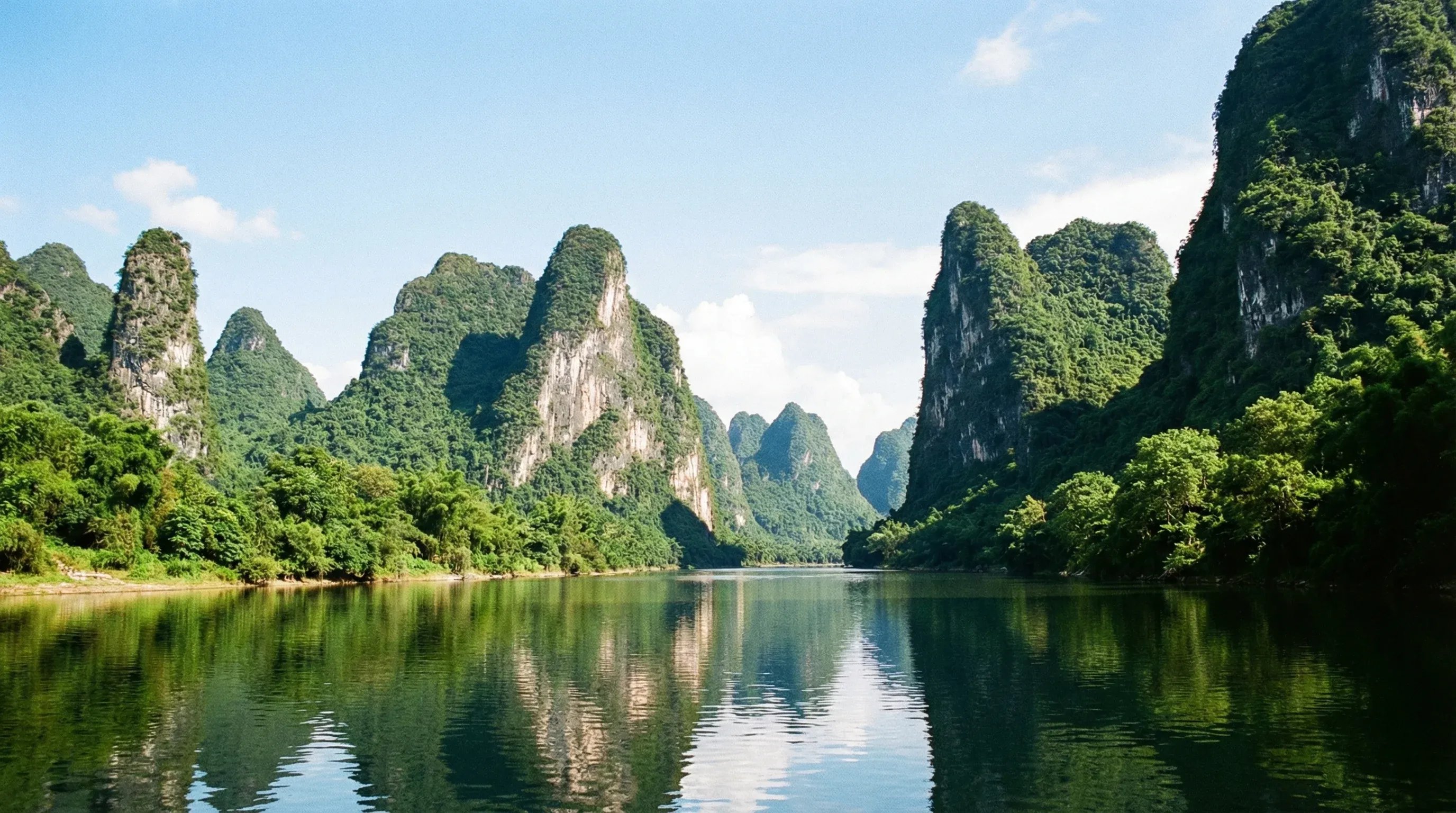

Guangxi Karst & Southern Hills
Where mountains float on rivers of glass 🏞️🛶
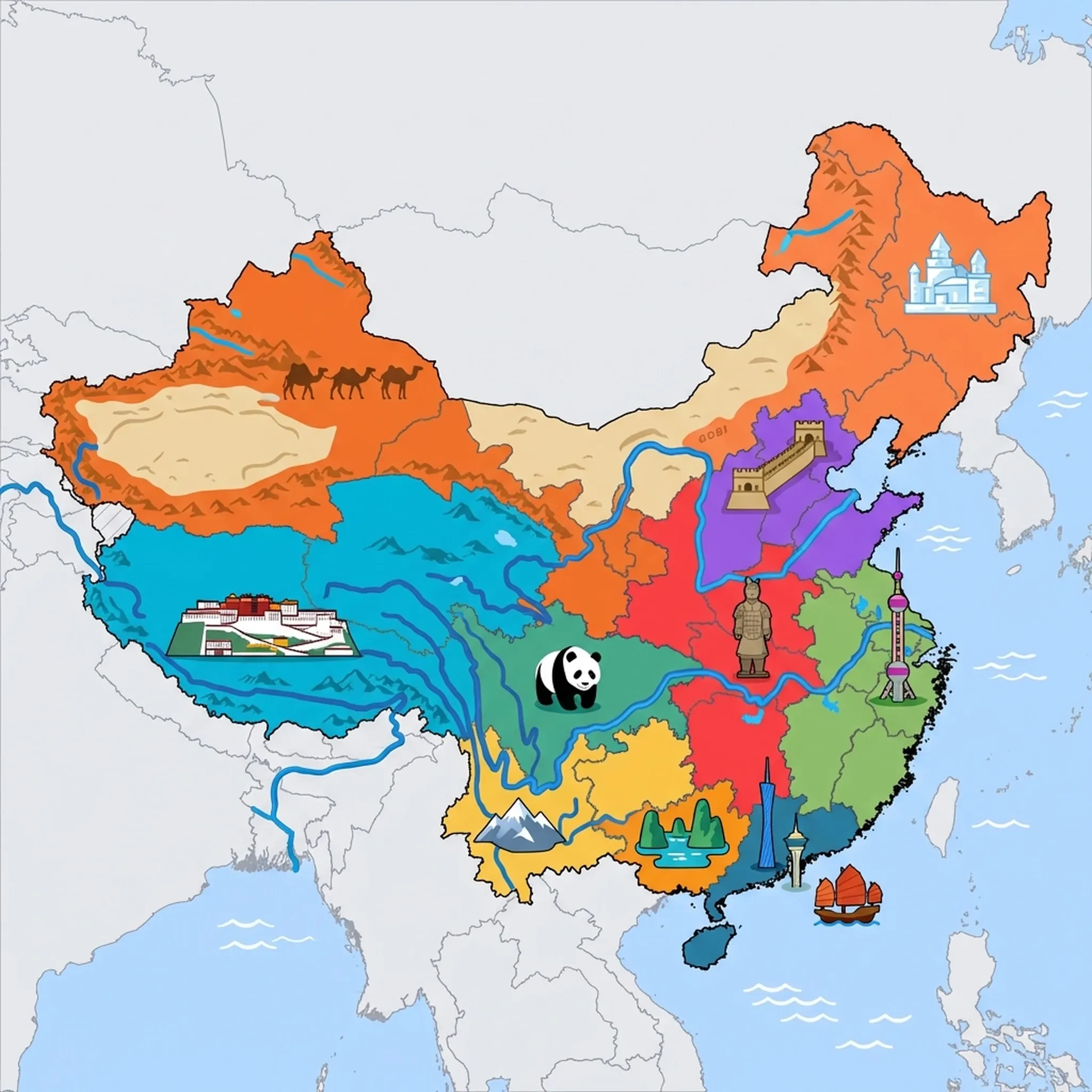
Click a region to explore
Overview
Guangxi offers some of the most iconic natural scenery in the world. The image of limestone karst mountains reflected in the placid Li River is stamped on the 20-yuan banknote and in the imagination of every traveler. For families, this region is a giant outdoor playground. It feels more tropical, slower-paced, and relaxed than the frenetic east coast. The climate is warm and humid year-round, making it a great escape from northern winters. Beyond the scenery, it is a region rich in ethnic minority culture, particularly the Zhuang and Yao people, whose colorful traditions and wooden architecture add a layer of cultural discovery for children.
This is a place to unplug. Days are spent drifting on bamboo rafts (motorized and safe for families), cycling through rice paddies, or exploring muddy caves. Yangshuo, in particular, has developed a backpacker-friendly vibe that has matured into a family-friendly hub with pizza places, easy cycling paths, and hotels with pools, making it an easy "soft landing" for families new to rural China.
Key Attractions
The Li River cruise from Guilin to Yangshuo is the headline act; grand 4-star boats offer comfort, while smaller motorized rafts near Yangshuo offer a closer connection to the water. In Guilin city, Elephant Trunk Hill is a fun, easy-to-visit landmark shaped exactly like an elephant drinking water. Adventure-seeking families should head to the Longji Rice Terraces, where you can hike through ancient, sculpted fields that change color with the seasons—from watery mirrors in spring to golden waves in autumn.
For a beach break, Beihai Silver Beach on the southern coast offers white sands and warm water. Back in Yangshuo, Yangshuo West Street provides a bustling night market atmosphere where kids can buy souvenirs and try local snacks. The Chengyang Wind and Rain Bridge is another cultural architectural marvel that showcases the unique carpentry of the Dong minority.
Practical Advice
The best time to visit is April to October. May and June can be rainy, causing high river levels which may cancel rafts. Yangshuo is better than Guilin for staying multiple days—it's smaller, prettier, and has more activities for kids.
Food & Drink
Typical meal times: Lunch 12:00 pm to 2:00 pm, dinner 6:00 pm to 9:00 pm.
Typical meal costs: Budget-friendly. A family dinner costs ¥150–300 (approx. $20–40 USD / €19–38 EUR).
Dietary requirements: Generally easy. Fresh vegetables are abundant. Western food is widely available in Yangshuo due to its tourism history.
Signature dishes:
- Guilin Rice Noodles (Mifen) – Breakfast staple of round rice noodles with gravy, fried peanuts, bamboo shoots, and thin slices of meat. Non-spicy versions are great for kids.
- Beer Fish – A Yangshuo specialty where fresh carp from the Li River is braised in a sauce with beer, tomatoes, and peppers (ask for non-spicy).
- Oil Tea – A unique soup-like tea served with puffed rice and nuts, a traditional snack of the minority people.
Why this score?
The region is ideal for family adventure, offering bamboo rafting, cave exploration, and cycling through rice paddies. While the terrain is visually dramatic and rugged, the tourism industry is very mature, providing guided experiences that make the landscape accessible. It feels off-the-beaten-path for children without being genuinely dangerous or isolated.
Why this score?
Medical facilities in Guilin are decent and capable of handling common tourist ailments and minor emergencies. However, the more popular rural areas like Yangshuo rely on smaller clinics where English is limited and complex cases require transfer to Guilin or Nanning. It lacks the specialized international hospitals found in China's first-tier cities.
Why this score?
Guilin and Yangshuo have been staples of the international 'China trail' for decades due to their iconic karst landscapes. While popular, it lacks the mega-city volume of the Yangtze Delta, appealing more to nature-seekers and backpackers. Recent years have seen a slight shift toward domestic crowds, though it remains highly accessible for international families.

Guangxi offers excellent value. Boutique hotels with pools in Yangshuo can be found for ¥400–700 (approx. $55–95 USD / €50–85 EUR). Local transport and bike rentals are very cheap. River cruises are the main expense, costing around ¥300–400 (approx. $40–55 USD / €38–50 EUR) per person for the big boats.

Getting Here & Around
Getting Here
- Airports – Guilin Liangjiang International Airport (KWL) is the main hub. Nanning serves the south.
- Train – High-speed trains connect Guilin to Hong Kong (3.5 hours) and Guangzhou (2.5 hours), making it an easy add-on to a southern trip.
- Bus – Express buses connect Guilin airport directly to Yangshuo (approx. 1.5 hours).
Getting Around
- Bamboo Raft – The quintessential way to see the Li River and Yulong River.
- Bicycle/E-scooter – The best way to explore the countryside around Yangshuo. Rentals with child seats are widely available.
- Did (Ride-hailing) – Easy and cheap for getting between hotels and scenic spots.
Nearby Airports (8 airports)
Tianyang
AEBBaise
Beihai Airport
BHYBeihai
Hechi Jinchengjiang Airport
HCJHechi
Guilin Liangjiang International Airport
KWLGuilin
Bailian Airport
LZHLiuzhou
Nanning Wuxu International Airport
NNGNanning
Xijiang Airport
WUZWuzhou
Yulin Fumian Airport
YLXYulin
View full flight map for China →
Official Links

Packing List
Sudden tropical downpours leave puddles; keeps feet dry without bulky boots
Rural rice paddies and river areas have many mosquitoes, especially at dusk
High humidity means cotton clothes get damp and stay damp
Winding mountain roads to the rice terraces can cause car sickness
Most public restrooms do not provide paper; carry your own packs at all times.
Soap is frequently missing from public washrooms, even in malls.
Western-style deodorant is rare in local convenience stores; bring your preferred brand.
You will use your phone for everything (maps, translation, payment), draining battery fast.
Familiar brands like Calpol or Tylenol are hard to find; bring your own supply.

Activities & Best Times

Hiking, wildlife, outdoor exploration, ecotourism
The iconic karst limestone peaks and the ancestral engineering of the Longji Rice Terraces provide a world-class, authentic immersion into nature. Peak months align with the golden harvest in autumn and the water-mirroring terrace views in spring, while winter mist can obscure the dramatic scenery.

Urban tourism, museums, historical sites, architecture
Guilin and Yangshuo offer a unique blend of Zhuang ethnic culture and karst-integrated urban heritage, supported by high-quality museums and botanical gardens. Spring and autumn provide the most comfortable walking weather for cultural exploration, whereas winter is often damp and grey.

Sport tourism, fitness activities, active recreation
Yangshuo is an internationally recognized hub for rock climbing and rural hiking with established infrastructure. The dry and cool autumn months provide optimal conditions for active pursuits, while summer's monsoonal rains and intense heat make outdoor sports strenuous or unsafe.

Beach resorts, marine activities: diving, snorkelling, kite surfing, wind surfing, sailing
Beihai and Weizhou Island provide clean, accessible coastal recreation with unique volcanic scenery. The summer months offer the warmest waters for swimming, but the region lacks the year-round warmth and ultra-luxury infrastructure of top-tier global beach destinations.

Learning experiences, scientific sites, historical education
Significant institutions like the China Karst Museum and Nanning's Science and Technology Museum offer substantial geological and scientific insights for traveling families. These facilities are best experienced during the main tourism seasons when staffing and programming are at their peak.

Scenic drives, countryside tours, route-based travel
The China-Vietnam Border Scenic Highway and the Yangshuo Ten-Mile Gallery offer spectacular driving routes through dramatic landscapes. Autumn offers the best visibility and safe road conditions; winter mist and summer monsoons can significantly degrade the scenic experience.

Amusement parks, family entertainment venues
Modern facilities like Sunac Land and Guilin Romance Park provide reliable family entertainment that meets international quality standards. Visitation peaks during summer school holidays and warm spring months, while winter temperatures reduce the appeal of outdoor rides and water parks.

Winter sports, ski resorts, snow activities
Guilin Tianhu Ice & Snow World offers a rare southern Chinese skiing experience, though infrastructure is limited compared to international alpine standards. The season is short, restricted to the coldest winter weeks, and remains a niche activity for the region.

Attractions (16 total)



Public Holidays & Calendar Next 12 months
Public holidays, festivals, cultural celebrations, and seasonal natural phenomena coming up in Guangxi Karst & Southern Hills over the next 12 months.
Loading holidays and events...

Travel Advisory
All major agencies recommend exercising a high degree of caution. This is primarily driven by the risk of arbitrary law enforcement, potential exit bans, and heightened security measures in specific autonomous regions.
Safety Topics
Traveller Advice (4 groups)

While not illegal, there are no legal protections against discrimination. Public displays of affection are generally discouraged as they may draw unwanted attention or social stigma in more conservative areas.

All foreign visitors must register their place of residence with the local Public Security Bureau within 24 hours of arrival. Always carry your passport, as police frequently conduct random identification checks.

China is generally considered safe for women travelling alone, but standard personal security precautions should be taken, particularly when using late-night transport or in crowded tourist areas.

Media professionals face a high risk of surveillance, harassment, and potential detention. Reporting on sensitive political topics or visiting restricted areas like Xinjiang can lead to immediate intervention by security forces.
Agency Summaries
Travellers should remain vigilant due to the unpredictable application of local regulations. Heightened risks exist for those with familial or ethnic connections to sensitive regions like Xinjiang, where arbitrary detention and surveillance are more prevalent. Dual nationality is not legally recognized, which can severely limit access to consular assistance.
The State Department advises increased vigilance in Mainland China because of the arbitrary enforcement of domestic laws, which includes the use of exit bans. These bans may be applied to foreign nationals involved in business or civil disputes, often without a clear legal process or notification.
While most visits are trouble-free, there is a risk of arbitrary detention under broadly defined national security laws. Foreigners may face increased scrutiny, particularly when visiting minority-heavy areas or if they have backgrounds in government, NGOs, or media. Visa-free entry for short stays is currently available for British citizens through 2026.
Safety and security concerns are higher than in New Zealand, particularly regarding local law enforcement and surveillance. Identification must be carried at all times, and tourists are often targeted by elaborate tea house or massage scams involving exorbitant bills and threats.
Irish citizens are advised to be cautious due to the potential for exit bans and arbitrary detention. Entry procedures may include medical screenings or temperature checks. It is vital to comply with all visa regulations and stay mindful of the specific periods of stay allowed by local authorities.
Authorities have previously detained foreign citizens on vague grounds of endangering national security. The security situation in Tibet and Xinjiang is particularly tense, with significant police presence and movement restrictions. Travellers should also be aware of sophisticated phone scams targeting foreign residents.
Information is provided for general guidance only and does not constitute travel, safety, medical, or legal advice. Conditions may change. Users are responsible for independently verifying information before travel.