
Northwest China & Silk Road
Camel rides through history's greatest desert 🐪🏜️
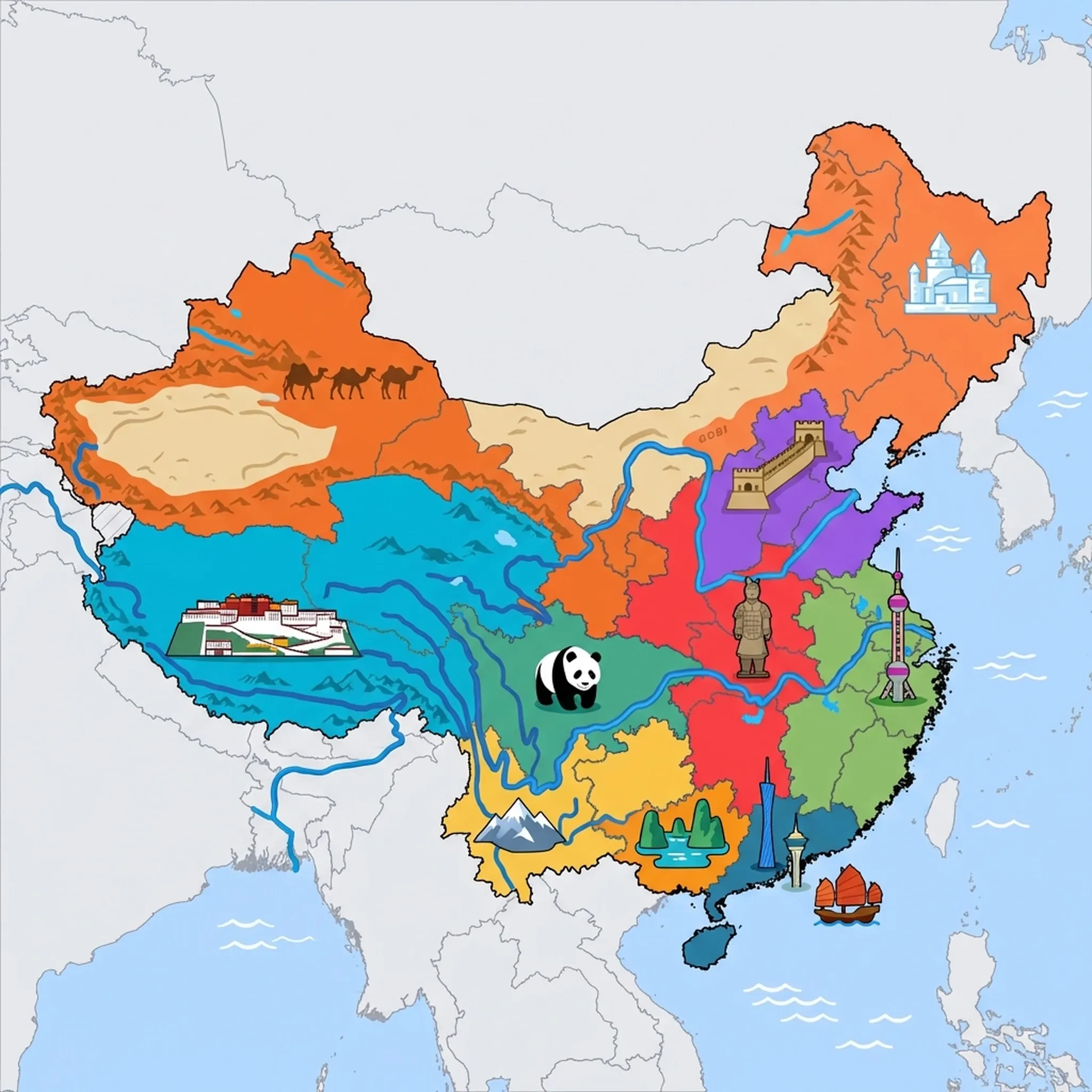
Click a region to explore
⚠️ SAFETY WARNING: Due to arbitrary detention risks and heavy surveillance, government agencies (including CA, USA, UK, and AU) advise travelers to exercise a high degree of caution in this region, particularly in Xinjiang, where 'Do Not Travel' advisories may apply. The security situation can be restrictive for foreigners. Families are strongly urged to consult their own government's official travel advisory before considering a trip, especially to Urumqi or Kashgar.
Overview
The Northwest is the land of legends, where the ancient Silk Road connected China to the West. For adventurous families, this is a journey into a landscape of sand dunes, rainbow-colored mountains, and ancient forts. The history here is palpable—this is where Buddhism entered China and where generals guarded the frontier. The geography is stark and dramatic, transitioning from the loess plateaus of Xi'an to the vast Gobi Desert and the alpine lakes of Qinghai. It feels vast and wild compared to the crowded east.
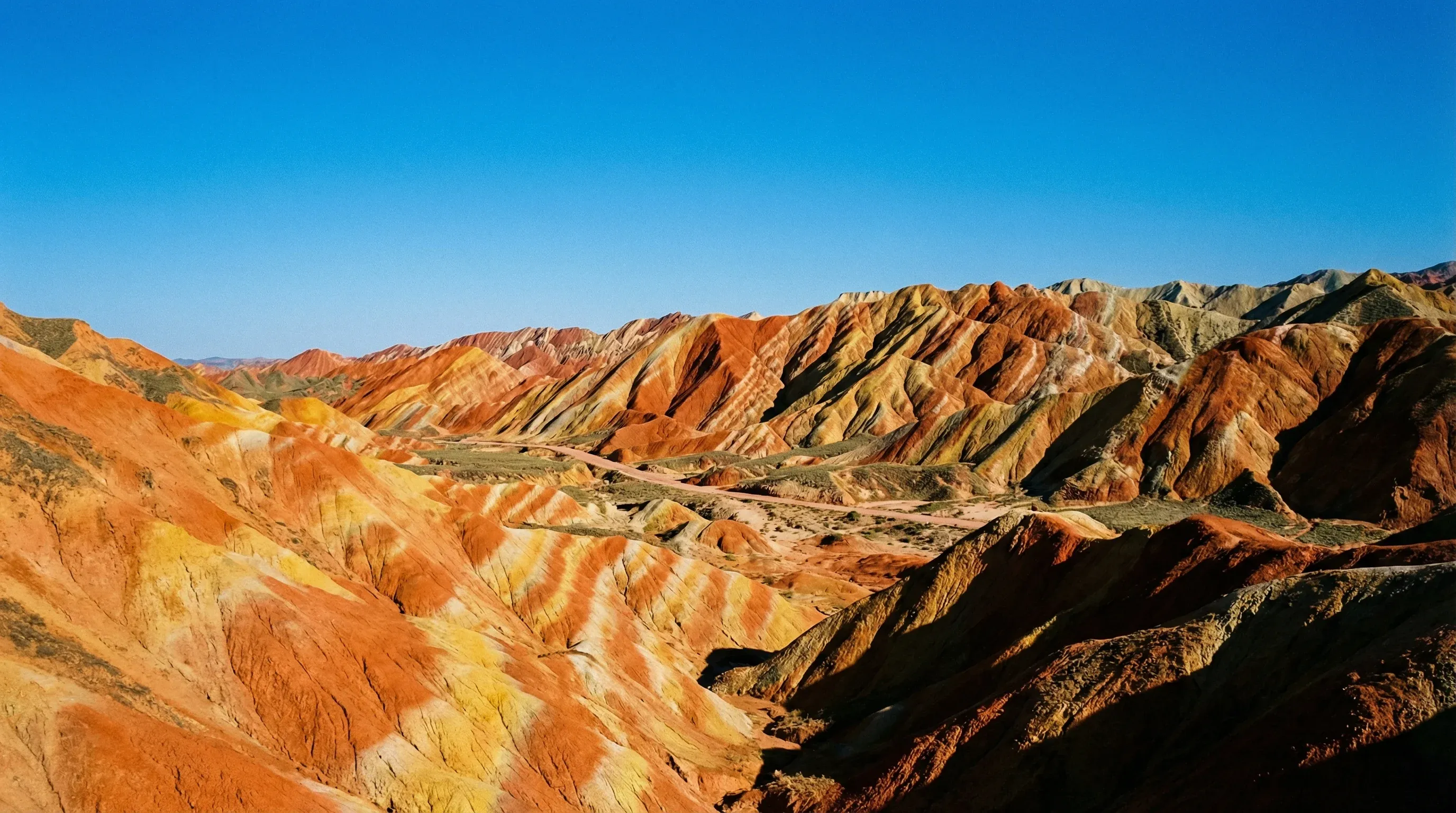
While parts of the region (Xinjiang) have strict advisories, the eastern corridor (Shaanxi, Gansu) remains a popular and incredible destination for families. Riding camels in the desert, sliding down sand dunes, and seeing the rainbow rocks of Zhangye are experiences that children never forget. The culture is a unique blend of Han Chinese, Hui Muslim, and Tibetan influences, reflected in the architecture and the delicious, wheat-based cuisine.
Key Attractions
In Gansu province, the Mogao Caves in Dunhuang are a UNESCO World Heritage site filled with ancient murals; the visitor center has excellent films that explain the history to kids before they see the real caves. Just nearby is Crescent Moon Lake and Mingsha Shan, a desert playground where families can ride camels, drive ATVs, and sled down massive singing sand dunes.
Further east, the Jiayuguan Pass stands as the majestic western end of the Ming Great Wall, a fortress that looks like a movie set. In Qinghai, the massive Qinghai Lake (Koko Nor) offers blue waters surrounded by yellow canola fields in summer (July), with yaks grazing by the roadside. For those sticking to Xi'an, the Huaqing Palace Hot Springs offers history and relaxation.
Practical Advice
Summer (June–August) is the most popular time but can be hot in the desert. May and September are ideal. Distances are huge; the high-speed train from Xi'an to Lanzhou and Urumqi is a comfortable lifeline. Be prepared for dry air and strong sun.
Food & Drink
Typical meal times: Lunch 12:30 pm to 2:30 pm, dinner 7:00 pm to 9:30 pm. Sunset is late in the west, so dinners are often later.
Typical meal costs: Budget-friendly. A bowl of noodles is ¥15–25. A family feast costs ¥150–300 (approx. $20–40 USD / €19–38 EUR).
Dietary requirements: This is noodle country. Lamb and beef are dominant due to the Muslim population; pork is absent in Halal restaurants. Vegetarians can rely on noodle soups (ask for no meat) and flatbreads.
Signature dishes:
- Lanzhou Beef Noodles – Hand-pulled noodles in a clear, flavorful beef broth with radish and chili oil (optional). Watching the noodles being pulled is a show in itself.
- Roujiamo – The "Chinese hamburger"; chopped stewed meat stuffed into a crispy baked bun. Great for kids.
- Lamb Skewers (Chuan'r) – Spiced lamb roasted over charcoal, sold on street corners everywhere.
Why this score?
The region features vast deserts, high-altitude mountain passes, and remote Silk Road outposts that offer a high level of adventure. Traveling through Xinjiang or the Hexi Corridor involves long distances and occasionally challenging terrain or political sensitivities. For families, riding camels in the Gobi or exploring ancient ruins feels like a true expedition into history.
Why this score?
Xi'an offers excellent medical facilities with some international experience due to its high tourist volume. In the wider region, medical quality is decent in provincial capitals like Urumqi, but access to English-speaking doctors drops off sharply as you head west. Emergency services are generally reliable but can be slowed by the vast distances between settlements.
Why this score?
Xi'an and its Terracotta Army are a global bucket-list destination, ensuring a steady stream of international visitors year-round. Beyond Xi'an, the Silk Road route through Gansu and Xinjiang attracts a specialized but significant number of foreign adventure travelers. It is arguably China's third most famous region for international tourists after Beijing and the Yangtze Delta.

The Northwest is very affordable. Hotels in Dunhuang or Lanzhou cost ¥300–600 (approx. $40–85 USD / €38–75 EUR). Food is cheap and filling. The main costs are entry tickets to major sites (Mogao Caves tickets are pricey at ¥238 and must be booked weeks in advance) and hiring private drivers for day trips.

Getting Here & Around
Getting Here
- Train – The Lanxin High-Speed Railway connects Xi'an to Lanzhou, Xining, and Urumqi. It is a scenic engineering marvel.
- Airports – Xi'an Xianyang (XIY) is the main hub. Dunhuang (DNH) has flights from major cities, saving long train rides.
Getting Around
- Car Hire with Driver – Essential for the "Hexi Corridor" route to stop at scenic spots like colorful mountains.
- Camel – The traditional (and fun) way to move around the dunes at Mingsha Shan.
- Train – Best for covering the 1000km+ distances between major cities.
Nearby Airports (38 airports)
Altay Airport
AATAltay
Alaer Talimu Airport
ACFAlaer
Aksu Airport
AKUAksu
Bole Alashankou Airport
BPLBole
Dunhuang Airport
DNHDunhuang
Fuyun Koktokay Airport
FYNFuyun
Gannan Xiahe Airport
GXHXiahe
Guyuan Liupanshan Airport
GYUGuyuan
Hami Airport
HMIHami
Hongqilafu Airport
HQLTashikuergan
Hotan
HTNHotan
Yinchuan Hedong International Airport
INCYinchuan
Qiemo Airport
IQMQiemo
Qingyang Airport
IQNQingyang
Jiangbulake Airport
JBKQitai
Jiayuguan Airport
JGNJiayuguan
Jinchuan Airport
JICJinchang
Kuqa Airport
KCAKuqa
Kashi
KHGKashi
Kanas Airport
KJIBuerjin
Korla Airport
KRLKorla
Karamay Airport
KRYKaramay
Lanzhou Zhongchuan International Airport
LHWLanzhou
Cheng Xian Airport
LNLLongan
Nalati Airport
NLTXinyuan
Shache Airport
QSZShache
Ruoqiang
RQARuogiang
Shihezi Huayuan Airport
SHFShihezi
Tacheng Airport
TCGTacheng
Tianshui Maijishan Airport
THQTianshui
Turpan Jiaohe Airport
TLQTurpan
Tangwangcheng Airport
TWCTumushuke
Ürümqi Diwopu International Airport
URCUrumqi
Yining Airport
YINYining
Wanfang Airport
YTWYutian
Zhangye Ganzhou Airport
YZYZhangye
Tianma Airport
ZFLZhaosu
Zhongwei Xiangshan Airport
ZHYZhongwei
View full flight map for China →
Official Links

Packing List
The desert sun is intense and there is zero shade on the dunes
Protects against blowing sand during camel rides or wind storms
The air is extremely dry; nosebleeds are common for unacclimated kids
Dust and dryness can irritate eyes significantly
Most public restrooms do not provide paper; carry your own packs at all times.
Soap is frequently missing from public washrooms, even in malls.
Western-style deodorant is rare in local convenience stores; bring your preferred brand.
You will use your phone for everything (maps, translation, payment), draining battery fast.
Familiar brands like Calpol or Tylenol are hard to find; bring your own supply.

Activities & Best Times

Hiking, wildlife, outdoor exploration, ecotourism
Home to the world-class Kanas Nature Reserve and Zhangye Danxia's unique geological formations, offering unparalleled wilderness immersion. Peak visitation occurs during the warmer summer months when high-altitude trails and northern Xinjiang pastures are fully accessible.

Urban tourism, museums, historical sites, architecture
Features iconic UNESCO sites like the Terracotta Army and Mogao Caves, representing the pinnacle of Silk Road heritage. Best experienced in spring and autumn to avoid the extreme desert heat and intense domestic crowds of mid-summer.

Learning experiences, scientific sites, historical education
The region serves as an open-air classroom for Silk Road archaeology, with significant facilities like the Shaanxi Nature Museum and major archaeological excavations. These sites are most comfortable to visit during the moderate temperatures of late spring and early autumn.

Sport tourism, fitness activities, active recreation
Offers internationally recognized trekking on Mount Huashan and high-altitude cycling circuits around Qinghai Lake. Optimal conditions for these physically demanding activities occur during the mild transition seasons, while winter ice makes mountain trails dangerous.

Amusement parks, family entertainment venues
Xi'an hosts unique cultural-themed venues like Tang Paradise and major modern parks like Fantawild Silk Road Dreamland. Peak attendance aligns with school holidays and warmer weather, though outdoor attractions may face reduced operations in the harsh continental winter.

Spa retreats, wellness centers, peaceful getaways
Features historic hot spring complexes like Huaqing Palace, though facilities often cater more to domestic luxury standards than global boutique wellness retreats. Winter is the most popular time for thermal bathing to contrast with the region's freezing outdoor temperatures.

Scenic drives, countryside tours, route-based travel
The Duku Highway and Silk Road Great Loop provide spectacular, culturally rich driving routes through deserts and mountains. Most high-altitude scenic passes are only open from June to September due to heavy snow and ice during the rest of the year.

Winter sports, ski resorts, snow activities
Xinjiang's Altay region boasts burgeoning world-class ski infrastructure and rare 'dry powder' snow conditions. The season is peak during mid-winter, offering a unique alpine experience for adventurous families that differs from traditional European resorts.

Beach resorts, marine activities: diving, snorkelling, kite surfing, wind surfing, sailing
While inland, large saline lakes like Qinghai and Sayram provide coastal-style recreation and scenic shores. These are only viable for lakeside relaxation during the short peak of summer when air temperatures are sufficiently warm.

Attractions (29 total)



Public Holidays & Calendar Next 12 months
Public holidays, festivals, cultural celebrations, and seasonal natural phenomena coming up in Northwest China & Silk Road over the next 12 months.
Loading holidays and events...

Travel Advisory
All major agencies recommend exercising a high degree of caution. This is primarily driven by the risk of arbitrary law enforcement, potential exit bans, and heightened security measures in specific autonomous regions.
Safety Topics
Traveller Advice (4 groups)

While not illegal, there are no legal protections against discrimination. Public displays of affection are generally discouraged as they may draw unwanted attention or social stigma in more conservative areas.

All foreign visitors must register their place of residence with the local Public Security Bureau within 24 hours of arrival. Always carry your passport, as police frequently conduct random identification checks.

China is generally considered safe for women travelling alone, but standard personal security precautions should be taken, particularly when using late-night transport or in crowded tourist areas.

Media professionals face a high risk of surveillance, harassment, and potential detention. Reporting on sensitive political topics or visiting restricted areas like Xinjiang can lead to immediate intervention by security forces.
Agency Summaries
Travellers should remain vigilant due to the unpredictable application of local regulations. Heightened risks exist for those with familial or ethnic connections to sensitive regions like Xinjiang, where arbitrary detention and surveillance are more prevalent. Dual nationality is not legally recognized, which can severely limit access to consular assistance.
The State Department advises increased vigilance in Mainland China because of the arbitrary enforcement of domestic laws, which includes the use of exit bans. These bans may be applied to foreign nationals involved in business or civil disputes, often without a clear legal process or notification.
While most visits are trouble-free, there is a risk of arbitrary detention under broadly defined national security laws. Foreigners may face increased scrutiny, particularly when visiting minority-heavy areas or if they have backgrounds in government, NGOs, or media. Visa-free entry for short stays is currently available for British citizens through 2026.
Safety and security concerns are higher than in New Zealand, particularly regarding local law enforcement and surveillance. Identification must be carried at all times, and tourists are often targeted by elaborate tea house or massage scams involving exorbitant bills and threats.
Irish citizens are advised to be cautious due to the potential for exit bans and arbitrary detention. Entry procedures may include medical screenings or temperature checks. It is vital to comply with all visa regulations and stay mindful of the specific periods of stay allowed by local authorities.
Authorities have previously detained foreign citizens on vague grounds of endangering national security. The security situation in Tibet and Xinjiang is particularly tense, with significant police presence and movement restrictions. Travellers should also be aware of sophisticated phone scams targeting foreign residents.
Information is provided for general guidance only and does not constitute travel, safety, medical, or legal advice. Conditions may change. Users are responsible for independently verifying information before travel.