
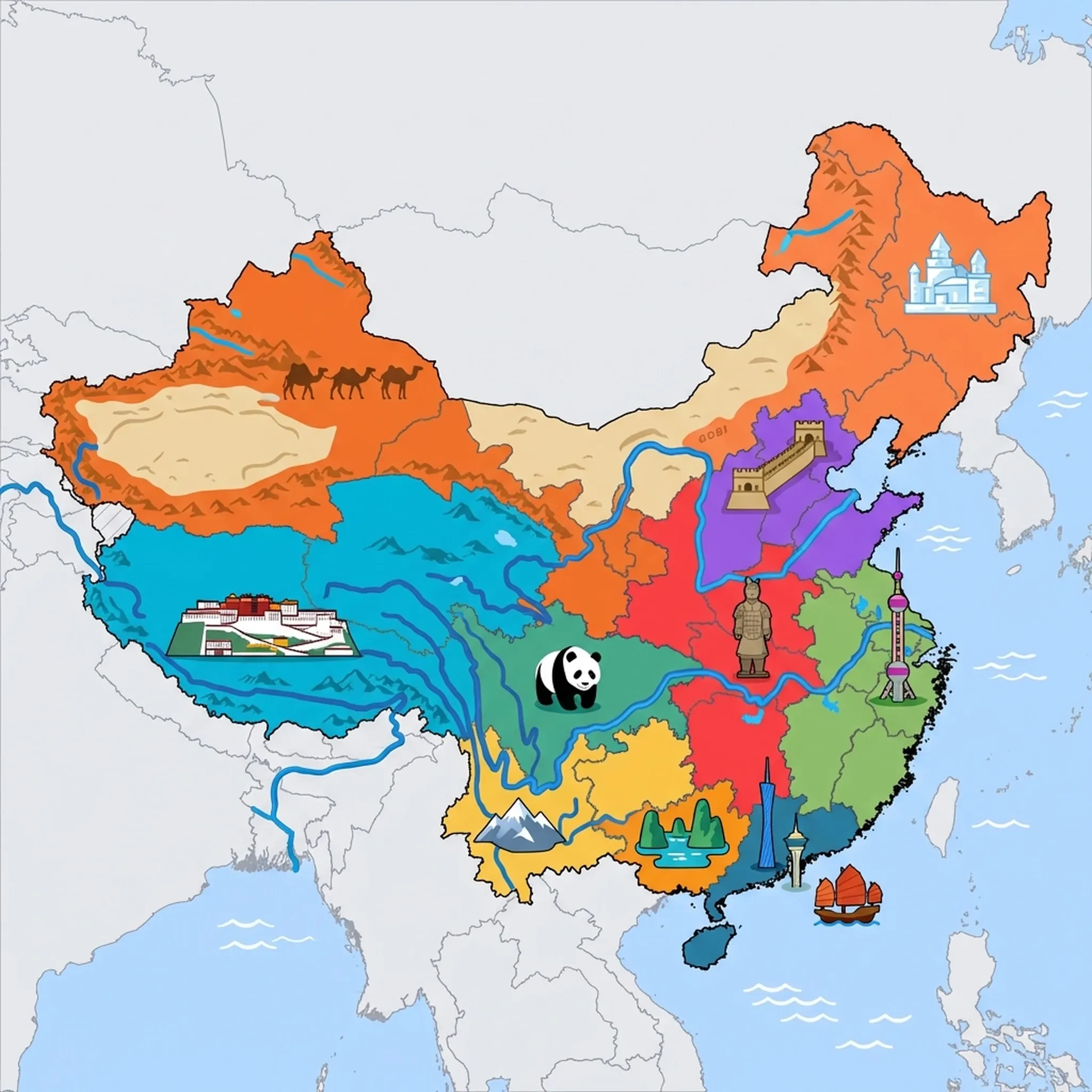
Click a region to explore
Overview
Sichuan is arguably the most popular region in China for families, largely thanks to one adorable resident: the Giant Panda. But beyond the black-and-white bears, this region offers a laid-back, leisurely lifestyle that is distinct from the frantic pace of the east coast. Chengdu, the capital, is famous for its teahouses and "slow life." The geography is lush and green, often shrouded in mist, earning it the nickname "Land of Abundance." Chongqing, its neighbor, is a futuristic 3D mountain city built on the banks of the Yangtze, famous for its monorails passing through buildings and its cyberpunk night views.
Culturally, this region is vibrant and spicy. While the food is famous for its heat, the people are known for their hospitality and relaxed nature. For kids, the excitement of seeing pandas is matched by the adventure of climbing sacred mountains or exploring ancient irrigation systems. It is a region that feels fertile, alive, and deeply welcoming.
Key Attractions
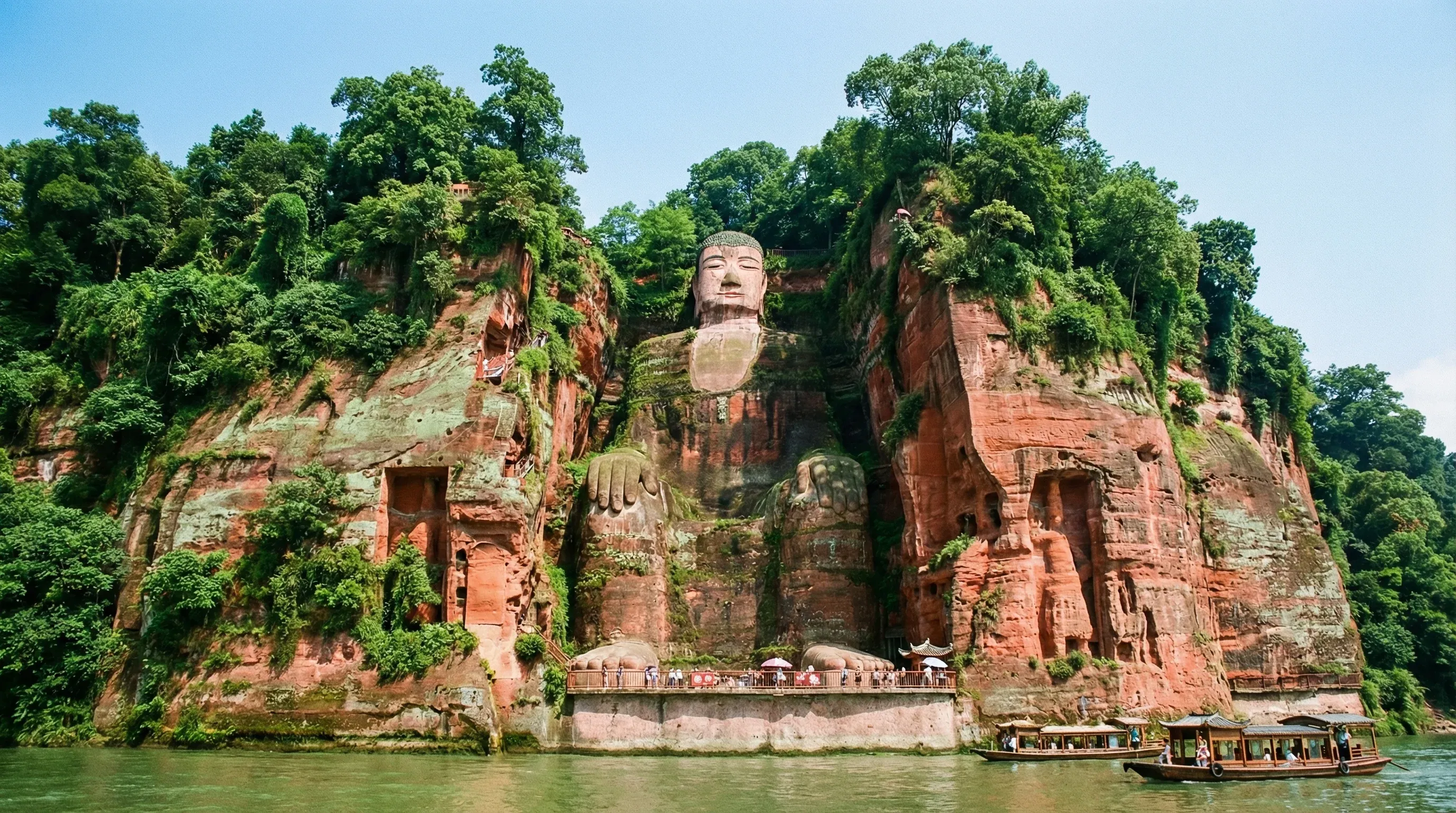
The Chengdu Research Base of Giant Panda Breeding is the number one stop. Go early (7:30 am) to see the pandas active and feeding; seeing the pink newborns in the nursery is a highlight. South of Chengdu, the Leshan Giant Buddha is a 71-meter tall statue carved into a red sandstone cliff—you can take a boat to see it from the river, which is easier for small legs than the steep hike.
For a full day of nature and monkeys (watch your snacks!), Mount Emei offers cable cars to golden summits. In Chongqing, the Hongya Cave complex looks like the bathhouse from "Spirited Away" and is a maze of shops and restaurants that kids love exploring. The Dujiangyan Irrigation System offers a mix of history and beautiful river walks.
Practical Advice
Spring and Autumn are best. Summer is hot and muggy. Sichuan food is spicy, but every restaurant has non-spicy options for kids (ask for "bu la"). Book Panda Base tickets in advance online.
Food & Drink
Typical meal times: Lunch 12:00 pm to 2:00 pm, dinner 6:00 pm to 9:00 pm.
Typical meal costs: Very reasonable. Hot pot for a family costs ¥200–400 (approx. $28–55 USD / €25–50 EUR).
Dietary requirements: Vegetarian friendly (lots of greens and tofu), but watch out for chili oil. Nut allergies are rare but peanuts are used in snacks.
Signature dishes:
- Hot Pot – A bubbling pot of soup (split pot available for non-spicy) where you cook your own meat and veg. A fun, interactive social meal.
- Kung Pao Chicken (Gongbao Jiding) – The authentic version is a sweet, sour, and slightly spicy stir-fry with peanuts and chicken cubes.
- Mapo Tofu – Soft tofu in a spicy, numbing sauce with minced beef (can be very spicy!).
Why this score?
Sichuan offers a great mix of accessible nature and more rugged mountain terrain on its western fringes. Families can enjoy well-managed parks like Mount Emei or venture into more remote areas for glimpses of the Tibetan plateau's edge. The humidity and steep geography add a layer of physical challenge compared to the flat eastern plains.
Why this score?
Chengdu is the medical hub for Southwest China, featuring high-quality hospitals like West China Hospital, which is among the best in the country. There are several private clinics and international departments that cater to foreigners, although they are fewer than in Beijing or Shanghai. Outside the Chengdu metro area, the quality and accessibility of care for foreigners decrease moderately.
Why this score?
Chengdu is globally famous for its Panda Research Base, which serves as a major draw for international families. The region also benefits from being the starting point for Yangtze River cruises and trips to the Leshan Giant Buddha. While popular, it feels more 'Chinese' and less internationalized than the eastern seaboard cities.

Sichuan offers great value. Luxury hotels are cheaper than in Shanghai, with 5-star options around ¥800–1,200 ($110–165 USD). Street food is incredibly cheap and delicious. The main expenses are attraction tickets (Panda Base is cheap at approx. ¥55, but others add up) and potential private transport for day trips.

Getting Here & Around
Getting Here
- Airports – Chengdu Tianfu (TFU) and Shuangliu (CTU) are major hubs. Chongqing Jiangbei (CKG) serves the mountain city.
- Train – High-speed trains connect Chengdu and Chongqing in just 1.5 hours.
- Cruise – Chongqing is the starting point for Yangtze River cruises.
Getting Around
- Metro – Chengdu and Chongqing both have excellent metro systems. Chongqing's monorail is a sightseeing experience in itself.
- High-Speed Rail – The best way to reach Leshan Giant Buddha and Mount Emei from Chengdu (approx 1 hour).
Nearby Airports (22 airports)
Hongyuan Airport
AHJHongyuan
Enyang Airport
BZXBazhong
Chongqing Jiangbei International Airport
CKGChongqing
Chongqing Xiannvshan Airport
CQWWulong
Chengdu Shuangliu International Airport
CTUChengdu
Daocheng Yading Airport
DCYDaocheng
Dazhou Jinya Airport
DZHDazhou
Guangyuan Airport
GYSGuangyuan
Ganzi Airport
GZGGanzi
Qianjiang Wulingshan Airport
JIQQianjiang
Jiuzhai Huanglong Airport
JZHSong Pan
Kangding Airport
KGTKangding
Langzhong Gucheng Airport
LZGLangzhong
Yunlong Airport
LZOLuzhou
Mianyang Airport
MIGMian Yang
Nanchong Airport
NAONanchong
Panzhihua
PZIPan Zhi Hua
Tianfu International Airport
TFUChengdu
Chongqing Wushan Airport
WSKWushan
Wanxian Airport
WXNWanxian
Qingshan
XICXichang
Yibin
YBPYibin
View full flight map for China →

Packing List
Everyone wears panda hats/headbands here; fun for kids to join in
Misty rain is common in the mountains (Emei/Qingcheng) year-round
Chongqing is known as the 'Mountain City'—lots of stairs and hills
Spicy, oily food can be messy; essential for post-meal cleanup
Most public restrooms do not provide paper; carry your own packs at all times.
Soap is frequently missing from public washrooms, even in malls.
Western-style deodorant is rare in local convenience stores; bring your preferred brand.
You will use your phone for everything (maps, translation, payment), draining battery fast.
Familiar brands like Calpol or Tylenol are hard to find; bring your own supply.

Activities & Best Times

Hiking, wildlife, outdoor exploration, ecotourism
Home to world-unique giant panda research bases and spectacular UNESCO mountain landscapes like Mount Emei. Best visited in spring or autumn to avoid the summer's heavy monsoonal rains and high humidity.

Urban tourism, museums, historical sites, architecture
Chengdu and Chongqing are hubs of unique Sichuanese culture, teahouse heritage, and world-class culinary scenes. The extreme humid heat of July and August makes the shoulder and temperate months far more appealing for families.

Learning experiences, scientific sites, historical education
Features globally significant facilities including the Zigong Dinosaur Museum and panda conservation centers that serve as primary travel motivators. These sites offer exceptional scientific engagement for families.

Sport tourism, fitness activities, active recreation
Offers iconic pilgrimage trekking on Mount Emei and extensive purpose-built greenway networks in Chengdu. Optimal activity conditions occur during the stable, temperate transition months of spring and autumn.

Spa retreats, wellness centers, peaceful getaways
Known as a major hot spring hub, Chongqing's historic and modern thermal complexes are highly regarded. These facilities are most restorative and popular during the cool, misty winter months.

Scenic drives, countryside tours, route-based travel
The gateway to the legendary G318 Sichuan-Tibet highway, offering spectacular mountain scenery for experienced families. October provides the most stable weather and spectacular foliage colors for high-altitude driving.

Winter sports, ski resorts, snow activities
Established alpine resorts like Xiling provide reliable winter sports infrastructure and modern lifts for regional travelers. The season is relatively short, peaking in mid-winter before the spring thaw begins.

Amusement parks, family entertainment venues
Contains several large-scale amusement and water parks like Happy Valley with high-quality facilities for children. These are best enjoyed in the pleasant outdoor temperatures of late spring and early autumn.

Beach resorts, marine activities: diving, snorkelling, kite surfing, wind surfing, sailing
Limited to river and lakeside recreation areas like Qionghai Lake, providing modest water activities for families. These are only suitable during the peak summer heat due to the region's cooler winters.

Attractions (33 total)



Public Holidays & Calendar Next 12 months
Public holidays, festivals, cultural celebrations, and seasonal natural phenomena coming up in Sichuan Basin & Upper Yangtze over the next 12 months.
Loading holidays and events...

Travel Advisory
All major agencies recommend exercising a high degree of caution. This is primarily driven by the risk of arbitrary law enforcement, potential exit bans, and heightened security measures in specific autonomous regions.
Safety Topics
Traveller Advice (4 groups)

While not illegal, there are no legal protections against discrimination. Public displays of affection are generally discouraged as they may draw unwanted attention or social stigma in more conservative areas.

All foreign visitors must register their place of residence with the local Public Security Bureau within 24 hours of arrival. Always carry your passport, as police frequently conduct random identification checks.

China is generally considered safe for women travelling alone, but standard personal security precautions should be taken, particularly when using late-night transport or in crowded tourist areas.

Media professionals face a high risk of surveillance, harassment, and potential detention. Reporting on sensitive political topics or visiting restricted areas like Xinjiang can lead to immediate intervention by security forces.
Agency Summaries
Travellers should remain vigilant due to the unpredictable application of local regulations. Heightened risks exist for those with familial or ethnic connections to sensitive regions like Xinjiang, where arbitrary detention and surveillance are more prevalent. Dual nationality is not legally recognized, which can severely limit access to consular assistance.
The State Department advises increased vigilance in Mainland China because of the arbitrary enforcement of domestic laws, which includes the use of exit bans. These bans may be applied to foreign nationals involved in business or civil disputes, often without a clear legal process or notification.
While most visits are trouble-free, there is a risk of arbitrary detention under broadly defined national security laws. Foreigners may face increased scrutiny, particularly when visiting minority-heavy areas or if they have backgrounds in government, NGOs, or media. Visa-free entry for short stays is currently available for British citizens through 2026.
Safety and security concerns are higher than in New Zealand, particularly regarding local law enforcement and surveillance. Identification must be carried at all times, and tourists are often targeted by elaborate tea house or massage scams involving exorbitant bills and threats.
Irish citizens are advised to be cautious due to the potential for exit bans and arbitrary detention. Entry procedures may include medical screenings or temperature checks. It is vital to comply with all visa regulations and stay mindful of the specific periods of stay allowed by local authorities.
Authorities have previously detained foreign citizens on vague grounds of endangering national security. The security situation in Tibet and Xinjiang is particularly tense, with significant police presence and movement restrictions. Travellers should also be aware of sophisticated phone scams targeting foreign residents.
Information is provided for general guidance only and does not constitute travel, safety, medical, or legal advice. Conditions may change. Users are responsible for independently verifying information before travel.