

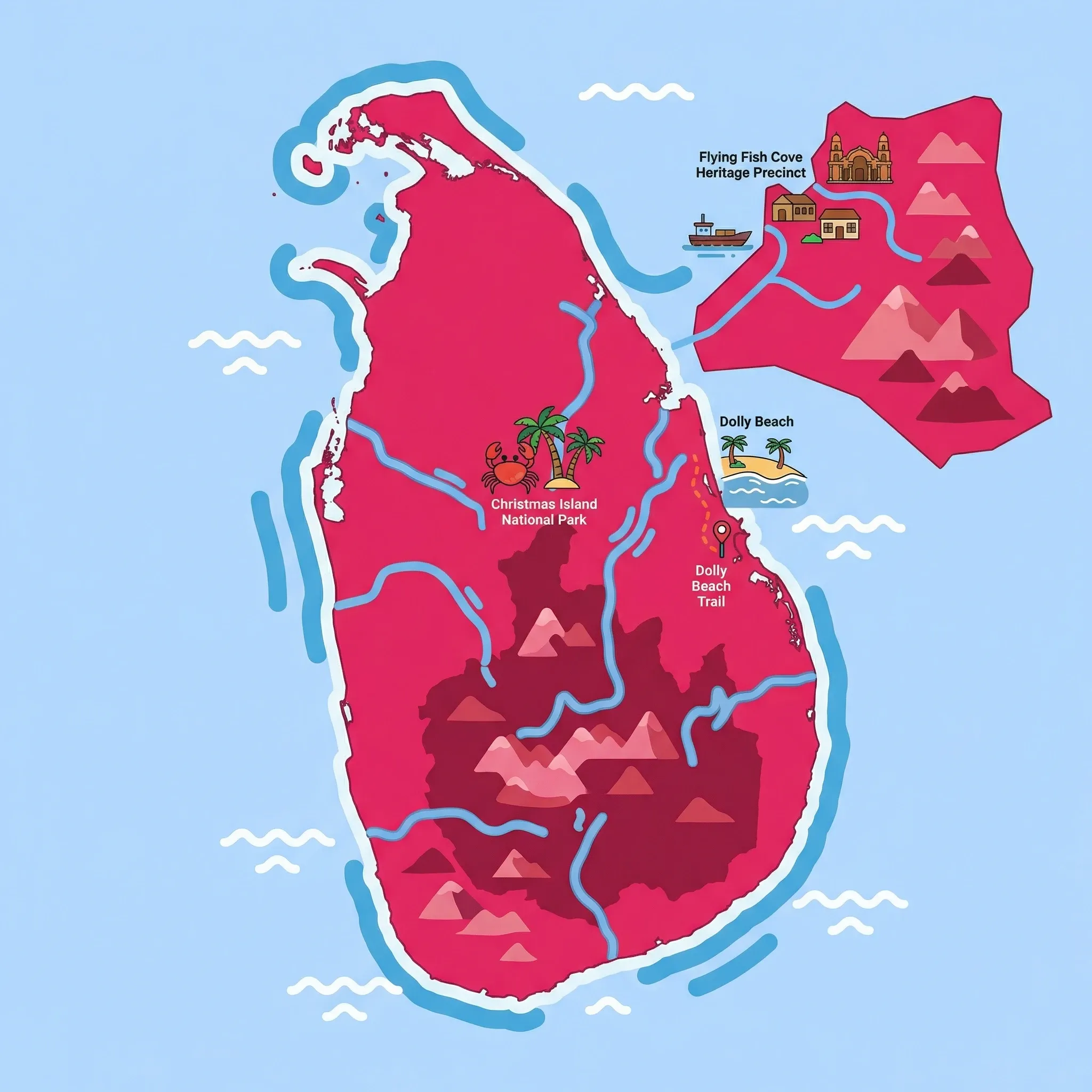
Christmas Island is one of the world’s most extraordinary nature destinations, located far out in the Indian Ocean. A territory of Australia, it feels like a lost world where the jungle meets the reef. For families who love wildlife, this is an unparalleled classroom. The island is famous for its tens of millions of red crabs, which carpet the forest floor and roads during their migration, but the appeal goes far beyond crustaceans. The landscape is a mix of jagged limestone cliffs, lush tropical rainforest, and secluded coves with water so clear it looks like liquid glass.
Culturally, the island is a vibrant mix of Australian, Malay, and Chinese influences, creating a friendly and safe community atmosphere. While it is remote and logistics require planning, the reward is an uncrowded paradise where kids can swim with sea turtles, spot rare birds, and explore accessible caves. It is not a typical resort destination with kids' clubs; rather, it is a place for families to disconnect from screens and reconnect with nature in its wildest, most pristine form.
Key Attractions
The star of the show is the Christmas Island National Park, which covers nearly two-thirds of the island. It is a Jurassic-like wonderland of towering rainforests and wetlands. Families should head to The Dales, a series of freshwater streams and waterfalls where you can shower under cascading water surrounded by blue crabs. Another highlight is Dolly Beach, a Robinson Crusoe-style strip of sand reached by a boardwalk jungle trek, where you can watch huge robber crabs (coconut crabs) lumbering along the shoreline.
For water activities, Flying Fish Cove is the island's main hub and arguably one of the best shore-snorkelling spots in the world. The reef starts just metres from the pebble beach, making it safe and easy for children to see colourful coral, clownfish, and turtles without needing a boat. The cove is protected from the ocean swell, providing calm swimming conditions year-round. Afterward, families can use the free BBQs and picnic tables nearby while watching the sunset.
Practical Advice
Christmas Island is a tropical destination with a wet season (December to April) and a dry season (May to November). The famous red crab migration usually occurs with the first rains of the wet season (October/November), which is a spectacular sight but can close roads. Families should book flights and accommodation months in advance, as capacity is limited. A hire car is absolutely essential as there is no public transport. Basic medical facilities are available, but comprehensive travel insurance including evacuation cover is critical due to the remote location.
Food & Drink
Typical meal times: 12:00 pm to 2:00 pm for lunch and 6:00 pm to 8:30 pm for dinner. Many places close early, so don’t leave dinner too late.
Typical meal costs: $25–45 AUD (approx. $16–30 USD / €15–27 EUR) for mains. Fresh food is freighted in, making it more expensive than the mainland.
Dietary requirements: Vegetarian options are available, though fresh produce availability depends on the supply ship. Halal food is widely available due to the strong Malay community. Gluten-free options are limited, so pack your own snacks.
Family-friendly dining: The atmosphere is casual everywhere. Highchairs are available in larger venues, but rare in small eateries. The outdoor nature of many venues makes them great for restless kids.
Signature dishes:
- Fresh Wahoo – Locally caught game fish, often served grilled or battered with chips, renowned for its firm, white flesh.
- Roti Canai – A flaky, crispy Malaysian flatbread served with a mild chicken or lentil curry dipping sauce, a favourite breakfast for locals.
- Laksa – A spicy noodle soup with a coconut milk base, reflecting the island's Chinese-Malay heritage (ask for a non-spicy version for kids).
- Kolo Mee – A simple but delicious dry noodle dish topped with minced meat and char siu, popular in the Chinese community.
Safety
Christmas Island is very safe regarding crime, but nature commands respect. The ocean swell can be powerful; only swim in designated safe areas like Flying Fish Cove and heed local warnings about "dog waves" (unexpected large waves) at cliffs/blowholes. Driving requires caution, especially during crab migration when roads may be slick with crabs or closed entirely. The limestone landscape is full of hidden holes, so keep children on marked tracks in the jungle.

Travel costs are high due to the island's remote location and reliance on imported goods. A family of four should budget around $400–600 AUD (approx. $260–390 USD / €240–360 EUR) per day. Accommodation and car hire are the biggest expenses, and grocery prices are significantly higher than on the Australian mainland. Flights from Perth are a monopoly route and can be pricey.
Age Suitability




Why this score?
The island offers a rugged experience with over 60% of its land protected as a National Park featuring dense rainforests, jagged limestone cliffs, and volcanic coastline. Significant adventure is found in navigating unsealed roads to reach The Blowholes or trekking through jungle trails to find isolated spots like Dolly Beach. The presence of unique wildlife like giant robber crabs and the lack of commercial development provide a genuine sense of wilderness.
Why this score?
Medical services are provided by a small hospital in Flying Fish Cove that offers high-quality basic care and emergency stabilization consistent with Australian standards. However, the facility lacks specialist units and intensive care capabilities, necessitating expensive and lengthy medevac flights to Perth for serious conditions. While reliable for minor issues, the extreme isolation significantly limits the scope of available medical interventions.
Why this score?
Christmas Island is a niche destination receiving only a few thousand visitors annually, primarily from Australia and Southeast Asia. While the red crab migration is a world-renowned natural phenomenon, the island's remote location and limited flight connectivity from Perth and Jakarta keep it off the path of mainstream global tourism. Infrastructure is limited to a few boutique lodges and guesthouses rather than large-scale international resorts.
Christmas Island is an expensive destination because almost everything must be imported by ship or plane. Accommodation for a family typically ranges from AUD 250–450 (approx. $165–300 USD / €150–270 EUR) per night. Car hire is essential and costs around AUD 80–120 (approx. $53–80 USD / €48–72 EUR) per day. Groceries in the local supermarket are significantly pricier than on the mainland; expect to pay double for fresh produce.

Getting There & Around
Getting There
- By Air – Virgin Australia operates reliable flights twice a week (usually Tuesdays and Fridays) from Perth (PER), which is the primary gateway for international visitors. Flight time is approx. 4 hours.
- Entry Requirements – As an Australian External Territory, domestic travel rules apply for Australian citizens (photo ID required). International visitors need a valid Australian visa. Check your government website for the latest visa requirements, or use the IATA Travel Centre entry-requirements checker.
- By Sea – There are no regular passenger ferries; arrival by sea is limited to private yachts or occasional expedition cruise ships.
Getting Around
- Car Hire – Essential for exploring the island. There is no public transport, and attractions are spread out. 4WD vehicles are recommended for accessing remote beaches and national park tracks. Book months in advance as fleets are small.
- Walking – Many attractions within the Christmas Island region, such as The Dales or Dolly Beach, require short jungle walks from car parks.
- Cycling – Possible for fit families, but the terrain is hilly and hot.

Packing List
Essential for protecting feet from sharp coral and limestone rocks at beaches and swimming holes.
Useful for exploring caves and spotting robber crabs or red crabs on evening walks.
Rental gear is limited and expensive; bringing your own ensures a good fit for kids.
Mobile signal is non-existent outside the main settlement areas; download Google Maps offline.
EFTPOS systems can go down due to internet outages; carrying cash is a necessary backup.

Activities & Best Times

Adventure & Nature
Very GoodHiking, wildlife, outdoor exploration, ecotourism
Often called the 'Galapagos of the Indian Ocean', it features endemic wildlife, unique red crab populations, and pristine rainforests. The drier months (Jun-Oct) provide the safest conditions for exploring the national park's karst geography and ancient ecosystems.

Festivals & Seasonal
Very GoodEvents, celebrations, seasonal attractions
The Red Crab Migration is a globally unique natural phenomenon that occurs nowhere else on Earth at this scale. It draws international tourists specifically for this event (October-December) and is widely featured in nature documentaries. This meets the 'very_good' threshold for a seasonal spectacle of international significance, even though it's a natural event rather than a cultural festival.

Beach & Sea
GoodBeach resorts, marine activities: diving, snorkelling, kite surfing, wind surfing, sailing
Renowned for world-class shore diving and snorkelling with exceptional visibility and pristine coral reefs. July to October offers the calmest seas and highest underwater clarity, whereas the wet season can bring rough swells and reduced visibility.

City & Cultural
GoodUrban tourism, museums, historical sites, architecture
Provides a highly authentic, non-commercialized blend of Chinese, Malay, and Australian culture within heritage precincts like Flying Fish Cove. Visiting during the dry season is optimal for exploring temples and historic areas on foot without monsoonal disruption.

Road Trips & Scenic
GoodScenic drives, countryside tours, route-based travel
Scenic drives like the Blowholes Drive offer spectacular jungle and coastal vistas on a remote, atmospheric scale. Driving is strictly regulated or closed during the peak crab migration (Nov-Dec) and can be hazardous during the heavy monsoonal rains of early year.

Sports & Active
GoodSport tourism, fitness activities, active recreation
Features challenging, high-reward jungle trekking routes like the Waterfall and West White Beach trails. These trails are best tackled in the dry season when they are less slippery and more accessible for active families.

Educational & Exploratory
MarginalLearning experiences, scientific sites, historical education
The Visitor Centre serves as a high-quality gateway for understanding the island's unique evolutionary biology and conservation efforts. It is most effectively visited during the primary tourism season when accompanying field-based learning opportunities are accessible.




Public Holidays & Calendar Next 12 months
Public holidays, festivals, cultural celebrations, and seasonal natural phenomena coming up in Christmas Island over the next 12 months.
Loading holidays and events...

Travel Advisory
Christmas Island is a very safe destination with a security environment comparable to mainland Australia. Standard safety awareness and common sense are sufficient for most visits.
Safety Topics
Traveller Advice (3 groups)

The territory follows Australian law where same-sex relationships and marriages are legally recognized. The social climate is generally open-minded and welcoming.

Maintain standard safety awareness, safeguard your belongings, and follow the directions of local authorities. It is advisable to secure comprehensive travel insurance that includes emergency medical evacuation.

If you plan to explore the National Park or remote areas, carry a Personal Locator Beacon (PLB), which can be borrowed from local authorities. Ensure you have adequate water, sun protection, and sturdy footwear for rugged terrain.
Agency Summaries
The safety environment on the island is considered stable. Visitors should follow standard safety protocols and stay informed about the local security situation through the Australian national terrorism threat system.
There are no significant travel warnings for this territory. British nationals are encouraged to follow routine safety measures and stay updated on the general security level assigned by Australian authorities.
The risk level is low and comparable to Canada. Travellers are advised to follow standard safety routines and monitor local reports for any potential weather disruptions or environmental hazards.
The security environment is similar to New Zealand. Travellers should use common sense and be mindful of petty crime in tourist locations and risks associated with extreme weather or wildlife.
As Christmas Island is an external territory of Australia, it maintains a security profile identical to the Australian mainland. Travellers should maintain standard safety awareness and prepare for the unique environmental conditions of the island.
Irish citizens are advised to exercise standard vigilance and monitor local media. The island is considered safe, and visitors should adhere to national and regional safety guidance.
Information is provided for general guidance only and does not constitute travel, safety, medical, or legal advice. Conditions may change. Users are responsible for independently verifying information before travel.