

Cocos (Keeling) Islands
Territory of Cocos (Keeling) Islands
Pulu Kokos (Keeling)
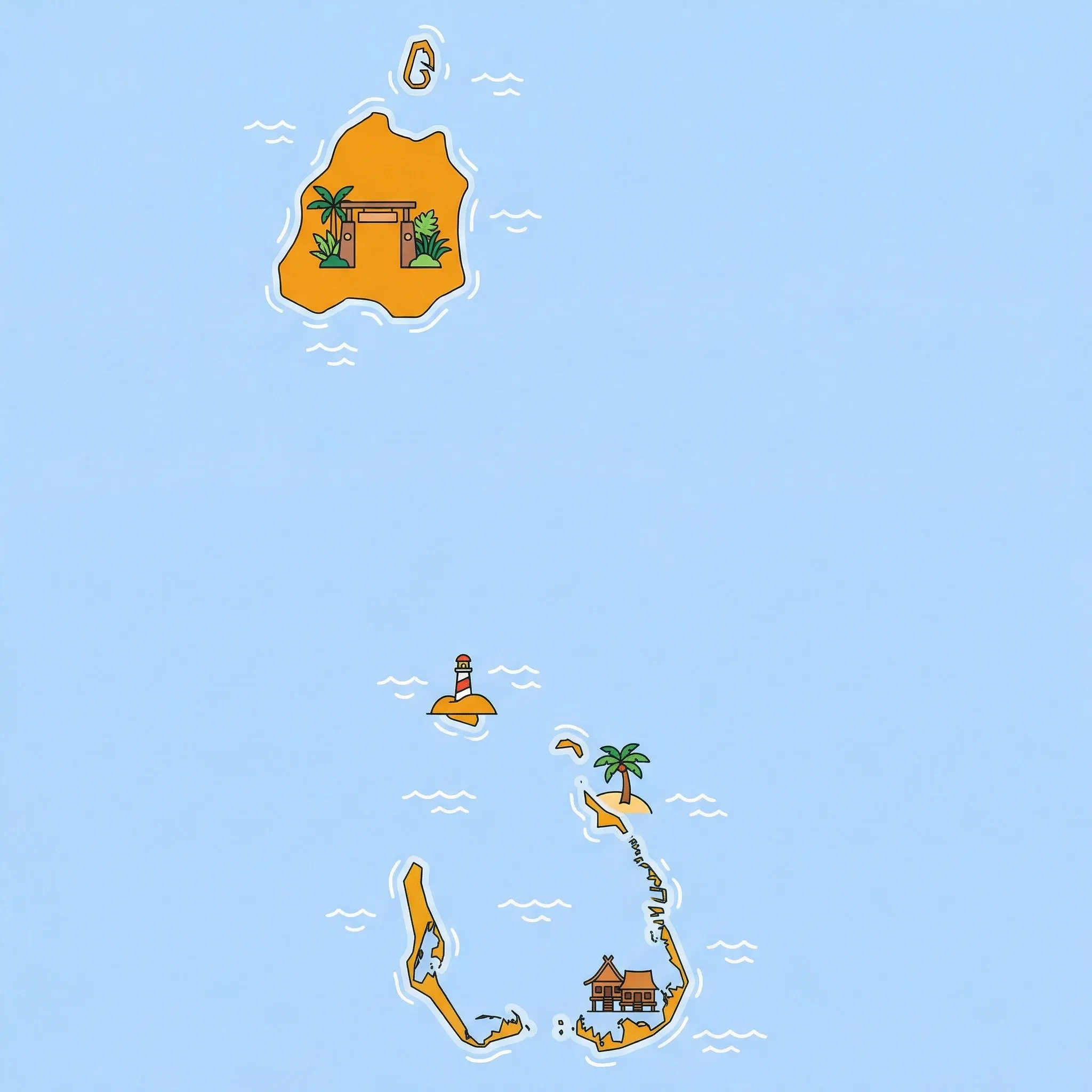
Floating in the azure Indian Ocean, the Cocos (Keeling) Islands offer families a travel experience that feels almost dreamlike in its isolation and beauty. This external Australian territory consists of two atolls: the southern atoll, a ring of 26 islands creating a vast, calm lagoon, and the remote northern atoll. For families, the Southern Atoll is the main playground. Life here moves at "island time" pace. West Island, the capital, feels like a sleepy Australian country town dropped into the tropics, while Home Island offers a vibrant immersion into Cocos Malay culture with its kampong (village) atmosphere and mosques. The total population is under 600, meaning beaches are never crowded and safety is exceptional.
What makes Cocos unique for children is the accessibility of its marine life. Unlike many tropical destinations where reefs are deep or currents strong, the central lagoon here is shallow, warm, and protected. Kids can spot turtles, reef sharks (the harmless kind), and colourful fish in waist-deep water. The islands are small enough to explore by bicycle or ferry, giving older children a sense of independence. It is a place to disconnect from digital distractions-internet is slow-and reconnect with nature, from hermit crab races on the beach to learning about the incredible history of the Clunies-Ross dynasty.
Key Attractions
The absolute jewel in the crown is Direction Island (Cossies Beach). Accessible by a scenic ferry ride, this uninhabited island is often cited as having Australia's best beach. For families, the highlight is "The Rip"-a gentle drift snorkel where the current carries you over a vibrant coral garden filled with parrotfish and clams. It is exhilarating but generally safe for confident swimmers (with supervision). The island has picnic shelters, wifi, and toilets, making it perfect for a full day trip.
On Home Island, history comes alive at Oceania House. This grand historic mansion was the ancestral home of the Clunies-Ross family, the former "Kings of the Cocos." Families can take guided tours to see the heritage architecture and expansive gardens, offering a fascinating glimpse into the islands' colonial past. While there, visit the small museum to learn about the Cocos Malay people's resilience and culture.
For nature-loving families with older children, a charter tour to Pulu Keeling National Park (North Keeling Island) is a bucket-list adventure. Located 24km north of the main atoll, this uninhabited seabird sanctuary is one of the world's most pristine islands. Note: Access is strictly weather-dependent and requires a permit or tour guide; landing can be difficult (often involving a swim from the boat), so it is best suited for adventurous families with strong swimmers.
Practical Advice
Best time to visit: The dry season (July to October) brings the trade winds, which are great for kitesurfing but can make boat crossings choppy. The shoulder seasons (April–June and November–January) often have calmer waters perfect for snorkeling.
Logistics: Supplies are expensive and fresh food is limited. Experienced family travelers often bring a cooler box (esky) of frozen meat and cheese from Perth (check luggage allowances). Medical facilities are basic; bring a full supply of any prescription medications and a robust first-aid kit. WiFi is available but slow.
Food & Drink
Typical meal times: 11:30 am to 1:30 pm for lunch, and 6:00 pm to 8:00 pm for dinner. Kitchens close early, so do not leave dinner too late.
Typical meal costs: $25–45 AUD (approx. $16–30 USD / €15–28 EUR) for a main course. Groceries are significantly more expensive than on the mainland due to freight costs.
Dietary requirements: Options are very limited. While you can find basic vegetarian meals, strict gluten-free or vegan options are rare. It is highly advisable to pack your own specialty snacks and staples.
Family-friendly dining: The vibe is ultra-casual. The Cocos Club on West Island is the social hub, offering pub-style meals where kids can run around on the grass. Salty’s offers bakery treats and pizzas that are popular with children.
Signature dishes:
- Cocos Malay Curry – A mild, aromatic curry often made with chicken or fish, served with rice and sambal. It reflects the islands' unique cultural heritage.
- Fresh Wahoo or Tuna – Often caught that very morning; served grilled or as fish and chips.
- Coconut treats – With millions of coconut palms, expect fresh coconut water and desserts incorporating coconut cream.
Safety
Cocos is incredibly safe regarding crime, but nature requires respect. Reef shoes are essential for everyone to protect against sharp coral and stonefish, which camouflage on the sea floor and have venomous spines. Mosquitoes can be prevalent; bring tropical-strength repellent. The sun is extreme-use high-SPF sunscreen and rash vests (swim shirts) for children. Always supervise kids in the water, even in the lagoon, as tidal movements can be deceptive.

Due to remoteness, everything is imported. Expect to pay $350–500 AUD (approx. $230–330 USD / €210–300 EUR) per night for a 2-bedroom family unit. Meals are pricey; a family dinner will cost around $100–150 AUD (approx. $65–100 USD / €60–90 EUR). Ferries are cheap ($2.50 AUD), but tours and car hire ($80–120 AUD/day) add up.
Age Suitability





Why this score?
The islands offer a high degree of adventure due to their extreme isolation in the Indian Ocean and the opportunity to explore uninhabited coral atolls like Pulu Keeling National Park. While the terrain is flat and non-rugged, the logistical challenge of reaching the territory and the focus on self-guided water-based exploration provide a significant sense of discovery and self-reliance.
Why this score?
Medical facilities are limited to small clinics on West and Home Islands that provide basic primary care and emergency stabilization for the local population and visitors. Any serious medical condition or complex emergency requires a costly and lengthy aero-medical evacuation to Perth, which is located nearly 2,750 kilometers away, making it a high-risk location for those with pre-existing conditions.
Why this score?
International visitor numbers are extremely low, with the islands primarily serving a niche market of Australian travelers and dedicated kite-surfers or divers. The extreme remoteness and limited flight connectivity—typically only twice weekly from Perth—restrict the flow of global tourists, keeping it an off-the-radar destination for the vast majority of world travelers.
Cocos is an expensive destination due to its isolation; almost everything is imported by air or sea. Accommodation ranges from $200–450 AUD (approx. $130–290 USD / €120–270 EUR) per night. Groceries are 50-100% more expensive than mainland Australia. A casual family dinner for four will cost around $120–160 AUD (approx. $80–105 USD / €70–95 EUR). Tours and boat charters are premium priced due to fuel costs.

Getting There & Around
Getting There
- By Air – Virgin Australia flies twice weekly from Perth (PER), usually via Christmas Island. The flight takes about 4–5 hours. It is the only commercial route in.
- By Sea – There are no commercial passenger ferries from the mainland; arrival by sea is limited to private yachts or cruise ships.
- Entry Requirements – Cocos (Keeling) Islands is an Australian territory. Australian citizens need photo ID (passport recommended). International visitors need a valid Australian visa. Check your government website for the latest visa requirements, or use the IATA Travel Centre entry-requirements checker.
Getting Around
- Ferries – The inter-island ferry is the lifeline. It runs frequently between West Island and Home Island (approx. 20 mins) and to Direction Island on Thursdays and Saturdays. Fares are very low (around $2.50 AUD).
- Car Hire – Essential for West Island if you want to explore hidden beaches like Trannies Beach or the Scout Park tide walk. Child seats are usually available but book weeks in advance.
- Bicycles – The flat terrain makes cycling a joy. Many accommodation providers offer bike hire. It is a safe and fun way for families to get from the settlement to the beach.
- Bus – A community bus on West Island connects the settlement to the jetty for ferry departures.

Packing List
Essential for all family members to protect against stonefish and sharp coral in the shallows.
Fresh food is expensive and limited; you are allowed to check in a cooler of food staples from Perth.
Vital for keeping phones and towels dry during ferry crossings and small boat trips to Direction Island.
While rental exists, having well-fitted masks for kids makes the 'Rip' drift snorkel much safer and more enjoyable.
Mosquitoes and sandflies can be intense, especially at dawn and dusk.
EFTPOS systems can go down due to internet outages, and the ferry/bus often requires small change.

Activities & Best Times

Adventure & Nature
GoodHiking, wildlife, outdoor exploration, ecotourism
Home to the RAMSAR-listed Pulu Keeling National Park, offering unique birdwatching and marine biodiversity. The drier months from August to December provide the best conditions for exploring trails and outer atolls without tropical deluges.

Beach & Sea
GoodBeach resorts, marine activities: diving, snorkelling, kite surfing, wind surfing, sailing
Remote coral atolls offering pristine snorkeling and world-class beaches like Cossies Beach. Peak season coincides with the drier months and consistent trade winds, while the wet season (Feb-Apr) brings higher humidity and storm risk.

City & Cultural
GoodUrban tourism, museums, historical sites, architecture
While the Cocos Malay culture and colonial history are unique and noteworthy, the scale is too small to justify 'very_good' for city/cultural tourism. With ~600 residents across two inhabited islands, no actual cities, and minimal cultural infrastructure, this is internationally over-calibrated. 'Good' appropriately recognizes the unique cultural interest without overstating the tourism infrastructure.

Educational & Exploratory
MarginalLearning experiences, scientific sites, historical education
Small-scale museums provide insights into the unique Clunies-Ross family history and the islands' strategic role in telegraphy. Accessibility to these sites is best in the drier months to avoid disruptions to inter-island ferry services.

Sports & Active
MarginalSport tourism, fitness activities, active recreation
While infrastructure is limited, the islands are a niche destination for world-class kitesurfing and coastal cycling. The peak period aligns with the strongest, most consistent trade winds from July through October.




Public Holidays & Calendar Next 12 months
Public holidays, festivals, cultural celebrations, and seasonal natural phenomena coming up in Cocos (Keeling) Islands over the next 12 months.
Loading holidays and events...

Travel Advisory
Standard safety awareness applies; no elevated risks reported by major agencies.
Safety Topics
Traveller Advice (3 groups)

The islands have limited infrastructure and many natural sites or transportation options, like the inter-island ferry, may not be fully accessible for those with mobility challenges.

When visiting Home Island, travelers should dress modestly by covering their shoulders and knees out of respect for the local Cocos Malay community's Islamic traditions.

The remote nature of the islands offers unique water sports and diving opportunities, but travelers should be aware of strong currents and the presence of marine life such as sharks.
Agency Summaries
British authorities provide standard travel guidance for the territory, indicating no heightened security warnings. Travelers are encouraged to research local conditions and obtain comprehensive insurance.
New Zealand classifies the islands as having a safety environment similar to its own. Visitors should stay informed about local conditions and follow the instructions of regional authorities.
The U.S. State Department maintains its lowest advisory level for the territory, indicating that standard safety risks apply. Travelers should follow typical safety protocols common to international travel.
The Canadian government advises travelers to use standard security awareness when visiting the islands. Safety conditions are generally stable, though travelers should remain aware of their surroundings as they would at home.
As an external territory of Australia, the islands are considered safe for visitors. The government recommends standard safety vigilance, emphasizing awareness of natural hazards rather than security threats.
Ireland advises its citizens to follow routine safety measures. The islands are assessed as having a low risk environment for travelers, with no specific security alerts in place.
Information is provided for general guidance only and does not constitute travel, safety, medical, or legal advice. Conditions may change. Users are responsible for independently verifying information before travel.