
Medellín & Coffee Region
Cable cars, coffee farms, and the City of Eternal Spring 🚠☕🌸
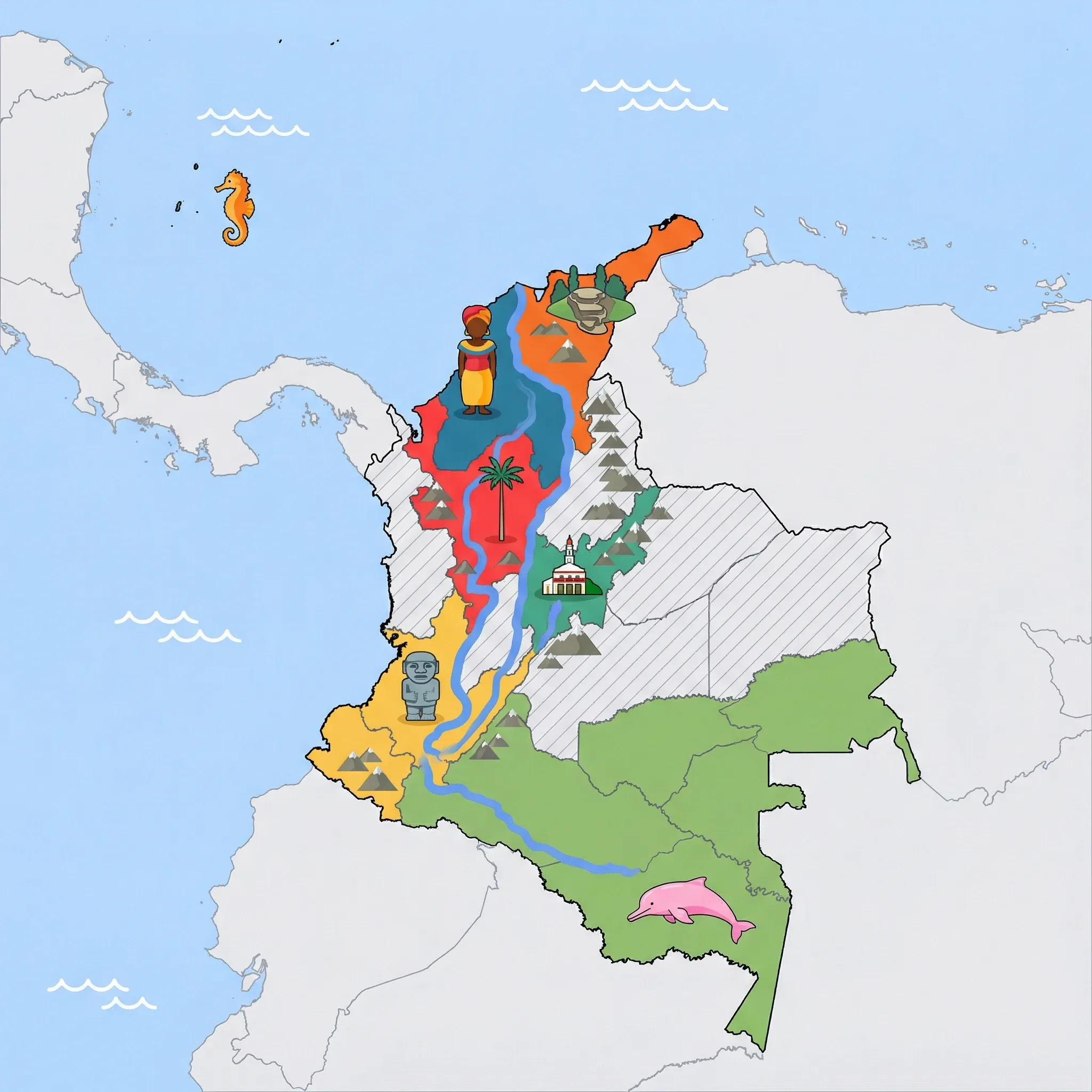
Click a region to explore
Medellín and the Coffee Region represent the heart of Colombia's transformation and hospitality. For families, this dual region offers the perfect balance: the excitement of a modern, efficient city and the relaxation of the countryside. Medellín, known as the "City of Eternal Spring," has a near-perfect climate year-round. It is famous for its social urbanism—libraries, parks, and the MetroCable system that turns public transport into a sightseeing adventure. The city feels optimistic and is incredibly proud of its turnaround, welcoming tourists with open arms. It is cleaner and more organized than the capital, making it easier to navigate with strollers and children.
Just a few hours south (or a short flight) lies the Coffee Region (Eje Cafetero). This area is like a manicured garden on a massive scale. The hills are lined with coffee bushes, plantains, and bamboo forests. It is arguably the fun capital of Colombia for kids because of its high-quality theme parks which are built into the agricultural landscape. Staying in a traditional coffee farm (finca) is a highlight; kids can run freely in the gardens, pick coffee beans, and spot colorful birds while parents enjoy the world's freshest brew on the porch.
Key Attractions
In Medellín, Parque Explora is world-class. It includes a massive freshwater aquarium (showcasing Amazonian fish) and hundreds of interactive physics and biology exhibits that encourage touching and playing. Right next door is the Joaquín Antonio Uribe Botanical Garden, a peaceful oasis with a butterfly house and wandering iguanas.
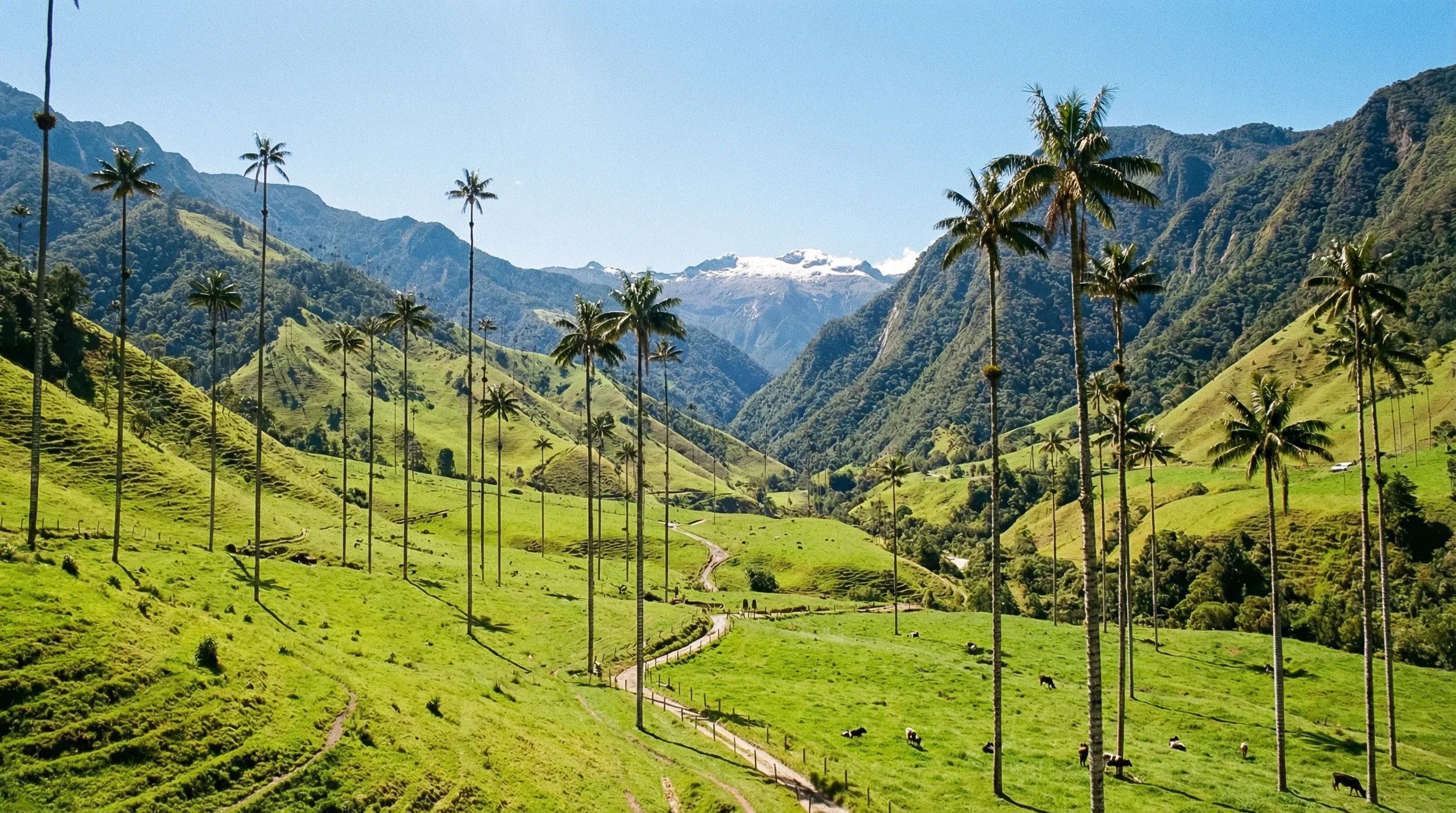
Venturing out to the rock of El Peñón de Guatapé is a must-do day trip; climbing the 700 steps is a tiring but rewarding challenge for active kids, offering views over a labyrinth of lakes. In the Coffee Region, Parque del Café is the top draw—it combines a coffee museum with a full-scale amusement park featuring roller coasters and train rides through the plantation. For nature lovers, the Cocora Valley near Salento offers a hike among the tallest palm trees in the world (Wax Palms), which look like something out of a Dr. Seuss book.
Practical Advice
Medellín is connected to the Coffee Region by a 5-7 hour drive or 45-minute flight. For families, flying is recommended to avoid motion sickness on winding mountain roads. The weather is mild but rain is frequent; carry umbrellas. In the Coffee Region, renting a car gives you the most freedom.
Food & Drink
Typical meal times: Lunch 12:00 pm to 2:00 pm. Dinner 6:30 pm to 8:30 pm.
Typical meal costs: Moderate. Lunch in Medellín: 20,000–35,000 COP (approx. $5–9 USD / €4.50–8 EUR). Dinner: 40,000–70,000 COP (approx. $10–18 USD / €9–16 EUR).
Dietary requirements: The region loves pork and beans, but vegetarian options are increasingly common in Medellín's El Poblado district and tourist towns like Salento.
Signature dishes:
- Bandeja Paisa – The legendary "platter." Rice, beans, ground beef, chicharrón (pork belly), chorizo, fried egg, arepa, avocado, and plantain. It is huge—one portion easily feeds two young children.
- Trout (Trucha) – In Salento and the Coffee Region, farmed rainbow trout is the specialty, usually served fried with a giant patacón (fried green plantain).
- Arepa Paisa – Thin, white corn cakes. Unlike coastal arepas, these are bland and meant to be eaten with cheese or butter as a side to every meal.
Why this score?
Adventure here is highly accessible, ranging from the Comuna 13 escalators and Metrocable rides to hiking among giant wax palms in Salento. It offers 'soft adventure' where families can experience the Andes and coffee plantations with relatively comfortable support systems.
Why this score?
Medellín is a major center for medical tourism in South America, particularly for transplants and complex surgeries. The hospitals in the Aburrá Valley are modern, well-staffed, and highly efficient at handling foreign health insurance and emergency care.
Why this score?
This region has seen an explosion in international popularity, driven by Medellín's urban transformation and the scenic Cocora Valley. It is firmly on the global tourist map with a robust infrastructure for international backpackers, families, and digital nomads.

Great value for money. Accommodation ranges from budget hostels to luxury glamping. A nice family room in a coffee finca costs 300,000–500,000 COP (approx. $75–125 USD / €68–112 EUR). Food portions are enormous, often allowing families to share meals. Public transport in Medellín is cheap (approx. 3,000 COP per ride).
Family Travel Notice
When visiting Medellin with minors, ensure children carry original identification documents or clear passport copies at all times to comply with local safety regulations.

Getting Here & Around
Getting Here
- Airports – José María Córdova (MDE) serves Medellín. For the Coffee Region, fly into Pereira (PEI), Armenia (AXM), or Manizales (MZL).
- Bus – Frequent buses connect Medellín to the Coffee Region, but the roads are winding and prone to closure during rainy seasons.
Getting Around
- Metro – Medellín's metro is the pride of the city. It is clean, safe, and connects to the Arví Park via cable car (Metrocable).
- Willys Jeeps – In Salento and rural areas, these colorful vintage Jeeps are the public transport. Kids love riding in the back (seated).
- Car Rental – Highly recommended for exploring the Coffee Region at your own pace.
Nearby Airports (7 airports)
Apartado
APOApartado
El Eden
AXMArmenia
El Bagre Airport
EBGEl Bagre
Olaya Herrera
EOHMedellin
Jose Maria Cordova
MDEMedellin
La Nubia
MZLManizales
Matecana
PEIPereira
View full flight map for Colombia →
Official Links

Packing List
Roads in the Coffee Region and airport transfers in Medellín are extremely winding.
It rains frequently in the afternoons, even when it's sunny in the morning.
Temperature swings from warm in the sun to chilly in the shade/evening.
Mandatory for entry to Amazon, Tayrona Park, and other jungle reserves; you may be denied entry without it.
Essential for boat transfers to Rosario Islands or Amazon trips where luggage often gets splashed.
Bogotá and Andean towns are high-altitude (2,600m+) and get surprisingly cold, especially at night.
Peace of mind in crowded city centers and markets where pickpocketing can occur.

Activities & Best Times

Hiking, wildlife, outdoor exploration, ecotourism
Offers world-class Andean landscapes like the Cocora Valley and unique coffee farm immersion that blends biodiversity with authentic heritage. Peak months align with the region's dry seasons, essential for trail accessibility and mountain visibility.

Urban tourism, museums, historical sites, architecture
Medellín provides a globally recognized urban transformation story alongside the preserved colonial architecture of Salento and Guatapé. The August Flower Festival and December Christmas lights are major international draws.

Sport tourism, fitness activities, active recreation
A premier destination for elite cycling, featuring the legendary Alto de Letras, and high-altitude hiking in Los Nevados. Optimal conditions for these demanding activities occur during the dry months when road and trail stability is highest.
Amusement parks, family entertainment venues
Home to high-quality, unique agro-parks like PANACA and the National Coffee Park, providing educational entertainment with world-class facilities. Peak periods coincide with major regional and international school holiday windows.

Learning experiences, scientific sites, historical education
Parque Explora is a destination-level science museum and aquarium that serves as a primary motivator for sophisticated families. Visiting is best during general peak tourism windows for the region to combine with other major activities.

Scenic drives, countryside tours, route-based travel
Features celebrated routes like the Coffee Highway and the Reservoir Route, offering spectacular Andean vistas and well-maintained infrastructure. Drier months are preferred to avoid heavy rains and landslide-related closures in the mountains.

Events, celebrations, seasonal attractions
Anchored by the world-famous Flower Festival in August and the Manizales Fair in January, providing deep cultural immersion. Outside these specific event windows, the region's appeal for dedicated festival tourism is limited.

Spa retreats, wellness centers, peaceful getaways
While the thermal baths in Santa Rosa de Cabal are significant, the region lacks the density of specialized high-end wellness resorts found in top-tier global spa destinations. Best visited when drier weather facilitates travel between thermal sites.

Attractions (26 total)



Public Holidays & Calendar Next 12 months
Public holidays, festivals, cultural celebrations, and seasonal natural phenomena coming up in Medellín & Coffee Region over the next 12 months.
Loading holidays and events...

Travel Advisory
The majority of international agencies recommend exercising a high degree of caution. While tourism is active, significant risks from crime and terrorism exist, and many regions—particularly borders—are subject to severe travel restrictions.
Safety Topics
Traveller Advice (4 groups)

It is strongly recommended to avoid traveling solo or walking alone at night. Be cautious in social settings and do not accept drinks or food from strangers.

All visitors should obtain comprehensive medical insurance that includes evacuation. Complete the Check-Mig registration form within 72 hours of travel and prioritize air travel over long-distance bus journeys through rural areas.

Personnel working in the oil, mining, and energy sectors should be aware of a heightened risk of kidnapping for ransom by illegal armed groups.

When visiting Medellin with minors, ensure children carry original identification documents or clear passport copies at all times to comply with local safety regulations.
Agency Summaries
While general travel is possible, the government warns against visiting several departments and border zones. Risks include internal conflict, terrorism, and potential insurance invalidation if entering restricted areas.
High levels of caution are required nationwide due to the threat of violent crime and terrorism. Significant areas along the borders with Venezuela and Ecuador are designated as 'Do Not Travel' zones.
Travelers are urged to rethink their plans due to widespread violent crime, terrorism, and kidnapping. U.S. government personnel face severe travel restrictions, and emergency services are limited in high-risk zones.
The security situation remains volatile across many regions. Travelers should avoid large gatherings and border regions, while remaining aware of health risks such as dengue fever and yellow fever.
Heightened security concerns exist throughout the country, particularly regarding violent crime and kidnapping. Travel is safest on main routes during daylight hours, with air travel preferred between major cities.
Visitors should maintain significant vigilance due to prevalent crime. There are strict warnings to avoid all travel to border regions and specific departments where kidnapping and violence from illegal armed groups are highly likely.
Information is provided for general guidance only and does not constitute travel, safety, medical, or legal advice. Conditions may change. Users are responsible for independently verifying information before travel.