
Santa Marta & Tayrona
Where the jungle meets the sea at the foot of snowy peaks 🏔️🌴
Click a region to explore
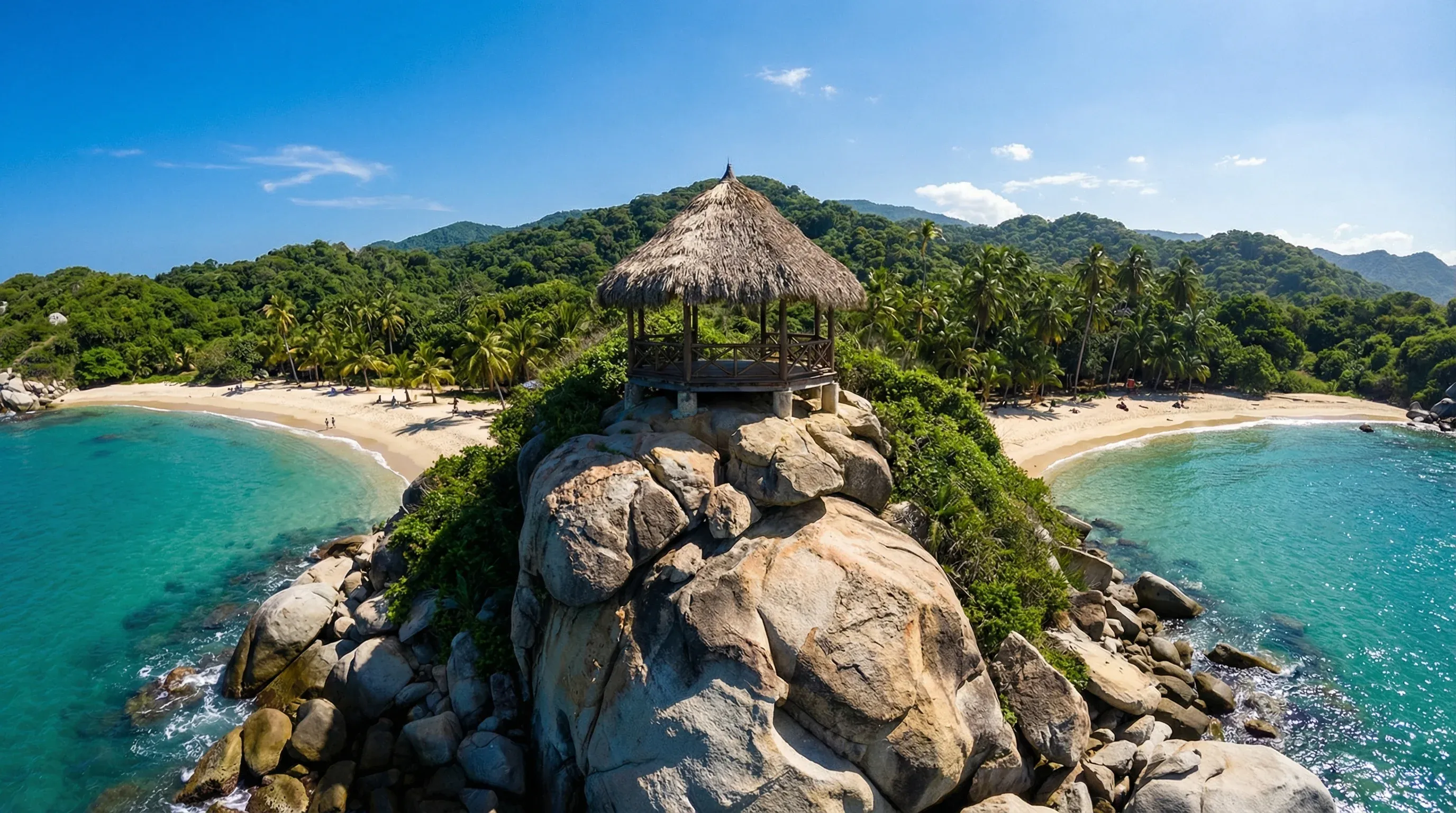
Santa Marta and Tayrona offer a wilder, more nature-focused Caribbean experience compared to Cartagena. This is the only place where you can swim in the ocean while looking up at snow-capped peaks (the Sierra Nevada). For families, the area consists of two main zones: the resort area of Rodadero, which is bustling, developed, and full of Colombian families; and the nature reserves like Tayrona and Minca. Santa Marta itself is the oldest surviving city in South America, with a small but charming historic center. The vibe here is adventurous. It attracts families who want to hike, swim in rivers, and explore jungles rather than just sit by a pool.
The crown jewel is Tayrona National Natural Park. While the full hike to Cabo San Juan can be tough for toddlers (approx. 2 hours each way), the initial trails are manageable and filled with wildlife like cotton-top tamarins and howler monkeys. Seeing the jungle spill right onto golden sandy beaches is a spectacular sight. For a cooler change of pace, the mountain village of Minca offers waterfalls and giant bamboo forests just 45 minutes uphill, providing a break from the coastal heat.
Key Attractions
For ease and fun, Playa Rodadero is the most family-centric beach. It has calm waters and plenty of services. From there, you can take a short boat ride to the Rodadero Sea Aquarium and Museum. It is somewhat old-school but offers children a chance to see sharks, turtles, and dolphins in sea-pens built directly into the ocean.
Inside Tayrona National Natural Park, the beaches of Cañaveral and Arrecifes are stunning, though swimming is often restricted due to strong currents—always obey the red flags. La Piscina is a safe, reef-protected area within the park for swimming. Back in the city, the Museo del Oro Tairona - Casa de la Aduana is a free, small, and air-conditioned museum that explains the fascinating indigenous history of the region in a way that is digestible for older kids.
Practical Advice
Tayrona Park closes for "spiritual cleansing" by indigenous communities several times a year (usually February, June, and October)—check dates before booking. Yellow Fever vaccination is recommended for the park. The heat is intense; carry plenty of water.
Food & Drink
Typical meal times: Lunch 12:00 pm to 2:00 pm. Dinner 7:00 pm to 9:00 pm.
Typical meal costs: Moderate. Lunch in Santa Marta: 20,000–35,000 COP (approx. $5–9 USD / €4.50–8 EUR). Seafood dinner: 40,000–70,000 COP (approx. $10–18 USD / €9–16 EUR).
Dietary requirements: Fried fish is the staple. Vegetarian options are common in Minca and the Santa Marta historic center, but rare in Rodadero.
Signature dishes:
- Cayeye – Green banana (guineo) mashed with butter and cheese. It is the local version of mashed potatoes, eaten for breakfast or lunch. Kids usually love the texture.
- Pargo Rojo Frito – Whole fried red snapper, served with coconut rice and patacón (fried plantain).
- Cocadas – Sweet coconut patties sold by beach vendors, available in flavors like pineapple, arequipe, or guava.
Why this score?
This is one of Colombia's most adventurous regions, featuring the multi-day Lost City (Ciudad Perdida) jungle trek and coastal hiking in Tayrona. The proximity of the Sierra Nevada mountains to the sea creates steep terrain and challenging conditions for those venturing outside the main resorts.
Why this score?
Santa Marta has functional hospitals, but the quality and English-language support are noticeably lower than in the 'big three' cities (Bogotá, Medellín, Cali). Rural areas like Tayrona or the mountain village of Minca have very limited medical reach, often restricted to basic first aid.
Why this score?
As the base for Tayrona National Park and the Lost City trek, this region attracts a significant number of international adventure-seekers. It is a well-known stop on the South American circuit, though it feels more rugged and less 'polished' than Cartagena.

Santa Marta caters to all budgets. Hostels and budget hotels are plentiful. Entry to Tayrona Park is pricey for foreigners (approx. 60,000–70,000 COP / $15–18 USD). Food is generally cheaper than in Cartagena. A nice apartment rental in Rodadero can cost 200,000–400,000 COP (approx. $50–100 USD / €45–90 EUR) per night.
Family Travel Notice
When visiting Medellin with minors, ensure children carry original identification documents or clear passport copies at all times to comply with local safety regulations.

Getting Here & Around
Getting Here
- Airports – Simon Bolívar International Airport (SMR) is located right next to the ocean, a short drive from Rodadero and Santa Marta.
- Bus – Connected to Cartagena (4-5 hours) and Barranquilla (2 hours). Shuttle vans (Marsol) are comfortable for families.
Getting Around
- Taxi – The easiest way to get between Santa Marta, Rodadero, and the airport. Negotiate prices or ask for the taximeter.
- Bus – Blue public buses connect Santa Marta to the entrance of Tayrona National Natural Park (approx. 1 hour).
- Boat – Water taxis run from Taganga to Tayrona beaches, but the ride can be very rough and scary for small children. Hiking or horses are safer.
Nearby Airports (4 airports)
Hacaritama Airport
HAYAguachica
Riohacha
RCHRiohacha
Simon Bolivar
SMRSanta Marta
Alfonso Lopez Pumarejo
VUPValledupar
View full flight map for Colombia →
Official Links

Packing List
Strollers are useless on Tayrona's jungle trails and beaches; you must carry small children.
Sand flies (jejenes) on the beaches are fierce and leave itchy bites; standard spray often fails.
ATMs are non-existent inside Tayrona Park and scarce in Minca/beaches.
Mandatory for entry to Amazon, Tayrona Park, and other jungle reserves; you may be denied entry without it.
Essential for boat transfers to Rosario Islands or Amazon trips where luggage often gets splashed.
Bogotá and Andean towns are high-altitude (2,600m+) and get surprisingly cold, especially at night.
Roads in the Andes are incredibly winding; essential for kids on bus transfers or car trips.
Peace of mind in crowded city centers and markets where pickpocketing can occur.

Activities & Best Times

Hiking, wildlife, outdoor exploration, ecotourism
A world-class destination for trekking to the Lost City (Ciudad Perdida) and exploring the high-altitude biodiversity of the Sierra Nevada. The dry season (Dec-Mar) is essential for safe trail conditions and optimal wildlife viewing, as the rainy months make jungle paths dangerously muddy.

Beach resorts, marine activities: diving, snorkelling, kite surfing, wind surfing, sailing
Features iconic jungle-fringed beaches like Cabo San Juan and Playa Cristal with high biodiversity and crystalline Caribbean waters. Peak season aligns with the dry months (Dec-Mar), while October is often unsuitable due to heavy rainfall and scheduled Tayrona National Park closures.

Urban tourism, museums, historical sites, architecture
Home to the historic Quinta de San Pedro Alejandrino and the Tairona Gold Museum, offering deep insight into colonial history and indigenous heritage. Peak visitation occurs during dry, breezy months; September and October see heavy tropical downpours that hinder urban exploration.

Sport tourism, fitness activities, active recreation
The multi-day Lost City Trek is an internationally recognized active tourism challenge requiring high fitness. The trek is most rewarding in the dry season when river crossings are safe and trail footing is stable, avoiding the peak precipitation months of September and October.

Learning experiences, scientific sites, historical education
Offers significant archaeological and marine biological learning opportunities at the Tairona Gold Museum and coastal research centers. These sites are most accessible during the dry seasons when transport between the city and archaeological sites is most reliable.

Scenic drives, countryside tours, route-based travel
The Troncal del Caribe provides a scenic drive along the coast with dramatic views of the Sierra Nevada meeting the sea. Optimal driving conditions and visibility are found during the dry season; heavy rains in late year can lead to road closures and landslides on mountain routes to Minca.

Amusement parks, family entertainment venues
Features established attractions like the Rodadero Sea Aquarium and Mundo Marino, which are popular with families but largely serve domestic tourism. Peak demand aligns with school holidays in January, July, and December when facilities are most active.

Spa retreats, wellness centers, peaceful getaways
Limited formal wellness infrastructure exists beyond the La Aguja hot springs and niche eco-yoga retreats in Minca. Best experienced in dry months when the serene atmosphere of the Sierra Nevada foothills is not interrupted by daily storms.




Public Holidays & Calendar Next 12 months
Public holidays, festivals, cultural celebrations, and seasonal natural phenomena coming up in Santa Marta & Tayrona over the next 12 months.
Loading holidays and events...

Travel Advisory
The majority of international agencies recommend exercising a high degree of caution. While tourism is active, significant risks from crime and terrorism exist, and many regions—particularly borders—are subject to severe travel restrictions.
Safety Topics
Traveller Advice (4 groups)

It is strongly recommended to avoid traveling solo or walking alone at night. Be cautious in social settings and do not accept drinks or food from strangers.

All visitors should obtain comprehensive medical insurance that includes evacuation. Complete the Check-Mig registration form within 72 hours of travel and prioritize air travel over long-distance bus journeys through rural areas.

Personnel working in the oil, mining, and energy sectors should be aware of a heightened risk of kidnapping for ransom by illegal armed groups.

When visiting Medellin with minors, ensure children carry original identification documents or clear passport copies at all times to comply with local safety regulations.
Agency Summaries
While general travel is possible, the government warns against visiting several departments and border zones. Risks include internal conflict, terrorism, and potential insurance invalidation if entering restricted areas.
High levels of caution are required nationwide due to the threat of violent crime and terrorism. Significant areas along the borders with Venezuela and Ecuador are designated as 'Do Not Travel' zones.
Travelers are urged to rethink their plans due to widespread violent crime, terrorism, and kidnapping. U.S. government personnel face severe travel restrictions, and emergency services are limited in high-risk zones.
The security situation remains volatile across many regions. Travelers should avoid large gatherings and border regions, while remaining aware of health risks such as dengue fever and yellow fever.
Heightened security concerns exist throughout the country, particularly regarding violent crime and kidnapping. Travel is safest on main routes during daylight hours, with air travel preferred between major cities.
Visitors should maintain significant vigilance due to prevalent crime. There are strict warnings to avoid all travel to border regions and specific departments where kidnapping and violence from illegal armed groups are highly likely.
Information is provided for general guidance only and does not constitute travel, safety, medical, or legal advice. Conditions may change. Users are responsible for independently verifying information before travel.