
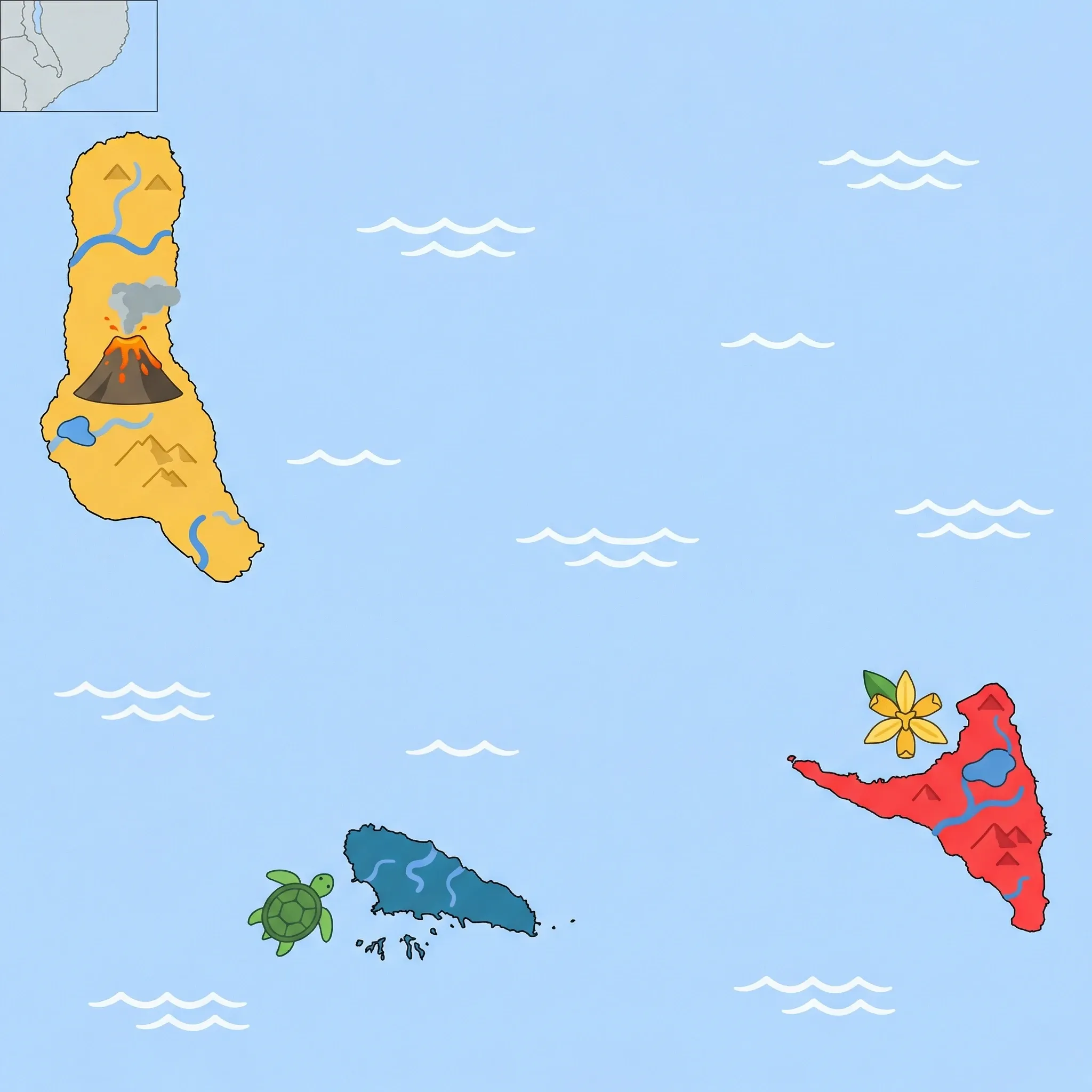
Click a region to explore
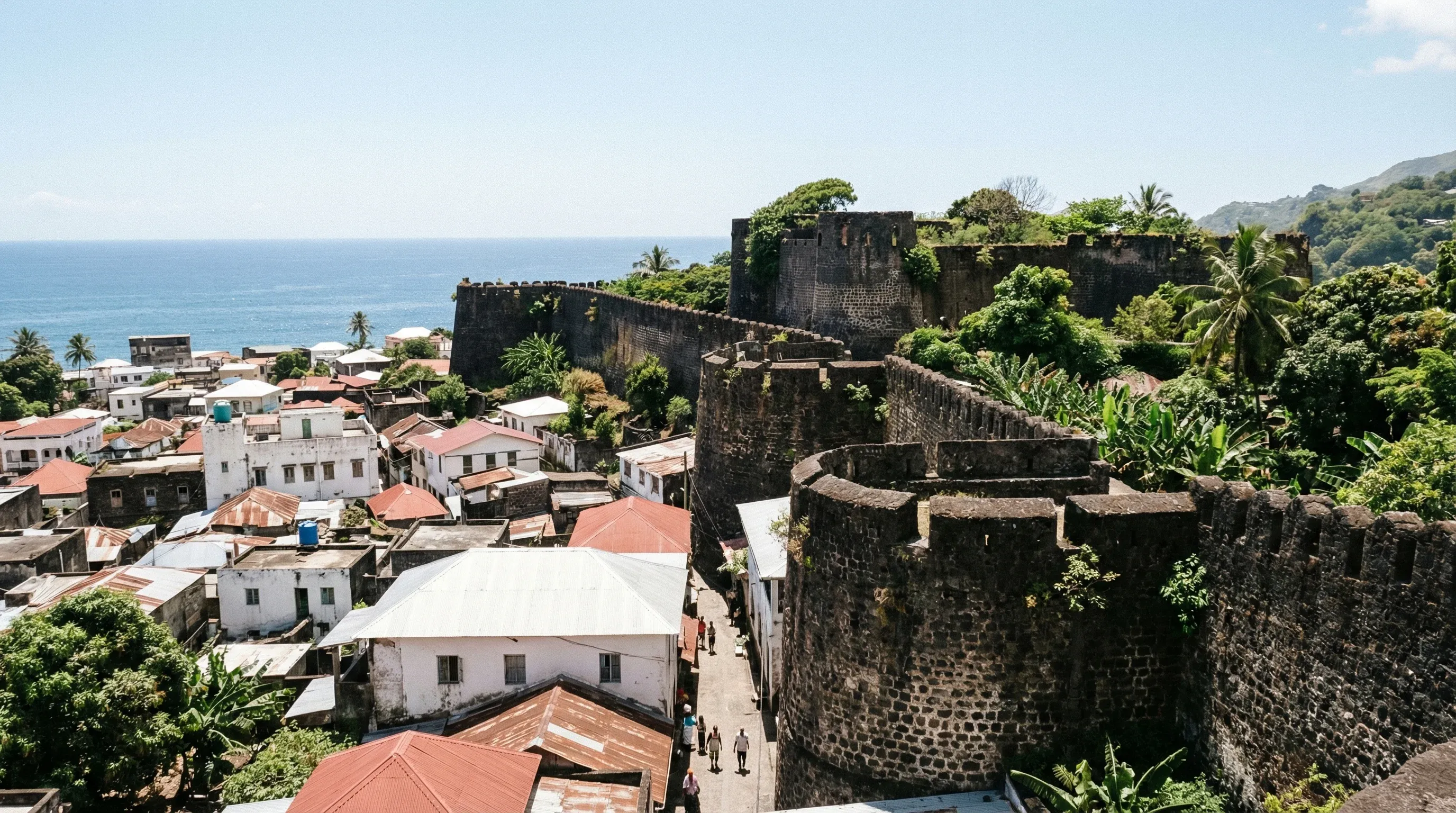
Anjouan (locally known as Ndzuwani) is often cited as the most beautiful of the Comoros archipelago, characterized by its sheer, jagged relief and lush vegetation. For families, this island feels like a 'Lost World' adventure; the terrain is steep, the forests are dense, and the air is perpetually heavy with the scent of cloves, vanilla, and ylang-ylang. Unlike the volcanic moonscapes of Grande Comore, Anjouan is vividly green, crisscrossed by rivers and waterfalls that tumble down to black sand beaches. The culture here is deeply rooted in Arab-Shirazi traditions, visible in the architecture of the medinas and the conservative but welcoming nature of the people.
While it lacks the smooth infrastructure of major tourist hubs, Anjouan rewards patient families with genuine discovery. Children can explore ancient citadels that once guarded against pirates, watch handmade dhows being built on the beaches, and spot giant fruit bats gliding over the canopy. The island requires a bit of stamina—roads are winding and hiking is often vertical—but the views of the Indian Ocean from the high passes are unmatched. It is a place to disconnect from digital life and reconnect with nature in its wildest form.
Key Attractions
While Anjouan does not host the famous UNESCO parks of its neighbors, its natural and historic landmarks are compelling. A visit to Mutsamudu is essential; its medina of narrow alleyways and stone staircases leads up to an 18th-century Citadel offering panoramic views of the harbor—a great spot for kids to play explorer. Nature-loving families should head to the center of the island to see Mount Ntringui, the island's highest point, often shrouded in cloud forests. Nearby, the Tatringa Falls offer a scenic picnic spot where water cascades down lush rock faces, providing a refreshing break from the tropical heat. The town of Domoni, with its palaces and mausoleums, offers a glimpse into the island's royal past.
Practical Advice
Best time to visit: The dry season (May to October) is best for hiking and avoiding the intense humidity of the summer. Anjouan is extremely steep; renting a 4x4 with an experienced local driver is safer and more relaxing than driving yourself. Be prepared for motion sickness on the winding mountain roads. Dress modestly (shoulders and knees covered) out of respect for local customs.
Food & Drink
Typical meal times: Lunch is typically served from 12:00 pm to 2:30 pm. Dinner is usually eaten late, from 7:30 pm to 9:30 pm.
Typical meal costs: Local eateries are affordable, while hotel restaurants charge more. A family meal costs around 6,000–12,000 KMF (approx. $13–26 USD / €12–24 EUR).
Dietary requirements: Seafood and root vegetables are staples. Vegetarians will find plenty of cassava, plantain, and rice dishes, but vegan specific menus are rare. Peanuts and coconut milk are ubiquitous, so alert kitchens to nut allergies immediately.
Signature dishes:
- Mataba – Cassava leaves stewed in coconut milk, often served with rice or fish; a creamy, comforting staple loved by children.
- Pilaou – A festive spiced rice dish influenced by Indian and Arabian cuisine, cooked with meat (usually goat or beef) and cardamom.
- Mkatra Foutra – A yeasty, coconut-based flatbread often eaten for breakfast or as a snack, delicious when dipped in curry.
Why this score?
The island's terrain is exceptionally rugged, featuring steep volcanic slopes like Mount Ntringui and dense tropical forests that are difficult to navigate. Travel here requires significant physical effort and a willingness to forgo modern comforts, as tourist services and paved roads are extremely limited.
Why this score?
Medical facilities on Anjouan are minimal and often lack basic supplies, requiring medical evacuation for anything beyond minor ailments. Foreign travelers will find almost no English-speaking staff and must rely on the very basic public healthcare infrastructure in Mutsamudu.
Why this score?
Anjouan receives a negligible number of international visitors compared to global tourism hubs, with arrivals often limited to niche adventurers and diaspora. While the island is known for its ylang-ylang and historic citadels, the lack of commercial flight frequency and tourist infrastructure keeps it firmly in the lowest tier of global popularity.

Anjouan is generally inexpensive compared to international destinations, but costs can vary due to limited tourist infrastructure. Street food is very cheap, around 500–1,500 KMF (approx. $1.10–3.30 USD / €1–3 EUR). A mid-range guesthouse or hotel room costs between 20,000–40,000 KMF (approx. $43–87 USD / €40–80 EUR) per night. Transport via shared taxi is negligible, but hiring a private driver for the day will cost significantly more.

Getting Here & Around
Getting Here
- Ferry – The most common way to arrive is via the inter-island ferries (SGTM) from Moroni (Grande Comore) or Mohéli. The crossing takes 3–5 hours but sea conditions can be rough.
- Air – Ouani Airport (AJN) receives domestic flights from Moroni (HAH) and Dzaoudzi (Mayotte). Flights can be subject to last-minute schedule changes.
Getting Around
- Taxi – Shared taxis are the primary mode of transport between towns. They are cheap but can be crowded and fast-paced on mountain roads.
- Car Hire – Renting a car with a driver is highly recommended for families. The roads are narrow, steep, and winding, making self-driving stressful for visitors.
- Walking – Within the medina of Mutsamudu, walking is the only option due to the narrow stairs and alleys.
Nearby Airports (1 airport)
Ouani Airport
AJNAnjouan
View full flight map for Comoros →

Packing List
Roads are relentlessly winding and steep; essential for kids in cars.
Many beaches have rocky entries or coral fragments mixed with sand.
Local culture is conservative; cover up immediately when leaving the water.
Mosquitoes are prevalent, and dengue/malaria are risks.
Power cuts are frequent on all islands; street lighting is minimal at night.
ATMs are unreliable and scarce; Euros are widely accepted at a fair fixed exchange rate.
Respectful attire is required; bikinis are only appropriate on strictly private hotel beaches.
Inter-island ferry crossings and small boat trips to marine parks can be very choppy.
English is rarely spoken outside of major hotels; basic French is crucial for communication.

Activities & Best Times

Hiking, wildlife, outdoor exploration, ecotourism
Mount Ntingui and rugged landscapes offer authentic wilderness trekking, but 'very_good' overstates international significance. Limited infrastructure, access challenges, and lack of international trekking reputation mean this should be 'good' - a worthwhile destination for adventurous travelers, but not internationally outstanding.

Urban tourism, museums, historical sites, architecture
Mutsamudu and Domoni are authentic Swahili stone towns, but 'very_good' is not internationally calibrated. These are small settlements on a remote island with minimal tourism infrastructure, not UNESCO sites or internationally recognized cultural destinations. 'Good' appropriately recognizes their authentic character while acknowledging limited scale.

Scenic drives, countryside tours, route-based travel
Scenic driving routes like the Mutsamudu to Moya mountain pass provide spectacular vistas of the island's jagged coastline and lush interior. Travel is recommended during the dry season when visibility is clear and the risk of rain-induced landslides on steep mountain roads is significantly reduced.

Sport tourism, fitness activities, active recreation
The island features challenging, internationally recognized trekking routes to high-altitude landmarks like Lac Dzialandzé and the Ntringui summit. These specialized hiking infrastructures are most accessible and safe for active families during the dry winter period, as heavy monsoon rains make the vertical terrain impassable.

Beach resorts, marine activities: diving, snorkelling, kite surfing, wind surfing, sailing
While Anjouan is more mountainous than its neighbors, the Bimbini Peninsula offers secluded coastal recreation for travelers seeking quiet, authentic marine environments. Conditions for swimming and coastal exploration are optimal when the sea is calm and underwater visibility is at its peak during the mid-year dry spell.




Public Holidays & Calendar Next 12 months
Public holidays, festivals, cultural celebrations, and seasonal natural phenomena coming up in Anjouan over the next 12 months.
Loading holidays and events...

Travel Advisory
While several agencies do not issue specific warnings, major partners (USA, Canada, Ireland) classify the risk as elevated due to significant limitations in medical infrastructure and the potential for spontaneous civil unrest. Travelers should exercise a higher degree of vigilance than normal.
Safety Topics
Traveller Advice (3 groups)

Those planning to hike Mount Karthala should monitor volcanic activity through local reports and coordinate with authorities, as the volcano is active and eruptions can occur without significant notice.

Female travelers should dress conservatively in accordance with local Islamic customs. It is recommended to avoid walking alone at night, particularly on beaches or in quiet urban areas.

While legal frameworks may be ambiguous, the social climate is highly conservative and Sunni Islam is the state religion. Travelers should exercise discretion in public as same-sex relations and public displays of affection may attract negative attention or legal scrutiny.
Agency Summaries
The Australian government does not currently maintain a specific travel advisory for Comoros due to a low number of Australian travelers or a perceived lower risk level. Travelers are encouraged to consult partner agencies like Canada or the UK for security information and ensure they have comprehensive insurance.
Most visits are trouble-free, though travelers should be mindful of low-level petty crime and avoid walking alone at night. Political demonstrations can lead to road closures and disruptions. As an Islamic nation, Comoros has strict cultural and religious norms that must be respected, including dress and behavior. Healthcare facilities are basic across the islands.
Travelers should remain very vigilant due to the scarcity of emergency response services and the poor standard of medical care. While violent crime is uncommon, petty theft occurs in public spaces. Political protests can arise and may lead to unrest or traffic delays. Infrastructure issues include hazardous road conditions and safety concerns with local maritime transport.
No formal warning is in place, but travelers are advised to maintain standard security awareness. Comprehensive medical insurance that includes air evacuation is essential due to the limited local health services. Pre-travel vaccinations for common regional diseases are strongly recommended.
Visitors should exercise increased caution and stay informed about local developments. There is no resident Irish diplomatic presence, limiting emergency assistance. Safety precautions should include avoiding large gatherings and being aware of the risk of natural hazards such as cyclones or seismic activity.
Heightened vigilance is advised because of crime, potential for civil unrest, and limited health infrastructure. Petty crime is prevalent in high-traffic areas. Protests often occur in Moroni and can occasionally become violent. Medical facilities are notably inadequate, especially in rural districts, often necessitating medical evacuation for serious conditions.
Information is provided for general guidance only and does not constitute travel, safety, medical, or legal advice. Conditions may change. Users are responsible for independently verifying information before travel.