
Grande Comore (Moroni, volcano)
Volcanic wonders and ancient Swahili culture 🌋🕌
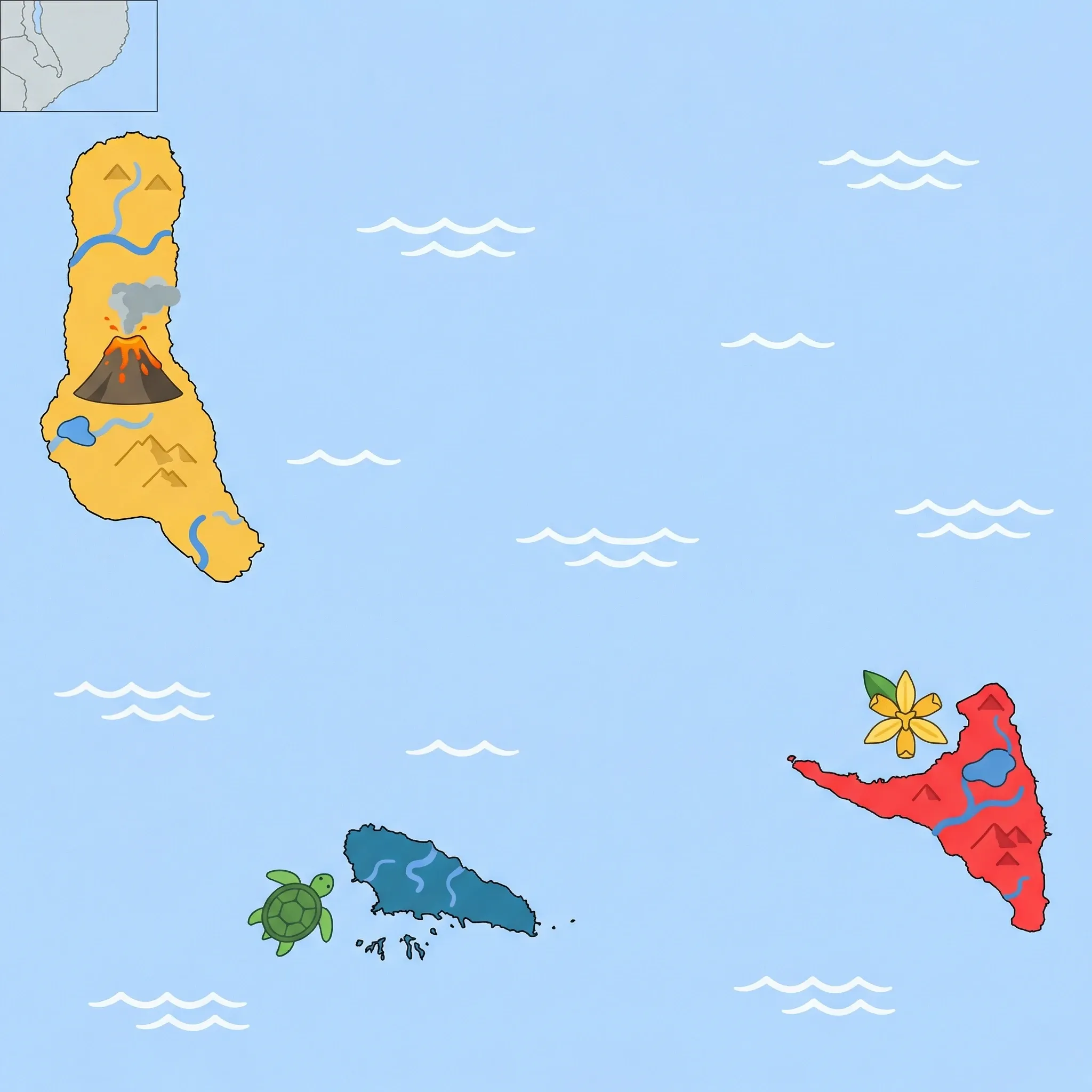
Click a region to explore
Grande Comore, or Ngazidja, is the largest and most diverse island in the Union of the Comoros. For families, this is the gateway to the archipelago and the place where the contrast between nature and civilization is most vivid. The island is dominated by the imposing silhouette of Mount Karthala, one of the world's most active volcanoes, whose past eruptions have sculpted the landscape into dramatic fields of black frozen lava. Against this dark rock, the turquoise Indian Ocean and the whitewashed mosques of the coastal towns create a stunning visual palette. The capital, Moroni, feels like a time capsule with its narrow streets, carved wooden doors, and bustling markets that smell of grilled corn and spices.
While the island has a rugged beauty, it also offers pockets of relaxation. The northern coast near Mitsamiouli boasts white sand beaches that are safe for swimming, unlike the rocky volcanic drop-offs found elsewhere. Culturally, it is a fascinating classroom for older children; the Grand Mariage tradition (a complex societal wedding custom) influences daily life, and the blend of African, Arab, and French influences is evident everywhere. Families visiting here should be prepared for an adventure—infrastructure is developing, and the charm lies in the island's raw, unpolished authenticity rather than resort-style luxury.
Key Attractions
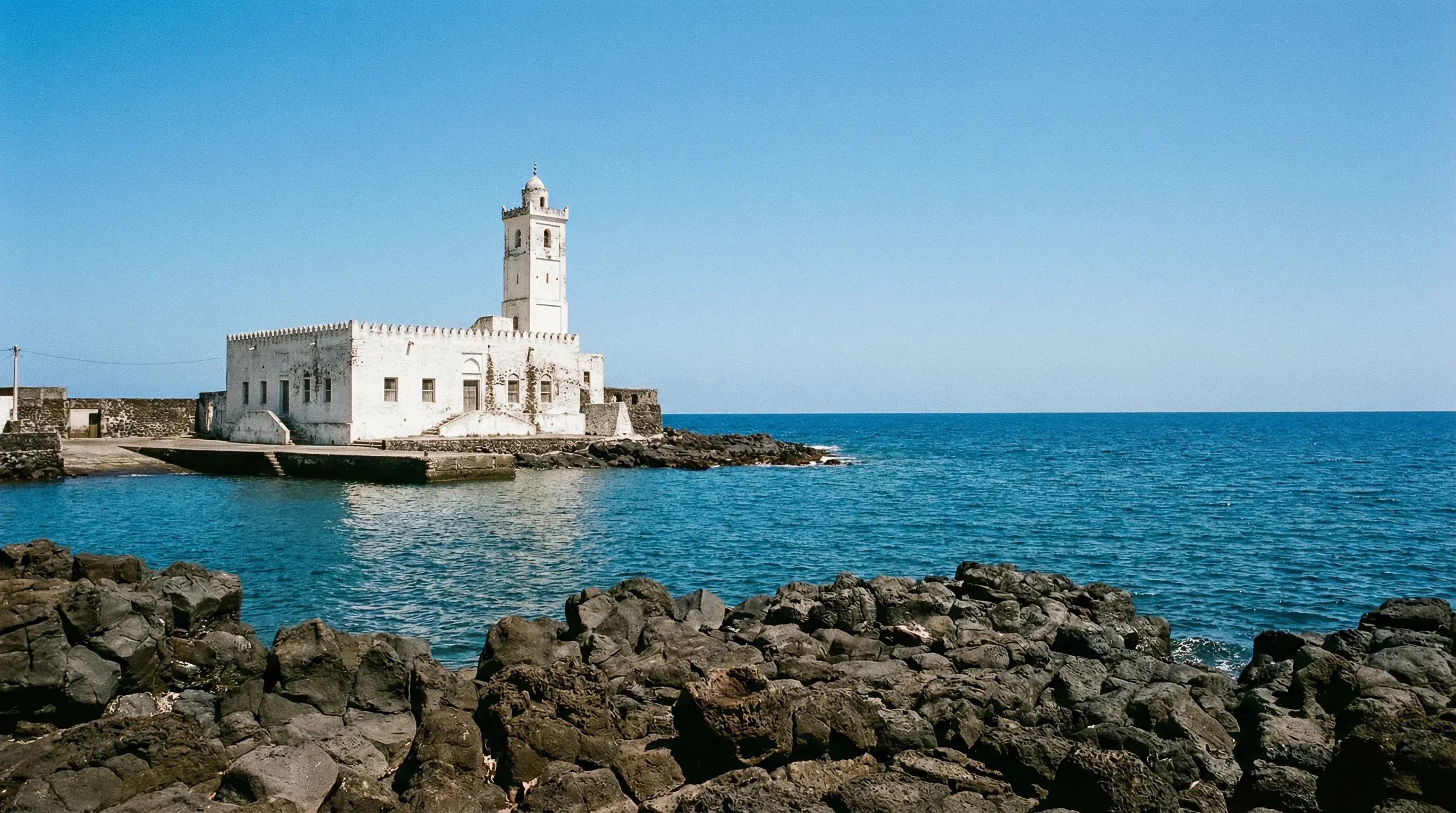
The island's centerpiece is undoubtedly Mount Karthala. For families with active teenagers, a guided trek to the caldera is an unforgettable geology lesson, though it requires stamina. For a more relaxed cultural experience, the heart of Moroni is home to the Ancienne Mosquée du Vendredi (Old Friday Mosque). Situated by the harbor, its distinctive architecture and coral-stone construction make it a photogenic icon of the city. Beyond the city, families enjoy visiting Lac Salé, a sulfurous saltwater crater lake believed to be bottomless by locals, and the beaches of Chomoni, where black lava rocks meet white sand.
Practical Advice
Best time to visit: June to October offers cooler, drier weather. December to April is the wet season, which can be hot and humid with more mosquitoes.
Family logistics: The sun is very strong; high-SPF sunscreen is essential. Moroni has pharmacies and supermarkets, but specific baby supplies (diapers/formula) can be expensive or hard to find, so pack enough. Respect local customs by dressing modestly outside of hotel beaches.
Food & Drink
Typical meal times: Lunch is usually 12:00 pm to 2:30 pm. Dinner is a social affair, often starting from 7:00 pm to 9:30 pm.
Typical meal costs: A meal at a nice restaurant in Moroni costs around 7,500–12,500 KMF (approx. $16–27 USD / €15–25 EUR). Local street snacks are under 1,000 KMF (approx. $2.20 USD / €2 EUR).
Dietary requirements: Halal food is the standard. Seafood is fresh and abundant. Vegetarian options like vegetable curries and grilled plantains are common, but strict gluten-free options are not well-understood in local eateries.
Signature dishes:
- Langouste à la Vanille – Fresh lobster cooked in a rich vanilla sauce, combining the islands' two most famous exports (seafood and spices).
- Mhogo – Boiled or fried cassava, often served with a spicy coconut chutney (putu) for dipping.
- Poulet Coco – Chicken slow-cooked in fresh coconut milk with garlic and turmeric, mild enough for young children.
Why this score?
The presence of Mount Karthala, one of the world's largest active volcanoes, offers a challenging multi-day trekking experience through lava fields and crater landscapes. Outside of Moroni, the infrastructure is sparse, creating a raw and authentic environment that demands self-reliance from visiting families.
Why this score?
While Moroni hosts the country's main hospital, El-Maarouf, services are still very limited by international standards and often face shortages of electricity and medicine. It is the best available care in the country, yet still far below the quality expected for reliable family travel without comprehensive insurance and evacuation plans.
Why this score?
As the primary gateway to the archipelago and home to the capital, Moroni, this region sees the majority of the country's limited international arrivals. Despite this, its total visitor numbers remain among the lowest in the world due to its remote location and underdeveloped tourism sector.

Grande Comore is the economic hub, meaning prices are slightly higher than on other islands. Imported goods are expensive. A standard hotel room ranges from 25,000–60,000 KMF (approx. $55–130 USD / €50–120 EUR). Private car hire with a driver typically costs 20,000–35,000 KMF (approx. $43–76 USD / €40–70 EUR) per day. Cash is king; credit cards are rarely accepted outside top hotels.

Getting Here & Around
Getting Here
- Airports – Prince Said Ibrahim International Airport (HAH) in Hahaya is the main international gateway, receiving flights from Ethiopia, Kenya, and Tanzania.
- Ferry – Inter-island ferries connect Moroni to Mohéli and Anjouan. The port is in the center of Moroni, near the old mosque.
Getting Around
- Taxi – In Moroni, shared taxis are ubiquitous and cheap. For trips outside the capital, you can hire a "taxi brousse" (bush taxi) or a private driver.
- Car Hire – Renting a car allows freedom to explore the northern beaches and volcanic south. A 4x4 is recommended for comfort on potholed roads.
- Walking – The Medina in Moroni is best explored on foot, as the alleys are too narrow for cars.
Nearby Airports (1 airport)
Moroni Hahaia
HAHMoroni
View full flight map for Comoros →

Packing List
Hard to buy locally and essential for protecting the coral ecosystems.
Power cuts (delestage) are frequent in Moroni; essential for evenings.
Tropical downpours occur suddenly, especially near Mount Karthala.
ATMs can be unreliable; bring cash to exchange for KMF.
Essential for protecting feet from sharp coral and sea urchins on wild, rocky beaches.
Power cuts are frequent on all islands; street lighting is minimal at night.
ATMs are unreliable and scarce; Euros are widely accepted at a fair fixed exchange rate.
Respectful attire is required; bikinis are only appropriate on strictly private hotel beaches.
Inter-island ferry crossings and small boat trips to marine parks can be very choppy.
English is rarely spoken outside of major hotels; basic French is crucial for communication.

Activities & Best Times

Hiking, wildlife, outdoor exploration, ecotourism
Mount Karthala (2,361m active volcano) is a legitimate trekking destination, but 'very_good' overstates its international significance. Limited tourism infrastructure, access challenges, and lack of international recognition mean it does not compete with established volcanic trekking destinations (Kilimanjaro, Mount Bromo, etc.). 'Good' is appropriate for a notable but underdeveloped adventure destination.

Beach resorts, marine activities: diving, snorkelling, kite surfing, wind surfing, sailing
Offers unique volcanic coastal landscapes and clear waters at locations like Trou du Prophète and Chomoni Beach; the dry season (June-October) provides the best visibility and calmest sea conditions.

Urban tourism, museums, historical sites, architecture
The Medina of Moroni and Friday Mosque are authentic Swahili-Islamic sites, but Moroni is a small capital (~50,000 population) with limited tourism infrastructure. 'Very_good' suggests competition with Stone Town Zanzibar, Lamu, or other established Swahili coast destinations - this is not internationally calibrated. 'Good' appropriately recognizes authentic cultural interest while acknowledging limited scale and development.

Scenic drives, countryside tours, route-based travel
Scenic drives like the Northern Loop showcase dramatic lava flows and baobab-lined coasts; the dry season ensures safer road conditions and clear panoramic views of the island's unique topography.

Sport tourism, fitness activities, active recreation
Focuses on rigorous volcanic trekking and coastal hiking along the Karthala and Bangoua Kouni routes; peak season offers the stable weather and dry terrain required for these physically demanding activities.

Learning experiences, scientific sites, historical education
The National Museum (CNDRS) is a significant site for scientific interest in the Coelacanth and local volcanology; visitor engagement is best during the main tourist season when regional travel is most reliable.




Public Holidays & Calendar Next 12 months
Public holidays, festivals, cultural celebrations, and seasonal natural phenomena coming up in Grande Comore (Moroni, volcano) over the next 12 months.
Loading holidays and events...

Travel Advisory
While several agencies do not issue specific warnings, major partners (USA, Canada, Ireland) classify the risk as elevated due to significant limitations in medical infrastructure and the potential for spontaneous civil unrest. Travelers should exercise a higher degree of vigilance than normal.
Safety Topics
Traveller Advice (3 groups)

Those planning to hike Mount Karthala should monitor volcanic activity through local reports and coordinate with authorities, as the volcano is active and eruptions can occur without significant notice.

Female travelers should dress conservatively in accordance with local Islamic customs. It is recommended to avoid walking alone at night, particularly on beaches or in quiet urban areas.

While legal frameworks may be ambiguous, the social climate is highly conservative and Sunni Islam is the state religion. Travelers should exercise discretion in public as same-sex relations and public displays of affection may attract negative attention or legal scrutiny.
Agency Summaries
The Australian government does not currently maintain a specific travel advisory for Comoros due to a low number of Australian travelers or a perceived lower risk level. Travelers are encouraged to consult partner agencies like Canada or the UK for security information and ensure they have comprehensive insurance.
Most visits are trouble-free, though travelers should be mindful of low-level petty crime and avoid walking alone at night. Political demonstrations can lead to road closures and disruptions. As an Islamic nation, Comoros has strict cultural and religious norms that must be respected, including dress and behavior. Healthcare facilities are basic across the islands.
Travelers should remain very vigilant due to the scarcity of emergency response services and the poor standard of medical care. While violent crime is uncommon, petty theft occurs in public spaces. Political protests can arise and may lead to unrest or traffic delays. Infrastructure issues include hazardous road conditions and safety concerns with local maritime transport.
No formal warning is in place, but travelers are advised to maintain standard security awareness. Comprehensive medical insurance that includes air evacuation is essential due to the limited local health services. Pre-travel vaccinations for common regional diseases are strongly recommended.
Visitors should exercise increased caution and stay informed about local developments. There is no resident Irish diplomatic presence, limiting emergency assistance. Safety precautions should include avoiding large gatherings and being aware of the risk of natural hazards such as cyclones or seismic activity.
Heightened vigilance is advised because of crime, potential for civil unrest, and limited health infrastructure. Petty crime is prevalent in high-traffic areas. Protests often occur in Moroni and can occasionally become violent. Medical facilities are notably inadequate, especially in rural districts, often necessitating medical evacuation for serious conditions.
Information is provided for general guidance only and does not constitute travel, safety, medical, or legal advice. Conditions may change. Users are responsible for independently verifying information before travel.