

Overview
The Cook Islands is a self-governing nation in free association with New Zealand, comprised of 15 islands scattered across a vast swathe of the South Pacific. For families, the experience centers primarily on Rarotonga, the vibrant capital island, and Aitutaki (lagoon), world-famous for its turquoise waters. The climate is tropical and equable, with a dry season from May to October that is perfect for outdoor activities. Culturally, the islands are deeply Polynesian but with a familiar New Zealand influence, making them incredibly accessible for English-speaking travelers.
What sets this destination apart is its manageability and safety. Rarotonga is small enough to drive around in 45 minutes, yet diverse enough to offer mountain treks, reef snorkeling, and cultural shows. There are no snakes, poisonous spiders, or dangerous wild animals on land, and the lagoons are generally protected by outer reefs, creating calm swimming pools for children. The "island time" vibe here is genuine; families will find themselves slowing down to match the local pace, where waving to passersby is mandatory and children are welcomed everywhere.
Key Attractions
On the main island, Muri Lagoon is the undisputed hub for family water sports. Its shallow, sandy-bottomed waters are perfect for novice snorkelers and kayakers. Families can paddle out to the small motu (islets) for a picnic or take a glass-bottom boat tour to see giant trevally and turtles without getting wet. Inland, the Cross-Island Track (Te Rua Manga) offers a rugged adventure through lush rainforest to the "Needle" rock formation. While the full trek is challenging and best for older, active teenagers, the shorter walk to the Wigmore's Waterfall end is manageable for younger children and offers a refreshing dip in a cool pool.
A short flight away lies Aitutaki (lagoon), often cited as the most beautiful lagoon in the world. Here, a boat cruise to One Foot Island (Tapuaetai) is essential. Kids will love the novelty of getting their passports stamped at the tiny post office on this uninhabited islet, which boasts blindingly white sand and impossibly blue water. For a touch of local life, a visit to Arutanga Village reveals the island's slow-paced charm, with its historic limestone church and small market stalls selling fresh fruit.
Practical Advice
The best time to visit is during the dry season (May to October), when temperatures are pleasant (20–26°C / 68–79°F) and humidity is lower. Tap water in some resorts is filtered, but bottled or boiled water is recommended for children. Healthcare on Rarotonga is good for the region, with a hospital and pharmacies, but serious cases may require evacuation to New Zealand. English is an official language, and the currency is the New Zealand Dollar (NZD), making logistics easy.
Food & Drink
Typical meal times: Lunch is typically 11:30 am to 2:00 pm, and dinner is served from 6:00 pm to 9:00 pm. Sunday is a day of rest, and many places close, though resort restaurants remain open.
Typical meal costs: NZ$20–35 (approx. $12–21 USD / €11–19 EUR) for casual lunch; NZ$40–80 (approx. $24–48 USD / €22–44 EUR) for a restaurant dinner.
Dietary requirements: Vegetarian and gluten-free options are increasingly common in Rarotonga's tourist hubs but limited on outer islands. Fresh fruit and vegetables are seasonal; imported goods can be expensive.
Family-friendly dining: Dining is very casual. Highchairs are available in most cafes and resorts. Night markets, like the Muri Night Market, are excellent for families, offering a variety of cheap, kid-friendly food stalls in an open-air setting.
Signature dishes:
- Ika Mata – Raw fish marinated in lemon or lime juice and coconut cream, often with diced veg. A mild, creamy ceviche that kids might surprisingly enjoy.
- Rukau – Young taro leaves cooked in coconut cream, similar to creamed spinach but with a rich, nutty, tropical flavour.
- Poke – A warm, baked fruit pudding (usually banana or pumpkin) thickened with arrowroot and served with coconut cream. Sweet and chewy, it's a hit with children.
- Curried Eke – Octopus cooked in a mild coconut curry sauce, tender and widely available at deli counters.
- Umukai – A traditional feast where food (pork, chicken, root vegetables) is slow-cooked in an earth oven (umu).

While not a budget destination, costs are comparable to New Zealand or Australia. A family can expect daily expenses of NZ$350–550 (approx. $210–330 USD / €195–305 EUR) including car hire, mid-range accommodation, and meals. Self-catering can significantly reduce costs. Activities like lagoon cruises are pricey but worth it.
Age Suitability




Did you know? Cook Islands welcomes approximately 114,000 international visitors per year. Most visitors come from East Asia and the Pacific.

Explore Regions
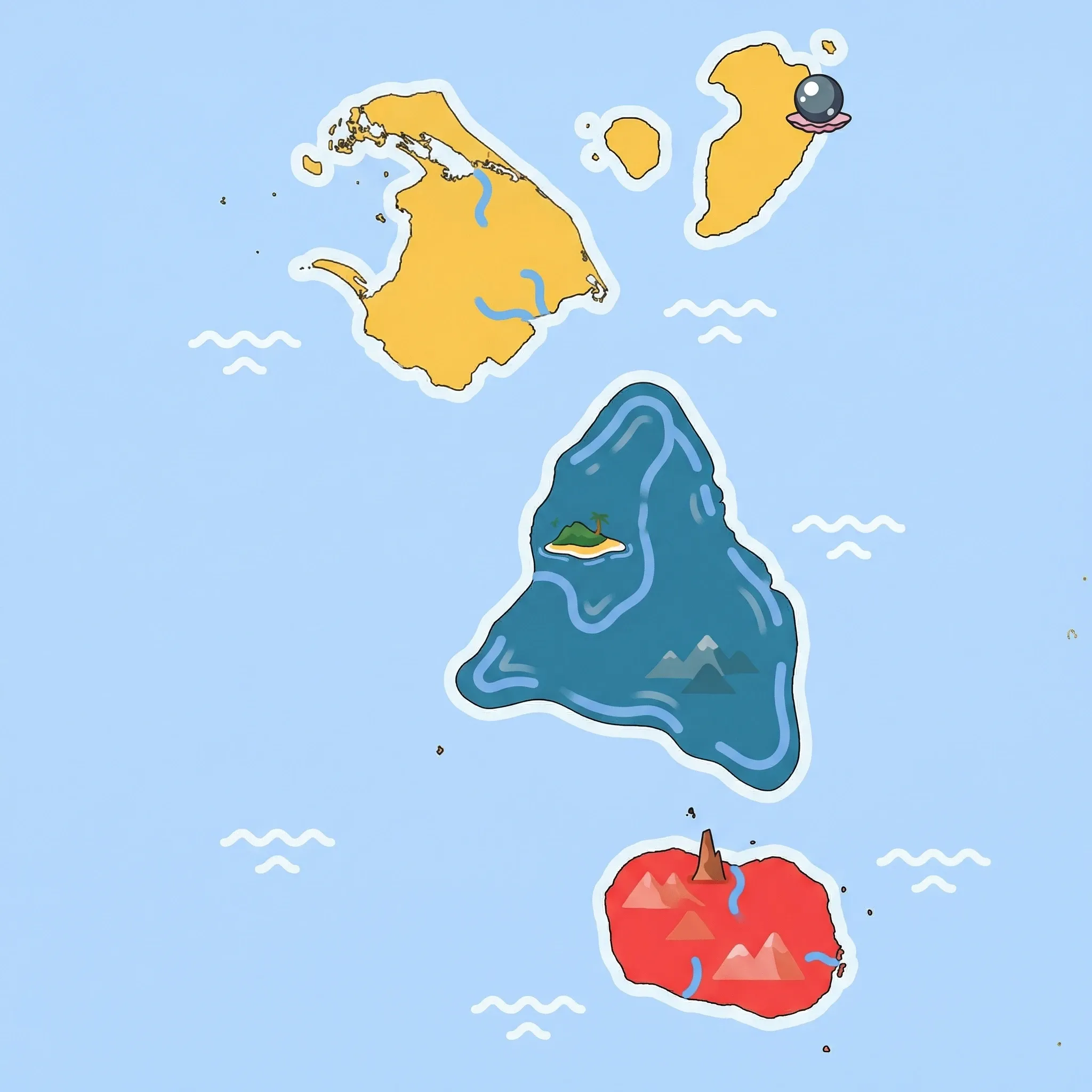
3 Regions
Aitutaki (lagoon)
The world's most beautiful lagoon 🏝️
Northern Group (remote)
Untouched atolls at the edge of the world ⚓
Rarotonga
A volcanic paradise with a laid-back family vibe 🌺
Click on a region marker to explore details. Use the dropdown to color regions by activity suitability.

Getting There & Around
Getting There
- By Air – Rarotonga International Airport (RAR) is the main gateway. Air New Zealand operates frequent flights from Auckland (AKL), which is the primary hub for international connections. Direct flights are also available from Sydney and Honolulu (Hawaiian Airlines).
- By Sea – Cruise ships occasionally anchor off Rarotonga, but tendering to shore can be weather-dependent.
- Entry Requirements – New Zealand citizens are granted a 90-day stay on arrival. Most other passport holders (US, UK, EU, AU) are granted a 31-day visitor permit on arrival, provided they have proof of onward travel and accommodation. Check your government website for the latest visa requirements, or use the IATA Travel Centre entry-requirements checker.
Getting Around
- Car Hire – The most practical option for families. Driving is on the left. You can use a full valid license from your home country (in English). Essential for exploring Rarotonga at your own pace.
- Scooters – Very popular, but strictly regulated. You must hold a full motorcycle license from your home country to ride one legally. If you only have a car license, you must take a theory and practical test at the police station to get a visitor license. Helmets are mandatory.
- Public Bus – Rarotonga has two efficient bus routes: "Clockwise" and "Anti-Clockwise". They circle the island every hour. It is a fun, cheap way for kids to see the island, though they stop running in the early evening.
- Domestic Flights – Air Rarotonga connects the outer islands. The 50-minute flight to Aitutaki (lagoon) offers spectacular aerial views of the reefs.

Packing List
Essential for protecting feet from sharp coral and stonefish in the lagoons, which can be camouflaged in the sand.
Crucial for protecting the fragile lagoon ecosystem while avoiding sunburn in the strong tropical UV.
Required to rent a car or to apply for a visitor scooter license at the police station; digital copies are often not accepted.
Mosquitoes can be active day and night, and dengue fever outbreaks do occur occasionally.
Highly useful for keeping cameras and phones dry during lagoon cruises, kayaking trips, or sudden tropical showers.

Activities & Best Times

Adventure & Nature
Very GoodHiking, wildlife, outdoor exploration, ecotourism
The rugged interior, highlighted by the Cross-Island Track and Te Rua Manga, offers authentic tropical jungle exploration and dramatic volcanic landscapes. Hiking is best during the drier winter months when trails are safer and the heat is manageable for active families.
The lagoon serves as a pristine nature reserve with diverse marine life, complemented by hiking tracks like Mount Maungapu for panoramic views. Peak season aligns with the cooler southern winter, offering the most comfortable conditions for wilderness exploration and hiking.
Features internationally significant wilderness at Suwarrow Atoll National Park, providing an authentic 'castaway' experience for adventurous families. Visitation is restricted by extreme isolation and is only viable during the drier months when park wardens are present and cyclone risk is low.

City & Cultural
Very GoodUrban tourism, museums, historical sites, architecture
Avarua provides a sophisticated yet intimate Polynesian cultural experience with its historic coral churches, botanical gardens, and vibrant local art scene. Visitation is ideal during the dry season when outdoor markets and cultural performances are most frequent and comfortable.
Features authentic Polynesian heritage at Arutanga Village and Punarei Cultural Village, alongside historic limestone churches. These outdoor cultural sites are best experienced during the drier months to avoid extreme heat and heavy tropical downpours.
Showcases unique atoll heritage and WWII relics, offering a deeply authentic look at remote Pacific life far from commercial centers. Travel to these isolated communities is best during the dry season, as heavy summer rains frequently disrupt the very limited and expensive transportation links.

Sports & Active
Very GoodSport tourism, fitness activities, active recreation
Established infrastructure for cycling, guided trekking, and lagoon sports caters well to families seeking an active holiday. The dry season (May-Oct) is critical for trail safety and to avoid the extreme humidity that can hinder strenuous physical activity.
Offers established hiking and cycling routes, including the summit track and island perimeter, for active travelers. The cooler and significantly less humid winter months are essential for safe and enjoyable physical exertion in this tropical environment.
Beach & Sea
GoodBeach resorts, marine activities: diving, snorkelling, kite surfing, wind surfing, sailing
Muri Lagoon and Titikaveka offer exceptional, safe snorkeling in protected turquoise waters with high visibility. Peak season from June to October provides the lowest rainfall and humidity, ensuring calm lagoon conditions and optimal water clarity for families.
Home to spectacular turquoise waters and iconic motus like One Foot Island, offering world-class snorkeling and scenic boat tours. The drier months from May to October provide optimal water clarity and safer lagoon navigation compared to the humid, rainy season.
The region offers pristine, untouched lagoon environments such as Penrhyn, but extreme remoteness and a total lack of conventional tourism infrastructure limit its appeal to highly specialized travelers. Peak season offers the best sea visibility and calmer waters for the difficult boat or air transfers required.

Educational & Exploratory
GoodLearning experiences, scientific sites, historical education
Purpose-built facilities like the Discover Marine and Wildlife Centre offer high-quality, destination-specific ecological education for children. These centers are excellent indoor alternatives during shoulder months, though they align with the main tourism season for full programming.
The Aitutaki Marine Research Centre provides niche insights into giant clam conservation and lagoon ecology for interested families. Visitation is best during the stable weather months when research boat trips and facility access are most reliable.

Road Trips & Scenic
MarginalScenic drives, countryside tours, route-based travel
The island's two main roads, Ara Tapu and the ancient Ara Metua, provide a simple but charming self-drive loop through coastal and rural landscapes. Driving is most enjoyable during the clear-sky months when scenic vistas and roadside fruit stalls are most accessible.
A small but scenic coastal loop provides a convenient way to explore the island's perimeter and local lifestyle. Driving conditions are most pleasant during the dry season when roads are clear and visibility of the lagoon is at its peak.

Public Holidays & Calendar Next 12 months
Public holidays, festivals, cultural celebrations, and seasonal natural phenomena coming up in Cook Islands over the next 12 months.
Loading holidays and events...
Climate & Weather
Aitutaki (lagoon)
Show Details
| Month | Temp °C | Rain | Humidity |
|---|
Northern Group (remote)
Show Details
| Month | Temp °C | Rain | Humidity |
|---|
Rarotonga
Show Details
| Month | Temp °C | Rain | Humidity |
|---|

Travel Advisory
All six major agencies agree on the lowest risk level for the Cook Islands, citing a stable security environment. Primary concerns are limited medical infrastructure and seasonal natural hazards rather than human-caused threats.
Safety Topics
Traveller Advice (3 groups)

Some official sources warn that same-sex acts are legally prohibited and social attitudes can be conservative, potentially leading to discrimination.

Visitors should dress modestly when in local villages and are advised not to leave bags or valuables unattended on public beaches.

Individuals participating in marine activities should be extremely cautious of strong currents in reef passages, which pose a significant risk to swimmers and divers.
Agency Summaries
A standard level of caution is recommended. Major considerations include opportunistic petty crime in tourist hubs and natural risks like tropical storms and tsunamis. Medical resources are particularly limited outside the main island.
The security landscape is largely comparable to that of New Zealand. Visitors should focus on protecting personal property from theft and remaining prepared for seasonal tropical storms and marine hazards.
The United States government suggests visitors maintain standard safety measures as the country is characterized by a stable security environment and low crime rates.
Travelers should maintain standard safety awareness. The country is generally secure, though visitors should be mindful of limited healthcare infrastructure and the potential for severe weather during the cyclone season. Same-sex relations are legally restricted.
No elevated safety warnings are currently active. Travelers are advised to ensure they have robust travel insurance that includes emergency medical flights to New Zealand, as local hospitals lack specialized equipment.
General safety measures are sufficient for Irish citizens. Short-term visitors typically enter without a visa. Assistance is provided via the Irish embassy located in New Zealand.
Information is provided for general guidance only and does not constitute travel, safety, medical, or legal advice. Conditions may change. Users are responsible for independently verifying information before travel.