
Click a region to explore
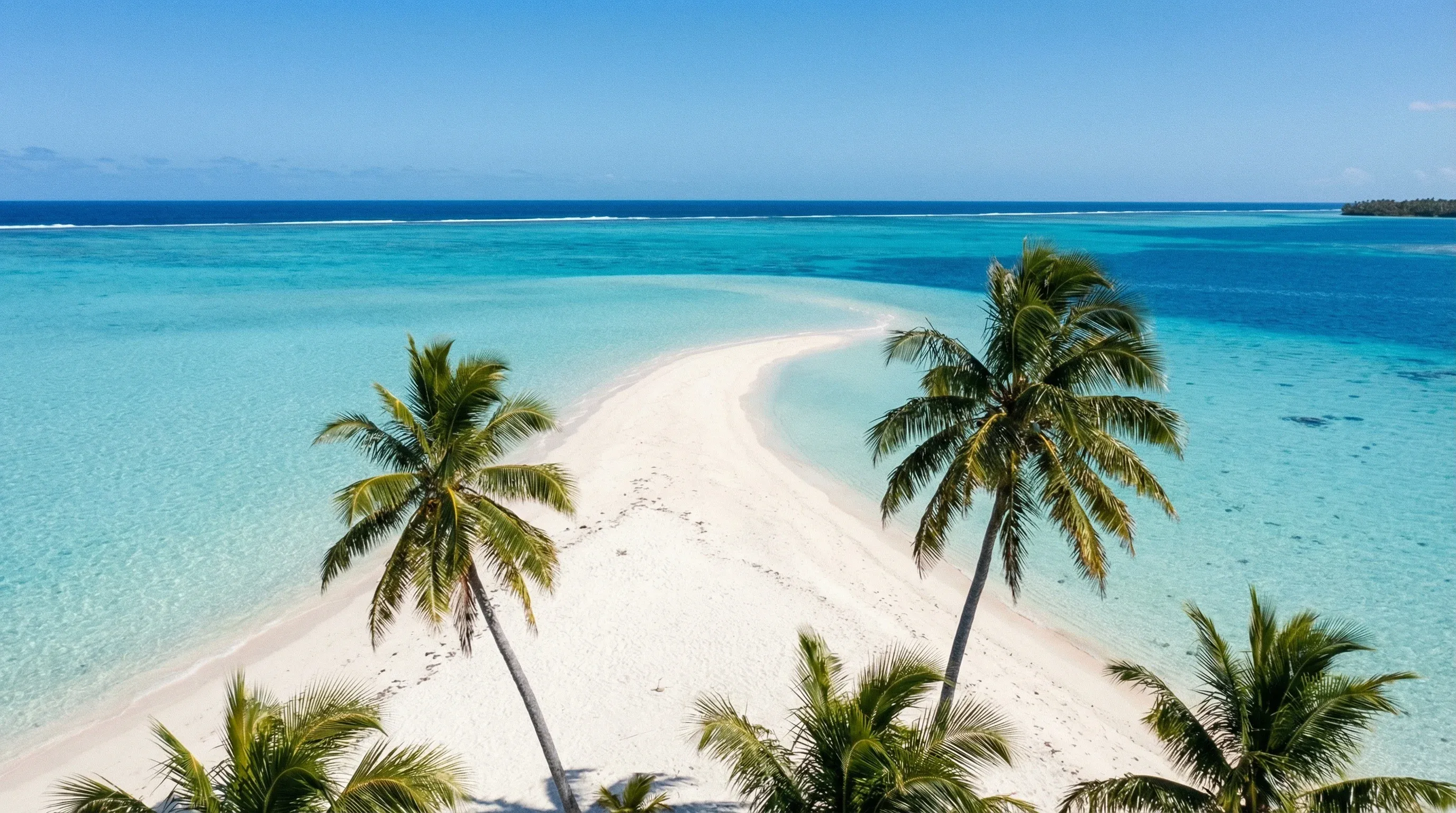
Aitutaki is widely regarded as one of the most spectacular destinations in the South Pacific, defined almost entirely by its breathtaking triangular lagoon. For families, the island offers a distinct shift in pace from Rarotonga; there are no nightclubs or busy roads here, only sleepy coral lanes and the gentle lapping of water. The climate is tropical and warm year-round, though the trade winds can provide a welcome breeze. The culture here is deeply rooted in hospitality, and children are welcomed everywhere with genuine warmth. While the main island offers small convenience stores and simplified logistics, the real magic happens on the water.
The lagoon itself is a playground for all ages. The water is exceptionally calm and clear, making it perfect for children learning to snorkel or swim without the fear of strong currents or crashing waves. Families can spend entire days island-hopping between uninhabited motus (islets), enjoying picnic lunches on sandbars that emerge only at low tide. It is a place to disconnect from digital distractions and reconnect with nature in its most pristine form.
Key Attractions
The absolute highlight of any trip is a boat cruise across the lagoon to One Foot Island (Tapuaetai). This small islet offers what is arguably the best swimming beach in the Cook Islands, with white sand stretching far into the electric-blue water. It is famously home to the world's smallest post office, where children can get their passports stamped—a unique souvenir they will cherish. The water here is shallow and teeming with friendly tropical fish, allowing even toddlers to wade safely.
Back on the main island, a visit to Arutanga Village provides a gentle cultural education. As the administrative center of Aitutaki, it houses the Cook Islands Christian Church (CICC), the oldest church in the country, built of limestone and coral. Families are welcome to attend Sunday services, where the soaring harmonies of the local choir offer a moving and authentic cultural experience that transcends language barriers.
Practical Advice
Aitutaki is quieter than Rarotonga, so bring essential baby supplies (diapers, formula) from the main island as selection here can be limited. The best time to visit is during the dry season from May to October. Sundays are strictly observed days of rest; almost all shops and activities close, so plan a beach day or attend church.
Food & Drink
Typical meal times: Breakfast is usually 7:30 am to 9:30 am. Lunch is served from 11:30 am to 2:00 pm, and dinner typically runs from 6:00 pm to 8:30 pm. Resort kitchens may stay open later, but local takeaways close early.
Typical meal costs: Dining is slightly more expensive than on the main island due to freight costs. A casual lunch costs NZD 25–40 (approx. $15–25 USD / €14–23 EUR). A two-course dinner at a resort restaurant costs NZD 60–90 (approx. $37–55 USD / €34–51 EUR).
Dietary requirements: Resorts are well-equipped to handle vegetarian, gluten-free, and dairy-free requests. Local takeaways have limited options, often frying food in shared oil, so ask ahead if you have severe allergies.
Signature dishes:
- Ika Mata – The national dish of raw fish 'cooked' in lemon juice and marinated in fresh coconut cream with diced vegetables.
- Island Fries – Thick-cut chips made from local taro, breadfruit, or kumara (sweet potato), a healthier and delicious alternative to potato fries.
- Poke – A warm, gelatinous fruit pudding usually made from overripe bananas or pumpkin mixed with arrowroot and coconut cream.
Why this score?
The experience is largely centered around comfortable lagoon cruises and snorkeling in shallow, safe waters. While it feels remote, the primary tourist areas are well-serviced by resorts, and the physical demands are low, making it more of a relaxation spot than a rugged wilderness.
Why this score?
Medical services are limited to a small local hospital that can handle minor injuries and basic ailments. Any significant medical emergency or specialized treatment requires an expensive air evacuation to Rarotonga or New Zealand.
Why this score?
While Aitutaki is a bucket-list destination for its world-class lagoon, it receives a fraction of the Cook Islands' 113k annual visitors due to the cost and logistics of domestic flights. It functions as a niche high-end destination with limited accommodation capacity compared to global holiday hubs.

Aitutaki attracts a premium due to its remote location and luxury honeymoon market. Accommodation ranges from NZD 250–400 (approx. $150–245 USD / €140–225 EUR) for mid-range bungalows to over NZD 1,000 for luxury villas. Grocery prices are 20–30% higher than Rarotonga. Lagoon cruises—a must-do activity—cost around NZD 150–200 (approx. $90–120 USD / €85–110 EUR) per adult.

Getting Here & Around
Getting Here
- Airports – Air Rarotonga operates multiple daily flights from Rarotonga (RAR) to Aitutaki (AIT). The flight takes approximately 50 minutes and offers stunning aerial views of the lagoon.
- Ferry – There is no scheduled passenger ferry service between Rarotonga and Aitutaki; flying is the only practical option for tourists.
Getting Around
- Scooter & Car Hire – Rental cars and scooters are the primary way to explore the main island. You can obtain a visitor license at the police station in Arutanga Village. Helmets are mandatory for visitors on scooters.
- Bicycles – The island is relatively flat and traffic is light, making cycling a viable option for families with older children.
- Water Taxi – Essential for reaching the motus like One Foot Island (Tapuaetai) if you are not on an organized cruise.
Nearby Airports (1 airport)
Aitutaki
AITAitutaki
View full flight map for Cook Islands →
Official Links

Packing List
Essential for protecting feet from coral cuts and stonefish in the lagoon shallows.
The lagoon glare is intense; polarized lenses allow you to see the coral heads and fish clearly from above water.
Standard sunscreen damages the coral reefs; use reef-safe mineral formulas.
Mosquitoes and sandflies can be active, especially inland and at dusk.
Required to rent a car or to apply for a visitor scooter license at the police station; digital copies are often not accepted.
Mosquitoes can be active day and night, and dengue fever outbreaks do occur occasionally.
Highly useful for keeping cameras and phones dry during lagoon cruises, kayaking trips, or sudden tropical showers.

Activities & Best Times

Hiking, wildlife, outdoor exploration, ecotourism
The lagoon serves as a pristine nature reserve with diverse marine life, complemented by hiking tracks like Mount Maungapu for panoramic views. Peak season aligns with the cooler southern winter, offering the most comfortable conditions for wilderness exploration and hiking.

Beach resorts, marine activities: diving, snorkelling, kite surfing, wind surfing, sailing
Home to spectacular turquoise waters and iconic motus like One Foot Island, offering world-class snorkeling and scenic boat tours. The drier months from May to October provide optimal water clarity and safer lagoon navigation compared to the humid, rainy season.

Urban tourism, museums, historical sites, architecture
Features authentic Polynesian heritage at Arutanga Village and Punarei Cultural Village, alongside historic limestone churches. These outdoor cultural sites are best experienced during the drier months to avoid extreme heat and heavy tropical downpours.

Sport tourism, fitness activities, active recreation
Offers established hiking and cycling routes, including the summit track and island perimeter, for active travelers. The cooler and significantly less humid winter months are essential for safe and enjoyable physical exertion in this tropical environment.

Learning experiences, scientific sites, historical education
The Aitutaki Marine Research Centre provides niche insights into giant clam conservation and lagoon ecology for interested families. Visitation is best during the stable weather months when research boat trips and facility access are most reliable.

Scenic drives, countryside tours, route-based travel
A small but scenic coastal loop provides a convenient way to explore the island's perimeter and local lifestyle. Driving conditions are most pleasant during the dry season when roads are clear and visibility of the lagoon is at its peak.

Attractions (5 total)



Public Holidays & Calendar Next 12 months
Public holidays, festivals, cultural celebrations, and seasonal natural phenomena coming up in Aitutaki (lagoon) over the next 12 months.
Loading holidays and events...

Travel Advisory
All six major agencies agree on the lowest risk level for the Cook Islands, citing a stable security environment. Primary concerns are limited medical infrastructure and seasonal natural hazards rather than human-caused threats.
Safety Topics
Traveller Advice (3 groups)

Some official sources warn that same-sex acts are legally prohibited and social attitudes can be conservative, potentially leading to discrimination.

Visitors should dress modestly when in local villages and are advised not to leave bags or valuables unattended on public beaches.

Individuals participating in marine activities should be extremely cautious of strong currents in reef passages, which pose a significant risk to swimmers and divers.
Agency Summaries
A standard level of caution is recommended. Major considerations include opportunistic petty crime in tourist hubs and natural risks like tropical storms and tsunamis. Medical resources are particularly limited outside the main island.
The security landscape is largely comparable to that of New Zealand. Visitors should focus on protecting personal property from theft and remaining prepared for seasonal tropical storms and marine hazards.
The United States government suggests visitors maintain standard safety measures as the country is characterized by a stable security environment and low crime rates.
Travelers should maintain standard safety awareness. The country is generally secure, though visitors should be mindful of limited healthcare infrastructure and the potential for severe weather during the cyclone season. Same-sex relations are legally restricted.
No elevated safety warnings are currently active. Travelers are advised to ensure they have robust travel insurance that includes emergency medical flights to New Zealand, as local hospitals lack specialized equipment.
General safety measures are sufficient for Irish citizens. Short-term visitors typically enter without a visa. Assistance is provided via the Irish embassy located in New Zealand.
Information is provided for general guidance only and does not constitute travel, safety, medical, or legal advice. Conditions may change. Users are responsible for independently verifying information before travel.