

⚠️ SAFETY WARNING: Exercise increased caution in Costa Rica due to crime (Level 2). While the country is generally safe for tourists, petty theft (pickpocketing and bag snatching) is common in tourist areas and on public transport. Violent crime can occur but is less frequent in resort areas. Always keep valuables secure, avoid isolated areas at night, and only use official taxis.
Overview
Costa Rica is widely considered the jewel of Central America for families, bridging the gap between wild adventure and comfortable travel. Famous for its abolishment of the army and its dedication to conservation, the country offers a peaceful, stable environment where nature takes centre stage. The geography is dramatic yet accessible, featuring a spine of volcanic mountains separating the Pacific and Caribbean coasts. For children, the country feels like a living storybook where toucans, howler monkeys, and sloths are daily sightings rather than zoo exhibits. The climate is tropical year-round, with a dry season (December to April) that aligns perfectly with school holidays, though the "green season" offers lush landscapes and fewer crowds.
The cultural philosophy of Pura Vida permeates every aspect of travel here. It translates to "pure life" but means so much more-a relaxed, friendly attitude that welcomes children everywhere. Unlike some rugged adventure destinations, Costa Rica has excellent tourism infrastructure. You can zip-line through the canopy in the morning and relax in a hot spring by afternoon. Whether you are driving a 4x4 through the Monteverde Cloud Forest or taking a boat through the canals of the Caribbean Coast, the experience is educational, thrilling, and profoundly memorable for all ages.
Key Attractions
No family trip is complete without visiting the iconic La Fortuna Waterfall in the Arenal & Northern Lowlands. Here, water crashes 70 metres into a jungle pool where families can swim in cool, refreshing waters. Nearby, Lake Arenal offers calmer adventures like kayaking and paddleboarding with the imposing volcano as a backdrop. For a more immersive wildlife experience, the Selvatura Park in Monteverde is essential; its hanging bridges allow even toddlers to walk safely through the tree canopy, while older kids can tackle world-class ziplines.
On the coast, the Guanacaste & Nicoya region offers family-friendly beaches like Playa Conchal, famous for its crushed-shell sand and turquoise waters. For a unique educational adventure, a trip to Tortuguero Village on the Caribbean side reveals a car-free network of jungle canals where you can watch sea turtles nest (season dependent). Closer to the capital in San José & Central Valley, the La Paz Waterfall Gardens Nature Park is a hit with younger children, featuring a butterfly observatory, hummingbird garden, and rescued jungle cats in one accessible location.
Practical Advice
The best time to visit is during the dry season (December–April), though the Caribbean coast has its own microclimate and is best in September–October. Tap water is generally safe in major towns, but bottled water is recommended in rural areas. Dengue fever exists, so mosquito protection is vital. Roads can be winding and slow; always estimate travel times generously.
Food & Drink
Typical meal times: Breakfast is early, from 6:30 am to 9:00 am; lunch is the main meal between 12:00 pm and 2:00 pm; dinner is served from 6:00 pm to 8:30 pm.
Typical meal costs: ₡4,000–8,000 (approx. $8–15 USD / €7.50–14 EUR) for local sodas; ₡10,000–20,000 (approx. $20–40 USD / €19–38 EUR) for mid-range restaurants.
Dietary requirements: Excellent for vegetarians and gluten-free travellers. Rice, beans, plantains, and fresh fruit are staples. Most restaurants understand "vegetariano" and "sin gluten", though cross-contamination in fried foods (like plantains) is a risk.
Family-friendly dining: Sodas (local eateries) are incredibly welcoming to children, offering simple, non-spicy food. Fresh fruit smoothies (batidos) made with water or milk are a universal favourite for kids.
Signature dishes:
- Gallo Pinto – The national breakfast dish of rice and black beans mixed with onions, coriander, and Lizano sauce.
- Casado – A lunchtime platter featuring rice, beans, salad, fried plantain, and a choice of meat or fish.
- Patacones – Twice-fried green plantains, smashed flat and served with refried beans and cheese.
- Chifrijo – A popular bowl layering rice, beans, chicharrón (fried pork), and pico de gallo, eaten with tortilla chips.
Safety
Costa Rica is a Level 2 advisory destination. While violent crime against tourists is rare, theft is the primary concern. Never leave luggage visible in a rental car, even for a moment. Use hotel safes for passports. Rip currents are a serious danger on both coasts; always swim near lifeguards and ask locals about conditions. In the jungle, stick to marked paths to avoid snakes and insects.
Family Travel Notice
Minors who hold dual citizenship (Canadian and Costa Rican) require specific departure approval from Costa Rican immigration authorities to leave the country. This permission must be requested by both parents in advance.

Families should budget ₡75,000–125,000 (approx. $150–250 USD / €140–235 EUR) per day for mid-range travel. While local food is cheap, tours (ziplining, guided hikes) are pricey, often costing $50–100 USD per person. Car rental and fuel are also significant expenses.
Age Suitability





Did you know? Costa Rica welcomes approximately 2.9 million international visitors per year. Most visitors come from Americas.

Explore Regions
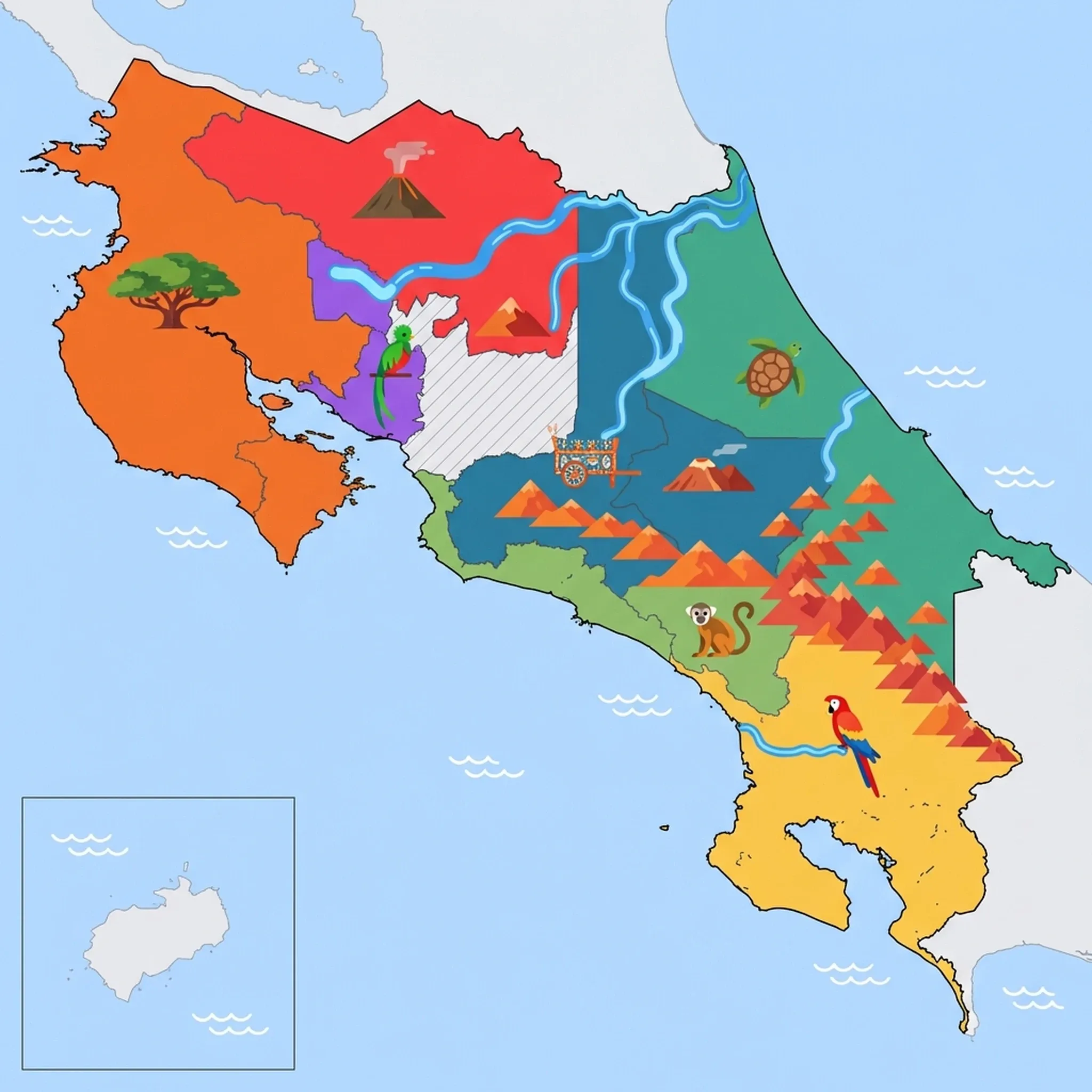
7 Regions
Arenal & Northern Lowlands
Volcanic thrills and rainforest adventures for the whole family 🌋🌿
Caribbean Coast (Tortuguero, Puerto Viejo)
Where jungle meets the sea with a reggae beat 🐢🌴
Central Pacific (Manuel Antonio)
Where the rainforest meets white sand beaches 🐒🏖️
Guanacaste & Nicoya (Pacific northwest)
Sun, surf, and sabanero culture 🤠🌊
Monteverde Cloud Forest
Walk among the clouds in a mystical green world ☁️🌿
Osa Peninsula & Southern Pacific
The wild, beating heart of Costa Rica's biodiversity 🐋🌿
San José & Central Valley
Culture, craters, and coffee in the heart of the country 🌋☕
Click on a region marker to explore details. Use the dropdown to color regions by activity suitability.

Getting There & Around
Getting There
- By Air – The main gateway is Juan Santamaría International Airport (SJO) near San José & Central Valley. Daniel Oduber Quirós International Airport (LIR) in Liberia serves the beaches of Guanacaste & Nicoya.
- By Land – Bus connections exist from Nicaragua (Peñas Blancas) and Panama (Paso Canoas/Sixaola), though border crossings can be lengthy.
- Entry Requirements – Citizens of the US, UK, Canada, and EU typically do not need a visa for stays up to 180 days. Proof of onward travel is required. Check your government website for the latest visa requirements, or use the IATA Travel Centre entry-requirements checker.
Getting Around
- Car Hire – The most popular option for families, offering flexibility to explore regions like Guanacaste & Nicoya. A 4x4 is highly recommended for unpaved roads leading to places like Monteverde Cloud Forest Biological Reserve.
- Shuttle Buses – Private or shared shuttles (e.g., Interbus) are stress-free, air-conditioned, and can provide door-to-door service between hotels.
- Domestic Flights – Small planes connect San José to remote areas like the Osa Peninsula, saving hours of driving time.

Packing List
High humidity can damage cameras and phones; keep these in your electronics bag to absorb moisture.
Essential for night walks and turtle watching tours to avoid disturbing wildlife with bright white light.
Protects gear during boat transfers (wet landings) and sudden tropical downpours.
Protect feet from sharp rocks and slipping during waterfall hikes; flip-flops often float away.
Sloths and monkeys are often high in the canopy; kids will miss them without their own pair.
Roads to Monteverde and the coast are notoriously winding and hilly.

Activities & Best Times

Adventure & Nature
ExcellentHiking, wildlife, outdoor exploration, ecotourism
A global epicenter for ecotourism, offering iconic volcano treks, canopy tours, and wildlife encounters in world-class rainforest preserves. Peak months coincide with the dry season and family holiday windows, while the peak rainfall in September and October makes jungle trails difficult to navigate.
Home to globally significant dry forest ecosystems, active volcanoes like Rincón de la Vieja, and world-renowned wildlife corridors. The dry season ensures trail accessibility and optimal wildlife viewing, while September and October see extreme precipitation that can close park access.
Home to Corcovado National Park, this region offers globally unique biodiversity and primary rainforest immersion. Peak dry season (Dec-Apr) is essential for trail accessibility, as extreme rainfall in Oct-Nov often causes park station closures.

Sports & Active
Very GoodSport tourism, fitness activities, active recreation
Offers world-class outdoor infrastructure including extensive hanging bridge networks and specialized hiking circuits near the volcano. Best experienced during drier months to ensure safety on technical trails and high-altitude activity platforms; activity is significantly hindered during the autumn rain peaks.
Boasts world-class adventure infrastructure for zip-lining, mountain biking, and surfing centered around major hubs like Tamarindo and Papagayo. Conditions are most consistent during the sun-drenched dry months, with the wet season bringing mud that impacts trail sports and cycling.
Renowned for world-class technical hiking and consistent surfing at Dominical. Optimal conditions coincide with the dry season, while the intense tropical rains of Sept-Nov make many jungle trails impassable and dangerous.

City & Cultural
GoodUrban tourism, museums, historical sites, architecture
While the Maleku Indigenous Reserve offers cultural value, this rural volcanic region lacks the urban cultural infrastructure (major museums, heritage districts, arts institutions) that would justify 'very_good' by international standards. Rio Celeste is a natural feature, not cultural. Downgrade to 'good' for authentic indigenous experiences.
Nicoya offers authentic colonial heritage, but it's a small town, not a major cultural destination. 'Very_good' should require density of globally significant cultural attractions (e.g., multiple UNESCO sites, major museums, historic districts). 'Good' appropriately recognizes colonial charm without international-level significance.
Features the UNESCO-listed Diquis stone spheres at Finca 6 and significant botanical collections. Best visited in the drier months to explore outdoor archaeological sites and gardens without the disruption of heavy tropical downpours.

Educational & Exploratory
GoodLearning experiences, scientific sites, historical education
Includes the internationally significant La Selva Biological Station, providing destination-level scientific engagement with tropical ecosystems. Scientific exploration is most effective during the drier months when outdoor field stations and research trails are most accessible.
Houses the Children's Museum and National Museum, which are destination-level attractions for families seeking cultural and scientific education. While these are primarily indoor facilities, the peak tourist season provides the most reliable logistical conditions for visiting multiple sites.
Home to internationally respected conservation facilities including the Jaguar Rescue Center and the Sea Turtle Conservancy. Peak timing is driven by the green sea turtle nesting season, providing unparalleled scientific engagement for families.

Relaxation & Wellness
GoodSpa retreats, wellness centers, peaceful getaways
Renowned for its naturally heated geothermal springs and high-end thermal spa complexes situated at the foot of Arenal Volcano. While hot springs are enjoyable in light rain, peak season (Dec-Apr) is preferred for facility enjoyment, with extreme rainfall in Oct/Nov potentially affecting riverside access.
Established wellness destination featuring unique volcanic hot springs and world-class retreat centers on the Nicoya Peninsula. While accessible year-round, the dry season is preferred by international travelers for outdoor yoga and thermal bathing, though the lush green season offers a more secluded vibe.
The Orosi Valley contains authentic thermal spring complexes that offer a serene alternative to the more commercialized northern resorts. These facilities are best enjoyed when the surrounding mountain roads are safest and the weather is driest between December and April.

Road Trips & Scenic
GoodScenic drives, countryside tours, route-based travel
Features celebrated scenic drives like the Lake Arenal route, offering spectacular volcanic vistas and winding mountain passes. Driving conditions and visibility are optimal from January to April, while the peak of the rainy season brings risks of landslides and cloud-obscured views.
Celebrated scenic routes like the Nicoya Highway offer spectacular coastal and mountain views through varied microclimates. Driving is safest and most enjoyable when roads are dry, as heavy rains in September and October can lead to washouts and challenging conditions on unpaved secondary routes.
The Costanera Sur provides a scenic gateway to the rugged Osa Peninsula, though road conditions require caution. Peak dry months ensure clear vistas and safe transit, while the peak rainy season carries high risks of landslides and washouts.

Theme Park & Entertainment
GoodAmusement parks, family entertainment venues
Features Parque Diversiones, a major regional amusement park, alongside several significant water parks. Peak visitation occurs during school holiday periods in December, January, and April, while the extreme rainfall of September and October limits the appeal of outdoor attractions.
The Baldi Hot Springs complex offers a major aquatic entertainment facility that appeals to families seeking amusement park-style thrills. Peak demand follows school holiday schedules, though heavy tropical storms in late year often limit the enjoyment of outdoor water slides and pools.
Localized entertainment options like Dino Park and aquatic centers provide family diversion but lack the scale of global theme park destinations. Operational consistency and visitor comfort are highest during the dry months when outdoor attractions are fully accessible.

Beach & Sea
GoodBeach resorts, marine activities: diving, snorkelling, kite surfing, wind surfing, sailing
Offers high-quality coastal experiences at Playa Conchal and Tamarindo with excellent infrastructure for families. Dry months provide the calmest waters and best visibility for water activities, while the height of the monsoon season degrades sea conditions and beach access.
Offers exceptional marine biodiversity at Caño Island Biological Reserve and rugged coastal scenery. The dry season (Dec-Mar) provides the necessary underwater visibility for world-class snorkeling and diving.
Offers unique golden and black sand beaches with world-class snorkeling in Cahuita's coral reefs. Peak conditions occur during the regional 'veranillo' in September and October when the Caribbean sea is calmest and visibility is highest.

Festivals & Seasonal
MarginalEvents, celebrations, seasonal attractions
Centred on the biannual Humpback whale migrations and the Envision festival. Peak windows align specifically with whale sightings in Jan-Feb and Aug-Sept, despite the high rainfall during the latter period.
While lacking major man-made festivals, the region is defined by the annual Green Sea Turtle nesting season, a major international draw for nature enthusiasts. This biological event is the primary seasonal motivator for international arrivals to Tortuguero.

Public Holidays & Calendar Next 12 months
Public holidays, festivals, cultural celebrations, and seasonal natural phenomena coming up in Costa Rica over the next 12 months.
Loading holidays and events...

Climate & Weather
Arenal & Northern Lowlands
Show Details
| Month | Temp °C | Rain | Humidity |
|---|
Caribbean Coast (Tortuguero, Puerto Viejo)
Show Details
| Month | Temp °C | Rain | Humidity |
|---|
Central Pacific (Manuel Antonio)
Show Details
| Month | Temp °C | Rain | Humidity |
|---|
Guanacaste & Nicoya (Pacific northwest)
Show Details
| Month | Temp °C | Rain | Humidity |
|---|
Monteverde Cloud Forest
Show Details
| Month | Temp °C | Rain | Humidity |
|---|
Osa Peninsula & Southern Pacific
Show Details
| Month | Temp °C | Rain | Humidity |
|---|

Travel Advisory
Most major agencies recommend exercising increased vigilance or a high degree of caution primarily due to the risk of crime. While the country is generally stable, petty theft is pervasive and violent crime is a significant concern in certain urban and coastal regions.
Safety Topics
Traveller Advice (4 groups)

There has been an increase in reports of sexual harassment and assault targeting foreign visitors. Women should be particularly cautious in bars, avoid leaving drinks unattended, and refrain from walking alone in poorly lit or isolated areas at night.

Minors who hold dual citizenship (Canadian and Costa Rican) require specific departure approval from Costa Rican immigration authorities to leave the country. This permission must be requested by both parents in advance.

While Costa Rica is generally more progressive than some regional neighbors, travellers should still be mindful of local attitudes and consult specific safety guides regarding public displays of affection in less urbanized areas.

Adventure seekers should ensure their insurance covers medical evacuation. Be extremely cautious of dangerous rip currents on both coasts, as most beaches lack lifeguards. Check local alerts before visiting volcanic regions, particularly Poás Volcano.
Agency Summaries
Increased caution is advised due to the prevalence of crime. Both petty theft and violent incidents, such as armed robberies and sexual assaults, affect tourists. Staying alert in isolated areas and avoiding displays of wealth is recommended.
Vigilance is necessary due to the threat of violent crime. Criminals frequently target transit hubs and tourist resorts for robberies, carjackings, and 'express kidnappings.'
There are no specific restrictions against travel to any part of the country, but visitors should be aware of significant levels of mugging and theft, particularly on the Atlantic coast and in urban centers.
General safety awareness is required, with specific focus on risks from natural hazards like hurricanes and volcanic activity, as well as maintaining personal security against crime.
Travellers should be extremely vigilant because of high crime rates. Common issues include petty theft, vehicle break-ins, and passport theft, which are especially prevalent in San José and popular coastal provinces like Puntarenas.
Heightened security concerns exist compared to domestic safety standards. Violent crime, including home invasions and gang-related muggings, are notable risks alongside widespread petty theft.
Information is provided for general guidance only and does not constitute travel, safety, medical, or legal advice. Conditions may change. Users are responsible for independently verifying information before travel.