
Arenal & Northern Lowlands
Volcanic thrills and rainforest adventures for the whole family 🌋🌿
Click a region to explore
Overview
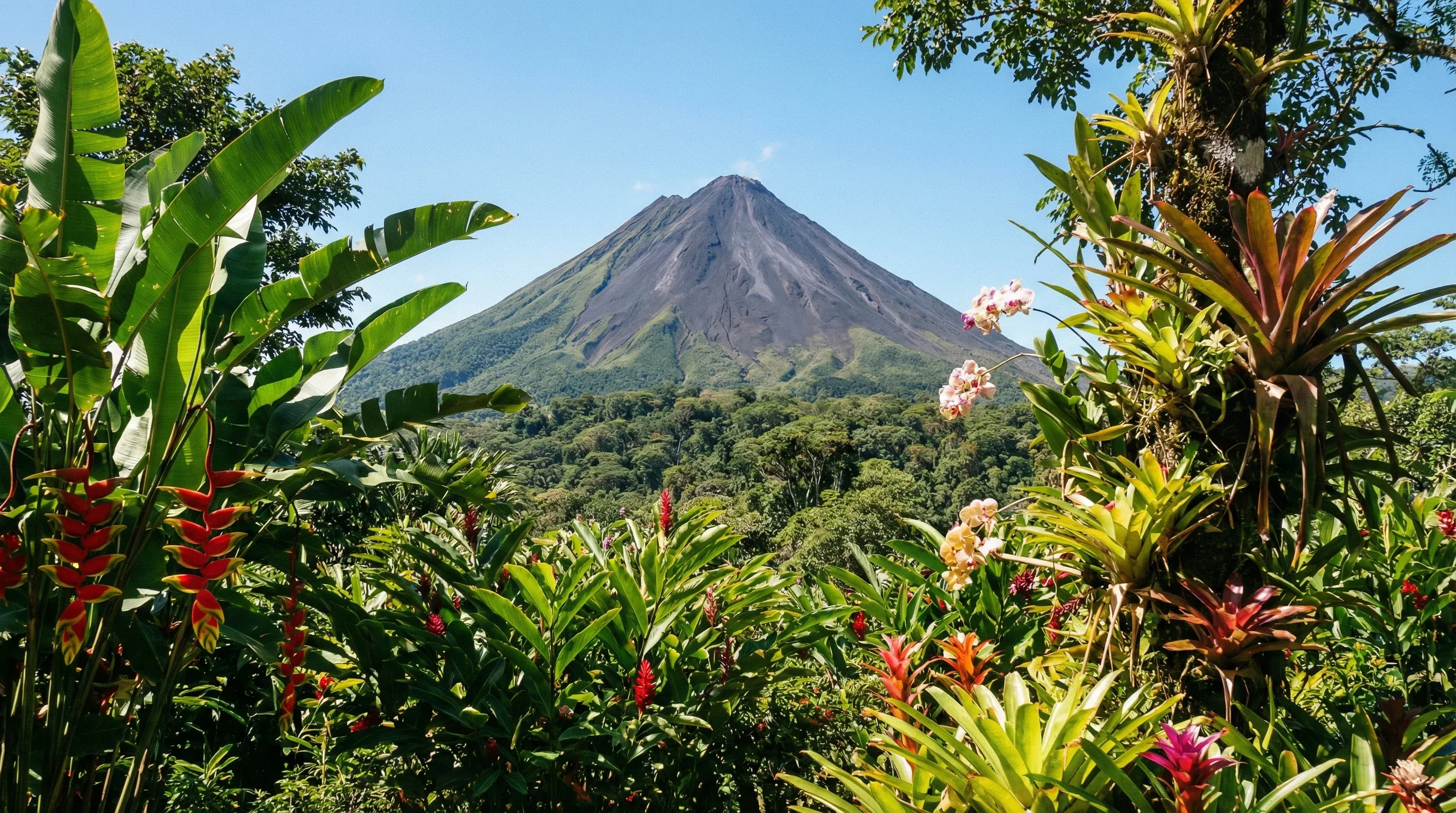
The Northern Lowlands, anchored by the iconic town of La Fortuna, represents the quintessential Costa Rican experience for families. At the heart of the region stands the Arenal Volcano, a majestic stratovolcano that, while currently resting, provides a stunning photogenic backdrop to every activity. The climate here is tropical and humid, keeping the rainforests lush and green year-round. For children, the area feels like a living biology textbook; it is common to spot toucans, howler monkeys, and coatimundis simply while driving between hotels.
What makes this region particularly special for parents is the infrastructure. Unlike more remote corners of the country, La Fortuna offers paved roads, modern amenities, and a vast array of family-oriented tour operators. Whether you are walking through the canopy on hanging bridges or swimming in natural volcanic hot springs, the blend of accessibility and raw nature is unmatched. It is an adventure playground where safety and excitement go hand in hand.
Key Attractions
The region's superstar is undoubtedly the landscape surrounding the volcano. Families should not miss the hike to the La Fortuna Waterfall, where a steep descent leads to a powerful cascade and a refreshing swimming hole perfect for older kids. For a more relaxed day on the water, a boat tour or kayaking trip on Lake Arenal offers wide-open views and a chance to spot lakeside wildlife without the hiking effort.
For a unique educational experience, the La Selva Biological Station provides guided walks that are scientifically rigorous yet accessible, giving children a chance to see the rainforest through the eyes of biologists. Just outside the immediate town, the magical blue waters of the Rio Celeste in Tenorio Volcano National Park offer a fairy-tale hiking setting that captivates visitors of all ages. Finally, no trip is complete without soaking in the thermal waters; the Rio Chollín offers a free, natural hot spring experience popular with locals.
Practical Advice
The best time to visit is during the drier months (December to April), though the "green season" offers fewer crowds and afternoon showers that cool things down. Book popular tours in advance. For families with toddlers, note that some hiking trails (like the waterfall steps) are not stroller-friendly; a sturdy carrier is essential.
Food & Drink
Typical meal times: Lunch is typically served from 12:00 pm to 2:30 pm, and dinner from 6:00 pm to 9:00 pm.
Typical meal costs: A mid-range family meal costs ₡20,000–35,000 (approx. $38–68 USD / €35–62 EUR).
Dietary requirements: Vegetarian options are standard (rice, beans, plantains). Gluten-free is relatively easy with traditional corn-based dishes, though cross-contamination in smaller sodas (local eateries) is a risk.
Signature dishes:
- Casado – The quintessential Costa Rican lunch featuring rice, black beans, salad, fried plantain, and a choice of protein (fish, chicken, or beef).
- Tilapia – Freshly caught freshwater fish, often farmed locally in the region, served fried or grilled with garlic.
- Gallo Pinto – The national breakfast dish of spotted rice and beans, mixed with Lizano sauce and coriander.
Why this score?
The region is a premier destination for 'soft' to 'medium' adventure, offering hanging bridges, waterfall rappelling, and rainforest trekking. While the terrain is rugged and volcanic, the infrastructure is polished, allowing families to experience significant outdoor thrills without extreme risk. Locations like Rio Celeste and the lava flow trails provide genuine immersion in wild landscapes.
Why this score?
La Fortuna and Alajuela (northern part) offer decent private clinics and basic emergency services tailored to tourists. However, for serious trauma or specialized care, patients usually require a 3-hour transfer to the major hospitals in the Central Valley. Language barriers are minimal in tourist clinics, but facility capacity is limited compared to urban centers.
Why this score?
As one of Costa Rica's primary icons, this region attracts a massive volume of international visitors to La Fortuna and the surrounding volcano park. It functions as a top-tier global eco-tourism hub with highly developed infrastructure, comparable to well-known European outdoor regions. The presence of over 50 major attractions, including world-famous hot springs, ensures a consistent year-round flow of foreign tourists.

Arenal is one of the more developed tourism hubs, meaning prices can be higher than in rural villages but offer good value for the quality. Budget cabins are available for ₡25,000–40,000 (approx. $48–78 USD / €45–72 EUR) per night, while family resorts with hot springs can range from ₡100,000–250,000+ (approx. $195–490+ USD / €180–450+ EUR). Local 'soda' meals are cheap, approx ₡4,000–6,000 (approx. $8–12 USD / €7–11 EUR).
Family Travel Notice
Minors who hold dual citizenship (Canadian and Costa Rican) require specific departure approval from Costa Rican immigration authorities to leave the country. This permission must be requested by both parents in advance.

Getting Here & Around
Getting Here
- Airports – The region is approximately a 2.5 to 3-hour drive from Juan Santamaría International Airport (SJO) in San José or roughly 2.5 hours from Liberia International Airport (LIR).
- Driving – Renting a car is popular; roads are generally paved and in good condition from both major airports to La Fortuna.
- Shuttle – Shared and private tourist shuttles connect La Fortuna directly with San José, Monteverde, and the beaches.
Getting Around
- Car – Having a rental car gives families the most flexibility to visit scattered attractions like Tenorio Volcano National Park at their own pace.
- Taxi/Uber – Red taxis are plentiful in La Fortuna town. Uber is available but can be less reliable in remote areas surrounding the volcano.
- Tours – Many families rely on tour operators who provide transport to and from specific activities like the La Fortuna Waterfall.
Nearby Airports (1 airport)
Arenal Airport
FONFortuna
View full flight map for Costa Rica →
Official Links

Packing List
Essential for hot springs and sudden tropical downpours.
High humidity means cotton takes days to dry on hotel balconies.
River beds and waterfall pools can be rocky and slippery.
For glasses and camera lenses which fog up instantly exiting air-conditioned cars.
High humidity can damage cameras and phones; keep these in your electronics bag to absorb moisture.
Essential for night walks and turtle watching tours to avoid disturbing wildlife with bright white light.
Protects gear during boat transfers (wet landings) and sudden tropical downpours.
Sloths and monkeys are often high in the canopy; kids will miss them without their own pair.
Roads to Monteverde and the coast are notoriously winding and hilly.

Activities & Best Times

Hiking, wildlife, outdoor exploration, ecotourism
A global epicenter for ecotourism, offering iconic volcano treks, canopy tours, and wildlife encounters in world-class rainforest preserves. Peak months coincide with the dry season and family holiday windows, while the peak rainfall in September and October makes jungle trails difficult to navigate.

Sport tourism, fitness activities, active recreation
Offers world-class outdoor infrastructure including extensive hanging bridge networks and specialized hiking circuits near the volcano. Best experienced during drier months to ensure safety on technical trails and high-altitude activity platforms; activity is significantly hindered during the autumn rain peaks.

Urban tourism, museums, historical sites, architecture
While the Maleku Indigenous Reserve offers cultural value, this rural volcanic region lacks the urban cultural infrastructure (major museums, heritage districts, arts institutions) that would justify 'very_good' by international standards. Rio Celeste is a natural feature, not cultural. Downgrade to 'good' for authentic indigenous experiences.

Learning experiences, scientific sites, historical education
Includes the internationally significant La Selva Biological Station, providing destination-level scientific engagement with tropical ecosystems. Scientific exploration is most effective during the drier months when outdoor field stations and research trails are most accessible.

Spa retreats, wellness centers, peaceful getaways
Renowned for its naturally heated geothermal springs and high-end thermal spa complexes situated at the foot of Arenal Volcano. While hot springs are enjoyable in light rain, peak season (Dec-Apr) is preferred for facility enjoyment, with extreme rainfall in Oct/Nov potentially affecting riverside access.

Scenic drives, countryside tours, route-based travel
Features celebrated scenic drives like the Lake Arenal route, offering spectacular volcanic vistas and winding mountain passes. Driving conditions and visibility are optimal from January to April, while the peak of the rainy season brings risks of landslides and cloud-obscured views.

Amusement parks, family entertainment venues
The Baldi Hot Springs complex offers a major aquatic entertainment facility that appeals to families seeking amusement park-style thrills. Peak demand follows school holiday schedules, though heavy tropical storms in late year often limit the enjoyment of outdoor water slides and pools.




Public Holidays & Calendar Next 12 months
Public holidays, festivals, cultural celebrations, and seasonal natural phenomena coming up in Arenal & Northern Lowlands over the next 12 months.
Loading holidays and events...

Travel Advisory
Most major agencies recommend exercising increased vigilance or a high degree of caution primarily due to the risk of crime. While the country is generally stable, petty theft is pervasive and violent crime is a significant concern in certain urban and coastal regions.
Safety Topics
Traveller Advice (4 groups)

There has been an increase in reports of sexual harassment and assault targeting foreign visitors. Women should be particularly cautious in bars, avoid leaving drinks unattended, and refrain from walking alone in poorly lit or isolated areas at night.

Minors who hold dual citizenship (Canadian and Costa Rican) require specific departure approval from Costa Rican immigration authorities to leave the country. This permission must be requested by both parents in advance.

While Costa Rica is generally more progressive than some regional neighbors, travellers should still be mindful of local attitudes and consult specific safety guides regarding public displays of affection in less urbanized areas.

Adventure seekers should ensure their insurance covers medical evacuation. Be extremely cautious of dangerous rip currents on both coasts, as most beaches lack lifeguards. Check local alerts before visiting volcanic regions, particularly Poás Volcano.
Agency Summaries
Increased caution is advised due to the prevalence of crime. Both petty theft and violent incidents, such as armed robberies and sexual assaults, affect tourists. Staying alert in isolated areas and avoiding displays of wealth is recommended.
Vigilance is necessary due to the threat of violent crime. Criminals frequently target transit hubs and tourist resorts for robberies, carjackings, and 'express kidnappings.'
There are no specific restrictions against travel to any part of the country, but visitors should be aware of significant levels of mugging and theft, particularly on the Atlantic coast and in urban centers.
General safety awareness is required, with specific focus on risks from natural hazards like hurricanes and volcanic activity, as well as maintaining personal security against crime.
Travellers should be extremely vigilant because of high crime rates. Common issues include petty theft, vehicle break-ins, and passport theft, which are especially prevalent in San José and popular coastal provinces like Puntarenas.
Heightened security concerns exist compared to domestic safety standards. Violent crime, including home invasions and gang-related muggings, are notable risks alongside widespread petty theft.
Information is provided for general guidance only and does not constitute travel, safety, medical, or legal advice. Conditions may change. Users are responsible for independently verifying information before travel.