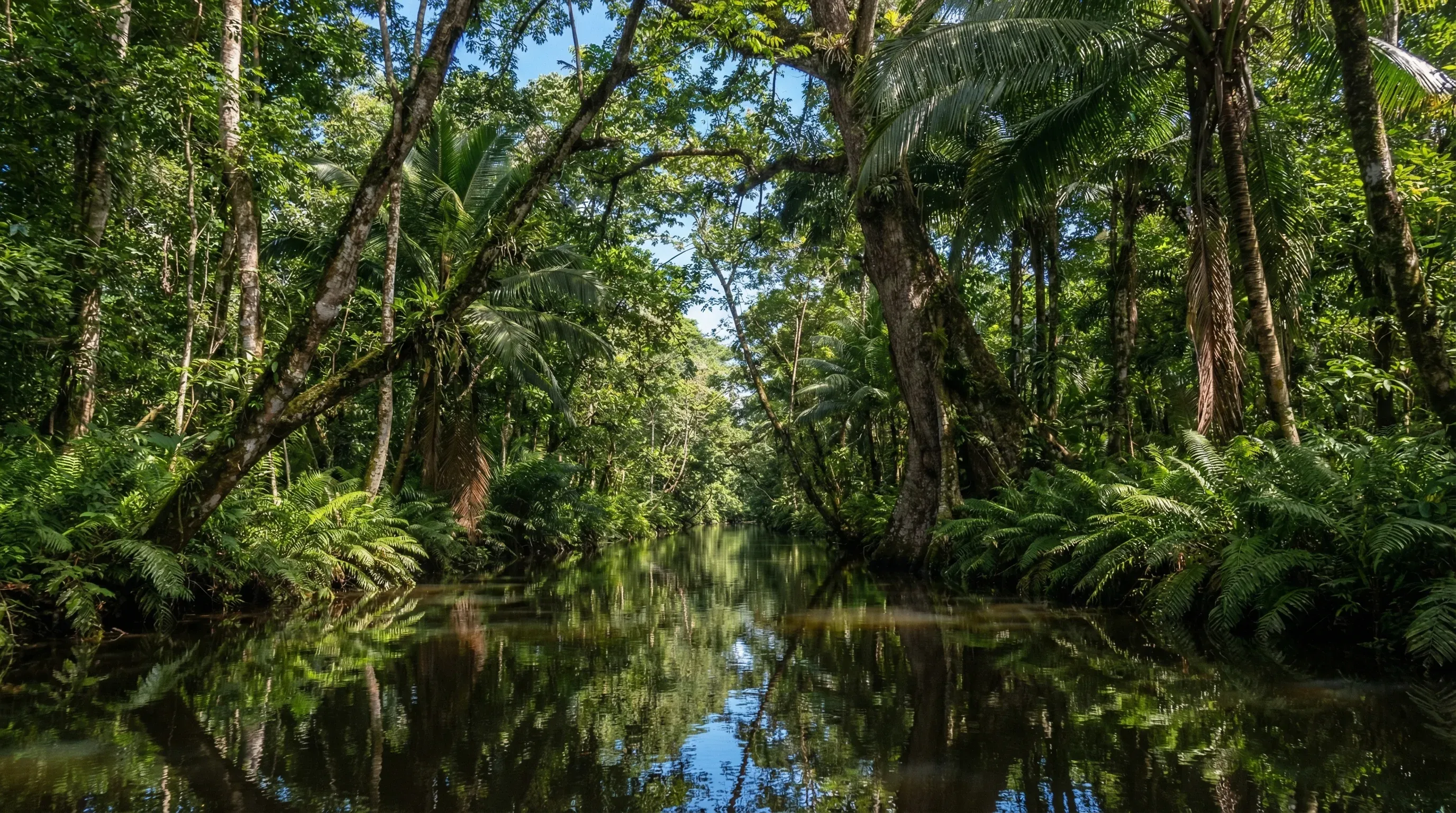

Caribbean Coast (Tortuguero, Puerto Viejo)
Where jungle meets the sea with a reggae beat 🐢🌴
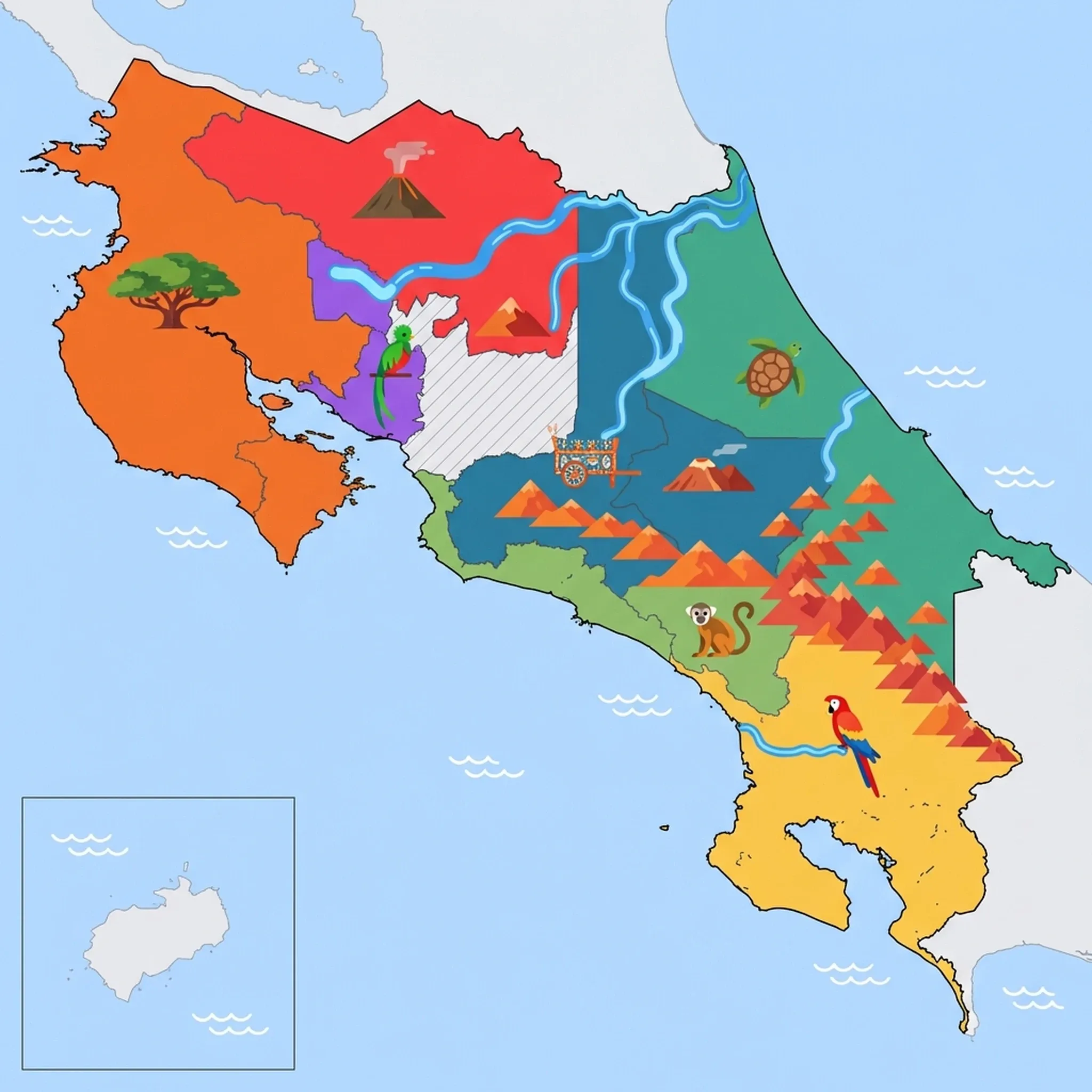
Click a region to explore
Overview
The Caribbean Coast of Costa Rica offers a distinct cultural and geographical experience compared to the rest of the country. Split into two main destinations, the north features the water-access-only canals of Tortuguero, often called the "Costa Rican Amazon," while the south boasts the vibrant, road-accessible beach towns of Puerto Viejo and Cahuita. The atmosphere here is deeply influenced by Afro-Caribbean culture, evident in the music, the relaxed pace of life, and the coconut-infused cuisine. For families, this region offers a chance to disconnect from resort-style tourism and engage with a more authentic, rustic side of the tropics.
Wildlife is the star of the show. In the north, boat trips replace bus rides, and children can watch monkeys swinging over the canals. In the south, the rainforest grows right up to the beach line, providing natural shade and plenty of sloth sightings. The sea conditions vary; while some beaches are perfect for wading, others have strong currents, so parents must choose swimming spots carefully. The vibe is colorful, friendly, and unhurried.
Key Attractions
A trip to Tortuguero Village is a non-negotiable highlight for nature-loving families. Accessible only by boat or small plane, the journey itself is an adventure. The main draw here is the sea turtle nesting (season dependent), where guided night tours allow families to witness these ancient creatures laying eggs on the beach. During the day, canoe tours through the national park canals reveal caimans, river otters, and countless birds.
Further south, Puerto Viejo de Talamanca serves as the cultural hub. It is a funky, colorful town where bicycles rule the road. Nearby Cahuita National Park (entry by donation) has a flat, easy coastal trail that is perfect for children, running parallel to the beach for easy swim breaks. The Jaguar Rescue Center (located near Puerto Viejo) is another must-do, offering educational tours where kids can see rescued sloths, monkeys, and wildcats up close.
Practical Advice
The Caribbean has its own microclimate; it is often sunny here when the rest of Costa Rica is rainy (September/October are beautiful months here). Tortuguero requires logistical planning—pack light as boats have luggage limits. In Puerto Viejo, renting bikes is the standard way to get around.
Food & Drink
Typical meal times: Lunch 12:00 pm to 3:00 pm; Dinner 6:30 pm to 9:00 pm. Service is notably "relaxed" (slow).
Typical meal costs: A casual meal runs ₡6,000–10,000 (approx. $12–20 USD / €11–18 EUR) per person.
Dietary requirements: Coconut milk is a staple. Vegetarian food is abundant due to the Rastafarian influence (Ital food). Seafood is omnipresent.
Signature dishes:
- Rice and Beans – Distinct from Gallo Pinto, this is rice and red beans cooked in fresh coconut milk and thyme, usually served with Caribbean chicken.
- Rondón – A hearty "run down" seafood soup with coconut milk, tubers (yucca, yam), and catch-of-the-day fish.
- Pati – A spicy beef turnover pastry sold as a snack, perfect for quick energy.
Why this score?
Tortuguero National Park requires navigating dense canal systems by boat, offering a high sense of remote exploration. The southern Talamanca coast features thick jungles and coastal trails like Cahuita that feel more wild and less manicured than the central Pacific. The humidity and dense wildlife presence contribute to a significantly more rugged travel experience for families.
Why this score?
Medical facilities are quite basic throughout this corridor, with Limón housing the only significant regional hospital which often lacks specialized equipment. Tortuguero is particularly isolated, relying on small clinics and emergency boat/air evacuations for serious incidents. Travelers must often rely on first-aid from lodges or travel back toward the center of the country for high-level care.
Why this score?
This region sees moderate tourism that is more niche than the Pacific side, with Tortuguero attracting wildlife enthusiasts and Puerto Viejo drawing a backpacker and surf crowd. While famous for turtle nesting, the logistics of boat-only access to the north and the distance from San José keep visitor numbers lower than the western coast. It retains a more local, Afro-Caribbean atmosphere with fewer large-scale resorts.

Generally cheaper than the Pacific coast. Accommodation in rustic lodges or cabins costs ₡30,000–60,000 (approx. $58–115 USD / €54–108 EUR). High-end boutique hotels exist but are fewer. Food portions are generous and affordable, with street snacks like patties costing under ₡1,500 (approx. $3 USD / €2.70 EUR).
Family Travel Notice
Minors who hold dual citizenship (Canadian and Costa Rican) require specific departure approval from Costa Rican immigration authorities to leave the country. This permission must be requested by both parents in advance.

Getting Here & Around
Getting Here
- Boat – Tortuguero Village is accessible via boat launch from La Pavona (public transport route) or Moín.
- Airports – Domestic flights land at Tortuguero and Limón. The drive from San José to Puerto Viejo de Talamanca takes 4–5 hours via Route 32.
- Bus – Direct buses run from San José to Puerto Viejo (MEPE terminal) and to the La Pavona boat launch for Tortuguero.
Getting Around
- Walking & Cycling – In Puerto Viejo de Talamanca, bicycles are the primary mode of transport. The road is flat and scenic.
- Boat – Essential in Tortuguero Village; water taxis function like buses.
- Public Bus – A local bus connects Limón, Cahuita, Puerto Viejo, and Manzanillo efficiently and cheaply.
Nearby Airports (2 airports)
Limon International
LIOLimon
Tortuquero Airport
TTQTortuquero
View full flight map for Costa Rica →
Official Links

Packing List
Strictly required for turtle nesting beaches to avoid disturbing animals.
Required for night tours on turtle beaches; white clothing is prohibited.
Essential for keeping electronics safe during open boat transfers in Tortuguero.
Screening in rustic Caribbean eco-lodges can be partial; extra protection helps.
High humidity can damage cameras and phones; keep these in your electronics bag to absorb moisture.
Essential for night walks and turtle watching tours to avoid disturbing wildlife with bright white light.
Protects gear during boat transfers (wet landings) and sudden tropical downpours.
Protect feet from sharp rocks and slipping during waterfall hikes; flip-flops often float away.
Sloths and monkeys are often high in the canopy; kids will miss them without their own pair.
Roads to Monteverde and the coast are notoriously winding and hilly.

Activities & Best Times

Hiking, wildlife, outdoor exploration, ecotourism
A global benchmark for ecotourism, featuring the 'Amazon-like' canals of Tortuguero and the dense rainforests of the Talamanca coast. Peak months align with turtle nesting cycles (July-October) and the drier weather windows essential for jungle navigation.

Beach resorts, marine activities: diving, snorkelling, kite surfing, wind surfing, sailing
Offers unique golden and black sand beaches with world-class snorkeling in Cahuita's coral reefs. Peak conditions occur during the regional 'veranillo' in September and October when the Caribbean sea is calmest and visibility is highest.

Urban tourism, museums, historical sites, architecture
Puerto Viejo offers an authentic and charming Afro-Caribbean atmosphere, but it's a small beach town without major museums, heritage sites, or cultural institutions. 'Very_good' should be reserved for destinations with globally significant cultural infrastructure. 'Good' appropriately recognizes the unique cultural character without overstating the scale.

Learning experiences, scientific sites, historical education
Home to internationally respected conservation facilities including the Jaguar Rescue Center and the Sea Turtle Conservancy. Peak timing is driven by the green sea turtle nesting season, providing unparalleled scientific engagement for families.

Scenic drives, countryside tours, route-based travel
The scenic drive along Route 36 offers spectacular coastal views and access to remote wildlife refuges. Travel is best during the drier months to avoid heavy rain-induced road closures on the primary access route (Route 32) from the central highlands.

Sport tourism, fitness activities, active recreation
Features internationally recognized coastal cycling routes and canopy tour infrastructure set within primary rainforest. Activity is highly weather-dependent, with peak months providing the necessary dry conditions for trail safety and biking comfort.

Events, celebrations, seasonal attractions
While lacking major man-made festivals, the region is defined by the annual Green Sea Turtle nesting season, a major international draw for nature enthusiasts. This biological event is the primary seasonal motivator for international arrivals to Tortuguero.




Public Holidays & Calendar Next 12 months
Public holidays, festivals, cultural celebrations, and seasonal natural phenomena coming up in Caribbean Coast (Tortuguero, Puerto Viejo) over the next 12 months.
Loading holidays and events...

Travel Advisory
Most major agencies recommend exercising increased vigilance or a high degree of caution primarily due to the risk of crime. While the country is generally stable, petty theft is pervasive and violent crime is a significant concern in certain urban and coastal regions.
Safety Topics
Traveller Advice (4 groups)

There has been an increase in reports of sexual harassment and assault targeting foreign visitors. Women should be particularly cautious in bars, avoid leaving drinks unattended, and refrain from walking alone in poorly lit or isolated areas at night.

Minors who hold dual citizenship (Canadian and Costa Rican) require specific departure approval from Costa Rican immigration authorities to leave the country. This permission must be requested by both parents in advance.

While Costa Rica is generally more progressive than some regional neighbors, travellers should still be mindful of local attitudes and consult specific safety guides regarding public displays of affection in less urbanized areas.

Adventure seekers should ensure their insurance covers medical evacuation. Be extremely cautious of dangerous rip currents on both coasts, as most beaches lack lifeguards. Check local alerts before visiting volcanic regions, particularly Poás Volcano.
Agency Summaries
Increased caution is advised due to the prevalence of crime. Both petty theft and violent incidents, such as armed robberies and sexual assaults, affect tourists. Staying alert in isolated areas and avoiding displays of wealth is recommended.
Vigilance is necessary due to the threat of violent crime. Criminals frequently target transit hubs and tourist resorts for robberies, carjackings, and 'express kidnappings.'
There are no specific restrictions against travel to any part of the country, but visitors should be aware of significant levels of mugging and theft, particularly on the Atlantic coast and in urban centers.
General safety awareness is required, with specific focus on risks from natural hazards like hurricanes and volcanic activity, as well as maintaining personal security against crime.
Travellers should be extremely vigilant because of high crime rates. Common issues include petty theft, vehicle break-ins, and passport theft, which are especially prevalent in San José and popular coastal provinces like Puntarenas.
Heightened security concerns exist compared to domestic safety standards. Violent crime, including home invasions and gang-related muggings, are notable risks alongside widespread petty theft.
Information is provided for general guidance only and does not constitute travel, safety, medical, or legal advice. Conditions may change. Users are responsible for independently verifying information before travel.