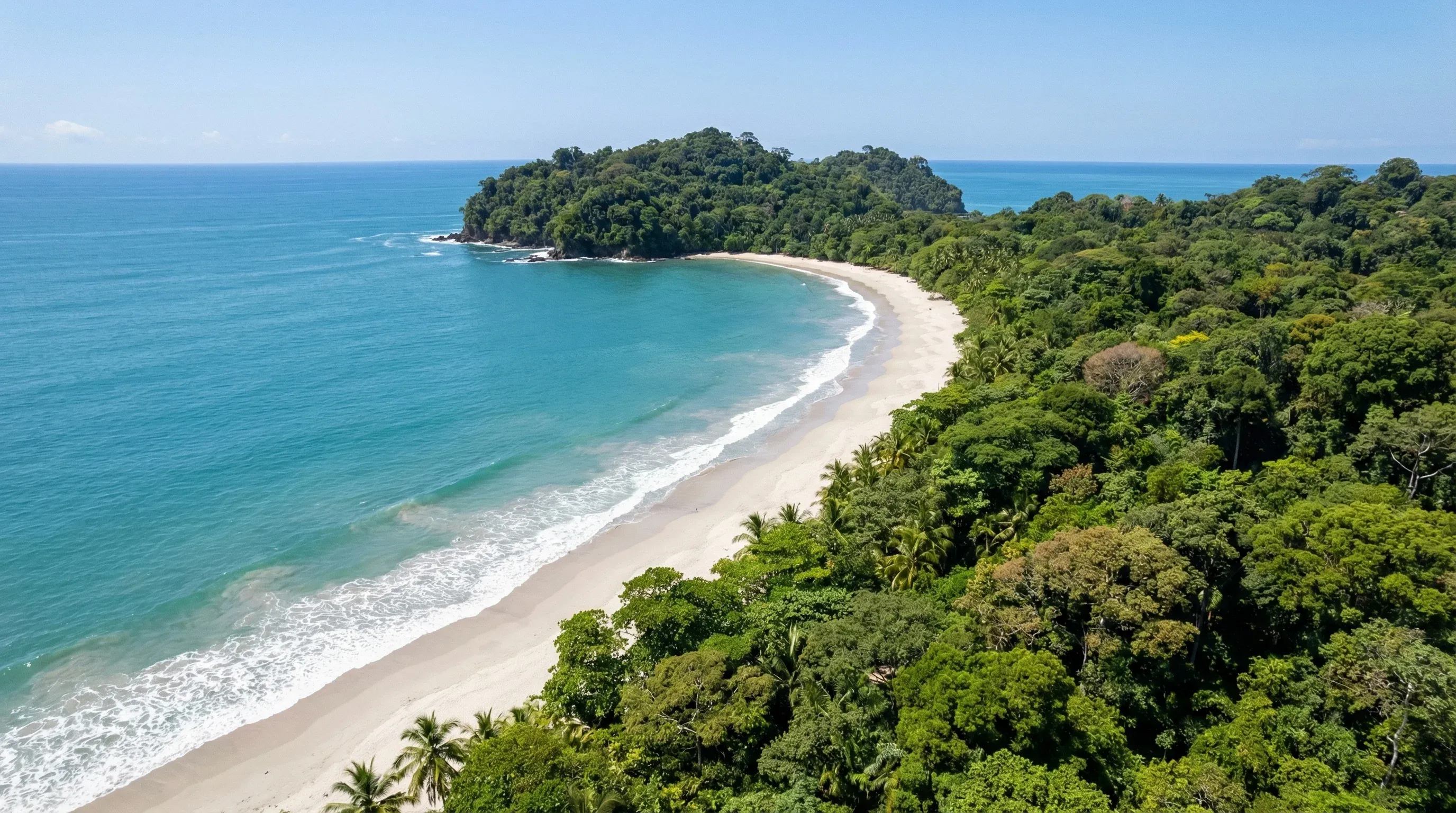

Central Pacific (Manuel Antonio)
Where the rainforest meets white sand beaches 🐒🏖️
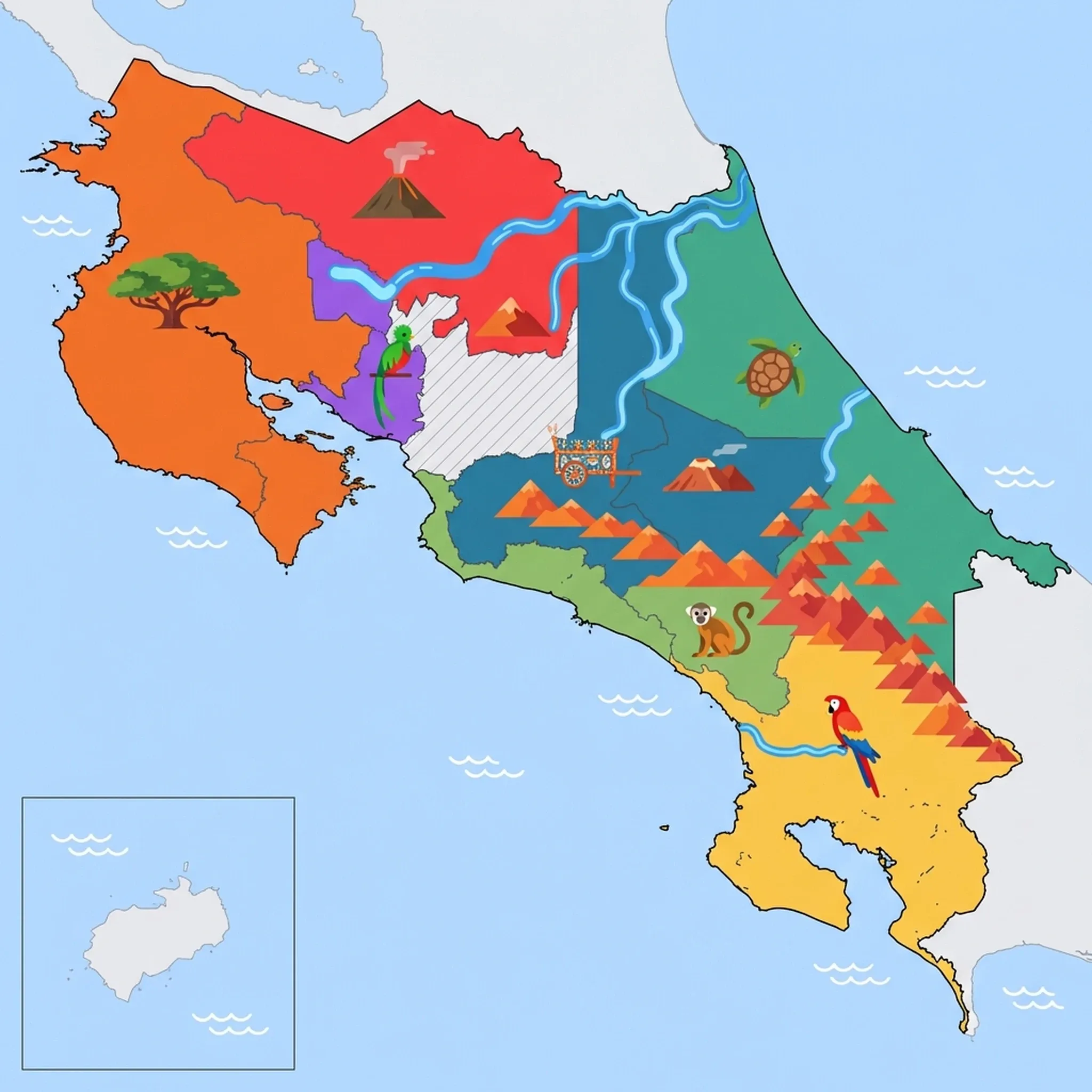
Click a region to explore
Overview
The Central Pacific region is arguably the most user-friendly destination for families visiting Costa Rica. Anchored by the world-famous Manuel Antonio National Park, this area condenses the country's biodiversity into a small, accessible package. The coastline is dramatic, with lush green mountains tumbling directly into the blue Pacific Ocean. Unlike more remote regions, the infrastructure here is highly developed, with paved roads, a wide range of international restaurants, and accommodation options to suit every budget.
For children, the wildlife viewing here is almost effortless. The national park is teeming with white-faced capuchin monkeys, squirrel monkeys, sloths, and iguanas that are often visible right from the main trails. The beaches inside the park are calm and protected, making them safe for younger swimmers. Beyond the park, the region offers mangrove boat tours, spice farm visits, and catamaran cruises, ensuring that active families never run out of things to do. It can get crowded, but the convenience and beauty make it worth the trip.
Key Attractions
While the region is famous for Manuel Antonio National Park (a must-visit for easy wildlife spotting and pristine beaches), the journey there is part of the fun. Stop at the Tarcoles River Bridge to safely peer down at dozens of massive American crocodiles sunbathing below—a thrilling sight for kids. Nearby, the Rainmaker Conservation Park offers a more secluded suspension bridge experience and pristine swimming holes without the heavy crowds of the main national park.
For a day on the water, catamaran tours from the Quepos marina are excellent for families, often including snorkeling stops and dolphin watching. Just north, the Carara National Park is a haven for birdwatchers and one of the best places to spot wild Scarlet Macaws. Families driving down from San José might also stop at Rescate Wildlife Rescue Center in Alajuela on their way out to the coast to learn about animal rehabilitation.
Practical Advice
Manuel Antonio National Park is closed on Tuesdays. You MUST buy tickets online in advance; they sell out weeks ahead in high season. The area is very popular, so expect crowds. Mornings (7:00 am) are best for animal sightings and beating the heat.
Food & Drink
Typical meal times: Lunch 12:00 pm to 2:00 pm; Dinner 6:00 pm to 9:30 pm.
Typical meal costs: Tourist prices apply. Sit-down meals range from ₡8,000–15,000 (approx. $15–29 USD / €14–27 EUR) per person.
Dietary requirements: excellent availability of gluten-free, vegan, and kid-friendly international options (pizza, burgers) alongside local food.
Signature dishes:
- Ceviche de Chucheca – A local variation of ceviche made with black clams, offering a distinct savory flavor.
- Arroz con Camarones – Rice with shrimp, vegetables, and spices, a staple in coastal restaurants.
- Patacones – Twice-fried green plantains, smashed flat and served with refried beans, cheese, or salsa.
Why this score?
While the region offers rainforests and wildlife, the adventure is highly managed and very accessible, with paved roads and well-marked, easy-to-walk trails. It is ideal for families seeking nature without significant physical exertion or 'off-grid' challenges. Activities like the Tárcoles crocodile bridge or the park's main beaches are heavily commercialized and low-risk.
Why this score?
The proximity to Quepos provides access to a regional public hospital and several high-quality private clinics that are accustomed to treating international tourists. Because of the high tourist volume, there is a better-than-average density of English-speaking medical staff and ambulance services compared to more remote coastal areas. It is one of the more medically secure regions outside of the Central Valley hub.
Why this score?
Manuel Antonio National Park is frequently the most-visited park in the country, drawing intense international crowds due to its proximity to San José. The area around Quepos and Jacó is densely packed with hotels, restaurants, and tour operators catering specifically to North American and European travelers. It is a quintessential 'bucket list' destination with very high visitor density relative to its geographic size.

This is one of the most expensive regions due to its popularity. Budget hotels are scarce near the beach. Expect to pay ₡80,000–150,000 (approx. $155–290 USD / €145–270 EUR) for a standard family room. Dining in "tourist trap" restaurants can be pricey; head to Quepos town for better value local meals around ₡5,000 (approx. $10 USD / €9 EUR).
Family Travel Notice
Minors who hold dual citizenship (Canadian and Costa Rican) require specific departure approval from Costa Rican immigration authorities to leave the country. This permission must be requested by both parents in advance.

Getting Here & Around
Getting Here
- Driving – An easy 2.5 to 3-hour drive from San José on the Route 27 and Route 34 (Costanera Sur). The roads are paved and generally good.
- Bus – Direct "Tracopa" buses run frequently from San José to Quepos and Manuel Antonio.
- Air – Domestic flights (Sansa) connect San José to the Quepos La Managua Airport (XQP) in just 20 minutes.
Getting Around
- Bus – A frequent and cheap shuttle bus runs back and forth between Quepos town and Manuel Antonio beach/park every 20 minutes.
- Walking – While hilly, the main tourist strip is walkable, though sidewalks can be narrow.
- Taxi – Red taxis are readily available. Agree on a fare or ensure the meter (maria) is on.
Nearby Airports (1 airport)
La Managua Airport
XQPQuepos
View full flight map for Costa Rica →
Official Links

Packing List
Sun is extremely intense near the equator; sunscreen washes off quickly in sweat/water.
Monkeys and raccoons on the beach are expert thieves; zippers alone won't stop them.
The winding roads (Route 27/34) and catamaran boats can cause nausea for kids.
Required for entry into the National Park (digital or paper copy usually accepted).
High humidity can damage cameras and phones; keep these in your electronics bag to absorb moisture.
Essential for night walks and turtle watching tours to avoid disturbing wildlife with bright white light.
Protects gear during boat transfers (wet landings) and sudden tropical downpours.
Protect feet from sharp rocks and slipping during waterfall hikes; flip-flops often float away.
Sloths and monkeys are often high in the canopy; kids will miss them without their own pair.

Activities & Best Times

Hiking, wildlife, outdoor exploration, ecotourism
Home to the iconic Manuel Antonio National Park and over 15 world-class nature attractions, offering unparalleled wildlife encounters where primary rainforest meets the Pacific. The dry season (Dec-Mar) provides optimal wildlife spotting and trail conditions, while the intense rainfall of September and October significantly restricts access.

Sport tourism, fitness activities, active recreation
A major hub for organized adventure sports, including world-class surfing at Playa Hermosa and extensive canopy tour networks. Peak visitation occurs during the dry season when safety for hiking and aerial activities is highest, whereas extreme rain in autumn can lead to temporary facility closures.

Beach resorts, marine activities: diving, snorkelling, kite surfing, wind surfing, sailing
Offers high-quality coastal experiences at Manuel Antonio and Jacó, famous for their accessibility and scenic beauty. The dry season ensures calm, clear waters for snorkeling and swimming, while high rainfall in September and October causes river runoff that degrades coastal water visibility.

Urban tourism, museums, historical sites, architecture
The Tárcoles Bridge is famous for crocodile viewing (a nature/wildlife activity, not cultural). The region lacks major museums, UNESCO sites, or significant historical districts that would justify 'very_good'. Downgrade to 'good' to recognize coastal town culture without overstating cultural significance.

Spa retreats, wellness centers, peaceful getaways
Includes regional thermal baths and specialized wellness retreats tucked into the rainforest. While these offer authentic restorative experiences, they are most enjoyable during the drier months when humidity is lower and outdoor spa facilities are fully operational.

Scenic drives, countryside tours, route-based travel
The Costanera Sur provides a scenic transit corridor with excellent Pacific views, though it serves more as a transport route than a dedicated touring destination. Driving conditions are safest and most scenic in the dry months; peak rainy season carries risks of localized flooding and reduced visibility.

Amusement parks, family entertainment venues
The region hosts ADR Adventure Park, providing a localized, nature-integrated alternative to traditional theme parks. Reliable operations for these high-adrenaline outdoor venues are concentrated in the drier months to avoid the safety hazards of tropical storms.




Public Holidays & Calendar Next 12 months
Public holidays, festivals, cultural celebrations, and seasonal natural phenomena coming up in Central Pacific (Manuel Antonio) over the next 12 months.
Loading holidays and events...

Travel Advisory
Most major agencies recommend exercising increased vigilance or a high degree of caution primarily due to the risk of crime. While the country is generally stable, petty theft is pervasive and violent crime is a significant concern in certain urban and coastal regions.
Safety Topics
Traveller Advice (4 groups)

There has been an increase in reports of sexual harassment and assault targeting foreign visitors. Women should be particularly cautious in bars, avoid leaving drinks unattended, and refrain from walking alone in poorly lit or isolated areas at night.

Minors who hold dual citizenship (Canadian and Costa Rican) require specific departure approval from Costa Rican immigration authorities to leave the country. This permission must be requested by both parents in advance.

While Costa Rica is generally more progressive than some regional neighbors, travellers should still be mindful of local attitudes and consult specific safety guides regarding public displays of affection in less urbanized areas.

Adventure seekers should ensure their insurance covers medical evacuation. Be extremely cautious of dangerous rip currents on both coasts, as most beaches lack lifeguards. Check local alerts before visiting volcanic regions, particularly Poás Volcano.
Agency Summaries
Increased caution is advised due to the prevalence of crime. Both petty theft and violent incidents, such as armed robberies and sexual assaults, affect tourists. Staying alert in isolated areas and avoiding displays of wealth is recommended.
Vigilance is necessary due to the threat of violent crime. Criminals frequently target transit hubs and tourist resorts for robberies, carjackings, and 'express kidnappings.'
There are no specific restrictions against travel to any part of the country, but visitors should be aware of significant levels of mugging and theft, particularly on the Atlantic coast and in urban centers.
General safety awareness is required, with specific focus on risks from natural hazards like hurricanes and volcanic activity, as well as maintaining personal security against crime.
Travellers should be extremely vigilant because of high crime rates. Common issues include petty theft, vehicle break-ins, and passport theft, which are especially prevalent in San José and popular coastal provinces like Puntarenas.
Heightened security concerns exist compared to domestic safety standards. Violent crime, including home invasions and gang-related muggings, are notable risks alongside widespread petty theft.
Information is provided for general guidance only and does not constitute travel, safety, medical, or legal advice. Conditions may change. Users are responsible for independently verifying information before travel.