

Croatia has rapidly become one of Europe's most sought-after family destinations, and for good reason. Stretching along the Adriatic Sea, this crescent-shaped country offers a mesmerizing blend of glittering coastline, over 1,000 islands, and lush inland forests. For families, it is a paradise of outdoor exploration. The waters are exceptionally calm and clear-perfect for young swimmers-while the beaches, though often pebbly, are famously clean. Beyond the coast, the country is safe, the locals are famously welcoming to children, and the history is tangible enough to capture even the shortest attention spans.
Geographically, you can think of Croatia in three main parts for travel: the Istrian Peninsula in the north, known for its Italian influence and hill towns; the long Central Dalmatian Coast & Islands which serves as the heart of summer tourism; and the historic south around Dubrovnik. The inland region, including Plitvice Lakes & Central Croatia, offers a cooler, greener contrast with stunning national parks. Whether you are hopping between islands on a ferry or walking the ramparts of a medieval fortress, the vibe is relaxed, safe, and deeply connected to nature.
Key Attractions
No family trip to Croatia is complete without visiting Plitvice Lakes National Park. This UNESCO World Heritage site is a wonderland of 16 terraced lakes joined by waterfalls that extend into a limestone canyon. Wooden walkways allow you to walk right over the rushing water-an exciting experience for kids. Further south, Krka National Park offers a similar experience but with a more relaxed feel, where you can take boat trips and explore historic watermills. For a mix of nature and history, Lokrum Island, just a short boat ride from Dubrovnik, is inhabited by wild peacocks and friendly rabbits that children adore.
History comes alive in the Southern Dalmatian Coast at the Dubrovnik City Walls. Walking this complete circuit of medieval fortifications offers views that feel like stepping into a storybook (or a famous TV show). In the north, the Pula Arena is one of the best-preserved Roman amphitheaters in the world; kids can explore the underground chambers where gladiators once prepared for battle. For a modern twist, the Sea Organ in Zadar plays music using the power of ocean waves, creating a magical soundscape that fascinates children and adults alike. If you need a break from culture, Aquapark Istralandia offers world-class water slides and pools.
Practical Advice
The best time to visit is during the "shoulder seasons" of late May to June or September, when the weather is warm enough for swimming but the crowds are thinner. July and August are hot and busy, but everything is open. Croatia is part of the Schengen Area and uses the Euro (€). Public healthcare is good, but carry a European Health Insurance Card (EHIC) or travel insurance. Tap water is safe to drink throughout the country.
Food & Drink
Typical meal times: Lunch is traditionally the main meal, served from 12:00 pm to 3:00 pm. Dinner is lighter and typically eaten from 7:00 pm to 9:30 pm, though restaurants in tourist areas stay open until 11:00 pm or midnight.
Typical meal costs: €15–30 (approx. $16–33 USD / £13–25 GBP) for a main dish in a mid-range restaurant. Pizzas and pasta are cheaper, around €10–15 (approx. $11–16 USD / £8–13 GBP).
Dietary requirements: Vegetarian options are widely available, particularly pasta, risottos, and vegetable sides like Swiss chard. Vegan options are growing in cities but can be limited in traditional rural konobas. Gluten-free awareness is improving, but always ask explicitly.
Family-friendly dining: Children are welcome everywhere. Most restaurants offer highchairs and are happy to serve half-portions or simple pasta dishes for kids. Service is generally relaxed and patient with families.
Signature dishes:
- Crni Rižot (Black Risotto) – A creamy risotto coloured with squid ink and filled with cuttlefish. It turns your tongue black, which kids often find hilarious.
- Peka – Meat (usually lamb or veal) or octopus slow-cooked with potatoes and vegetables under a bell-shaped iron lid covered in embers. The meat becomes incredibly tender.
- Ćevapi – Small, grilled skinless sausages made of minced meat, usually served in flatbread with onions and ajvar (red pepper relish). A guaranteed hit with children.
- Pašticada – A slow-cooked beef stew in a rich sweet-and-sour sauce, typically served with homemade gnocchi.
- Fritule – Mini doughnut-like pastry balls, often flavoured with lemon zest and raisins, served warm with powdered sugar or chocolate sauce.

A family of four can expect to spend around €250–350 (approx. $270–380 USD / £210–295 GBP) per day. This budget covers mid-range apartment accommodation, dining out once a day, supermarket snacks, and entry fees to national parks. Prices are significantly higher in July and August compared to the shoulder months.
Age Suitability





Did you know? Croatia welcomes approximately 15.3 million international visitors per year. Most visitors come from Europe.

Explore Regions
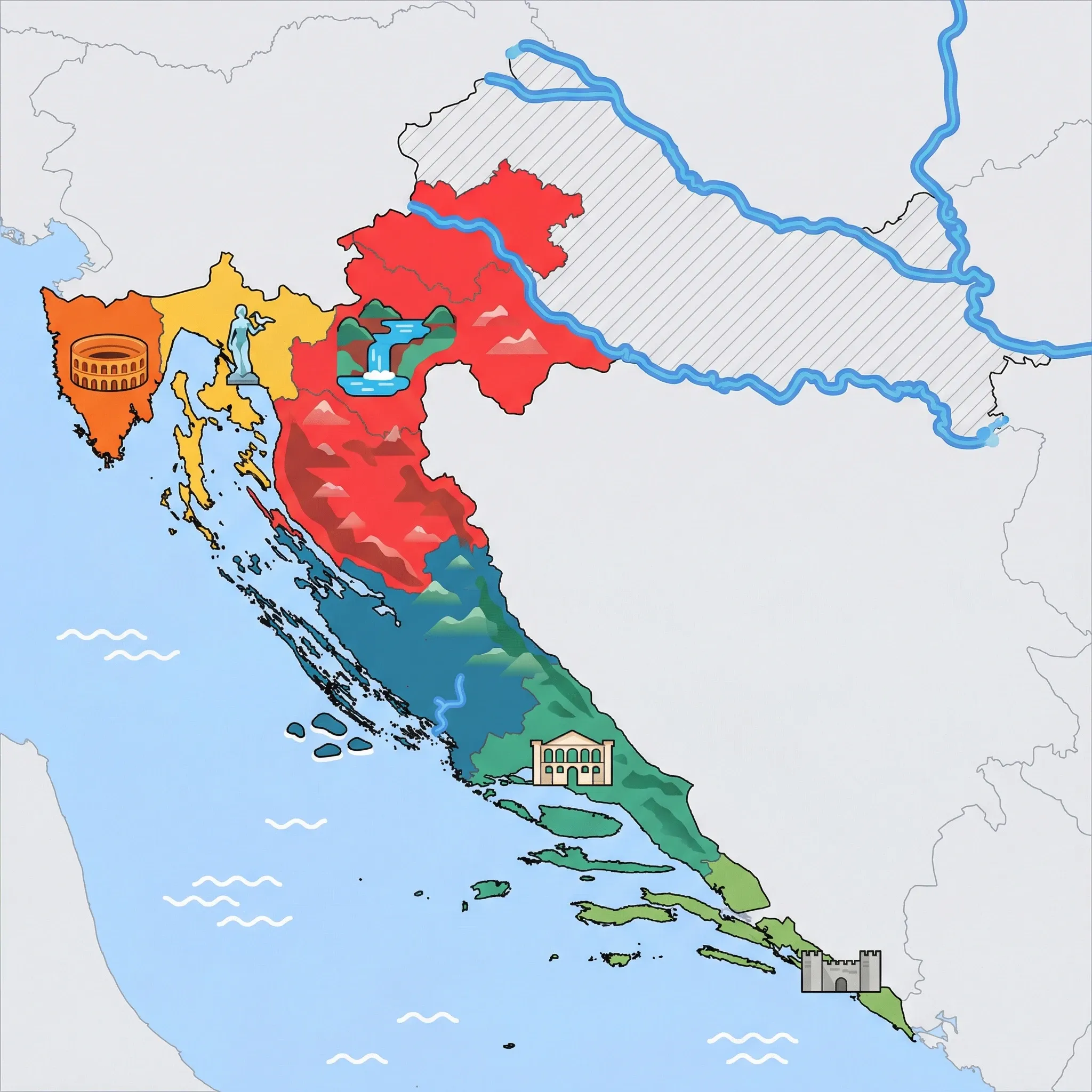
6 Regions
Central Dalmatian Coast & Islands
Ancient emperors, turquoise coves, and island adventures 🏛️🏝️
Istrian Peninsula
Hilltop towns, Roman giants, and splashy fun 🏟️🦕
Kvarner Gulf Coast
Where mountains meet the sea and dolphins play 🐬⛰️
Northern Dalmatian Coast
Singing steps, waterfalls, and 300 islands 🎶🌊
Plitvice Lakes & Central Croatia
Cascading lakes, castles, and capital cool 🏰🌲
Southern Dalmatian Coast
Real-life castles, deep blue seas, and island legends 🏰🐉
Click on a region marker to explore details. Use the dropdown to color regions by activity suitability.

Getting There & Around
Getting There
- By Air – Major international airports are in Split (SPU), Dubrovnik (DBV), and Zagreb (ZAG). Split is the best gateway for the Central Dalmatian Coast & Islands.
- By Sea – Car ferries connect Ancona and Bari in Italy to Split, Zadar, and Dubrovnik. It is a popular way to arrive if you are touring Europe by car.
- By Land – Croatia is easily accessible by car from Central Europe via Slovenia or Hungary. Border crossings can be busy on summer weekends.
- Entry Requirements – Croatia is part of the Schengen Area. EU citizens can enter with an ID card. US, UK, and Canadian citizens do not need a visa for short stays. Check your government website for the latest visa requirements, or use the IATA Travel Centre entry-requirements checker.
Getting Around
- Ferries & Catamarans – The lifeline of the coast. Jadrolinija is the main operator connecting the mainland to islands like Hvar and Brač. Catamarans are faster (passenger only), while ferries carry cars. Book ahead in summer.
- Car Hire – Highly recommended for families to explore the Istrian Peninsula or visit Plitvice Lakes National Park at your own pace. Roads are generally excellent, though coastal routes can be winding.
- Buses – The intercity bus network is extensive, reliable, and affordable, connecting major hubs like Split, Zadar, and Dubrovnik frequently.

Packing List
Most beaches are pebbly or rocky, and sea urchins are common in the shallows.
Essential for keeping phones and wallets dry during ferry rides, boat trips, and kayaking.
Catamaran crossings between islands can be choppy; helpful for sensitive kids.
Mosquitoes can be very active in the evenings, especially near pine forests and national parks.
The Adriatic is exceptionally clear; bringing your own mask ensures kids can explore underwater anytime.

Activities & Best Times

Adventure & Nature
ExcellentHiking, wildlife, outdoor exploration, ecotourism
Home to the UNESCO-listed Plitvice Lakes, this region offers world-class karst landscapes and turquoise waterfalls that are globally iconic. Peak visitation occurs from late spring through early autumn when the extensive trail network and boat routes are fully operational.
Features an extraordinary convergence of sea and mountains with three major national and nature parks (Risnjak, Učka, and Northern Velebit). Peak visitation occurs in late spring and early autumn to avoid summer crowds and high heat while ensuring trail accessibility.
Home to world-class karst landscapes in Krka and Paklenica National Parks, offering spectacular waterfalls and canyoning. Peak months avoid the extreme summer heat while ensuring all trails and park facilities are fully accessible.

City & Cultural
ExcellentUrban tourism, museums, historical sites, architecture
Zagreb offers a sophisticated blend of Austro-Hungarian architecture and unique museums, such as the Museum of Naive Art, while Varaždin is a baroque masterpiece. Peak months reflect the best walking weather and the world-class Advent festival in December.
Boasts high-density UNESCO heritage including Diocletian's Palace and Trogir's historic core. May, June, and September offer the most authentic atmosphere for sophisticated travelers, avoiding the mass-market congestion of July and August.
Dubrovnik's UNESCO-listed fortifications and the historic walls of Ston represent world-class heritage with high authenticity. While July and August see peak visitation, the cultural atmosphere remains vibrant and globally unique throughout the extended summer season.

Sports & Active
Very GoodSport tourism, fitness activities, active recreation
The region features high-quality infrastructure including the Amazon of Europe Bike Trail and dedicated adrenaline parks near Plitvice. Milder spring and autumn temperatures are ideal for active exploration compared to the humid summer heat.
Boasts internationally recognized rock climbing at Paklenica and high-quality adventure parks near Biograd. Peak months offer the optimal balance of dry weather and manageable temperatures for intensive physical activity.
The Parenzana Trail is a premier European cycling route that utilizes a former railway line, supported by excellent infrastructure for active families. Peak months avoid the peak summer heat, which can make strenuous cycling or climbing less comfortable.

Educational & Exploratory
GoodLearning experiences, scientific sites, historical education
Engaging facilities like the Museum of Ancient Glass and Paklenica's visitor centers offer distinctive learning opportunities. Best visited when the surrounding regions are active but not overwhelmed by peak summer tourism.
The Pula Aquarium, housed in a historic fortress, and the Višnjan Observatory offer high-quality learning experiences for science-minded families. Visitation is best during the milder months when outdoor components of these sites are most enjoyable.
Features unique niche museums such as the Peek & Poke Computer Museum and the Natural History Museum of Rijeka. Peak months align with general tourism periods as many educational visitor centers in nature parks have seasonal staffing and accessibility.

Festivals & Seasonal
GoodEvents, celebrations, seasonal attractions
Advent in Zagreb has won multiple 'Best Christmas Market in Europe' awards and draws significant international visitors. It is a destination-level seasonal event, not a marginal offering. This should be rated 'good'.
Ultra Europe is a globally significant electronic music festival attracting 150,000+ international attendees annually. It is not a niche event but a major international draw that positions Split as a destination festival location. This warrants 'good' rather than 'marginal'.
Anchored by international electronic music events like Hideout Festival on Pag. While culturally significant, these events are highly concentrated in the summer and cater more to youth than general family travelers.

Relaxation & Wellness
GoodSpa retreats, wellness centers, peaceful getaways
The Zagorje region is an established hub for thermal wellness, with dedicated complexes like Varaždinske Toplice offering authentic restorative experiences. These facilities are a primary draw during the colder months when indoor thermal bathing is most appealing.
Istarske Toplice provides a historic thermal bath experience, though the region lacks a high density of world-class wellness retreats. This type of tourism is a popular alternative during the cooler months when coastal activities are unavailable.

Road Trips & Scenic
GoodScenic drives, countryside tours, route-based travel
Historic routes like the Master's Road and the Zagorje Castle Route provide scenic touring through diverse terrain and heritage sites. Spring and autumn offer the most pleasant driving conditions and clear visibility across the highland landscapes.
The Adriatic Highway and the lunar landscapes of Pag Island provide exceptional scenic driving experiences. Spring and autumn offer the best visibility and most comfortable driving temperatures for families.
The network of hilltop towns like Motovun and Grožnjan creates a scenic landscape reminiscent of Tuscany, perfect for rural touring. Late spring and early autumn provide clear visibility and pleasant conditions for navigating the winding interior roads.

Theme Park & Entertainment
GoodAmusement parks, family entertainment venues
Features several high-quality thermal water parks like Terme Tuhelj and Aquae Vivae which offer substantial family entertainment. Peak appeal coincides with summer when outdoor aquatic facilities are fully accessible and school holidays are in effect.
Offers quality regional family entertainment at Dalmaland and Aquapark Dalmatia. These facilities operate seasonally, with peak demand and full availability occurring during the summer school holiday period.
Istralandia and Aquacolors are among Europe's top-rated water parks, providing high-standard family entertainment. These parks are highly seasonal, operating only during the warmer months, with peak demand coinciding with European school summer holidays.

Beach & Sea
GoodBeach resorts, marine activities: diving, snorkelling, kite surfing, wind surfing, sailing
Features pristine Adriatic waters and unique coastal spots like Sakarun Beach and the Sea Organ. Seasonal timing is restricted by water temperatures, with peak visitation during the warm summer months.
Istria offers high-quality pebble beaches and crystal-clear waters at Cape Kamenjak and the Brijuni Islands, though it lacks the sandy expanses of global benchmarks. The swimming season is strictly limited to the hot summer months, with June and September offering a quieter but cooler experience.
Offers iconic pebble and sandy beaches like Paradise Beach and Vela Plaža with exceptionally clear Adriatic waters. Best enjoyed during the stable summer heat of July and August; shoulder months provide cooler water while off-season conditions are too cold for swimming.

Ski & Snow
MarginalWinter sports, ski resorts, snow activities
Small-scale ski facilities at Sljeme and Mukinje provide basic winter sports options for local visitors, though they lack the infrastructure of major alpine resorts. The season is short and highly dependent on peak winter cold and supplementary snowmaking.
Platak offers a unique but limited opportunity to ski with a sea view; however, infrastructure and snow reliability do not meet high international standards. Seasonality is strictly limited to the core winter months with very thin shoulder windows.

Public Holidays & Calendar Next 12 months
Public holidays, festivals, cultural celebrations, and seasonal natural phenomena coming up in Croatia over the next 12 months.
Loading holidays and events...
Climate & Weather
Central Dalmatian Coast & Islands
Show Details
| Month | Temp °C | Rain | Humidity |
|---|
Istrian Peninsula
Show Details
| Month | Temp °C | Rain | Humidity |
|---|
Kvarner Gulf Coast
Show Details
| Month | Temp °C | Rain | Humidity |
|---|
Northern Dalmatian Coast
Show Details
| Month | Temp °C | Rain | Humidity |
|---|
Plitvice Lakes & Central Croatia
Show Details
| Month | Temp °C | Rain | Humidity |
|---|
Southern Dalmatian Coast
Show Details
| Month | Temp °C | Rain | Humidity |
|---|

Travel Advisory
Croatia is consistently rated as a safe destination by all major international agencies. Standard personal safety awareness is recommended, as with any European destination.
Safety Topics
Traveller Advice (4 groups)

While generally safe, travelers should be aware that public displays of affection may attract unwanted attention in less metropolitan areas.

Ensure you carry a valid passport at all times and register your stay with the local police within 48 hours of arrival if your accommodation provider does not handle this for you.

Exercise caution when using taxis alone. It is recommended to use reputable ride-sharing apps, share your trip status with others, and note the taxi identification number.

Avoid off-road travel and uncultivated land in Karlovac and Lika-Senj counties due to a residual landmine risk. Always stay on marked paths and heed international warning signs in these regions.
Agency Summaries
Croatia remains a safe destination. Most visits are trouble-free, though tourists should be alert to sporadic bomb threats in public spaces and potential violence at major sporting events.
Croatia is generally safe for visitors, requiring standard safety measures similar to those in Canada. Travelers should maintain awareness of petty crime and seasonal risks.
No major travel restrictions are in place. Visitors are advised to follow local laws and be mindful of common tourist-related safety issues such as petty theft and overcharging.
Standard safety precautions are sufficient for most of the country. Specific regional risks exist in forested areas where landmines remain from past conflicts.
Travelers should use common sense and standard security measures. Entry requirements follow Schengen area protocols, and visitors must register their presence with local authorities.
Violent crime is rare, but petty crime is prevalent in high-traffic tourist zones. Environmental hazards like summer wildfires and tick-borne illnesses should be noted.
Information is provided for general guidance only and does not constitute travel, safety, medical, or legal advice. Conditions may change. Users are responsible for independently verifying information before travel.