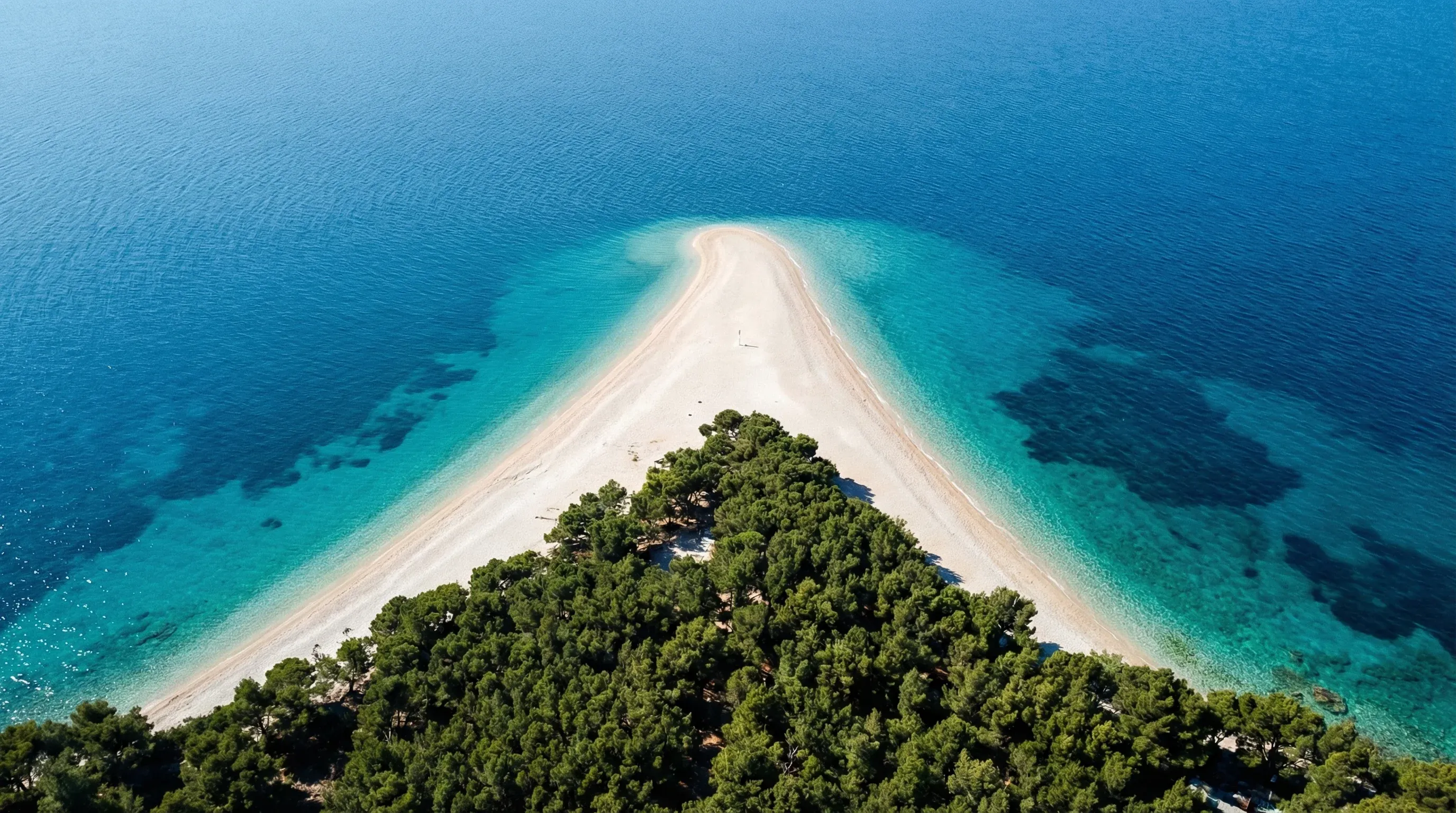

Central Dalmatian Coast & Islands
Ancient emperors, turquoise coves, and island adventures 🏛️🏝️
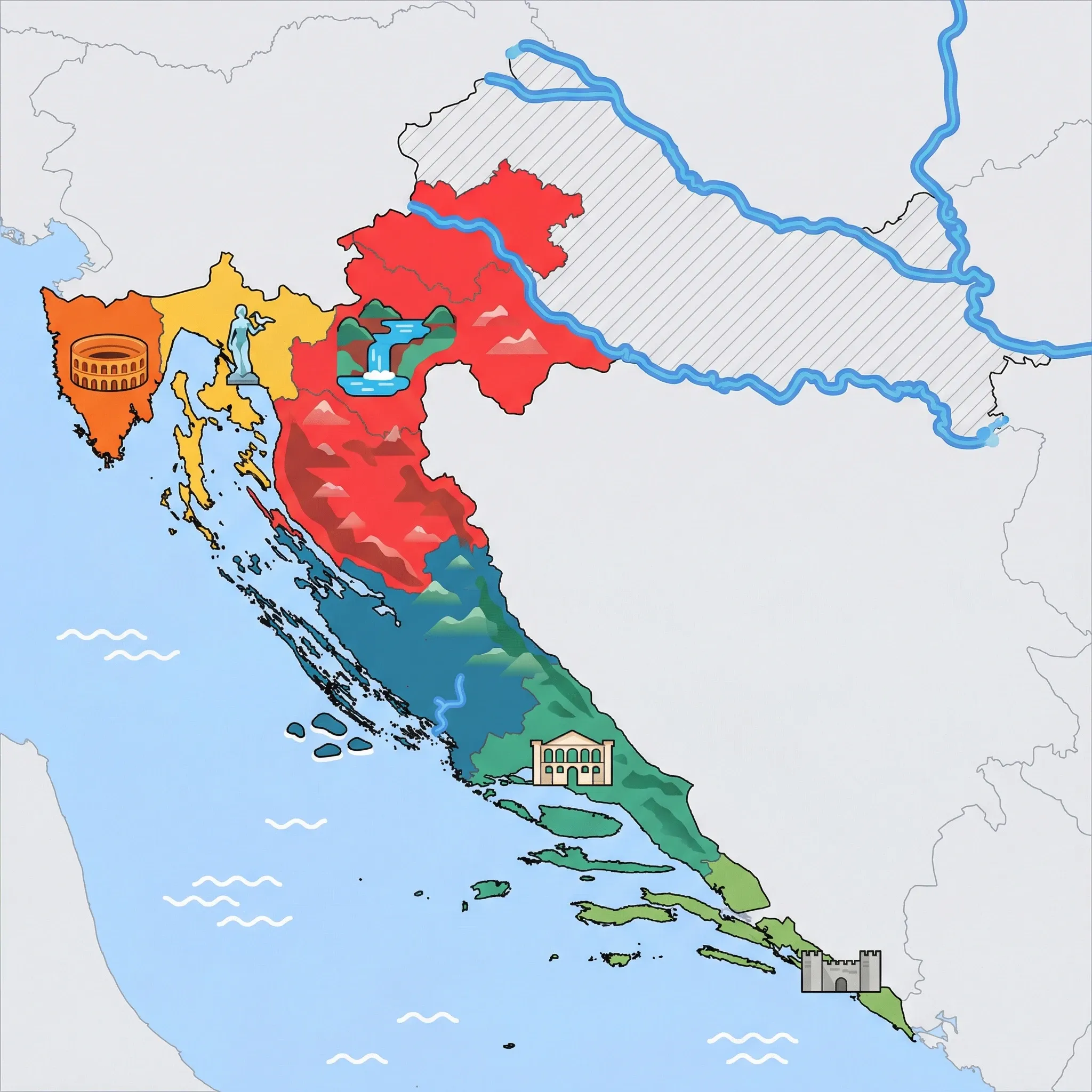
Click a region to explore
Central Dalmatia defines the quintessential Croatian holiday experience, blending a vibrant Mediterranean lifestyle with profound historical depth that captivates both parents and children. At its center lies Split, a bustling transport hub that is also a living museum, where laundry flutters between Roman columns and children play soccer in squares that have existed for nearly two millennia. The region stretches south to the Makarska Riviera, famous for its pebbled beaches shaded by fragrant pine trees and backed by the dramatic limestone slopes of the Biokovo Nature Park. The climate here is classically Mediterranean, boasting hot, dry summers and mild winters, with the Maestral wind providing a refreshing afternoon breeze that makes the heat manageable for little ones.
For families, the true magic lies in the archipelago. The islands of Brač and Hvar are not just for the yachting set; they offer family-friendly resorts, shallow bays, and a slower pace of life. The culture is outdoors-oriented, safe, and incredibly welcoming to children, who are often treated like VIPs in local restaurants. Whether you are exploring the pirate history of Omiš or snorkeling in crystal-clear coves, the region offers a balance of educational sightseeing and pure relaxation that is hard to beat.
Key Attractions
The absolute centerpiece of the region is Diocletian's Palace in Split. Far from being a stuffy museum, it is a living city center where families can eat ice cream on the steps of the Peristyle while Roman soldiers (actors) march by. Just outside the city, the Klis Fortress offers a spectacular hilltop adventure; famous as a filming location for Game of Thrones, it provides panoramic views and plenty of ramparts for kids to explore. A short drive away, the Historic City of Trogir is a UNESCO World Heritage site located on a small island connected by bridges, where the car-free streets feel like a medieval maze.
On the islands, the Zlatni Rat beach on Brač is iconic. Its shape changes with the tide and wind, and while the stones are pebbles rather than sand, the water clarity is unmatched. For active families, the Biokovo Nature Park offers the incredible Skywalk—a glass horseshoe platform jutting out over the cliff edge—providing a thrilling perspective of the coastline below (though perhaps not for those with a fear of heights!).
Practical Advice
The peak season is July and August, but for families, late June and September are superior choices—the sea is warm, but the crowds and temperatures are lower. If visiting in high summer, plan sightseeing for early morning (before 10:00 am) and spend the midday heat in the shade or the sea. Ferries to the islands are reliable but can get crowded; buy tickets online in advance for the car ferries.
Food & Drink
Typical meal times: Lunch is usually served from 1:00 pm to 3:00 pm, while dinner is a late affair, typically starting from 8:00 pm to 10:00 pm, though restaurants serve tourists earlier.
Typical meal costs: A main course in a standard Konoba (tavern) costs €15–25 (approx. $16–27 USD / £13–21 GBP). A family dinner for four usually runs €70–110 (approx. $76–119 USD / £60–94 GBP).
Dietary requirements: Mediterranean cuisine is naturally accommodating. Vegetarian options (grilled vegetables, pasta, risottos) are common. Gluten-free is understood in tourist hubs, though cross-contamination in small kitchens can be a risk.
Signature dishes:
- Pašticada – A slow-cooked beef stew marinated in vinegar and lemons, served with homemade gnocchi; a beloved Sunday family dish.
- Soparnik – A savory Swiss chard and onion pie from the Poljica region, baked in glowing embers—perfect for a healthy, handheld snack.
- Gregada – A simple, ancient fisherman's stew of white fish, potatoes, olive oil, and herbs, traditionally associated with Hvar.
Why this score?
Adventure is accessible through activities like rafting on the Cetina River or hiking the rugged Biokovo range, including the Skywalk. The islands of Vis and Brač offer more remote exploration, though the high level of tourism infrastructure and organized tours tempers the overall sense of wildness. Families can easily find outdoor thrills without departing from well-maintained safety standards.
Why this score?
Split serves as the primary medical hub with a large clinical hospital center that is experienced in treating international tourists. While the mainland has good emergency response, medical access on islands like Hvar or Vis is more limited, often requiring helicopter or speedboat transfers for serious emergencies. Language barriers are minimal in main facilities but can be present in smaller island clinics.
Why this score?
This region is a cornerstone of Croatian tourism, anchored by the UNESCO-listed Diocletian's Palace in Split and the globally famous island of Hvar. It experiences massive international flows during the summer months, particularly from ferry-hopping travelers and cruise ship passengers. While Hvar is a high-end global draw, the overall region maintains a strong, consistent international presence that ranks just below world mega-destinations.

While cheaper than Dubrovnik, Central Dalmatia sees prices rise significantly in July and August. Accommodation on Hvar is pricey, often exceeding €200 (approx. $215 USD / £170 GBP) per night. On the mainland (Makarska), apartments are more affordable, around €80–120 (approx. $86–130 USD / £68–102 GBP). Coffee is a bargain at €2–3 (approx. $2.15–3.25 USD / £1.70–2.55 GBP).

Getting Here & Around
Getting Here
- Airports – Split Airport (SPU) is the second busiest in Croatia, with direct flights from major European cities. It is located near Historic City of Trogir.
- Ferry – Split is the main maritime hub. Jadrolinija ferries connect Split to Ancona (Italy) and provide the primary link to Brač, Hvar, and Vis.
- Driving – The A1 motorway connects Zagreb to Split in about 4 hours. The drive is scenic but tolls apply.
Getting Around
- Ferry & Catamaran – Essential for island hopping. Catamarans (foot passengers only) are faster, while ferries take cars. The route to Stari Grad on Hvar passes the Stari Grad Plain.
- Bus – An extensive network connects Split, Makarska, and Trogir. Buses are reliable and affordable.
- Car – Recommended if you want to explore the Makarska Riviera or the interiors of the islands.
Nearby Airports (2 airports)
Bol
BWKBol
Split Airport
SPUSplit
View full flight map for Croatia →

Packing List
Essential for pebble beaches and protecting feet from sea urchins.
Evenings on the islands and near pine forests can be buggy.
Catamaran rides to Hvar or Vis can be choppy when the wind picks up.
Croatian beaches are rocky/pebbled; thin towels are uncomfortable.
Most beaches are pebbly or rocky, and sea urchins are common in the shallows.
Essential for keeping phones and wallets dry during ferry rides, boat trips, and kayaking.
The Adriatic is exceptionally clear; bringing your own mask ensures kids can explore underwater anytime.

Activities & Best Times

Urban tourism, museums, historical sites, architecture
Boasts high-density UNESCO heritage including Diocletian's Palace and Trogir's historic core. May, June, and September offer the most authentic atmosphere for sophisticated travelers, avoiding the mass-market congestion of July and August.

Hiking, wildlife, outdoor exploration, ecotourism
While Biokovo and Cetina River canyon offer impressive karst landscapes and canyoning, 'excellent' should be reserved for globally premier adventure destinations like the Alps, Patagonia, or New Zealand. Croatia offers very good regional adventure opportunities but does not compete at the absolute top tier internationally.

Sport tourism, fitness activities, active recreation
Excellent infrastructure for technical pursuits like canyoning, ziplining, and mountain trekking. Active travelers should prioritize the transitional months to ensure comfortable temperatures for strenuous physical activity.

Beach resorts, marine activities: diving, snorkelling, kite surfing, wind surfing, sailing
Home to iconic pebbled beaches like Zlatni Rat and Punta Rata with exceptional Adriatic clarity. Best conditions occur in summer when sea temperatures are ideal for swimming, while winter months are too cold for coastal recreation.

Events, celebrations, seasonal attractions
Ultra Europe is a globally significant electronic music festival attracting 150,000+ international attendees annually. It is not a niche event but a major international draw that positions Split as a destination festival location. This warrants 'good' rather than 'marginal'.

Scenic drives, countryside tours, route-based travel
The Adriatic Highway and island scenic routes offer spectacular coastal vistas and well-maintained roads. Travel is most enjoyable in the shoulder seasons when traffic is manageable and visibility is high.

Amusement parks, family entertainment venues
Offers quality aquatic and ethno-parks such as Stella Croatica that appeal to families. These facilities are strictly seasonal, with optimal operations coinciding with the warmest summer temperatures.

Learning experiences, scientific sites, historical education
Features niche scientific interests like the Malacological Museum, though they are secondary to the city's broader culture. Access is best during the active tourism seasons when facilities maintain consistent opening hours.

Attractions (20 total)



Public Holidays & Calendar Next 12 months
Public holidays, festivals, cultural celebrations, and seasonal natural phenomena coming up in Central Dalmatian Coast & Islands over the next 12 months.
Loading holidays and events...

Travel Advisory
Croatia is consistently rated as a safe destination by all major international agencies. Standard personal safety awareness is recommended, as with any European destination.
Safety Topics
Traveller Advice (4 groups)

While generally safe, travelers should be aware that public displays of affection may attract unwanted attention in less metropolitan areas.

Ensure you carry a valid passport at all times and register your stay with the local police within 48 hours of arrival if your accommodation provider does not handle this for you.

Exercise caution when using taxis alone. It is recommended to use reputable ride-sharing apps, share your trip status with others, and note the taxi identification number.

Avoid off-road travel and uncultivated land in Karlovac and Lika-Senj counties due to a residual landmine risk. Always stay on marked paths and heed international warning signs in these regions.
Agency Summaries
Croatia remains a safe destination. Most visits are trouble-free, though tourists should be alert to sporadic bomb threats in public spaces and potential violence at major sporting events.
Croatia is generally safe for visitors, requiring standard safety measures similar to those in Canada. Travelers should maintain awareness of petty crime and seasonal risks.
No major travel restrictions are in place. Visitors are advised to follow local laws and be mindful of common tourist-related safety issues such as petty theft and overcharging.
Standard safety precautions are sufficient for most of the country. Specific regional risks exist in forested areas where landmines remain from past conflicts.
Travelers should use common sense and standard security measures. Entry requirements follow Schengen area protocols, and visitors must register their presence with local authorities.
Violent crime is rare, but petty crime is prevalent in high-traffic tourist zones. Environmental hazards like summer wildfires and tick-borne illnesses should be noted.
Information is provided for general guidance only and does not constitute travel, safety, medical, or legal advice. Conditions may change. Users are responsible for independently verifying information before travel.