
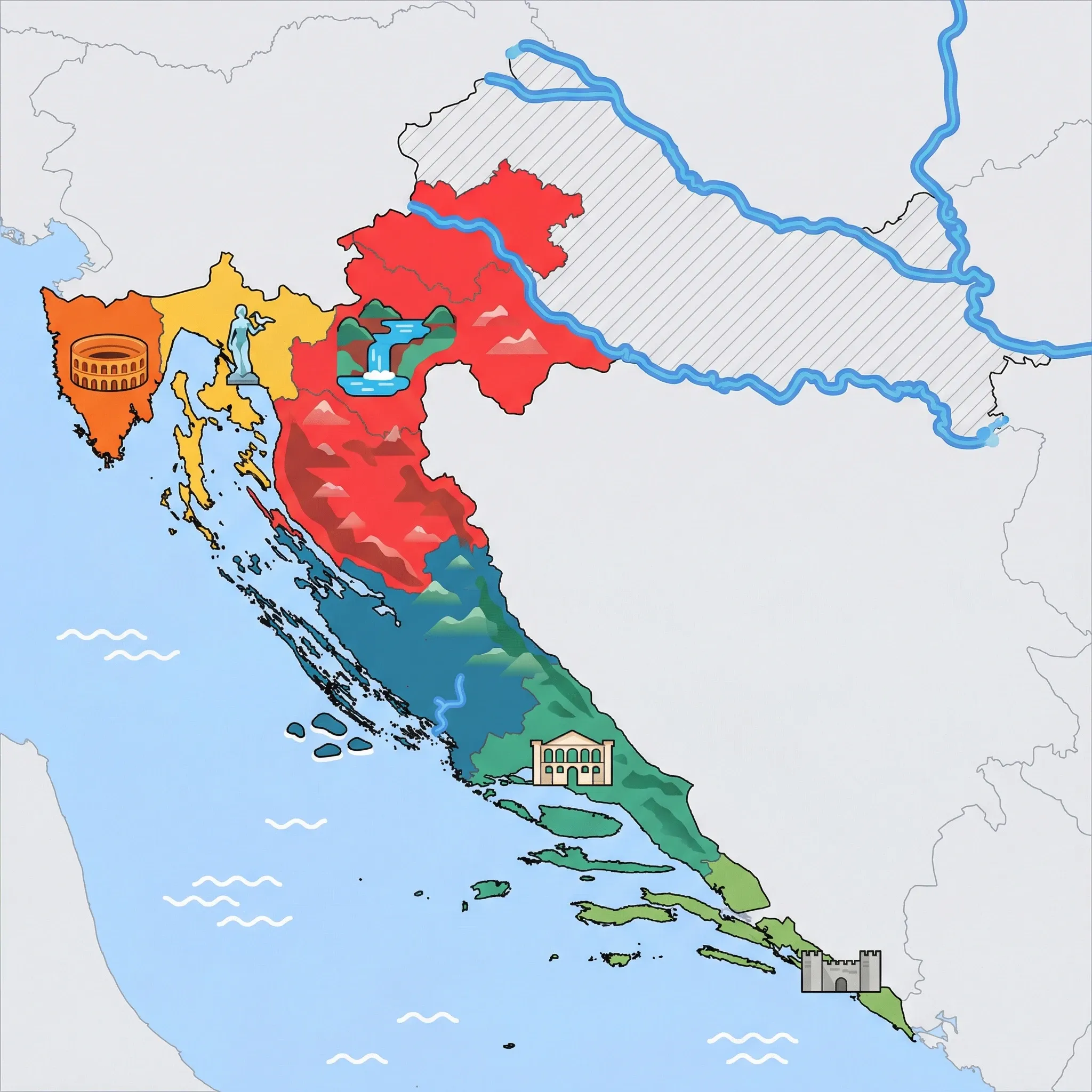
Click a region to explore
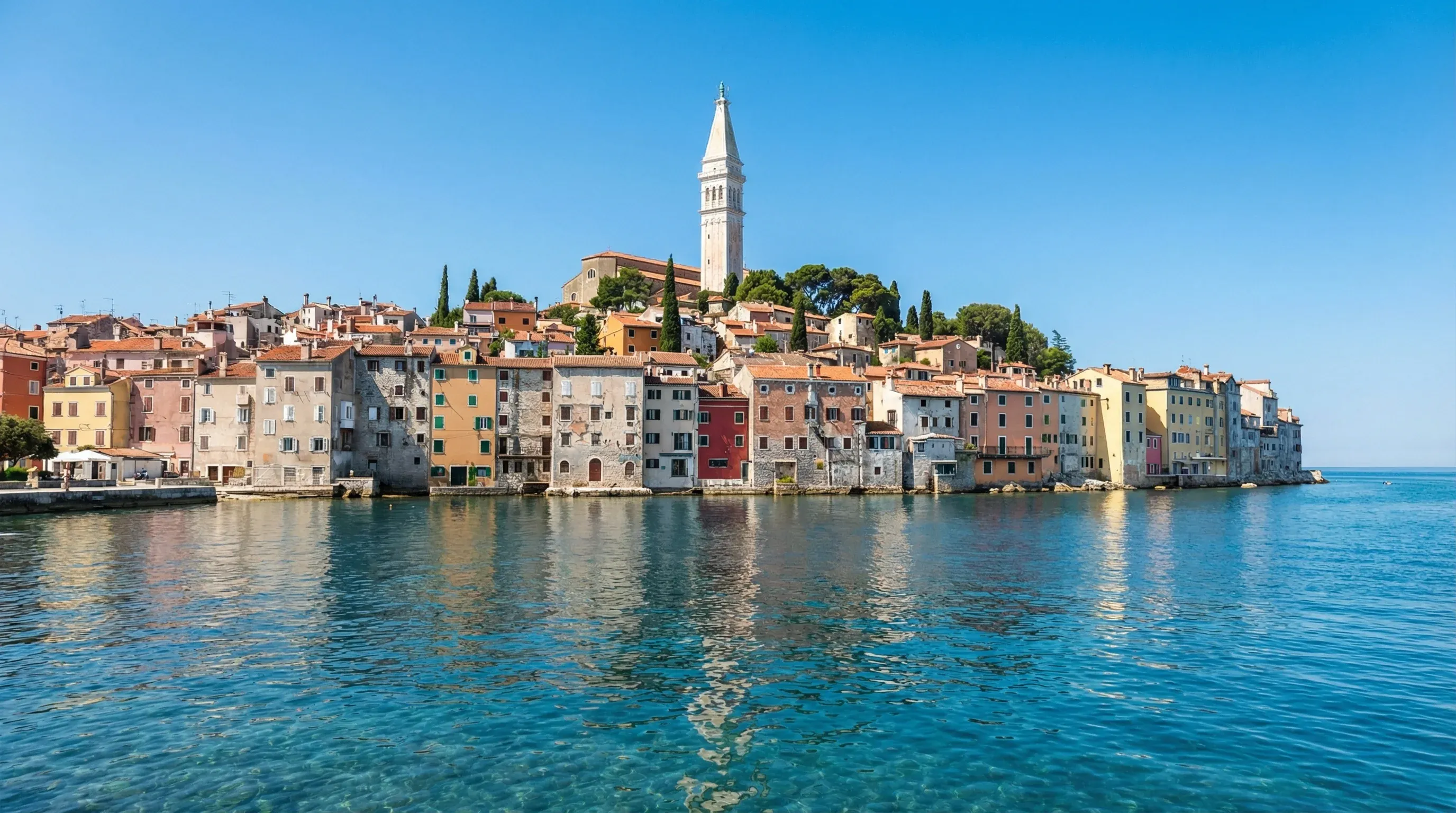
Istria is distinct from the rest of Croatia, heavily influenced by its proximity to Italy and its history under Venetian rule. For families, this is arguably the most user-friendly region in the country. The landscape is a stunning contrast of "Blue Istria" (the coast) and "Green Istria" (the interior). The coast is dotted with high-quality camping resorts and hotels specifically designed for families, featuring animation teams and pools, while the interior offers medieval hilltop towns that look like they've been plucked from a fairy tale. The vibe here is relaxed and gourmet; while parents enjoy world-class olive oils and truffles, children have endless space to run free in car-free town centers.
The region is compact, meaning you can stay in a coastal town like Poreč and be in the heart of the truffle forests within 45 minutes. The coastline is rocky with concrete swimming platforms, which keeps the water exceptionally clear—perfect for snorkeling. Istria is also a leader in agrotourism; many family-run farms (agroturizam) offer meals where children can see the animals and play in the fields while adults enjoy slow-cooked rural cuisine.
Key Attractions
History comes alive in Pula, home to the Pula Arena, one of the six largest surviving Roman amphitheatres in the world. Unlike the Colosseum in Rome, you can walk on the central sand and explore the underground chambers where lions were once kept. For a full day of nature and history, a boat trip to Brijuni National Park is essential. This island group was Tito's private summer residence and features a unique safari park with zebras and elephants, as well as real dinosaur footprints that children can hunt for along the coast.
When history fatigue sets in, Istria boasts two award-winning water parks. Aquapark Istralandia and Aquacolors Poreč offer massive slides and wave pools that provide a full day of entertainment. For active families, the Cape Kamenjak nature reserve offers rugged coves for cliff jumping (at safe heights) and swimming, followed by a drink at the quirky Safari Bar, which is built into the living reeds and bamboo.
Practical Advice
Istria is very car-dependent for exploring the interior, though the coastal towns are walkable. The sea temperature is pleasant from June to September. Many beaches here are "Blue Flag" certified, ensuring high safety and water quality standards. Beware that sandy beaches are rare; most are pebble or paved.
Food & Drink
Typical meal times: Lunch is 12:00 pm to 2:00 pm. Dinner starts around 7:00 pm, which is slightly earlier than in Dalmatia, reflecting the Central European influence.
Typical meal costs: A meal in a rural agroturizam is excellent value, around €20–30 (approx. $21–32 USD / £17–25 GBP) per person. Coastal seafood restaurants are pricier, with mains €25–40 (approx. $27–43 USD / £21–34 GBP).
Dietary requirements: Istria is very accustomed to tourists. Vegetarian pasta dishes (especially with truffles) are a staple. Gluten-free pasta is increasingly available in better restaurants.
Signature dishes:
- Fuži s tartufima – Hand-rolled pasta tubes served with a creamy sauce made from local black or white truffles; rich and earthy.
- Maneštra – A hearty vegetable and bean soup similar to minestrone, often containing sweet corn (bobići) and cured pork.
- Ombolo – Cured pork loin, typically grilled and served with sauerkraut, reflecting the Austrian influence on the region.
Why this score?
The region is characterized more by rolling hills and developed coastlines than by rugged wilderness, making it less physically challenging than other parts of Croatia. Adventure is found in the Parenzana cycling trail and coastal kayaking at Cape Kamenjak, but these are generally well-marked and family-friendly. The interior hill towns like Motovun offer a rustic feel without significant physical risk.
Why this score?
Istria boasts high-quality medical facilities in Pula and Rovinj, and its proximity to Western Europe (Slovenia and Italy) influences the standard of care. There are numerous private clinics catering specifically to tourists, and English and Italian are widely spoken by medical staff. The infrastructure is robust enough to handle the massive seasonal influx of visitors effectively.
Why this score?
Istria is a powerhouse for Central European tourism, particularly for German, Austrian, and Italian visitors who frequent its extensive network of luxury campsites and resorts. Cities like Rovinj and the Pula Arena are major international attractions, and the region has one of the highest densities of hotel beds in the country. It is well-established on the global travel circuit for its blend of Roman history and agrotourism.

Istria offers a wide range of budgets. Large camping resorts (glamping) can be pricey in August, around €150–250 (approx. $160–270 USD / £128–213 GBP) per night for a mobile home. Dining inland is often cheaper than on the coast. Espresso is standard at €1.80–2.50 (approx. $1.95–2.70 USD / £1.50–2.15 GBP).

Getting Here & Around
Getting Here
- Airports – Pula Airport (PUY) serves the region directly. Alternatively, Trieste Airport (TRS) in Italy is just an hour's drive away.
- Driving – Istria is easily accessible by car from Slovenia and Italy via the "Istrian Y" motorway.
- Ferry – High-speed catamarans connect Venice to Pula, Rovinj, and Poreč during the summer season—a fantastic way to arrive.
Getting Around
- Car – Highly recommended for visiting hill towns like Motovun and the Cape Kamenjak nature reserve.
- Cycling – The region is famous for cycling. The Parenzana Trail (The Route of Health and Friendship) is a family-friendly bike route on an old railway line.
- Tourist Train – Most coastal towns like Poreč have rubber-tire "trains" connecting hotels to the town centers.
Nearby Airports (1 airport)
Pula
PUYPula
View full flight map for Croatia →
Official Links

Packing List
Family cycling is huge here; rental seats can be hard on unaccustomed riders.
Water clarity is exceptional, and kids will want to see the fish near the rocks.
Many beaches have pine forests right to the edge; perfect for hanging a hammock.
Most beaches are pebbly or rocky, and sea urchins are common in the shallows.
Essential for keeping phones and wallets dry during ferry rides, boat trips, and kayaking.
Catamaran crossings between islands can be choppy; helpful for sensitive kids.
Mosquitoes can be very active in the evenings, especially near pine forests and national parks.
The Adriatic is exceptionally clear; bringing your own mask ensures kids can explore underwater anytime.

Activities & Best Times

Hiking, wildlife, outdoor exploration, ecotourism
With unique ecosystems like Brijuni's safari park and the dramatic Pazin Cave, Istria provides diverse nature encounters for families. May, June, and September offer the most comfortable temperatures for exploring outdoor adventure parks and hiking trails.

Urban tourism, museums, historical sites, architecture
The region features world-class Roman architecture in Pula and the UNESCO-listed Euphrasian Basilica in Poreč, reflecting deep Venetian and Roman heritage. These cultural centers are best explored in late spring or early autumn to avoid the intense summer heat and cruise ship crowds.

Sport tourism, fitness activities, active recreation
The Parenzana Trail is a premier European cycling route that utilizes a former railway line, supported by excellent infrastructure for active families. Peak months avoid the peak summer heat, which can make strenuous cycling or climbing less comfortable.

Beach resorts, marine activities: diving, snorkelling, kite surfing, wind surfing, sailing
Istria offers high-quality pebble beaches and crystal-clear waters at Cape Kamenjak and the Brijuni Islands, though it lacks the sandy expanses of global benchmarks. The swimming season is strictly limited to the hot summer months, with June and September offering a quieter but cooler experience.

Learning experiences, scientific sites, historical education
The Pula Aquarium, housed in a historic fortress, and the Višnjan Observatory offer high-quality learning experiences for science-minded families. Visitation is best during the milder months when outdoor components of these sites are most enjoyable.

Scenic drives, countryside tours, route-based travel
The network of hilltop towns like Motovun and Grožnjan creates a scenic landscape reminiscent of Tuscany, perfect for rural touring. Late spring and early autumn provide clear visibility and pleasant conditions for navigating the winding interior roads.
Amusement parks, family entertainment venues
Istralandia and Aquacolors are among Europe's top-rated water parks, providing high-standard family entertainment. These parks are highly seasonal, operating only during the warmer months, with peak demand coinciding with European school summer holidays.

Spa retreats, wellness centers, peaceful getaways
Istarske Toplice provides a historic thermal bath experience, though the region lacks a high density of world-class wellness retreats. This type of tourism is a popular alternative during the cooler months when coastal activities are unavailable.

Attractions (17 total)



Public Holidays & Calendar Next 12 months
Public holidays, festivals, cultural celebrations, and seasonal natural phenomena coming up in Istrian Peninsula over the next 12 months.
Loading holidays and events...

Travel Advisory
Croatia is consistently rated as a safe destination by all major international agencies. Standard personal safety awareness is recommended, as with any European destination.
Safety Topics
Traveller Advice (4 groups)

While generally safe, travelers should be aware that public displays of affection may attract unwanted attention in less metropolitan areas.

Ensure you carry a valid passport at all times and register your stay with the local police within 48 hours of arrival if your accommodation provider does not handle this for you.

Exercise caution when using taxis alone. It is recommended to use reputable ride-sharing apps, share your trip status with others, and note the taxi identification number.

Avoid off-road travel and uncultivated land in Karlovac and Lika-Senj counties due to a residual landmine risk. Always stay on marked paths and heed international warning signs in these regions.
Agency Summaries
Croatia remains a safe destination. Most visits are trouble-free, though tourists should be alert to sporadic bomb threats in public spaces and potential violence at major sporting events.
Croatia is generally safe for visitors, requiring standard safety measures similar to those in Canada. Travelers should maintain awareness of petty crime and seasonal risks.
No major travel restrictions are in place. Visitors are advised to follow local laws and be mindful of common tourist-related safety issues such as petty theft and overcharging.
Standard safety precautions are sufficient for most of the country. Specific regional risks exist in forested areas where landmines remain from past conflicts.
Travelers should use common sense and standard security measures. Entry requirements follow Schengen area protocols, and visitors must register their presence with local authorities.
Violent crime is rare, but petty crime is prevalent in high-traffic tourist zones. Environmental hazards like summer wildfires and tick-borne illnesses should be noted.
Information is provided for general guidance only and does not constitute travel, safety, medical, or legal advice. Conditions may change. Users are responsible for independently verifying information before travel.