
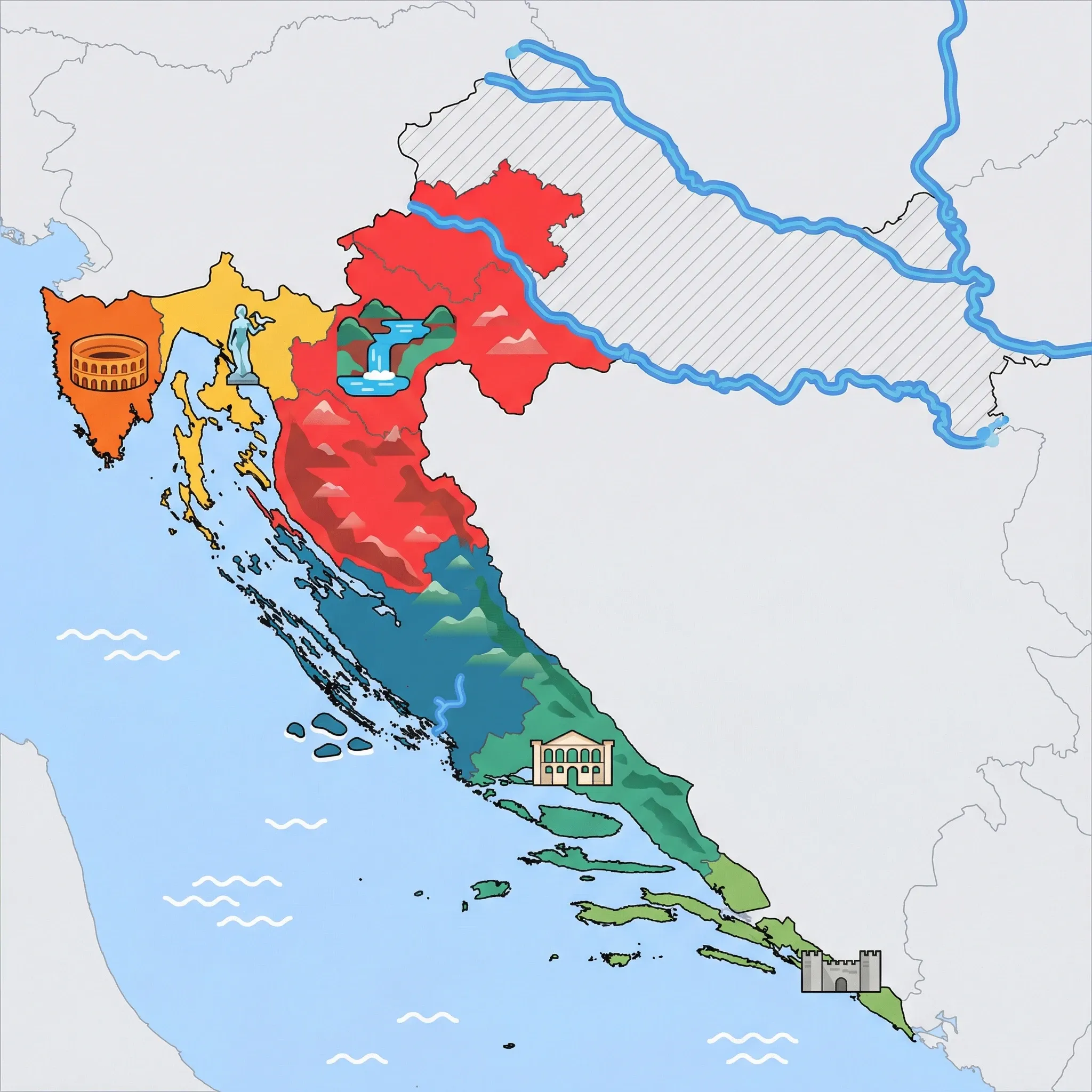
Click a region to explore
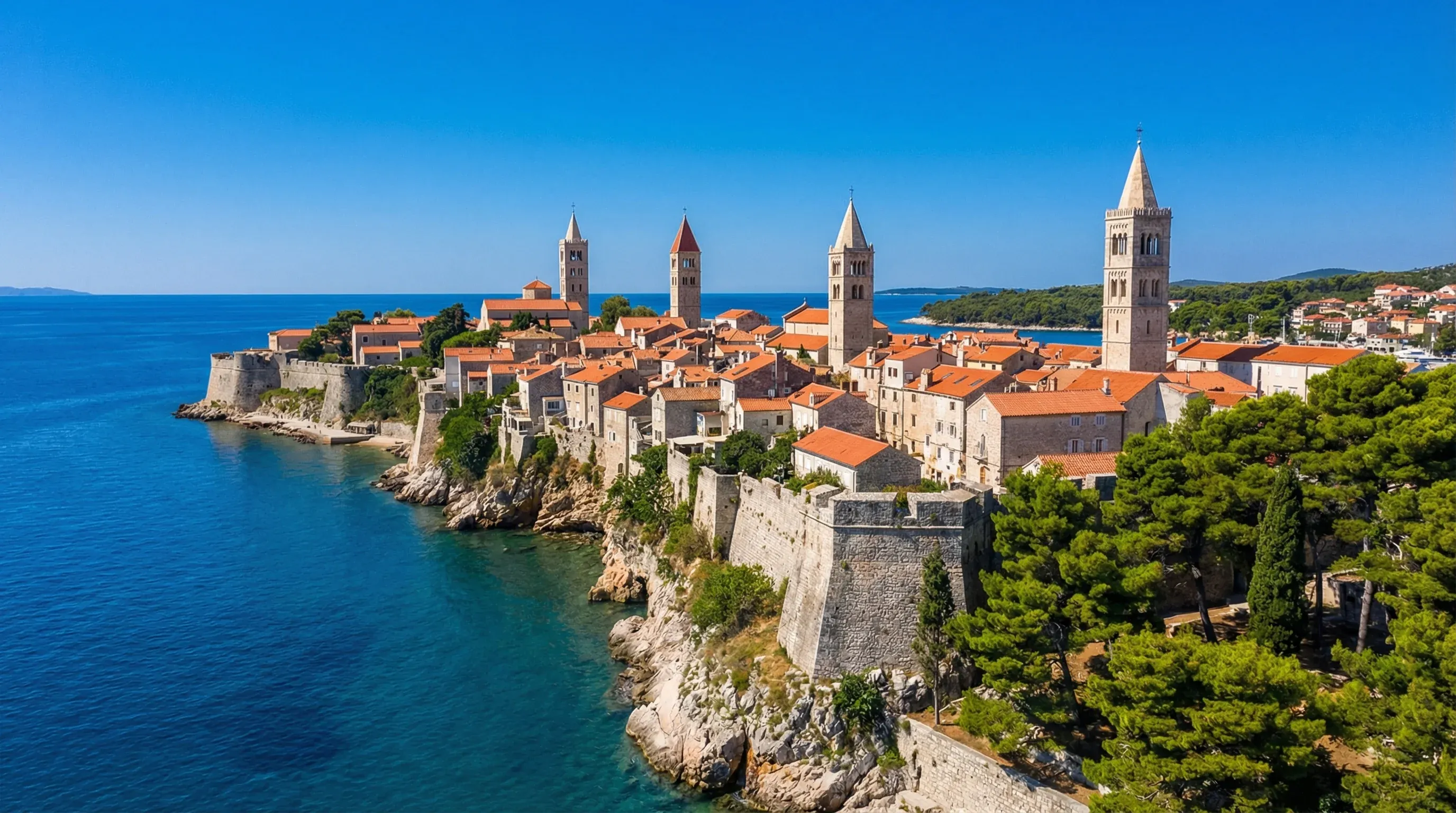
The Kvarner Gulf is often overlooked by international travelers rushing south to Dubrovnik, which is a mistake—especially for families. This region is the closest part of the Croatian coast to Central Europe, making it accessible and diverse. It combines the grand, Habsburg-era architecture of Opatija with the rugged, authentic island life of Cres and Lošinj. The geography here is dramatic; the mountains rise steeply from the sea, creating a climate that is reputed to be healing for respiratory problems—in fact, Lošinj has been a health resort for over a century due to its air quality and pine forests.
For children, Kvarner offers variety. You can spot griffon vultures on Cres, look for wild dolphins in the waters around Lošinj, or build sandcastles on Rab (home to some of the few true sandy beaches in Croatia). The vibe is slightly more local and less frantic than the southern coast. Rijeka, the main city, was a recent European Capital of Culture and offers excellent museums and urban exploration, while the nearby islands feel worlds apart with their sheep-filled pastures and stone walls.
Key Attractions
On the island of Rab, Paradise Beach (Rajska Plaža) is a rarity in Croatia: a long stretch of sand with incredibly shallow water that stays knee-deep for hundreds of meters, making it the safest possible beach for toddlers. In Rijeka, a climb to Trsat Castle is a must; the fortress watches over the city and looks like a storybook stronghold. Nearby, the Natural History Museum Rijeka is excellent for curious minds interested in the Adriatic's marine life.
For a touch of old-world glamour, a family walk along the Lungomare Promenade in Opatija is essential. This 12km coastal path winds past grand villas and hotels, with plenty of spots to stop for ice cream or a swim. Further out, the Učka Nature Park offers relief from the summer heat; you can drive up the mountain for cooler air and stunning views over the entire bay.
Practical Advice
The islands of Cres and Lošinj are connected by a small swing bridge, effectively functioning as one long island. Ferries to these islands can be busy, so arrive early. The "Bura" wind can blow strongly here even in summer, closing bridges temporarily, so keep an eye on weather forecasts if driving high vehicles.
Food & Drink
Typical meal times: Lunch 1:00 pm to 3:00 pm. Dinner 7:30 pm to 9:30 pm. Reservations are recommended in August.
Typical meal costs: Expect to pay €18–28 (approx. $19–30 USD / £15–24 GBP) for a main dish. Scampi dishes are a premium delicacy and charged by weight, often costing €60+ (approx. $65+ USD / £51+ GBP) per kg.
Dietary requirements: Standard Mediterranean diet. Kvarner has a good number of Italian restaurants (pizzerias) which are easy for fussy eaters.
Signature dishes:
- Kvarner Scampi – Renowned as the best in the world due to the clean water; usually served "na buzaru" (stewed in wine, garlic, and tomato) and eaten with hands.
- Rab Cake (Rabska torta) – A unique, spiral-shaped almond and Maraschino liqueur cake from Rab island, originally made for visiting Popes.
- Šurlice – Hand-rolled pasta from Krk island, typically served with a rich goulash of lamb or seafood.
Why this score?
The region offers a diverse mix of adventure, ranging from the alpine heights of Učka Nature Park to the less-developed, wilder island of Cres. Hiking and windsurfing are popular, and the proximity to the Gorski Kotar mountains provides a more rugged backdrop than the Istrian peninsula. However, most tourist activities remain centered around developed beaches and historic promenades.
Why this score?
Rijeka is one of Croatia's three major medical centers, housing a university hospital with specialized departments and modern equipment. This provides Kvarner with a higher level of medical security than the southern islands, with quick access from most coastal points. Facilities are accustomed to international patients, and emergency services are well-integrated with the region's ferry and road networks.
Why this score?
Kvarner is a recognized European destination with a long history of wellness tourism in Opatija and family beach holidays on Krk, Croatia's most visited island. While it lacks the extreme global name recognition of Dubrovnik, it attracts millions of visitors annually, primarily from neighboring EU countries. The region serves as a popular gateway between the mountainous interior and the Adriatic Sea.

Prices in Opatija can be high (similar to Dubrovnik) due to its exclusive history. However, Rijeka and the islands are generally more affordable. A coffee on the Rijeka Korzo is around €1.60–2.00 (approx. $1.75–2.15 USD / £1.35–1.70 GBP). Family apartments on Krk average €80–130 (approx. $86–140 USD / £68–110 GBP) per night.

Getting Here & Around
Getting Here
- Airports – Rijeka Airport (RJK) is actually located on the island of Krk. Pula Airport is also a viable option.
- Driving – Very accessible from Central Europe. Rijeka is the terminus of the main highway from Zagreb.
- Bridge – The island of Krk is connected to the mainland by a toll-free bridge, making it the easiest island to reach.
Getting Around
- Car – Essential. The Cres and Lošinj Island Spine (D100) is a scenic drive but watch for sheep on the road in Cres.
- Catamaran – connects Rijeka with the islands of Rab and Pag.
- Walking – The Lungomare Promenade connects the towns of the Opatija Riviera, allowing for long, traffic-free walks with strollers.
Nearby Airports (1 airport)
Rijeka
RJKRijeka
View full flight map for Croatia →
Official Links

Packing List
The Bura wind can drop temperatures suddenly, even in summer.
Essential for spotting Griffon Vultures on Cres and dolphins near Lošinj.
Učka and Risnjak mountains offer serious hiking terrain just minutes from the beach.
Most beaches are pebbly or rocky, and sea urchins are common in the shallows.
Essential for keeping phones and wallets dry during ferry rides, boat trips, and kayaking.
Catamaran crossings between islands can be choppy; helpful for sensitive kids.
Mosquitoes can be very active in the evenings, especially near pine forests and national parks.
The Adriatic is exceptionally clear; bringing your own mask ensures kids can explore underwater anytime.

Activities & Best Times

Hiking, wildlife, outdoor exploration, ecotourism
Features an extraordinary convergence of sea and mountains with three major national and nature parks (Risnjak, Učka, and Northern Velebit). Peak visitation occurs in late spring and early autumn to avoid summer crowds and high heat while ensuring trail accessibility.

Urban tourism, museums, historical sites, architecture
Combines the Austro-Hungarian elegance of Opatija with Rijeka's gritty industrial heritage and world-class artifacts like the Apoxyomenos. Late spring and early autumn offer the most pleasant weather for exploring urban architecture and museums without the summer tourist peak.

Sport tourism, fitness activities, active recreation
Boasts high-quality active infrastructure including the 150km Camino Krk route and the challenging Učka summit trails. Conditions are optimal in the cooler spring and autumn periods, as the steep elevation gains can be grueling in the peak summer heat.

Beach resorts, marine activities: diving, snorkelling, kite surfing, wind surfing, sailing
Offers iconic pebble and sandy beaches like Paradise Beach and Vela Plaža with exceptionally clear Adriatic waters. Best enjoyed during the stable summer heat of July and August; shoulder months provide cooler water while off-season conditions are too cold for swimming.

Learning experiences, scientific sites, historical education
Features unique niche museums such as the Peek & Poke Computer Museum and the Natural History Museum of Rijeka. Peak months align with general tourism periods as many educational visitor centers in nature parks have seasonal staffing and accessibility.

Scenic drives, countryside tours, route-based travel
The D8 Adriatic Highway and the central island spine of Cres and Lošinj provide spectacular coastal driving with reliable road quality. May, June, and September offer the best visibility and driving conditions, avoiding both the summer traffic jams and winter's high precipitation.

Events, celebrations, seasonal attractions
Home to the Rijeka Carnival, one of Europe's largest traditional carnival celebrations, which draws significant international attention in February. Outside of the pre-Lenten window, the region lacks other festival attractions of equivalent international weight.

Winter sports, ski resorts, snow activities
Platak offers a unique but limited opportunity to ski with a sea view; however, infrastructure and snow reliability do not meet high international standards. Seasonality is strictly limited to the core winter months with very thin shoulder windows.
Amusement parks, family entertainment venues
Limited to seasonal water parks such as Čikat, which cater well to local families but are not primary international motivators. These facilities are generally only operational during the warm summer window of June through September.

Attractions (21 total)



Public Holidays & Calendar Next 12 months
Public holidays, festivals, cultural celebrations, and seasonal natural phenomena coming up in Kvarner Gulf Coast over the next 12 months.
Loading holidays and events...

Travel Advisory
Croatia is consistently rated as a safe destination by all major international agencies. Standard personal safety awareness is recommended, as with any European destination.
Safety Topics
Traveller Advice (4 groups)

While generally safe, travelers should be aware that public displays of affection may attract unwanted attention in less metropolitan areas.

Ensure you carry a valid passport at all times and register your stay with the local police within 48 hours of arrival if your accommodation provider does not handle this for you.

Exercise caution when using taxis alone. It is recommended to use reputable ride-sharing apps, share your trip status with others, and note the taxi identification number.

Avoid off-road travel and uncultivated land in Karlovac and Lika-Senj counties due to a residual landmine risk. Always stay on marked paths and heed international warning signs in these regions.
Agency Summaries
Croatia remains a safe destination. Most visits are trouble-free, though tourists should be alert to sporadic bomb threats in public spaces and potential violence at major sporting events.
Croatia is generally safe for visitors, requiring standard safety measures similar to those in Canada. Travelers should maintain awareness of petty crime and seasonal risks.
No major travel restrictions are in place. Visitors are advised to follow local laws and be mindful of common tourist-related safety issues such as petty theft and overcharging.
Standard safety precautions are sufficient for most of the country. Specific regional risks exist in forested areas where landmines remain from past conflicts.
Travelers should use common sense and standard security measures. Entry requirements follow Schengen area protocols, and visitors must register their presence with local authorities.
Violent crime is rare, but petty crime is prevalent in high-traffic tourist zones. Environmental hazards like summer wildfires and tick-borne illnesses should be noted.
Information is provided for general guidance only and does not constitute travel, safety, medical, or legal advice. Conditions may change. Users are responsible for independently verifying information before travel.