
Northern Dalmatian Coast
Singing steps, waterfalls, and 300 islands 🎶🌊
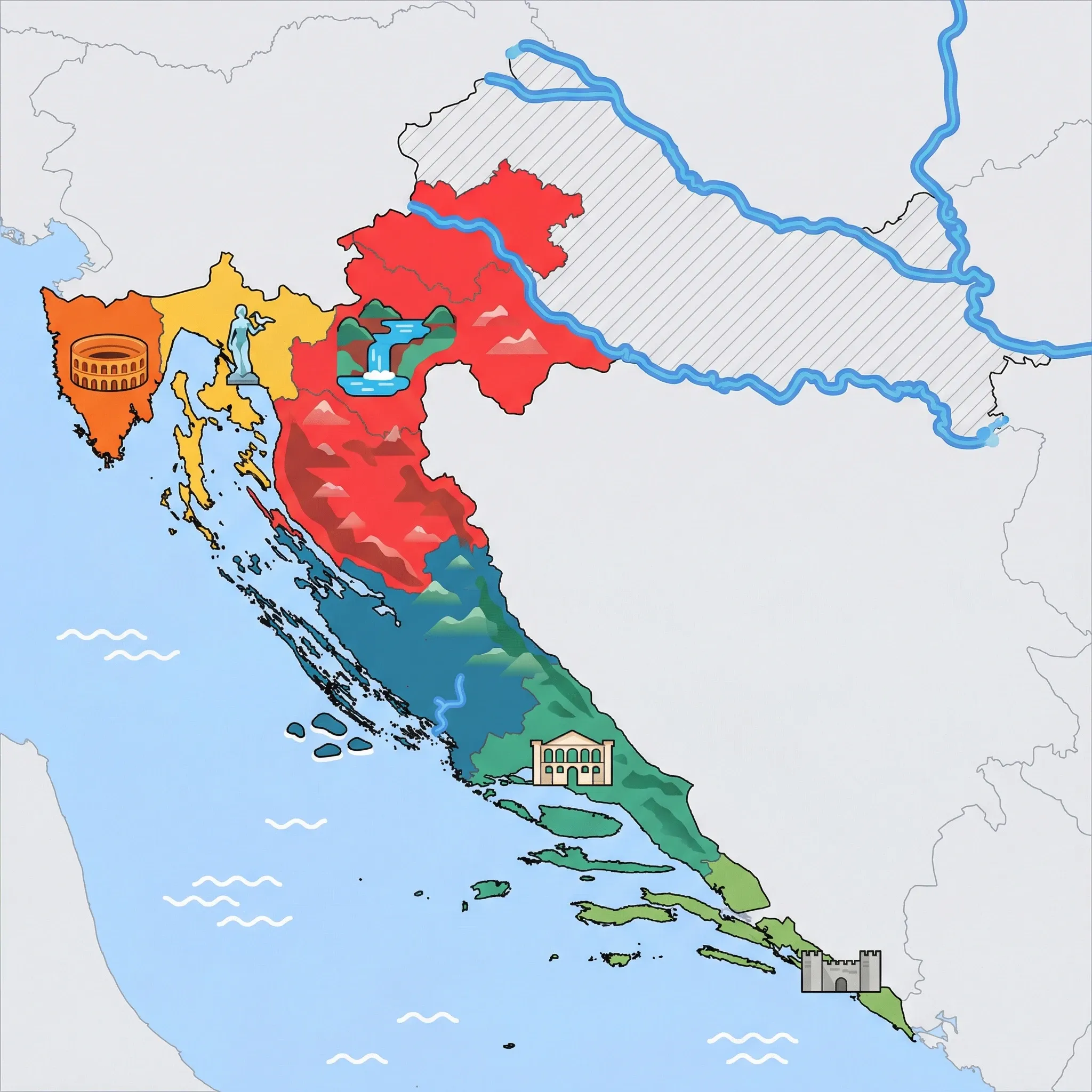
Click a region to explore
Northern Dalmatia strikes a fantastic balance: it has the historic charm of the south but with slightly fewer crowds and better access to nature. The region is dominated by Zadar, a city that has brilliantly fused its Roman forums with modern art installations that appeal directly to children. The coastline here is incredibly indented, protecting hundreds of islands that make for calm, safe sailing and swimming waters. Unlike the steep mountains of the south, the coast here is more varied, ranging from the dramatic canyons of Paklenica to the flat, salt-rich plains of Nin.
For active families, this is the prime playground. You have three National Parks within easy reach. The sailing here is world-class, and the "bare" islands of Kornati offer a Robinson Crusoe experience that feels like visiting another planet. The region also hosts the island of Pag, famous for its lunar landscape and sheep cheese, connected to the mainland by a bridge, making it an easy day trip. The atmosphere is laid-back and artistic, with Zadar's waterfront acting as a massive communal living room where families gather every evening.
Key Attractions
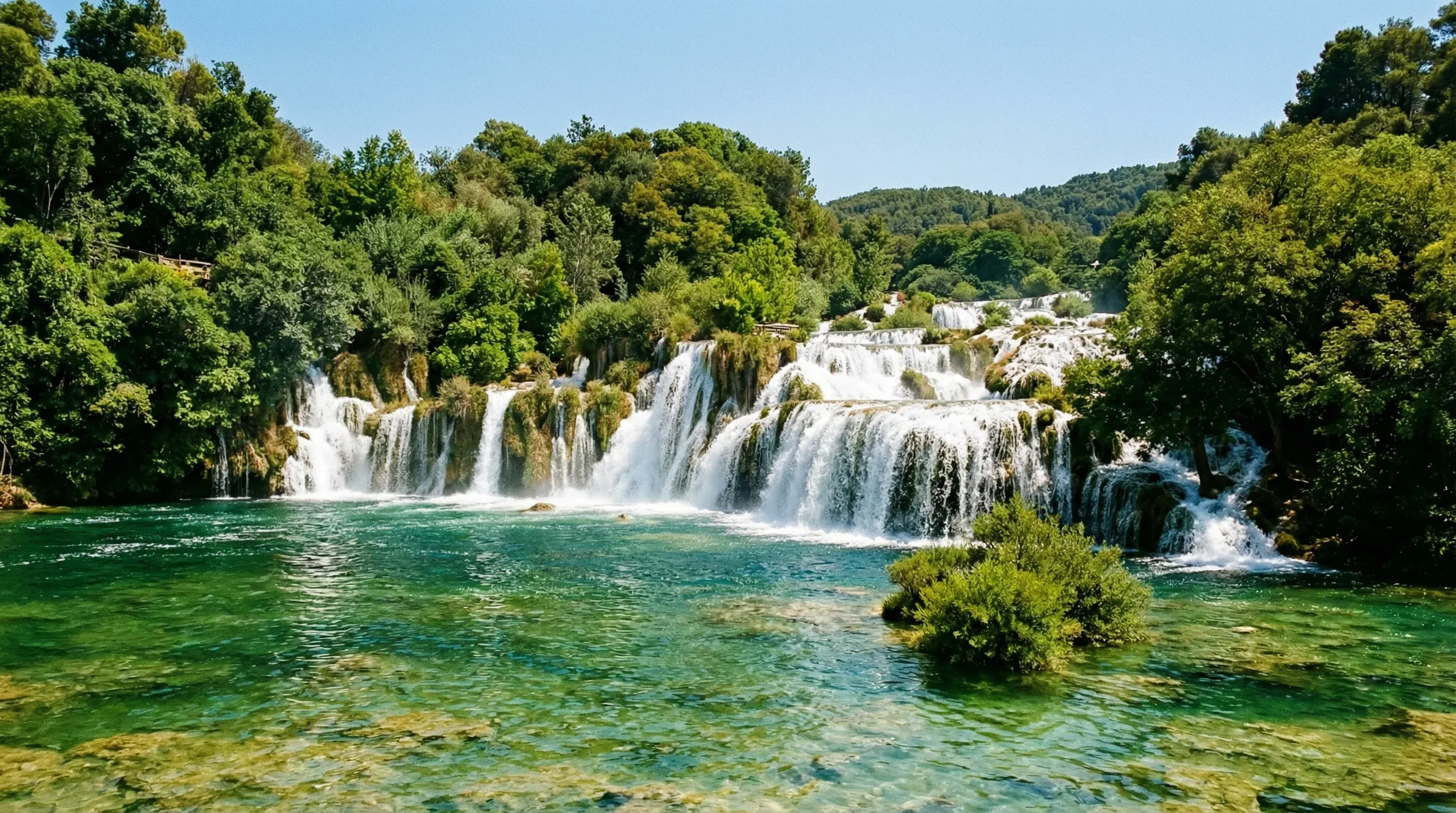
Zadar's waterfront is home to two unique installations: the Sea Organ, a set of stone steps that plays harmonic chords powered by the waves, and the Greeting to the Sun, a giant solar-powered dancefloor that lights up at night—kids absolutely love chasing the lights here. Inland, Krka National Park is a major highlight. Unlike Plitvice, you can get closer to the water here (though swimming rules have tightened), and the wooden boardwalks over the rushing water are thrilling but safe. In Šibenik, the St. Nicholas' Fortress is a UNESCO site that can be visited by boat, looking like a stone wedge floating on the sea.
For a unique beach day, head to Sakarun Beach on Dugi Otok, known for its Caribbean-blue water and white sand. Alternatively, visiting the Lun Olive Gardens on Pag allows kids to see 1,000-year-old wild olive trees that look like gnarly fairytale creatures.
Practical Advice
Zadar is a great base because it is flat and stroller-friendly, unlike the stepped streets of Dubrovnik. If visiting Krka National Park, go as early as possible (8:00 am) to avoid the crushing midday crowds. The sun on Pag island is intense due to the lack of shade (it's mostly rock), so extra sun protection is vital there.
Food & Drink
Typical meal times: Lunch 12:30 pm to 2:30 pm. Dinner 7:30 pm to 10:00 pm. Zadar has a lively street food scene.
Typical meal costs: Very reasonable. Pizza slices or burek cost €2–4 (approx. $2.15–4.30 USD / £1.70–3.40 GBP). Sit-down meals range €15–25 (approx. $16–27 USD / £13–21 GBP) per main.
Dietary requirements: Easy to find grilled meat and fish. Pag cheese is a must for vegetarians (who eat dairy).
Signature dishes:
- Paški sir (Pag Cheese) – A hard, distinctively salty sheep cheese, flavored by the salt dust that the wind blows onto the island's sagebrush.
- Maraschino – A sweet cherry liqueur from Zadar (for the parents!), often used in desserts.
- Šokol – A cured pork neck delicacy specific to the town of Nin, dried in the bura wind.
Why this score?
This region is an outdoor enthusiast's hub, featuring Paklenica National Park, which is one of Europe's premier rock climbing and hiking destinations. The Kornati islands offer some of the most remote sailing experiences in the Mediterranean, requiring significant self-sufficiency. While the coastal towns are developed, the immediate proximity to deep canyons and karst mountains provides a more authentic adventure profile.
Why this score?
Zadar and Šibenik both have general hospitals that provide adequate care for the vast majority of tourist needs and emergencies. While these facilities are reliable, they are not as large or specialized as the medical centers in Zagreb or Rijeka. Emergency services are well-practiced in mountain rescues due to the popularity of Paklenica National Park.
Why this score?
Centered on Zadar and Šibenik, this region has seen a significant boost in international popularity due to its budget airline hub and the massive draw of Krka National Park. It attracts a moderate-to-high flow of international travelers, though it is often viewed as a slightly quieter alternative to the Central and Southern coasts. Major sites like the Sea Organ and the Kornati archipelago are well-known to European travelers.

Generally the best value coastal region. While entrance fees to National Parks are high (€20–40 / approx. $21–43 USD / £17–34 GBP per adult in summer), food and accommodation are cheaper than in Istria or the South. A family apartment can often be found for €70–100 (approx. $75–108 USD / £60–85 GBP) per night.

Getting Here & Around
Getting Here
- Airports – Zadar Airport (ZAD) is a major hub for low-cost carriers (Ryanair), making this one of the cheapest regions to fly into.
- Driving – Zadar is directly on the A1 motorway. The drive from Zagreb takes about 3 hours.
- Bus – Excellent connections. The bus from Zadar to the Krka National Park takes about 50 minutes.
Getting Around
- Ferry – Extensive network connecting Zadar to Ugljan, Dugi Otok, and Silba.
- Car – Essential for visiting the National Parks like Paklenica National Park.
- Walking – The historic peninsulas of Zadar and Šibenik are pedestrian-only zones.
Nearby Airports (1 airport)
Zadar Airport
ZADZadar
View full flight map for Croatia →
Official Links

Packing List
The strong, steady afternoon winds on beaches like Nin make for perfect kite-flying.
The sun is extremely strong on the reflective white stone of Pag and Kornati.
Essential for listening to the Sea Organ at sunset; stone steps can be cold/hard.
Most beaches are pebbly or rocky, and sea urchins are common in the shallows.
Essential for keeping phones and wallets dry during ferry rides, boat trips, and kayaking.
Catamaran crossings between islands can be choppy; helpful for sensitive kids.
Mosquitoes can be very active in the evenings, especially near pine forests and national parks.
The Adriatic is exceptionally clear; bringing your own mask ensures kids can explore underwater anytime.

Activities & Best Times

Hiking, wildlife, outdoor exploration, ecotourism
Home to world-class karst landscapes in Krka and Paklenica National Parks, offering spectacular waterfalls and canyoning. Peak months avoid the extreme summer heat while ensuring all trails and park facilities are fully accessible.

Urban tourism, museums, historical sites, architecture
Rich in Venetian and Roman heritage, anchored by the UNESCO-listed Cathedral in Šibenik and Zadar's historic center. Late spring and early autumn provide the best conditions for exploring ancient streets without the mid-summer crowds.

Sport tourism, fitness activities, active recreation
Boasts internationally recognized rock climbing at Paklenica and high-quality adventure parks near Biograd. Peak months offer the optimal balance of dry weather and manageable temperatures for intensive physical activity.

Beach resorts, marine activities: diving, snorkelling, kite surfing, wind surfing, sailing
Features pristine Adriatic waters and unique coastal spots like Sakarun Beach and the Sea Organ. Seasonal timing is restricted by water temperatures, with peak visitation during the warm summer months.

Learning experiences, scientific sites, historical education
Engaging facilities like the Museum of Ancient Glass and Paklenica's visitor centers offer distinctive learning opportunities. Best visited when the surrounding regions are active but not overwhelmed by peak summer tourism.

Scenic drives, countryside tours, route-based travel
The Adriatic Highway and the lunar landscapes of Pag Island provide exceptional scenic driving experiences. Spring and autumn offer the best visibility and most comfortable driving temperatures for families.

Amusement parks, family entertainment venues
Offers quality regional family entertainment at Dalmaland and Aquapark Dalmatia. These facilities operate seasonally, with peak demand and full availability occurring during the summer school holiday period.

Events, celebrations, seasonal attractions
Anchored by international electronic music events like Hideout Festival on Pag. While culturally significant, these events are highly concentrated in the summer and cater more to youth than general family travelers.

Attractions (21 total)



Public Holidays & Calendar Next 12 months
Public holidays, festivals, cultural celebrations, and seasonal natural phenomena coming up in Northern Dalmatian Coast over the next 12 months.
Loading holidays and events...

Travel Advisory
Croatia is consistently rated as a safe destination by all major international agencies. Standard personal safety awareness is recommended, as with any European destination.
Safety Topics
Traveller Advice (4 groups)

While generally safe, travelers should be aware that public displays of affection may attract unwanted attention in less metropolitan areas.

Ensure you carry a valid passport at all times and register your stay with the local police within 48 hours of arrival if your accommodation provider does not handle this for you.

Exercise caution when using taxis alone. It is recommended to use reputable ride-sharing apps, share your trip status with others, and note the taxi identification number.

Avoid off-road travel and uncultivated land in Karlovac and Lika-Senj counties due to a residual landmine risk. Always stay on marked paths and heed international warning signs in these regions.
Agency Summaries
Croatia remains a safe destination. Most visits are trouble-free, though tourists should be alert to sporadic bomb threats in public spaces and potential violence at major sporting events.
Croatia is generally safe for visitors, requiring standard safety measures similar to those in Canada. Travelers should maintain awareness of petty crime and seasonal risks.
No major travel restrictions are in place. Visitors are advised to follow local laws and be mindful of common tourist-related safety issues such as petty theft and overcharging.
Standard safety precautions are sufficient for most of the country. Specific regional risks exist in forested areas where landmines remain from past conflicts.
Travelers should use common sense and standard security measures. Entry requirements follow Schengen area protocols, and visitors must register their presence with local authorities.
Violent crime is rare, but petty crime is prevalent in high-traffic tourist zones. Environmental hazards like summer wildfires and tick-borne illnesses should be noted.
Information is provided for general guidance only and does not constitute travel, safety, medical, or legal advice. Conditions may change. Users are responsible for independently verifying information before travel.