

⚠️ SAFETY WARNING: Due to severe shortages of fuel, medicine, and electricity, government agencies (including CA, USA, UK, AU, IE, and NZ) advise travelers to reconsider their need to travel (Level 2) or exercise increased caution. Nationwide power outages are frequent, and medical infrastructure is critically limited. Families are strongly urged to consult their own government's official travel advisory before considering a trip, as circumstances and risk assessments vary.
Overview
Cuba is the Caribbean's largest island, a land trapped in a fascinating time warp where 1950s Chevrolets roll past crumbling Spanish colonial facades. For families, it offers a unique blend of beach relaxation and eye-opening cultural immersion. The island is famous for its music, from the son of Santiago to the salsa of Havana, and its safe, welcoming atmosphere where children are treated with affection. However, the current economic crisis means travel here is an adventure that demands flexibility; it is best suited for experienced travel families who can navigate logistical hiccups with a smile.
Beyond the cities, the island boasts spectacular natural beauty. In Pinar del Río & Tobacco Country, limestone mogotes rise from green tobacco fields, offering hiking and cave exploration. The North Coast Resorts & Jardines del Rey offer some of the world's finest beaches with calm, shallow waters perfect for younger kids. While the infrastructure challenges are real, the chance to disconnect from the digital world and connect with a resilient, joyful culture makes Cuba an unforgettable classroom for young travelers.
Key Attractions
Start your journey in the capital, Havana & Western Cuba, where Old Havana (Habana Vieja) captivates with its four main plazas, street performers, and living history. Kids will love riding in a classic convertible along El Malecón, the city's iconic seawall, especially at sunset. For a whimsical art experience, visit Fusterlandia, a neighborhood covered in colorful mosaics that feels like a real-life kaleidoscope.
For sun and sand, Varadero Beach is world-renowned for its 20 kilometers of powder-soft sand and family-friendly resorts. Further east in Central Cuba & Colonial Heartland, the town of Trinidad Historic Center is a UNESCO gem where you can walk on cobblestones and visit the Valle de los Ingenios to learn about the sugar trade. Nature lovers should not miss El Nicho waterfalls, where cool natural pools offer a refreshing break from the heat.
In the west, the Viñales Valley offers a Jurassic Park-like landscape where families can take easy horseback rides to visit local farms. For a more secluded beach experience, the cays of the north, such as Cayo Santa María, provide luxury and tranquility away from the bustle of the mainland.
Practical Advice
The best time to visit is the dry season from November to April. Cash is king-bring enough EUR or USD cash for your entire trip, as US cards do not work and non-US cards are unreliable; exchange casually for CUP only as needed for small purchases. Internet is limited and often requires scratch cards in public parks, though some hotels have Wi-Fi. Comprehensive medical insurance is a condition of entry. Pack a full medical kit, as local pharmacies are often empty.
Food & Drink
Typical meal times: Lunch is typically 12:00 pm to 3:00 pm, and dinner runs from 7:00 pm to 10:00 pm.
Typical meal costs: 3,500–7,000 CUP (approx. $10–20 USD / €9–18 EUR) for a main dish in a private restaurant (paladar). State-run places are cheaper but often lack food.
Dietary requirements: Vegetarian options are generally limited to rice, beans, omelets, and fruit. Vegan and gluten-free travelers must be extremely proactive and bring their own snacks, as understanding of these diets is low and specialty products are non-existent.
Family-friendly dining: Cubans love children, and kids are welcome everywhere. Highchairs are rare outside resorts. Menus are simple, with grilled chicken or fish and rice (arroz con gris) being safe staples for fussy eaters.
Signature dishes:
- Ropa Vieja – Shredded beef slow-cooked in a tomato-based criollo sauce with peppers and onions, the national dish.
- Moros y Cristianos – Black beans and white rice cooked together with spices, a savory side dish found at almost every meal.
- Tostones – Twice-fried green plantain wheels, salted and served as a crunchy, potato-chip-like snack kids usually love.
- Ajiaco – A hearty country stew made with corn, meat, and root vegetables like malanga and yucca.
- Flan – A rich, creamy caramel custard dessert that is a favorite sweet treat across the island.
Safety
While violent crime is lower than in many other Caribbean destinations, the economic crisis has led to an increase in petty theft and opportunistic crime. The biggest safety risk for families comes from infrastructure failures: sudden blackouts can leave streets pitch black (bring flashlights), and sidewalks are often broken and hazardous for strollers. Avoid drinking tap water under any circumstances; stick to bottled or purified water. Dengue fever is a risk, so diligent mosquito protection is essential.

While local life is inexpensive, shortages mean tourists pay a premium for comfort. A family of four should budget 50,000–90,000 CUP (approx. $150–250 USD / €140–230 EUR) per day for private accommodation, meals in paladares, and private car transport. Bring all cash in USD or EUR.
Age Suitability





Did you know? Cuba welcomes approximately 1.6 million international visitors per year. Most visitors come from Americas.
Explore Regions
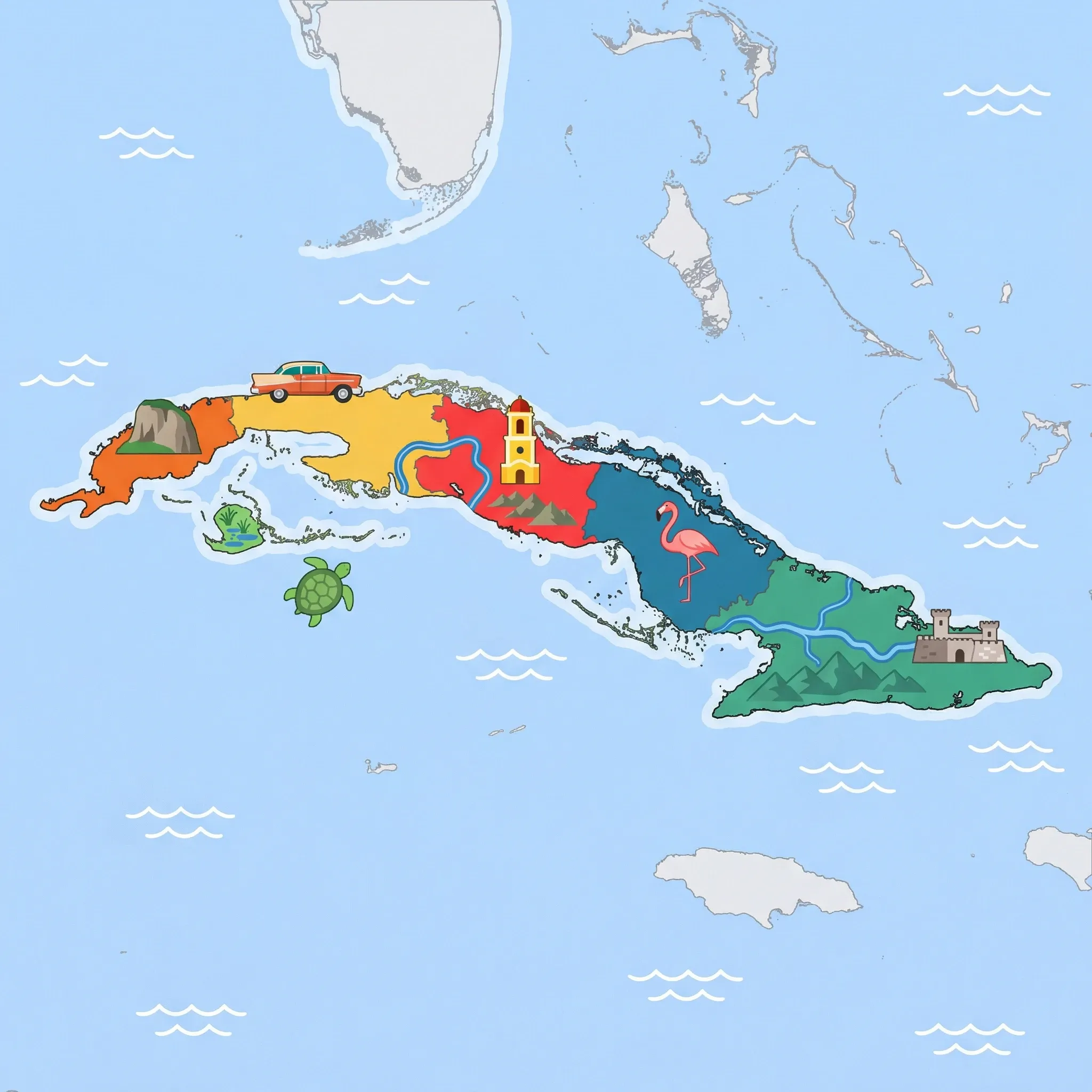
6 Regions
Central Cuba & Colonial Heartland
Cobblestones, waterfalls, and Caribbean charm 🏰🌊
Eastern Cuba & Sierra Maestra
Wild mountains and the rhythm of the Caribbean 🥁⛰️
Havana & Western Cuba
Classic cars, Spanish forts, and vibrant street life 🚗🏰
Island Cuba & Offshore Cays
Remote islands, sea turtles, and endless white sand 🐢🏝️
North Coast Resorts & Jardines del Rey
Flamingos, turquoise lagoons, and resort relaxation 🦩🍹
Pinar del Río & Tobacco Country
Limestone valleys, caves, and cowboy culture 🤠🌄
Click on a region marker to explore details. Use the dropdown to color regions by activity suitability.

Getting There & Around
Getting There
- By Air – José Martí International Airport (HAV) in Havana is the main gateway. Varadero (VRA) also receives many international charter flights.
- Entry Requirements – All visitors need a Tourist Card (Visa). US citizens must comply with one of 12 authorized categories (e.g., "Support for the Cuban People") and cannot travel for pure tourism. You must also complete the digital D'Viajeros form 72 hours before arrival. Check your government website for the latest visa requirements, or use the IATA Travel Centre entry-requirements checker.
Getting Around
- Private Taxis/Transfers – The most reliable option for families. Classic American cars (almendrones) can be hired for city tours or inter-city transfers, but ensure they have seatbelts.
- Viazul Bus – The tourist bus network connects major hubs like Havana and Trinidad Historic Center. It is reliable and air-conditioned, but tickets must be booked days in advance.
- Car Hire – Not recommended due to severe fuel shortages; gas stations often have days-long queues or no fuel at all.
- Domestic Flights – erratic and frequently cancelled due to aviation fuel shortages.

Packing List
Bottled water shortages are common; a LifeStraw or Grayl bottle ensures you can drink tap water safely.
ATMs often fail or have poor rates; US cards don't work. Cash is essential for almost all payments.
Rarely provided in public restrooms or even some museums/restaurants due to chronic shortages.
Daily blackouts are frequent and can last hours; keeps phones and fans charged.
Food can be bland and condiments are often unavailable in restaurants due to supply chain issues.
Pharmacies are empty. Pack painkillers, antibiotics, antihistamines, and stomach meds.
Essential for sleeping during power outages when air conditioning cuts out in the tropical heat.
Internet is slow, expensive, and restricted to specific zones. Offline navigation is vital.

Activities & Best Times

Adventure & Nature
ExcellentHiking, wildlife, outdoor exploration, ecotourism
Home to Cuba's highest peak and the UNESCO-listed Alejandro de Humboldt National Park, offering world-class tropical biodiversity and rugged trekking. Peak months avoid the extreme humidity and heavy rains that make mountain trails difficult for families.
A world-class destination for its unique Mogote karst formations and the extensive Gran Caverna de Santo Tomás. Optimal exploration occurs from December to March when temperatures are comfortable and trails in the Viñales Valley remain dry.
Claims 'over ten significant natural attractions' but editorial list shows Viñales (which is actually in Pinar del Río region). Without clear evidence of 10+ world-class natural sites, 'excellent' is over-rated.

City & Cultural
ExcellentUrban tourism, museums, historical sites, architecture
Santiago de Cuba offers an unparalleled Afro-Cuban cultural experience and historic UNESCO sites like San Pedro de la Roca. July is a peak month despite the heat due to the culturally significant Carnival of Santiago.
Home to UNESCO-listed Trinidad and Cienfuegos, the region offers remarkably preserved Spanish colonial architecture and authentic Caribbean street life. Peak months provide comfortable temperatures for walking tours, while the late summer is characterized by intense humidity and tropical storm risks.
Old Havana is a UNESCO-listed masterpiece of colonial architecture and vibrant street life, offering world-class music and historical depth. The cooler winter months are perfect for walking the historic quarters, while peak hurricane season in autumn can disrupt travel plans.

Educational & Exploratory
Very GoodLearning experiences, scientific sites, historical education
Boasts internationally significant sites like the Pharmaceutical Museum and the National Museum of Natural History, offering deep dives into Caribbean science and history. Indoor facilities provide year-round learning, though the city is most pleasant for families during the dry, cooler months.
Rich in revolutionary history and natural science museums, including the remote Comandancia de la Plata. Best visited in the drier, cooler months when remote archaeological and historical sites are more accessible.
Features internationally significant conservation sites like the Sea Turtle Rescue Center, which offers engaging scientific learning for families. The general tourism peak provides the best facility access, though summer shoulder months align with local turtle nesting activity.

Sports & Active
Very GoodSport tourism, fitness activities, active recreation
Features iconic cycling routes like La Farola and challenging summit hikes on Pico Turquino that attract international outdoor enthusiasts. Summer months are designated off-season due to dangerously high heat indices for active sports.
Offers world-class scuba diving at María la Gorda and exceptional hiking and caving throughout the Sierra de los Órganos. Activities are best during the dry season when sea visibility is high and mountain trails are safe.
Features established hiking infrastructure in Topes de Collantes and unique canopy tours over colonial landscapes. Discerning families should visit in the cooler dry season to ensure safety and comfort, as extreme heat and heavy rains can impact outdoor facilities from August through October.

Beach & Sea
GoodBeach resorts, marine activities: diving, snorkelling, kite surfing, wind surfing, sailing
Offers pristine beaches in Guardalavaca and Pesquero with high-quality international resorts and clear Caribbean waters. Sept-Oct is avoided due to the peak of the Atlantic hurricane season and high storm surge risk.
Home to iconic beaches like Playa Paraíso and Playa Sirena, known for crystal-clear waters and pristine sands. Optimal conditions for sea visibility and comfort are found in the dry season, with late summer bringing a high risk of tropical storms.
Home to remote, high-quality keys like Cayo Levisa and Cayo Jutías, offering pristine sands and excellent reef access. Peak visits occur during the dry winter months to avoid the humidity and hurricane risk of the summer wet season.

Festivals & Seasonal
GoodEvents, celebrations, seasonal attractions
Santiago Carnival is described as a 'major international cultural event.' This is Cuba's most famous carnival and warrants 'good' rating minimum.
Las Parrandas de Remedios is described as 'one of Cuba's most [significant]' festivals in December. A nationally important festival warrants 'good' not 'marginal'.
Havana hosts prestigious international jazz and film festivals in December and January, attracting a global cultural elite. These events define the peak season, while the International Ballet Festival offers a strong shoulder-season draw in late autumn.

Road Trips & Scenic
GoodScenic drives, countryside tours, route-based travel
The La Farola and Carretera Granma provide some of the Caribbean's most dramatic coastal and mountain driving scenery. Driving is least recommended in late summer/early autumn when heavy rains can cause landslides on mountain passes.
The 'Ruta del Tabaco' offers a highly scenic and culturally rich driving experience through Cuba's premier tobacco-growing lands. Dry season months ensure the best road conditions and visibility for the dramatic mogote-filled landscapes.
Iconic routes like the Circuito Sur and the Pedraplén de Caibarién offer spectacular views of the Caribbean and the mountains. Driving is most enjoyable during the dry season when visibility is high and rural roads are in their best condition, avoiding the washout risks of the late wet season.

Theme Park & Entertainment
GoodAmusement parks, family entertainment venues
The National Aquarium and Parque Lenin provide significant family entertainment options with unique local character. These facilities are best visited when temperatures are moderate during the dry season, avoiding the peak storm months of September and October.
Regional facilities like the Bahía de Naranjo Dolphinarium provide family entertainment but lack the scale of global theme park destinations. Operational consistency is highest during the primary winter and summer tourist windows.
Includes specialized attractions like dolphinariums and cable skiing facilities. Visits are best during peak family travel windows when weather is most stable for outdoor entertainment.

Relaxation & Wellness
MarginalSpa retreats, wellness centers, peaceful getaways
The presence of historic thermal baths like San Diego de los Baños offers a traditional, if limited, wellness experience for travelers. Visit during the cooler months to best enjoy the restorative properties of the springs without the discomfort of peak Caribbean heat.
San Diego de los Baños provides a historic thermal bath experience, though facilities are modest compared to global spa benchmarks. The cooler months of the dry season are preferable for enjoying hot springs.
The historic thermal baths at Santa María del Rosario offer a traditional wellness experience, though specialized infrastructure is limited compared to global benchmarks. Cooler winter weather enhances the restorative experience of the natural springs.

Public Holidays & Calendar Next 12 months
Public holidays, festivals, cultural celebrations, and seasonal natural phenomena coming up in Cuba over the next 12 months.
Loading holidays and events...
Climate & Weather
Central Cuba & Colonial Heartland
Show Details
| Month | Temp °C | Rain | Humidity |
|---|
Eastern Cuba & Sierra Maestra
Show Details
| Month | Temp °C | Rain | Humidity |
|---|
Havana & Western Cuba
Show Details
| Month | Temp °C | Rain | Humidity |
|---|
Island Cuba & Offshore Cays
Show Details
| Month | Temp °C | Rain | Humidity |
|---|
North Coast Resorts & Jardines del Rey
Show Details
| Month | Temp °C | Rain | Humidity |
|---|
Pinar del Río & Tobacco Country
Show Details
| Month | Temp °C | Rain | Humidity |
|---|

Travel Advisory
A majority of international agencies now advise against non-essential travel to Cuba. The country is facing a systemic collapse of infrastructure, including nationwide power outages, severe shortages of fuel, food, and medicine, and major disruptions to international aviation.
Safety Topics
Traveller Advice (4 groups)

Travellers should bring sufficient cash in small denominations as international cards are often unusable and banking systems are disrupted. Stock up on essential items like toilet paper, toiletries, and non-perishable food before arrival.

Individuals with chronic health conditions should reconsider travel due to the critical shortage of prescription medications and medical supplies. Power outages may also affect the storage of refrigerated medicines or the use of medical devices.

While recent legal changes have expanded rights, including the legalization of same-sex marriage, public displays of affection may still meet with conservative social reactions outside of major cosmopolitan areas like Havana.

Female visitors generally experience a safe environment but should remain aware that verbal harassment is common. It is advisable to avoid walking alone in poorly lit areas at night, particularly during scheduled power blackouts.
Agency Summaries
The British government discourages all travel except for critical needs due to the island's nearing paralysis. National power failures and a lack of aviation fuel are causing significant flight cancellations and service breakdowns.
Canadians are advised to skip non-essential trips to Cuba because of a severe and worsening crisis involving shortages of fuel, power, and basic goods like food and medicine. Infrastructure is unstable, and airlines have significantly reduced service.
Ireland has raised its warning level to discourage non-essential visits. The economic and humanitarian situation has deteriorated, leading to life-threatening risks associated with power outages and limited consular support.
Australian authorities suggest rethinking travel plans due to persistent fuel shortages that affect essential services and transport. There is also a noted threat from violent crime and a lack of clean drinking water.
New Zealanders should be extra vigilant due to infrastructure failures. Fuel shortages and regular electricity blackouts are impacting transport, while petty crime remains a concern in urban and tourist zones.
U.S. officials recommend heightened awareness due to crime and a failing power grid. Travellers must also comply with specific legal categories for travel, as pure tourism remains restricted under U.S. law.
Information is provided for general guidance only and does not constitute travel, safety, medical, or legal advice. Conditions may change. Users are responsible for independently verifying information before travel.