

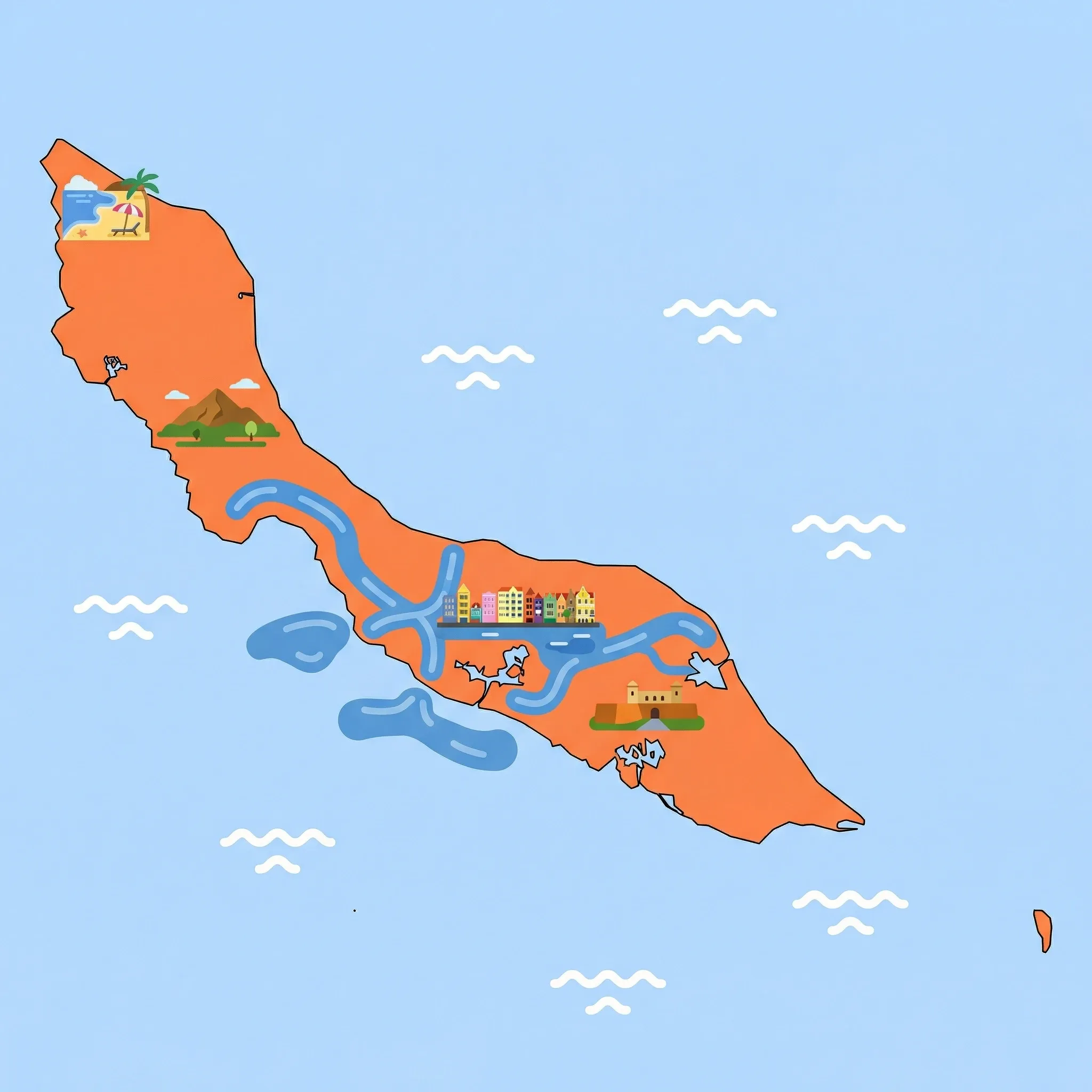
Curaçao offers a distinctively different Caribbean experience for families. Unlike the lush rainforest islands, this Dutch territory is semi-arid, covered in cacti and blessed with consistent trade winds that keep the heat manageable. Its location outside the main hurricane belt makes it a reliable destination year-round. The island is defined by its vibrant culture-a fusion of Dutch, Afro-Caribbean, and Latin influences-heard in the local Papiamentu language and seen in the iconic candy-colored waterfront of Willemstad. For families, the vibe is relaxed, safe, and incredibly diverse, offering everything from European-style cafe culture to rugged desert adventures.
The island's geography is perfect for children. The southern coast is lined with calm bays and inlets (bocas) where the water is crystal clear and shallow, making it ideal for young swimmers. Unlike destinations requiring boat trips to see marine life, Curaçao is famous for shore diving and snorkeling; families can spot turtles and colorful fish just steps from the sand. Beyond the beach, the island offers interactive museums, wildlife parks, and a rich history that feels accessible rather than overwhelming.
Key Attractions
For a perfect mix of education and fun, the Curaçao Sea Aquarium is a must-visit. Unlike typical aquariums, it uses an open-water system, meaning fresh seawater pumps constantly into the tanks. Children can interact with flamingos, watch dolphin presentations in the open sea, and even view marine life from a semi-submarine. For a classic beach day, Cas Abao Beach is often rated among the best in the Caribbean; its white sand, swaying palms, and calm shallow waters are perfect for toddlers, while older kids can snorkel along the rocky edges.
Active families should head west to Christoffel National Park, the island's largest nature reserve. It offers hiking trails suited to various abilities and the chance to spot the native Curaçao White-tailed Deer. Nearby, Shete Boka National Park offers a dramatic contrast to the calm south coast; here, children can watch massive waves crash against the rocky north shore and explore the Boka Tabla sea cave. Back in the capital, the Mikvé Israel-Emanuel Synagogue captivates children with its floor covered in white sand-a tribute to ancestors camping in the desert-while Fort Amsterdam allows them to walk the ramparts of a UNESCO World Heritage site.
Practical Advice
The best time to visit is from December to April, though the weather is warm year-round. Tap water in Curaçao is desalinated, safe, and delicious to drink, so bring reusable bottles. The sun is extremely strong; schedule outdoor activities for early morning or late afternoon. Renting a car is virtually essential for families, as the best beaches are spread out and public transport is limited.
Food & Drink
Typical meal times: Lunch is typically served from 12:00 pm to 2:00 pm, often the main meal of the day. Dinner is usually enjoyed between 6:00 pm and 9:00 pm.
Typical meal costs: 35–65 ANG (approx. $20–36 USD / €18–33 EUR) for a mid-range main course. Street food snacks cost around 5–10 ANG (approx. $3–6 USD / €2.50–5 EUR).
Dietary requirements: Vegetarian and gluten-free options are increasingly common in Willemstad and tourist areas, though less so at local roadside stands (Snèks). Dutch influence means dairy is common, but staff generally speak excellent English and can help with allergy queries.
Family-friendly dining: Curaçao is very child-friendly. Many restaurants offer "kindermenu" (kids' menus) featuring Dutch snacks like frikandel (skinless sausage) or chicken nuggets. Highchairs are standard in most sit-down establishments.
Signature dishes:
- Keshi Yena – Spiced meat (usually chicken or beef) stuffed inside a hollowed-out round of Edam or Gouda cheese, then baked. A rich, savory favorite.
- Karni Stobá – A hearty beef stew slow-cooked with vegetables and spices, typically served with rice or funchi.
- Funchi – A cornmeal polenta-like side dish, often served fried (Funchi Hasa) which kids usually love as a fry alternative.
- Pastechi – A fried crescent-shaped pastry filled with cheese, meat, or fish-the ultimate cheap and tasty on-the-go snack.
Family Travel Notice
Strict documentation is required for travellers under 18, including original birth certificates and signed consent forms from legal guardians. Parents should also monitor minors in nightlife areas where the legal drinking age of 18 may not be strictly enforced.

Curaçao is moderately priced. A family of four can expect to spend around 540–720 ANG (approx. $300–400 USD / €275–370 EUR) per day including car rental, mid-range accommodation, and meals. Local food trucks (Truk'i Pan) offer significant savings over tourist restaurants.
Age Suitability





Did you know? Curaçao welcomes approximately 490,000 international visitors per year. Most visitors come from Europe.
Why this score?
The island offers a blend of developed resort areas and manageable outdoor exploration, such as hiking the Christoffel Mountain Trail and diving at the Mushroom Forest. While the rugged north coast and the remote island of Klein Curaçao provide some off-the-beaten-path experiences, the infrastructure is robust enough that most activities are highly accessible for families.
Why this score?
Medical care is anchored by the Curaçao Medical Center (CMC), a modern facility opened in 2019 that offers high-quality services and Dutch-trained specialists. While it is one of the best-equipped facilities in the Southern Caribbean, it functions as a regional center rather than a global medical hub, and very complex cases may still require evacuation to the Netherlands or the US.
Why this score?
Curaçao welcomes approximately 500,000 international stay-over visitors annually, placing it as a moderate Caribbean destination compared to global hubs. Its popularity is driven by the UNESCO World Heritage site of Willemstad and its unique Dutch-Caribbean culture, though it remains a niche choice compared to mass-market neighbors like the Dominican Republic or Aruba.
Curaçao is priced moderately compared to high-end Caribbean destinations but is not a budget location. A mid-range family car rental costs ANG 90–150 (approx. $50–85 USD / €46–77 EUR) per day. Family accommodation in a vacation home or resort averages ANG 300–600 (approx. $165–335 USD / €150–310 EUR) per night. Supermarket prices are comparable to US/Europe prices as most goods are imported.

Getting There & Around
Getting There
- By Air – Curaçao International Airport (CUR), also known as Hato Airport, receives direct flights from North America (Miami, New York, Charlotte, Toronto), Europe (Amsterdam), and South America.
- By Sea – Willemstad is a major port of call for Caribbean cruise lines. The cruise terminal is within walking distance of Fort Amsterdam and downtown shopping.
- Entry Requirements – US, Canadian, UK, and EU citizens do not need a visa for stays up to 90 days. However, ALL travelers (including children) must complete the Digital Immigration Card (DI Card) online before departure. Check your government website for the latest visa requirements, or use the IATA Travel Centre entry-requirements checker.
Getting Around
- Car Hire – The most practical option for families. Renting a car allows you to reach hidden beaches like Cas Abao Beach and explore wilder areas like Shete Boka National Park at your own pace. Navigation apps work well.
- Taxis – Taxis are safe but expensive and do not use meters; rates are fixed based on destination. Always agree on the price (in USD or ANG) before getting in.
- Buses – "Konvooi" (large buses) and "Bus" (small vans) cover main routes from Willemstad. While cheap (approx. 2–3 ANG), schedules can be unreliable and they do not reach many secluded beaches.

Packing List
Many best snorkeling beaches have rocky entries, coral rubble, or sea urchins that hurt bare feet.
The island's constant, strong trade winds will easily blow away loose hats.
Essential for 'beach hopping' culture—keeps drinks and snacks cold in the hot car between stops.
Sun is intense and chemicals like oxybenzone are harmful to the coral reefs you will be swimming over.
Shore snorkeling is the main activity; renting gear daily adds up and quality varies.

Activities & Best Times

Beach & Sea
ExcellentBeach resorts, marine activities: diving, snorkelling, kite surfing, wind surfing, sailing
Curaçao has internationally renowned Caribbean beaches with exceptional water clarity, coral reefs, and iconic sites like Cas Abao and Kenepa Grandi. The island is a top-tier beach destination globally and should be rated excellent.

Adventure & Nature
Very GoodHiking, wildlife, outdoor exploration, ecotourism
Diverse arid landscapes featuring the Christoffel Mountain and Shete Boka National Park provide unique hiking and wildlife viewing. The drier first half of the year is optimal for trekking before humidity and seasonal rains peak in late autumn.

City & Cultural
Very GoodUrban tourism, museums, historical sites, architecture
Willemstad is a UNESCO World Heritage site known for its vibrant Handelskade waterfront, Queen Emma Bridge, and deep Jewish heritage. Cultural exploration is best during high-demand tourism months, avoiding the peak heat and rain of the late year.

Festivals & Seasonal
GoodEvents, celebrations, seasonal attractions
North Sea Jazz Curaçao is an internationally significant music festival, and Carnival is a major Caribbean cultural event. These warrant a 'good' rating rather than marginal.

Road Trips & Scenic
GoodScenic drives, countryside tours, route-based travel
The drive to Westpunt and the Christoffel National Park mountain drive offer scenic coastal and volcanic vistas. The driest months provide the best driving conditions and clearest viewpoints across the island's rugged terrain.

Sports & Active
GoodSport tourism, fitness activities, active recreation
Organized trails for hiking and mountain biking in the national parks provide solid infrastructure for active families. Conditions are most favorable for high-exertion activity during the cooler and less humid months from January to May.

Educational & Exploratory
MarginalLearning experiences, scientific sites, historical education
The Children's Museum and Maritime Museum offer quality insights into Caribbean history and marine biology for families. These are secondary attractions that follow general tourism peaks and provide good indoor alternatives during the warmer months.

Theme Park & Entertainment
MarginalAmusement parks, family entertainment venues
While the Sea Aquarium and Kunuku Aqua Resort exist, these are supplementary family attractions, not destination-defining theme parks. Theme parks are not a primary draw for Curaçao.

Attractions (13 total)



Public Holidays & Calendar Next 12 months
Public holidays, festivals, cultural celebrations, and seasonal natural phenomena coming up in Curaçao over the next 12 months.
Loading holidays and events...

Travel Advisory
All major agencies agree that Curaçao is a safe destination where standard travel safety awareness is sufficient.
Safety Topics
Traveller Advice (4 groups)

Strict documentation is required for travellers under 18, including original birth certificates and signed consent forms from legal guardians. Parents should also monitor minors in nightlife areas where the legal drinking age of 18 may not be strictly enforced.

Solo female travellers have reported instances of verbal abuse and harassment. It is advised to avoid unpatrolled beaches and unpopulated areas after dark.

Review regional guidance for the Dutch Caribbean; while generally progressive, social attitudes can vary outside of main tourist hubs.

Ensure you complete the mandatory Digital Immigration Card (DI card) online at least 48 to 72 hours before arrival to facilitate entry.
Agency Summaries
Travellers should maintain a standard level of security awareness. While the island is generally safe, petty crimes like pickpocketing and vehicle break-ins occur, particularly during major events like Carnival. Natural concerns include the June to November hurricane season and potential seismic activity.
The U.S. government recommends standard safety measures. Petty theft is a risk in tourist-heavy areas such as beaches and hotel lobbies. Health risks include mosquito-borne illnesses like Zika and Dengue. Road conditions can be hazardous during rainfall.
Security risks are considered low and similar to Ireland. Travellers are encouraged to register their trip and maintain typical vigilance against crime. Insurance should cover all planned water activities and medical evacuation.
General advice for the region emphasizes standard safety vigilance. Risks are comparable to those found in Australian cities, including petty crime and environmental hazards like tropical storms. Comprehensive travel insurance is strongly advised.
No specific travel warnings are in place. New Zealanders are advised to monitor local news, protect personal belongings, and be aware of health risks such as Chikungunya and Zika in the Caribbean region.
Most visits are trouble-free, though petty theft and street crime are present. There is a risk of violent crime associated with the illegal drug trade, though it rarely affects tourists. Travellers must complete a digital immigration card before arrival.
Information is provided for general guidance only and does not constitute travel, safety, medical, or legal advice. Conditions may change. Users are responsible for independently verifying information before travel.