

Overview
Floating in the far eastern Mediterranean, Cyprus is an island of intense contrasts and ancient charm that serves as a perfect introduction to the region for families. Geographically, it bridges Europe, Asia, and Africa, resulting in a culture that is deeply layered and uniquely welcoming. For families, the island’s greatest asset is its scale; you can drive from the snow-dusted peaks of Mount Olympus to the warm, crystal-clear waters of Fig Tree Bay in under an hour. The climate is famously sunny, boasting over 300 days of sunshine a year, making it a reliable destination for outdoor exploration almost any month.
Culturally, Cyprus is incredibly child-centric. The local concept of filoxenia (hospitality) means children are treated like VIPs in restaurants and villages. While the coastal resorts of Ayia Napa & East offer world-class beaches and waterparks, the interior holds quiet stone villages where time seems to stand still. Families can explore Roman villas with pristine mosaics in the morning and build sandcastles on Blue Flag beaches in the afternoon. It is a safe, English-speaking, and manageable destination that balances relaxation with genuine educational value.
Key Attractions
Cyprus packs a remarkable amount of history and fun into its coastline. In the west, the Paphos & West region is a UNESCO-listed treasure trove. Kids will love exploring the Paphos Archaeological Park, home to colorful Roman mosaics, and the spooky, underground chambers of the Tombs of the Kings, which feel like a real-life Indiana Jones set. Just up the coast, Coral Bay offers calm, shallow waters perfect for toddlers, while the legendary Aphrodite's Rock (Petra tou Romiou) provides a pebble beach and dramatic scenery for older kids to photograph.
For high-energy fun, the east coast is unbeatable. WaterWorld Themed Waterpark in Ayia Napa is one of Europe's largest, themed entirely around Greek mythology so kids can slide down 'Mount Olympus' or the 'River Odyssey'. For a change of pace, the Ayia Napa Sculpture Park offers an open-air art walk with sea views. In the south, history buffs should visit Kourion Archaeological Site to see a Greco-Roman theatre overlooking the sea, followed by a swim at nearby Kourion Beach. Families seeking cooler air should head to the Troodos Mountains to visit the opulent Kykkos Monastery or wander the cobblestone streets of Omodos Village.
Practical Advice
The best time to visit with children is during the shoulder seasons-May to June or September to October. During these months, the sea is warm enough for swimming, but the air temperature is manageable (25–30°C / 77–86°F). July and August can see temperatures soar above 35°C (95°F), which can be draining for young children. Cyprus drives on the left, making car hire easy for UK visitors. Tap water is generally safe to drink, though the taste varies, so bottled water is common. Sun safety is critical; the UV index is very high even on cloudy days.
Food & Drink
Typical meal times: Lunch is typically served late, from 1:00 pm to 3:30 pm. Dinner is a social affair that rarely starts before 8:00 pm, though tourist areas will serve families earlier, around 6:30 pm or 7:00 pm.
Typical meal costs: €45–70 (approx. $50–75 USD / £38–60 GBP) for a family meal at a local tavern. High-end restaurants in Limassol or Paphos will cost significantly more.
Dietary requirements: Vegetarian and vegan options are excellent, particularly during fasting periods (Lent). Gluten-free awareness is growing in tourist hubs but can be hit-or-miss in rural villages; always ask for 'no flour' (alevri).
Family-friendly dining: Children are welcome everywhere, even in upscale tavernas late at night. Highchairs are standard, but kids' menus are often just nuggets and chips-ordering small appetizers (meze) for them to share is a healthier and tastier option.
Signature dishes:
- Halloumi – The island's famous squeaky cheese, served grilled or fresh with watermelon.
- Souvlakia – Small skewers of pork or chicken grilled over charcoal, usually served in pitta bread with salad.
- Sheftalia – Herby minced pork sausages wrapped in caul fat, incredibly juicy and unique to Cyprus.
- Koupepia – Vine leaves stuffed with minced meat, rice, and herbs, softer and more tomato-rich than the Greek dolmades.
- Loukoumades – Deep-fried dough balls soaked in honey syrup and sprinkled with cinnamon, a favourite sweet treat for kids.
Family Travel Notice
Individuals pursuing international surrogacy should be aware that the process is legally intricate and requires specialized professional guidance.

Cyprus offers good value compared to Western Europe, though prices in tourist hubs like Ayia Napa can be higher. A family of four should budget €130–180 (approx. $140–195 USD / £110–155 GBP) per day for car hire, accommodation, and meals. Supermarkets are affordable, but imported brands can be pricey.
Age Suitability




Did you know? Cyprus welcomes approximately 4.0 million international visitors per year. Most visitors come from Europe.
Explore Regions
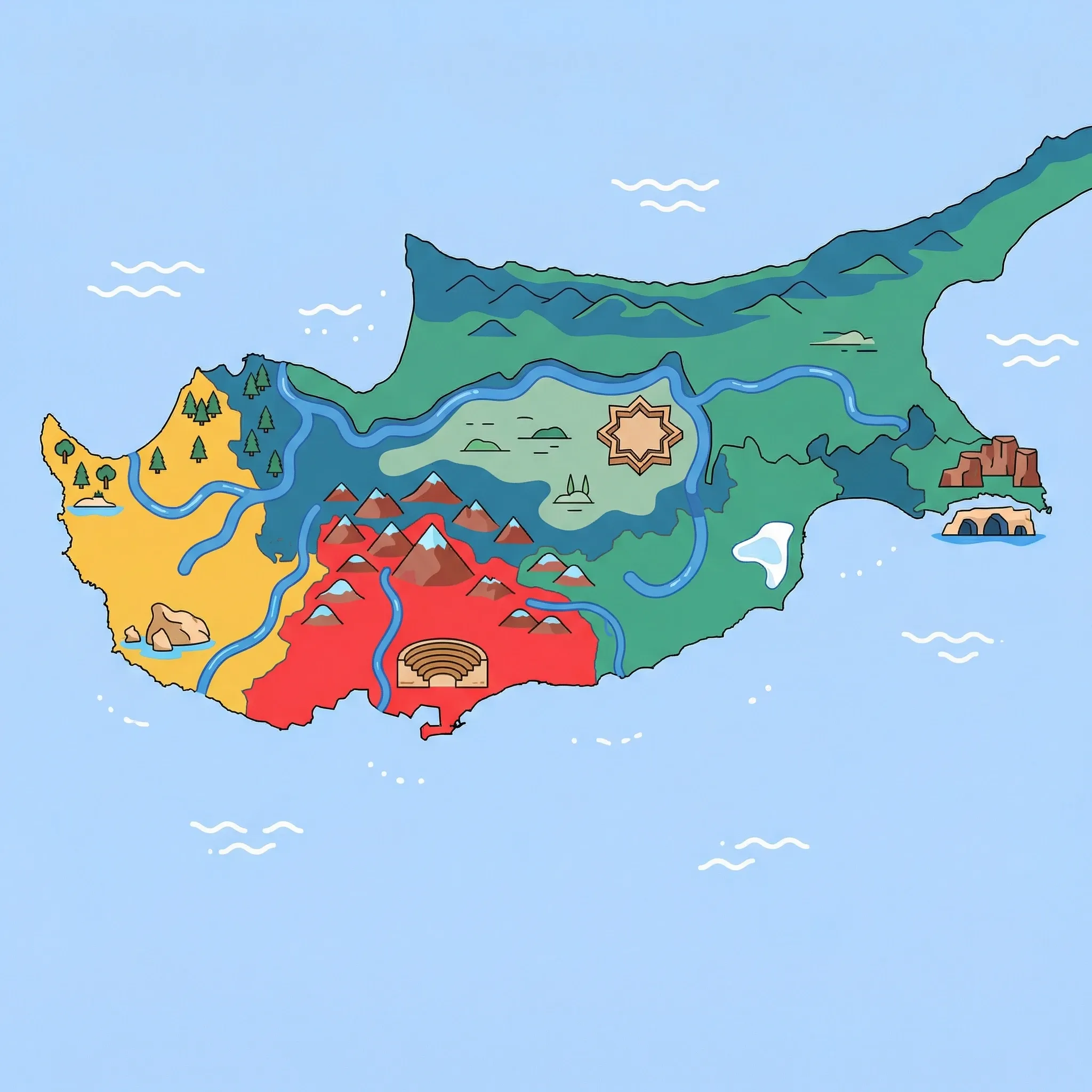
4 Regions
Ayia Napa & East
Golden sands, turquoise waters, and endless family fun 🏖️
Limassol & South
Cosmopolitan city vibes meeting ancient history 🏰
Nicosia & Interior
Ancient walls, mountain peaks, and hidden villages 🌲
Paphos & West
Where ancient myths meet wild nature 🐢
Click on a region marker to explore details. Use the dropdown to color regions by activity suitability.

Getting There & Around
Getting There
- By Air – Larnaca International Airport (LCA) is the main gateway, serving the east and central regions. Paphos International Airport (PFO) serves Paphos & West and is a hub for budget airlines.
- By Sea – Limited ferry services operate between Greece (Piraeus) and Limassol during the summer months, but flying is the standard mode of entry.
- Entry Requirements – EU, UK, and US citizens do not need a visa for stays up to 90 days. Check your government website for the latest visa requirements, or use the IATA Travel Centre entry-requirements checker.
Getting Around
- Car Hire – The most practical way to explore the island, especially for reaching remote beaches like Fig Tree Bay or mountain villages. Driving is on the left-hand side, and major roads are well-maintained.
- Buses – InterCity buses connect major towns like Limassol & South and Paphos cheaply (€4–7), but frequencies can be low. Local urban buses are useful for short hops within resort areas.
- Taxis – Widely available in tourist areas but can be expensive for long distances. Always ask for the meter to be used or agree on a fare beforehand.

Packing List
Essential for pebble beaches like Aphrodite’s Rock and hot sand in summer.
Cyprus uses the British 3-pin rectangular plug system, unlike the rest of Europe.
Strictly required for entering active monasteries like Kykkos (knees/shoulders covered).
Mosquitoes can be aggressive at night in coastal villas during summer.
Sunscreen is significantly more expensive in Cypriot tourist shops than in the UK/US.
Summer heat is intense; plastic bottles warm up in minutes.

Activities & Best Times

Adventure & Nature
Very GoodHiking, wildlife, outdoor exploration, ecotourism
The region combines major water parks with significant nature trails in the Troodos foothills, offering diverse outdoor family engagement. Spring and autumn are ideal for hiking, whereas the height of summer is better suited for water-based adventure parks.
The Akamas Peninsula and Avakas Gorge offer exceptional wilderness and endemic biodiversity, best explored in the blooming spring or mild autumn when heat is not prohibitive.
The Troodos Mountains offer a rich network of trails and national parks, including major sites like Caledonia Waterfalls and the UNESCO Biosphere Reserve. Peak season avoids winter snow and the most intense summer heat, though mountains provide a cool retreat during July and August.

City & Cultural
Very GoodUrban tourism, museums, historical sites, architecture
Home to the world-class Kourion archaeological site and authentic wine villages like Omodos, the region offers deep historical immersion. Peak visitation avoids the intense mid-summer heat and winter rains, focusing on the pleasant Mediterranean shoulder seasons.
UNESCO-listed archaeological parks and Byzantine churches provide world-class historical depth, though the intensive walking required is best avoided during the July-August heat.
Nicosia is a unique cultural hub with world-class institutions like the Cyprus Museum and historic Venetian walls, complemented by the painted Byzantine churches of Troodos. Extreme summer temperatures in the capital and rainy winter months make spring and autumn the most comfortable periods for exploration.

Sports & Active
Very GoodSport tourism, fitness activities, active recreation
Robust infrastructure for active families, including major adventure parks and internationally recognized hiking trails like the Artemis and Atalante. Optimal conditions occur during the transition months when temperatures support physical exertion without the extreme heat of mid-summer.
Boasts significant infrastructure for watersports, equestrian activities, and major hiking trails, with the shoulder seasons providing the ideal climate for high-intensity activity.
Features high-quality adventure parks and a range of technical nature trails suitable for active families. Conditions are optimal in the shoulder seasons when the weather is stable and cool enough for strenuous physical activity.

Beach & Sea
GoodBeach resorts, marine activities: diving, snorkelling, kite surfing, wind surfing, sailing
Limassol offers family-friendly urban beaches and the unique dark sands of Kourion, supported by high-quality infrastructure. Peak summer months provide the calm, warm waters essential for family swimming, while winter temperatures are too low for typical coastal recreation.
Home to iconic coastal sites like the Blue Lagoon and Coral Bay, providing clear waters and high-quality resort infrastructure that peaks during the hot summer months.
Home to iconic blue-flag shores like Nissi Beach and Fig Tree Bay, offering exceptionally clear, shallow waters perfect for young families. The peak summer months provide the warmest swimming temperatures, while the shoulder months offer a more tranquil experience for discerning travelers.

Educational & Exploratory
GoodLearning experiences, scientific sites, historical education
Features unique ecological education centers focused on Mediterranean turtle conservation at Lara Bay, with activity peaks during the seasonal nesting and hatching cycles.
Specific facilities like the Akrotiri Environmental Centre and the Motor Museum provide focused learning opportunities for curious families. These indoor or structured sites are best visited when the weather is mild, avoiding the peak heat of summer and the wettest winter months.
The Troodos Geopark and the Cyprus Museum of Natural History offer specialized scientific engagement for families. While significant within the Eastern Mediterranean, they serve more as high-quality local resources than primary international travel motivators.

Road Trips & Scenic
GoodScenic drives, countryside tours, route-based travel
The Commandaria and Wine Routes offer scenic drives through the Limassol foothills, connecting historic villages and vineyards via well-maintained roads. These routes are most appealing in spring and autumn when the landscape is vibrant and driving conditions are optimal.
Well-defined wine routes through the Laona and Akamas regions offer scenic drives through authentic rural landscapes, optimal during the spring bloom or the autumn harvest.
The Pitsilia and Commandaria wine routes offer exceptional scenic driving through traditional villages and vineyards. Winter months can be challenging due to mountain ice and fog, while spring and autumn provide the best lighting and vineyard colors.

Relaxation & Wellness
GoodSpa retreats, wellness centers, peaceful getaways
Authentic wellness experiences are available through traditional hamams in Nicosia and the specialized sulphur springs in the mountain village of Kalopanayiotis. These are best enjoyed in cooler months, as the high summer heat makes thermal treatments uncomfortable.
Anchored by the historic Hammam Baths, this region offers authentic traditional wellness experiences that are most restorative during the cooler winter and spring months.

Theme Park & Entertainment
MarginalAmusement parks, family entertainment venues
Features regional-scale water and rope parks that provide reliable entertainment for families but lack the scale of global theme park destinations. Operational seasons are strictly limited to the warmer months, with peak demand coinciding with summer school holidays.
Limited to smaller regional facilities like Ithaki Amusement Park, which serve as supplementary entertainment for families during the peak summer holiday season.
Features local family entertainment like Papafilipou Luna Park and several rope adventure parks in the mountains. These provide good regional entertainment but lack the international standing of major global theme park destinations.

Ski & Snow
MarginalWinter sports, ski resorts, snow activities

Public Holidays & Calendar Next 12 months
Public holidays, festivals, cultural celebrations, and seasonal natural phenomena coming up in Cyprus over the next 12 months.
Loading holidays and events...
Climate & Weather
Ayia Napa & East
Show Details
| Month | Temp °C | Rain | Humidity |
|---|
Limassol & South
Show Details
| Month | Temp °C | Rain | Humidity |
|---|
Nicosia & Interior
Show Details
| Month | Temp °C | Rain | Humidity |
|---|
Paphos & West
Show Details
| Month | Temp °C | Rain | Humidity |
|---|

Travel Advisory
While most agencies maintain that travel is possible, the majority now advise a higher degree of vigilance than normal due to regional conflict spillover risks and security concerns.
Safety Topics
Traveller Advice (3 groups)

Visitors should avoid the buffer zone and ensure they enter through recognized ports to maintain legal status. Maintain flexible travel plans in case of regional airspace closures.

Individuals pursuing international surrogacy should be aware that the process is legally intricate and requires specialized professional guidance.

While same-sex relationships are legally recognized, social acceptance can vary, particularly in more conservative or northern areas.
Agency Summaries
Travelers are urged to rethink their plans because of the risk of armed conflict and the embassy's restricted capacity to assist citizens, particularly in the northern region.
Increased awareness is required due to regional tensions and recent drone activity impacting military base areas on the island.
Standard safety measures are recommended, though visitors should remain alert to airport disruptions and register their presence with the embassy.
Vigilance is advised due to active peacekeeping operations and the possibility of retaliatory strikes in the broader region affecting safety and travel.
While no general travel ban is in place, travelers are warned that regional escalations and the global threat of terrorism present ongoing security risks.
Officials have raised the risk level due to the potential for falling military debris and flight path interruptions resulting from regional hostilities.
Information is provided for general guidance only and does not constitute travel, safety, medical, or legal advice. Conditions may change. Users are responsible for independently verifying information before travel.