
Congo River & Basin
Journey into the green heart of Africa 🌿🛶
Click a region to explore
⚠️ SAFETY WARNING: Due to limited infrastructure, lack of medical facilities, and crime in remote areas, government agencies (including CA, USA, UK, and AU) advise travelers to reconsider or avoid travel to this region. The river basin is vast and isolated; emergency assistance is often unavailable. Families are strongly urged to consult their own government's official travel advisory before considering a trip, as circumstances and risk assessments vary.
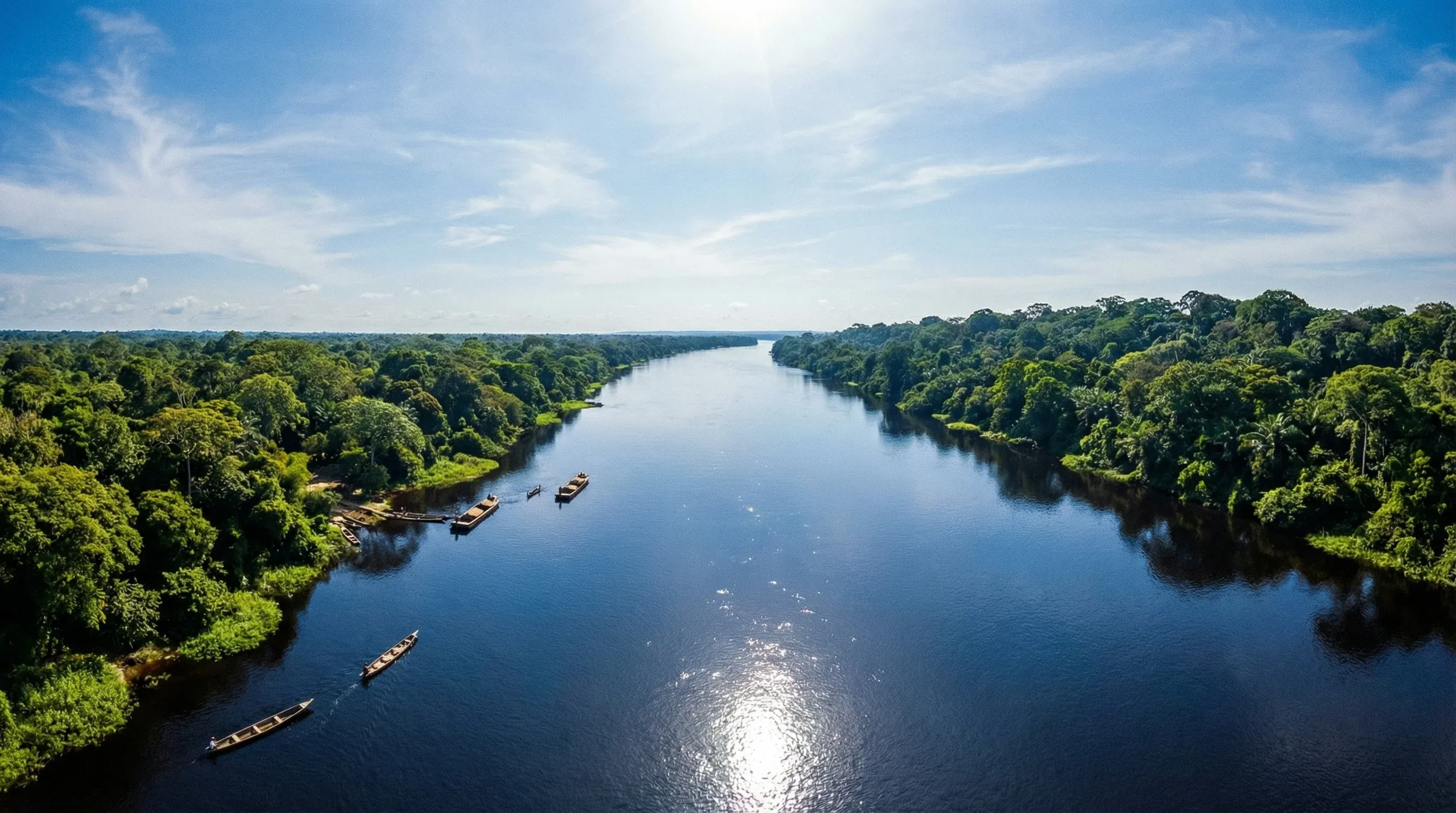
The Congo River & Basin represents the ultimate frontier for family travelers—a place where nature dictates the rhythm of life and the landscape stretches out in an endless carpet of green. This is not a destination for a casual holiday; it is an expedition into the "lungs of Africa." For families with older, adventurous children, the region offers an education in ecology and anthropology that cannot be replicated in a classroom. The river itself serves as the region's superhighway, a massive artery of commerce and culture where barges laden with goods float past dugout canoes. The humidity is palpable, the sounds of the jungle are constant, and the sense of isolation is profound. It is a place of raw, unfiltered beauty where the modern world feels centuries away.
Culturally, the basin is a mosaic of riverine communities whose lives revolve around the water. Children visiting here will witness a way of life that has remained largely unchanged for generations. From the bustling river ports where smoked fish is traded for cassava to the quiet, mist-covered mornings on the tributaries, the atmosphere is heavy with history and mystery. While infrastructure is basic—hotels are often simple guesthouses and electricity can be sporadic—the reward is a genuine connection with one of the planet's most critical ecosystems. Seeing the forest canopy from a boat or trekking to find rare primates offers a perspective on conservation that is both humbling and inspiring.
Key Attractions
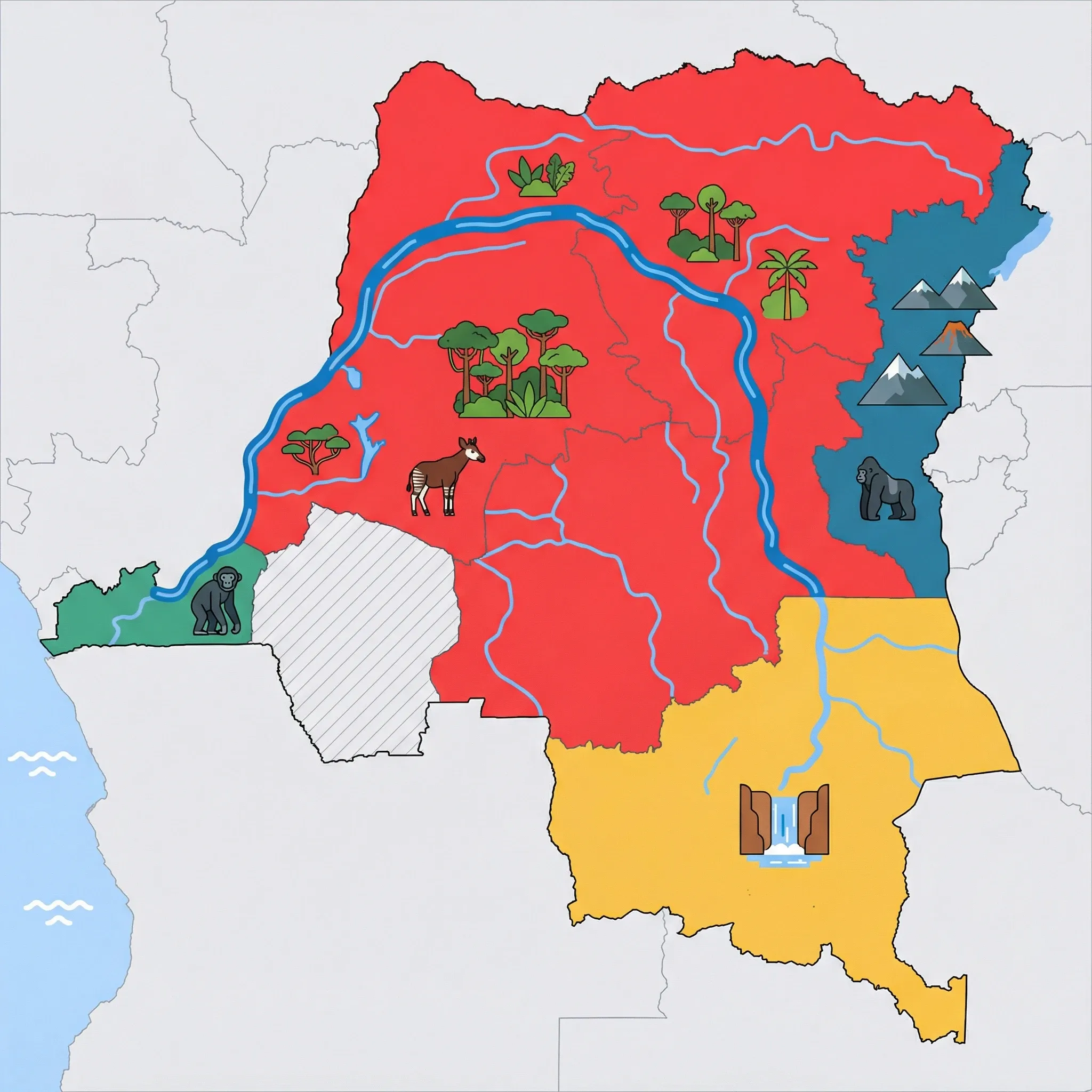
The crown jewel of the basin's conservation efforts is Salonga National Park. As Africa's largest tropical rainforest reserve and a UNESCO World Heritage site, it is a sanctuary for the bonobo, our closest primate relative. While access is challenging and requires a charter flight or long boat journey, the chance to track these intelligent, peaceful apes in their natural habitat is a life-changing experience for wildlife enthusiasts. The park is also home to forest elephants and the elusive Congo peacock.
Near the city of Mbandaka, the Eala Botanical Garden offers a more accessible slice of nature. Once one of the finest botanical research centers in colonial Africa, it creates a fascinating, slightly overgrown atmosphere where families can walk among thousands of species of tropical trees and plants. It serves as a gentle introduction to the region's flora without the rigors of a deep jungle trek. Further upriver near Kisangani (often accessed via the river route), the Wagenia Fishermen Site is a marvel of traditional engineering. Local fishermen construct massive wooden scaffolds across the rapids to lower conical traps into the roaring water—a technique passed down for centuries that is mesmerizing to watch.
Practical Advice
The best time to visit is during the slightly drier seasons, roughly from June to August and December to February, though rain is possible year-round in the rainforest. Travel here requires patience; schedules are fluid, and delays are part of the experience. Families must travel with a reputable, specialized tour operator who can arrange logistics, security, and food. Malaria prophylaxis is absolutely non-negotiable, and long sleeves are essential against tsetse flies in certain areas.
Food & Drink
Typical meal times: Breakfast is early, around 6:30 am to 8:00 am. Lunch is the main meal, usually taken between 12:00 pm and 2:00 pm. Dinner is often late, from 7:30 pm to 9:30 pm.
Typical meal costs: In local guesthouses, meals are inexpensive. Expect to pay roughly 28,000–56,000 CDF (approx. $10–20 USD / €9–18 EUR) for a hearty dinner. Specialized eco-lodges will charge international prices, often included in tour packages.
Dietary requirements: Vegetarian options are limited to side dishes like cassava leaves, plantains, and rice. Gluten-free is relatively easy as the local diet relies on cassava and maize rather than wheat, but cross-contamination is possible. Vegan travelers will need to communicate clearly to avoid fish stock.
Signature dishes:
- Liboke – Freshwater fish (often catfish or tilapia) marinated with tomato, onion, and chili, wrapped in marantaceae leaves and steamed over charcoal.
- Pondu – A thick, green stew made from pounded cassava leaves, palm oil, and spices—a staple vegetable dish found at almost every meal.
- Chikwangue – Fermented cassava dough wrapped in banana leaves and boiled, serving as a dense, starchy accompaniment to stews, similar to a dumpling.
Why this score?
Navigating the world's second-largest rainforest and the Congo River requires a high-level expedition mindset, involving significant physical demands and unpredictable travel. The lack of marked trails and the vastness of the wilderness make it one of the most rugged destinations on Earth.
Why this score?
Medical facilities in the basin are virtually non-existent outside of basic missionary clinics or small town dispensaries with very limited supplies. Emergency evacuation is extremely difficult and would likely take days from the deep interior.
Why this score?
This region receives almost no international leisure tourists due to extreme logistical challenges and a lack of commercial river transport infrastructure. Visitors are typically limited to specialized researchers or high-end expedition groups rather than standard tourists.

While local street food is cheap, the logistics for a tourist are expensive due to scarcity. A safe, clean hotel in Mbandaka costs 280,000–420,000 CDF (approx. $100–150 USD / €90–135 EUR). Organized river expeditions are luxury-priced, often exceeding 1,400,000 CDF (approx. $500 USD / €450 EUR) per day per person including logistics.

Getting Here & Around
Getting Here
- Airports – Mbandaka Airport (MDK) is the primary gateway to the central basin, with flights from Kinshasa. Kisangani Bangoka International Airport (FKI) serves the upper river region.
- Ferry – The journey from Kinshasa to Mbandaka or Kisangani by river barge is legendary but takes weeks and is not recommended for families. Private boat charters are faster but expensive.
Getting Around
- Boat – The river is the road. Travel between attractions like Eala Botanical Garden and remote villages is almost exclusively by dugout canoe (pirogue) or motorized launch.
- Walking – Within towns like Mbandaka, walking or taking a motorcycle taxi (motos) is common, though families should prefer arranged private vehicles.
Nearby Airports (3 airports)
Kisangani Simisini
FKIKisangani
Gemena
GMAGemena
Mbandaka
MDKMbandaka
View full flight map for Democratic Republic of the Congo →

Packing List
Bottled water availability is unreliable in remote villages
Essential for keeping electronics safe during canoe travel
Washing often happens directly in river tributaries
Electricity is rare; red light prevents attracting insects at night
Heavy duty protection against tsetse flies and mosquitoes
Local merchants and banks refuse dollar bills with even tiny tears, marks, or dates older than 2013.
You will be physically denied entry at the airport without this original yellow booklet.
Power cuts are frequent even in cities; street lighting is non-existent in many areas.
English is rarely spoken outside top hotels; basic French is essential for daily interactions.
Malaria is a severe risk throughout the country; medication is much harder to find locally.
To keep phones charged during long travel days or frequent hotel blackouts.

Activities & Best Times

Hiking, wildlife, outdoor exploration, ecotourism
Offers unparalleled immersion in the world's second-largest rainforest, including UNESCO-listed Salonga National Park and the unique biodiversity of Lac Tumba. The drier window from December to February is essential for navigating jungle trails and river systems, as peak rainfall in October and November makes logistics and wildlife spotting extremely difficult.

Urban tourism, museums, historical sites, architecture
Features unique heritage sites such as the Wagenia Fishermen's traditional cataracts fishing and the historic Yangambi Research Station. Travel is most rewarding during the shorter dry season (Dec-Feb) when urban navigation and river transport are reliable; heavy equatorial rains in the off-season months significantly disrupt local infrastructure and outdoor cultural demonstrations.

Learning experiences, scientific sites, historical education
Provides access to globally significant scientific facilities like the Epulu Research Station for Okapi conservation and the Jardin Botanique d'Eala. These sites offer profound insights into tropical ecology and conservation history, with the drier months providing the necessary road and river access to reach these remote research outposts.




Public Holidays & Calendar Next 12 months
Public holidays, festivals, cultural celebrations, and seasonal natural phenomena coming up in Congo River & Basin over the next 12 months.
Loading holidays and events...

Travel Advisory
Due to a split in agency assessments between 'Reconsider Travel' and 'Do Not Travel', the higher severity level of L3 is applied. Most agencies cite extreme risks from armed conflict, kidnapping, and terrorism.
Safety Topics
Traveller Advice (4 groups)

While same-sex relations are not explicitly criminalized under national law, social stigma and discrimination are high, and same-sex couples are legally barred from adopting children.

Ensure you have comprehensive travel insurance that includes emergency medical evacuation by air. Most standard policies may exclude coverage for the DRC due to its security status.

High risks of sexual violence and harassment exist. Women are advised to maintain a low profile, dress conservatively, and avoid travelling alone, particularly after dark.

Humanitarian workers are frequently targeted by armed groups and violent mobs. Personnel should operate with extreme caution and specialized security protocols.
Agency Summaries
Canadians are advised to avoid non-essential travel to the Democratic Republic of the Congo due to a very fragile security environment, significant crime rates, and frequent civil disturbances. Regional advisories suggest avoiding all travel to most eastern and northeastern provinces.
Ireland maintains a 'Do Not Travel' advisory for the DRC, emphasizing the high risk of violence and conflict, especially in eastern provinces where fighting between government and rebel forces has escalated.
The U.S. government recommends reconsidering travel to the DRC because of prevalent crime and civil unrest. Some regions, particularly in the east, carry a much higher risk due to active armed conflict and terrorism.
British authorities advise against all but essential travel to the country as a whole, with stricter 'no travel' warnings for specific areas in the east and north. Recent updates highlight insecurity at Bangoka International Airport in Kisangani.
New Zealand advises its citizens not to travel to the DRC due to the unstable security situation, ongoing armed conflict, and high risk of terrorism and violent crime.
Australia advises against all travel to the DRC due to the volatile security climate and the significant threat of kidnapping, terrorism, and violent conflict throughout the country.
Information is provided for general guidance only and does not constitute travel, safety, medical, or legal advice. Conditions may change. Users are responsible for independently verifying information before travel.